


Saudi Arabia Urges UN Action to Protect Children in Conflict Zones

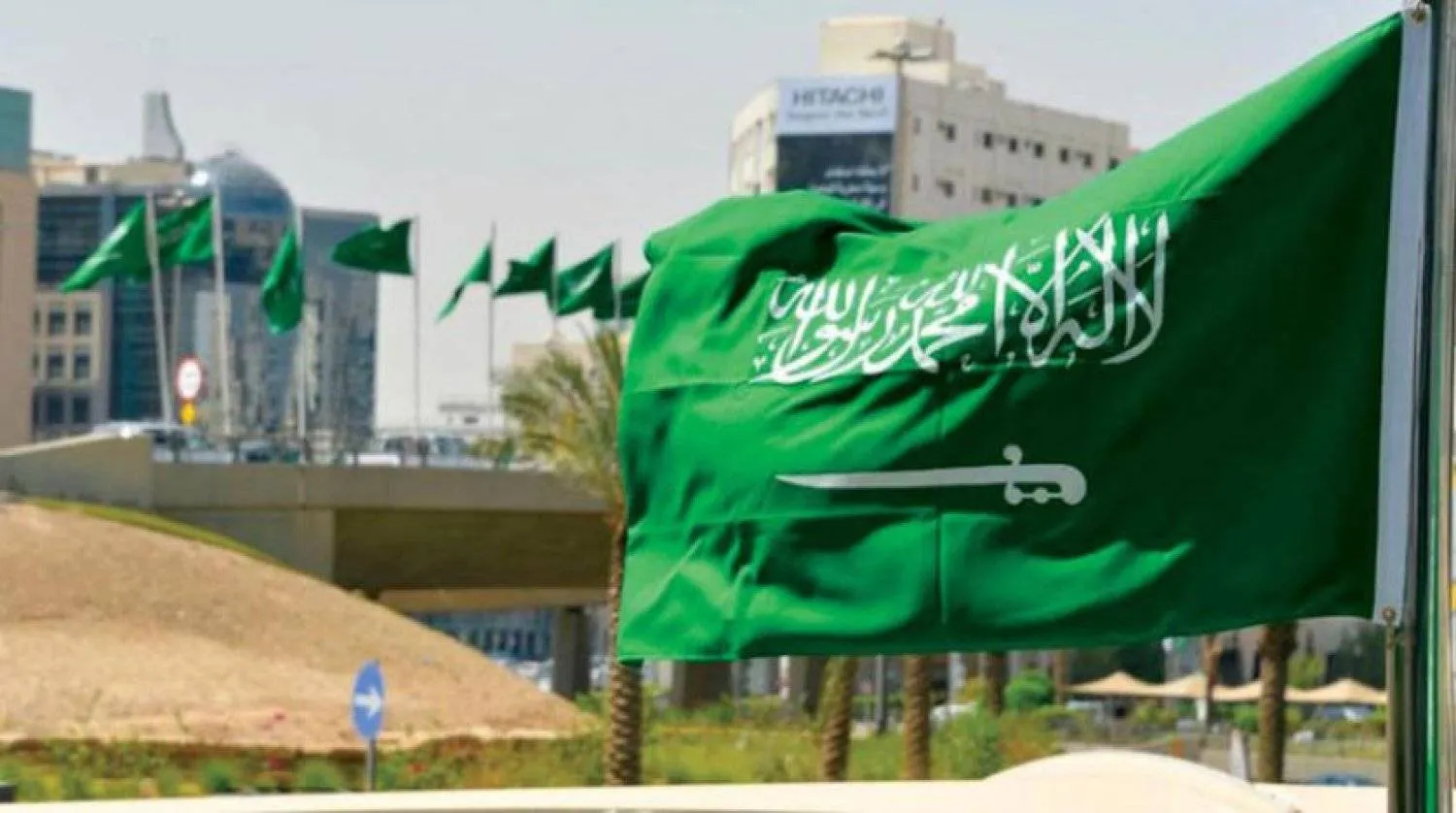
The Saudi flag. Asharq Al-Awsat
TT

Saudi Arabia Urges UN Action to Protect Children in Conflict Zones

The Saudi flag. Asharq Al-Awsat

Saudi Arabia told the UN Security Council that protecting children in armed conflicts is a shared global responsibility requiring concerted efforts to address its root causes and repercussions.

Delivering the Kingdom's statement, Saudi Arabia’s Permanent Representative to the United Nations Abdulaziz Alwasil emphasized that Saudi Arabia prioritizes children's rights in conflict zones based on the noble principles of Islamic Sharia.

Alwasil highlighted Saudi Arabia's continuous support for global civilian protection through humanitarian and relief projects implemented by the King Salman Humanitarian Aid and Relief Center.

These initiatives span more than 90 countries, providing essential aid to those affected by conflicts and disasters without discrimination.

Addressing the situation in the Gaza Strip, the Kingdom stated that the ongoing crisis constitutes a flagrant violation of international humanitarian law and shared human values.

The statement called for urgent international action to stop the tragedy, protect children, and hold those responsible for these grave violations accountable, while reiterating Saudi support for all international efforts aimed at achieving security and stability.



Civil Defense Announces Danger Has Passed in Five Saudi Cities, Including Makkah

Early Warning Sirens Activated in Makkah and Four Other Saudi Cities (SPA)
TT

Civil Defense Announces Danger Has Passed in Five Saudi Cities, Including Makkah

Early Warning Sirens Activated in Makkah and Four Other Saudi Cities (SPA)

Saudi Civil Defense announced on Thursday that the danger had passed in Makkah, Jeddah, Taif, Yanbu, and Tabuk, shortly after early warning sirens were activated as part of emergency procedures to warn of a potential danger.

Through its official account on the X platform, Saudi Civil Defense urged residents to continue following instructions, avoid gathering and filming altogether, and contact the emergency number 998 when necessary.

Earlier, Civil Defense had announced the activation of an alert through the National Early Warning Platform for Emergencies in Makkah, Jeddah, Taif, Yanbu, and Tabuk to warn of a potential danger, urging residents to remain calm and follow official instructions.

According to the safety guidelines issued by Civil Defense, residents were instructed to immediately move to the nearest safe location, either inside a building or in an interior room away from windows, and remain there until the danger had passed. They were also advised not to leave their homes or buildings during the warning period.

Civil Defense stressed the importance of staying away from open areas, windows, and glass, and of not standing on balconies or rooftops. It explained that anyone outside a building should enter the nearest building or seek shelter behind a solid barrier.

It also warned against gathering, filming, and approaching dangerous locations. Drivers who receive a warning message while driving were advised to pull over to the side of the road, away from bridges, tunnels, and high-rise buildings.

Civil Defense emphasized the importance of obtaining information from official sources and warned against circulating rumors or footage from unknown sources. It stressed the need to follow instructions issued by the relevant authorities through official channels.


Google Plans First Test of AI Chips in Space under Project Suncatcher

FILE PHOTO: A specially designed Google logo, during the opening of Google's new Artificial Intelligence (AI) centre in Berlin, Germany, March 5, 2026. REUTERS/Annegret Hilse//File Photo
TT

Google Plans First Test of AI Chips in Space under Project Suncatcher

FILE PHOTO: A specially designed Google logo, during the opening of Google's new Artificial Intelligence (AI) centre in Berlin, Germany, March 5, 2026. REUTERS/Annegret Hilse//File Photo

Alphabet's Google said on Thursday it will launch a prototype satellite next week in its first in-orbit test of Project Suncatcher, a research effort to explore whether space could potentially host large-scale AI computing infrastructure.

Companies including SpaceX and Starcloud are pursuing plans to deploy data centers in low Earth orbit, aiming to harness near-continuous sunlight to power energy-intensive AI computing and sidestep terrestrial constraints on electricity supplies.

The new mission, scheduled to fly on SpaceX's upcoming Transporter-18 rideshare launch in partnership with satellite company Planet Labs, will assess how Google's AI hardware withstands launch forces, radiation and extreme temperatures in LEO.

After the launch, it will send a prototype satellite carrying Google Tensor Processing Units into low Earth orbit to assess if the AI chips can operate reliably in space, according to Reuters.

Space radiation can disrupt or degrade electronics, including by causing data errors known as bit flips.

Google said it tested its TPUs while running AI workloads in a facility at the University of California, Davis, but that orbital testing was needed to understand how the hardware performs in the real environment.

The company will also evaluate its design to cool the power-intensive chips in the vacuum of space, where conventional airflow cooling is impossible, by combining heat pipes with radiators.

But experts have said that the concept remains years from being commercially viable given high launch costs, engineering constraints and satellite production bottlenecks.

The first Suncatcher mission is designed to gather in-orbit data and identify potential failure points, rather than demonstrate an operational orbital data center, Google said.

It aims to launch two satellites in 2027 to test the high-bandwidth laser links needed to connect future computing clusters.


Coalition: Six Ballistic Missiles Launched by Terrorist Houthi Militia Intercepted, Destroyed

Coalition spokesman Major General Turki al-Malki. (SPA)
TT

Coalition: Six Ballistic Missiles Launched by Terrorist Houthi Militia Intercepted, Destroyed

Coalition spokesman Major General Turki al-Malki. (SPA)

Official Spokesperson of the Coalition to Support Legitimacy in Yemen Major General Turki Al-Malki stated that coalition forces intercepted and destroyed six ballistic missiles launched by the terrorist Houthi militia, and air defenses foiled an attempt to target Taif and Yanbu.

He said the escalation and violations by the terrorist Houthi militia will be dealt with firmly.