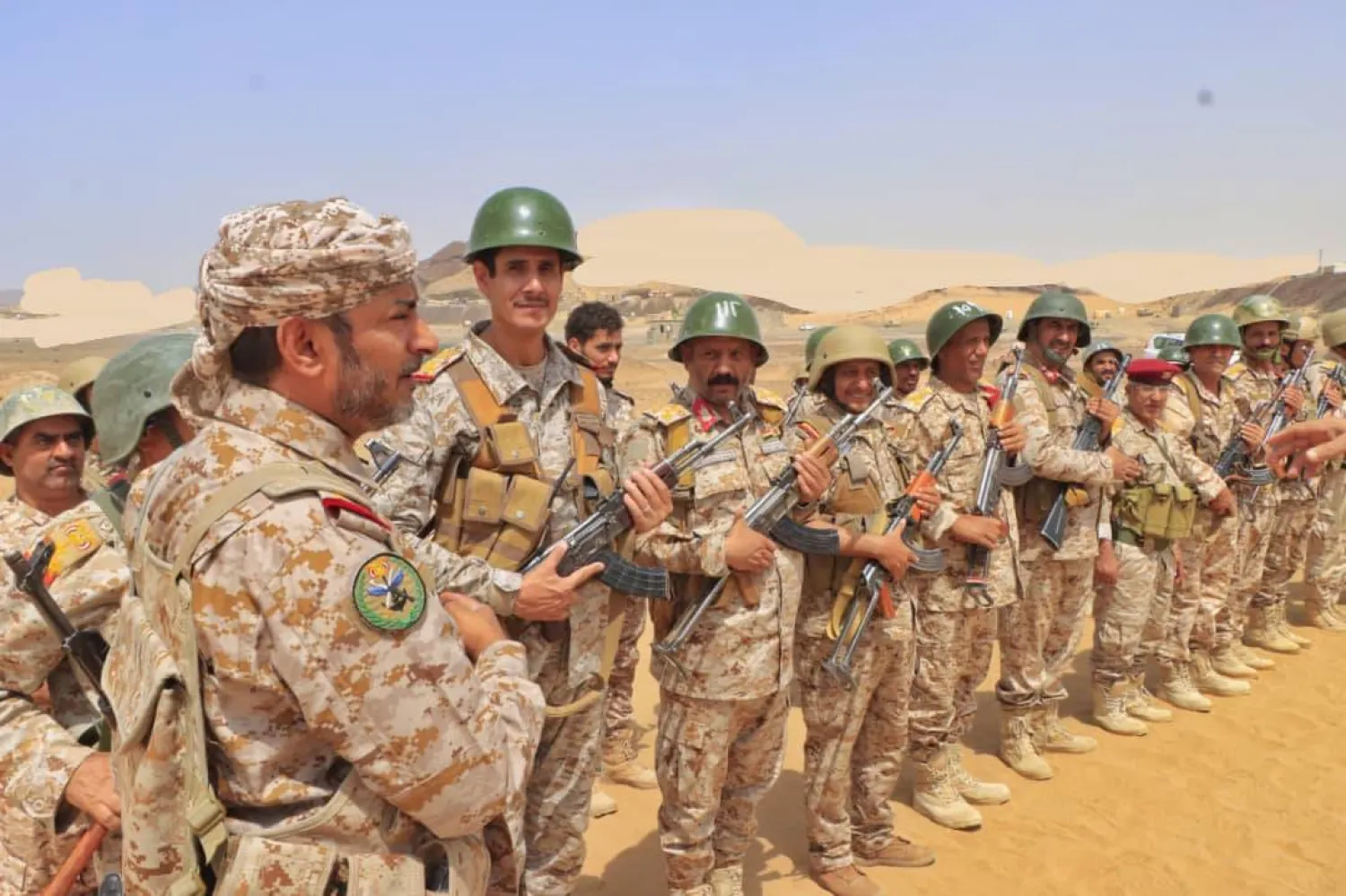

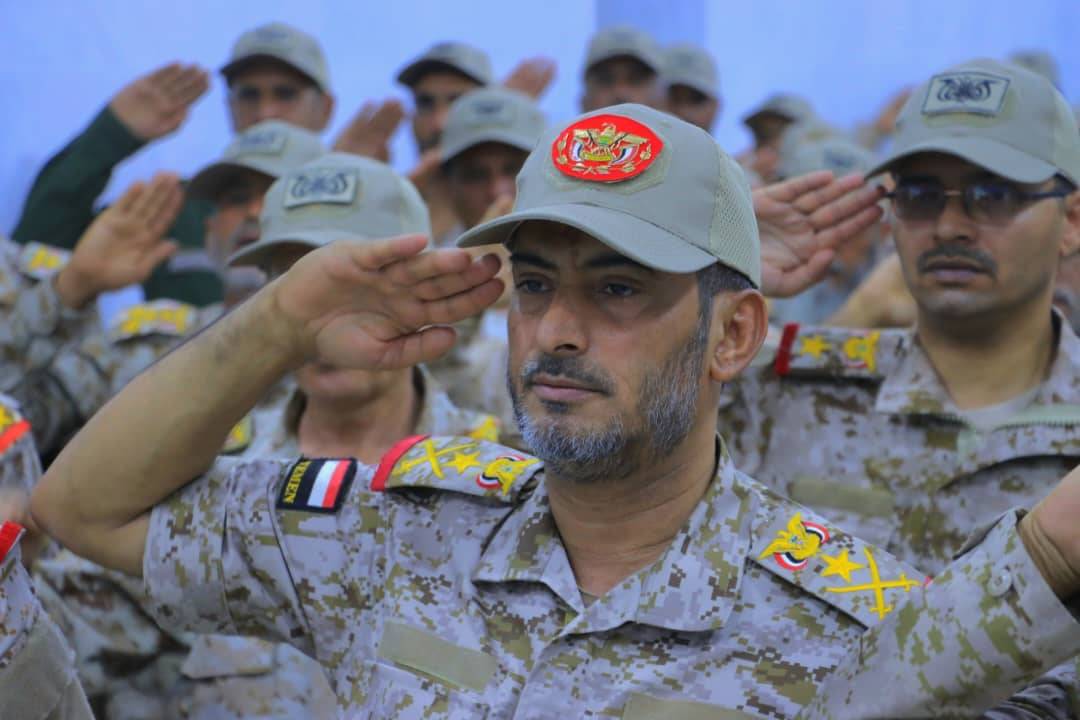
Yemen's Chief of the General Staff and Commander of Joint Operations, Lieutenant General Sagheer bin Aziz, said the military leadership and decision-making process have been unified as part of efforts to bring all military formations under the umbrella of the Ministry of Defense and the General Staff.
He revealed that the Yemeni armed forces have completed about 80 percent of their operational and administrative arrangements since the 2022 truce began, adding that the military has continued over the past several years to rebuild its units, improve combat readiness, and strengthen its capabilities in confronting the Iran-backed Houthi group.
Speaking to Asharq Al-Awsat from Marib, bin Aziz said the effort included reorganizing military units, defining their sectors and missions in line with military standards, training and qualifying large numbers of armed forces personnel, and restructuring administrative systems in accordance with the Armed Forces Service Law.
The army chief stressed that "the leadership is now unified, the military decision-making process is unified, and we are on the right path toward bringing all military formations under the umbrella of the Ministry of Defense and the General Staff."
Restructuring
He added: "Since the truce began in 2022, we have made excellent progress in both operational and administrative arrangements. We reorganized military units, their sectors, and their missions in accordance with military standards. We also trained and qualified large numbers of armed forces personnel and restructured the administrative framework of military units in line with the law."
Bin Aziz explained that since 2015 the Yemeni military has fought a different kind of war from any it had faced before. The armed forces were assembled from former army units as well as newly established formations while fighting a conflict that continued until 2022, during which the military suffered "tens of thousands of martyrs and wounded."
He continued: "The army withstood an arsenal backed by Iran. There were setbacks, but our resilience was greater because it preserved what remained of the Republic of Yemen and the institutions of the state."
According to bin Aziz, one of the most significant achievements in recent years has been the introduction of a smart ID card system for armed forces personnel, which has now been implemented in about 95 percent of military units. He described it as an important step in eliminating overlap and duplication within the armed forces.
He said: "This is an important achievement because it removes doubts and concerns about overlapping units, duplication, and related issues. We are satisfied with what has been accomplished so far, and the work is continuing."
Integrating Military Formations
On integrating military formations, bin Aziz said unifying the administration of the armed forces is one of the most important requirements for success on the battlefield and for achieving security and stability in Yemen. He noted that the process requires time and multiple steps to incorporate the various formations under the umbrella of the Ministry of Defense and the General Staff.
He added: "Reforming the military establishment and unifying its administration is a goal shared by everyone. We believe that unifying the military's command structure is one of the fundamental pillars for achieving success in the battle and securing stability in the Republic of Yemen."
He said work on this effort is continuing under the leadership of the chairman of the Presidential Leadership Council, the supreme commander of the armed forces, together with the council's members. He stressed that the most important achievement at this stage is that the leadership has become unified, both within Yemen and across the Coalition to Restore Legitimacy.
He said: "What matters to us now is that the leadership has become unified and the military decision-making process is unified. We are on the right path toward bringing all military formations under the umbrella of the Ministry of Defense and the General Staff."
Lessons Learned
Asked about the military lessons drawn from years of war, Yemen's army chief said the nature of warfare has changed dramatically, with drones, ballistic missiles, electronic jamming systems, and smart weapons becoming decisive factors in modern warfare.
At the same time, he stressed that technology does not eliminate the role of ground forces. While smart weapons may influence offensive operations and the scale of losses, he said controlling and securing territory ultimately depends on personnel on the ground.
He said: "War today has become a different kind of conflict. Drones, ballistic missiles, electronic jamming systems, and smart weapons have become the decisive factors. But no matter how advanced technology becomes, ground forces, particularly the infantry, remain among the most important factors in success on the battlefield."
He added: "Drones, ballistic missiles, and smart systems cannot remain on the ground and secure it. The infantry soldier remains the decisive factor in holding territory, and controlling the ground is more important than any other weapon."
Modern Technologies
On the use of modern technologies, bin Aziz said the Yemeni armed forces are making "good" use of these capabilities. He said the military has specialized units for drones, smart weapons, and electronic jamming systems, in addition to experienced personnel who have gained extensive battlefield expertise over years of war.
He said: "Our training and qualification in this field are of the highest standard. We have specialized units for drones, smart weapons, and electronic jamming systems, along with highly capable personnel who possess extensive battlefield experience as well as advanced training."
Saudi Partnership and Support
The Yemeni army chief praised Saudi Arabia's support in military training and qualification, noting that the Kingdom has trained hundreds of Yemeni military personnel across various fields.
He said: "Our brothers in Saudi Arabia are also committed to training and qualification. We highly value and appreciate the continued military cooperation they have provided."
He added that the relationship with Saudi Arabia goes beyond coordination and has become "a genuine partnership on the ground" across multiple fields, particularly in confronting Houthi threats that target not only Yemen but also Saudi Arabia and the Arab region as a whole.
He continued: "The Saudis have stood with us through every circumstance and at every stage. We can never fully repay them for the support and cooperation they have provided in what we regard as our sacred battle against the Houthi group."
Bin Aziz stressed that Saudi Arabia's support for Yemen is not driven by political or economic objectives, but by its conviction that the security of Yemen and Saudi Arabia is indivisible.
He said: "We know that Saudi Arabia has no political or economic ambitions in its cooperation with the Republic of Yemen. Its primary objective is the belief that its security is inseparable from Yemen's, and Yemen's security is inseparable from its own. This is a sincere, brotherly stance and the response of generous men standing by their brothers in Yemen."
Concluding the interview, the Yemeni army chief said the current phase marks a transition from coordination to a genuine partnership.
He said: "Today, we are no longer in a phase of coordination alone. We are in a phase of genuine partnership on the ground, militarily, economically, politically, and socially, to defeat the enemy that threatens Yemen, Saudi Arabia, and the entire Arab world."