

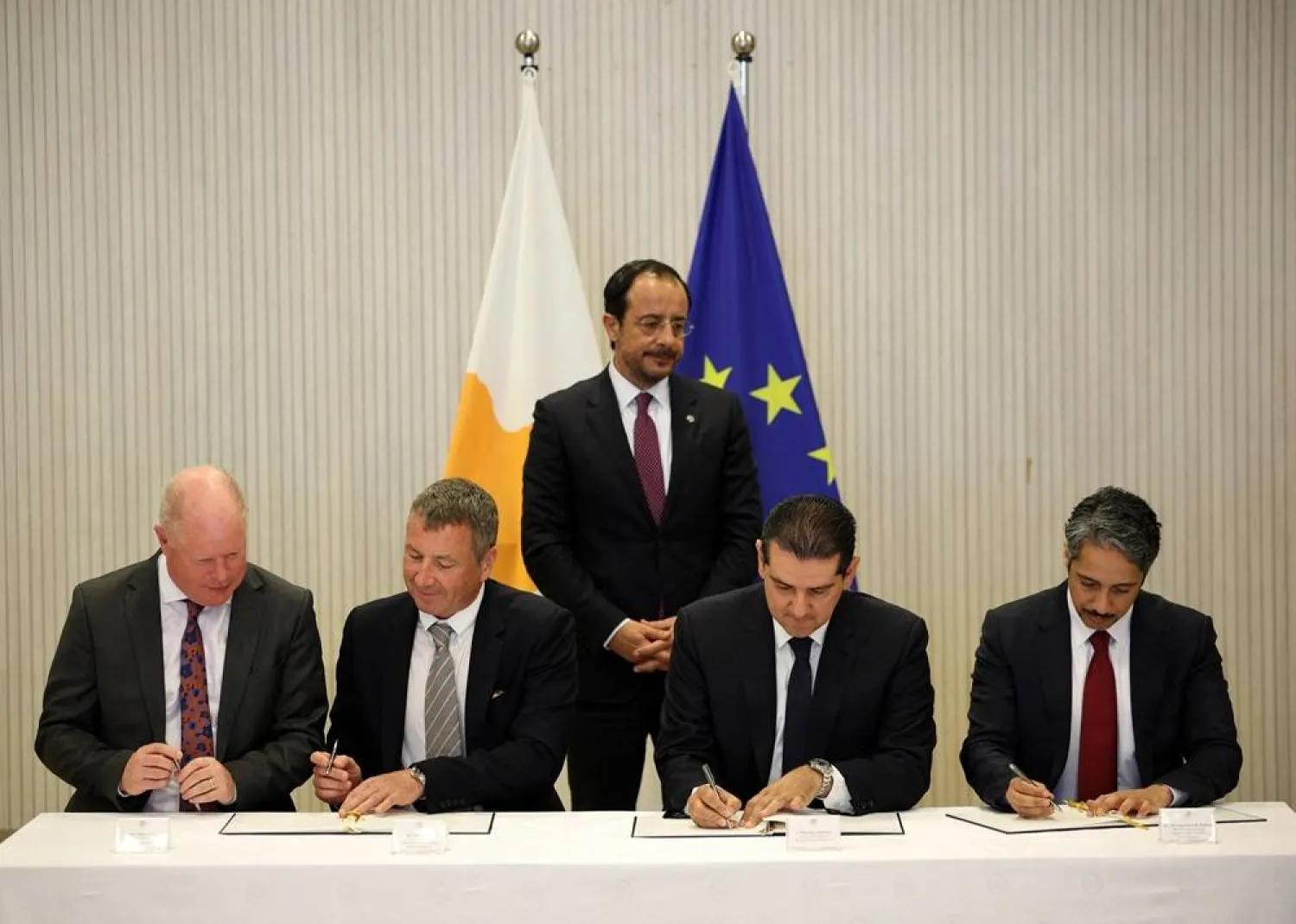

Cyprus, Energy Giants Declare Gas Fields Commercially Viable

Representatives of ExxonMobil and QatarEnergy sign an agreement with Cyprus declaring gas in two offshore fields marketable, paving the way for further development of offshore gas reserves in the eastern Mediterranean, at the Presidential Palace in Nicosia, Cyprus June 30, 2026. (Reuters)
TT

Cyprus, Energy Giants Declare Gas Fields Commercially Viable

Representatives of ExxonMobil and QatarEnergy sign an agreement with Cyprus declaring gas in two offshore fields marketable, paving the way for further development of offshore gas reserves in the eastern Mediterranean, at the Presidential Palace in Nicosia, Cyprus June 30, 2026. (Reuters)

Cyprus, ExxonMobil and QatarEnergy on Tuesday declared natural gas fields discovered off the Mediterranean island nation to be commercially viable, with a 2033 target for production to commence.

The declaration of commercial discovery, signed in Nicosia, moves the Glaucus and Pegasus gas discoveries from the exploration phase to project development, strengthening Cyprus's ambitions to become an eastern Mediterranean energy hub.

"This has been the culmination of eight years of work since we were awarded the blocks in 2017, discovery in 2019, second discovery last year," John Ardill, ExxonMobil's vice president for exploration and new ventures, said.

"This declaration of commerciality takes us from looking for energy to developing energy," Ardill said. "It is a very historic point."

Cypriot President Nikos Christodoulides described the agreement as "a milestone of strategic importance".

Ardill said the company expected to take a final investment decision in 2029, with production starting in 2033.

He added that ExxonMobil would resume drilling later this year as part of the Pegasus appraisal program, while expanding exploration into Blocks 4 and 10A of the Cypriot exclusive economic zone (EEZ).

"The concept of a European energy hub is realized when the molecules start flowing, and that's what we are here to initiate today," Ardill said.

Ardill said the leading development option is a subsea pipeline linking the Cypriot fields to existing liquefied natural gas infrastructure in Egypt, pointing to established bilateral agreements and infrastructure.

An onshore LNG terminal in Cyprus would require substantially larger gas reserves than those identified so far.

Tuesday's declaration follows years of appraisal drilling and technical studies confirming the fields are commercially exploitable.

Energy Minister Michael Damianos said Cyprus expected to launch a new offshore licensing round within the next two years.

The island nation has sought to position its offshore gas as a strategic source of energy security for Europe following Russia's invasion of Ukraine.

It has been 15 years since Nicosia's first commercial natural gas find, dubbed the Aphrodite field.

Cyprus has delineated its EEZ into 13 offshore exploration blocks licensed to international energy companies, including ExxonMobil, QatarEnergy, Eni, TotalEnergies and Chevron.

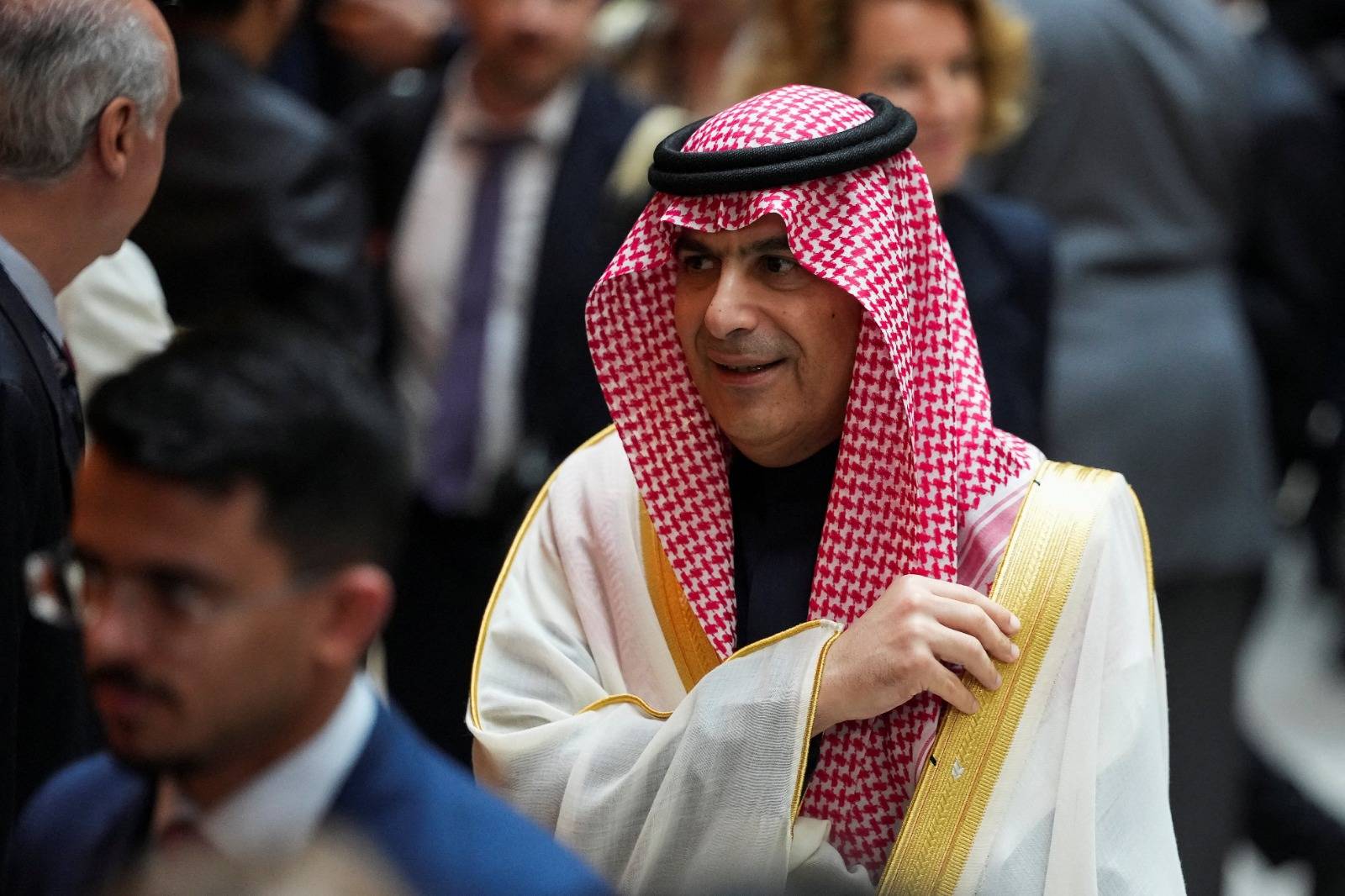

Acwa-WTCO Consortium Holds Preparatory Meeting in Syria to Launch Water Partnership Studies

The Saudi and Syrian delegations meet in Damascus on Monday. (SPA)
TT

Acwa-WTCO Consortium Holds Preparatory Meeting in Syria to Launch Water Partnership Studies

The Saudi and Syrian delegations meet in Damascus on Monday. (SPA)

The consortium comprising the Water Transmission Company (WTCO) and Acwa Power held on Monday a preparatory meeting in Damascus on the tripartite agreement concluded with the Syrian Ministry of Energy.

The meeting aimed to activate the agreement's provisions and develop an implementation plan to support and develop water sector projects in Syria.

The agreement aims to prepare preliminary feasibility studies based on an assessment of Syria's current water resources, determine current and future water needs, and examine the optimal mix of seawater desalination and the use of surface and groundwater resources.

This will pave the way for the development of integrated water desalination and transmission projects with production and transmission capacities of up to 1.2 million cubic meters per day, with transmission networks extending approximately 400 kilometers.

The meeting reviewed the work plan and reaffirmed the agreement's objectives and implementation timeline. It also covered the allocation of tasks and mechanisms for communication and joint work among the consortium parties and the consulting and implementing entities.


Saudi Arabia, Australia Discuss Climate Cooperation Opportunities

Saudi Minister of Energy and Minister of Industry and Mineral Resources Prince Abdulaziz bin Salman bin Abdulaziz and Australian Minister for Climate Change and Energy Chris Bowen meet in Jeddah. (SPA)
TT

Saudi Arabia, Australia Discuss Climate Cooperation Opportunities

Saudi Minister of Energy and Minister of Industry and Mineral Resources Prince Abdulaziz bin Salman bin Abdulaziz and Australian Minister for Climate Change and Energy Chris Bowen meet in Jeddah. (SPA)

Saudi Minister of Energy and Minister of Industry and Mineral Resources Prince Abdulaziz bin Salman bin Abdulaziz met in Jeddah on Monday with Australian Minister for Climate Change and Energy Chris Bowen.

They discussed opportunities for cooperation on climate action and joint efforts in connection with the 31st Conference of the Parties to the United Nations Framework Convention on Climate Change (COP31), scheduled to be held in Türkiye in November this year.

Talks focused on advancing the objectives and principles of the United Nations Framework Convention on Climate Change and the Paris Agreement, with a view to achieving inclusive, balanced and practical outcomes that take into account the national circumstances of member states.

They reviewed Saudi Arabia’s initiatives and efforts to address the impacts of climate change, including the deployment of renewable energy, emissions management, reduction and removal, the Saudi Green Initiative, as well as the implementation of the Circular Carbon Economy approach and its technologies and other national and regional programs and initiatives.

Bowen toured the Shuaibah Solar Power Project, one of the largest projects under Saudi Arabia’s National Renewable Energy Program.

His visit also included a tour of Historic Jeddah, one of the Kingdom’s leading cultural and tourism destinations, as well as a visit to King Abdullah University of Science and Technology (KAUST), where he was briefed on the university’s research environment and academic programs in science, engineering and biotechnology.


Mideast Oil Exports Rebound to 12.8 Million Barrels Per Day

Vessels in the Strait of Hormuz near the beach of Bandar Abbas, Iran, September 28, 2026. Amirhosein Khorgooi/ISNA/via WANA (West Asia News Agency) via Reuters
TT

Mideast Oil Exports Rebound to 12.8 Million Barrels Per Day

Vessels in the Strait of Hormuz near the beach of Bandar Abbas, Iran, September 28, 2026. Amirhosein Khorgooi/ISNA/via WANA (West Asia News Agency) via Reuters

Crude oil exports from key Middle East producers rebounded in September to 12.8 million barrels per day, the highest since the US-Israeli war with Iran started in February, data from Kpler showed on Monday, as Saudi Arabia and the United Arab Emirates boosted exports.

The rebound came following a recovery in exports via the Strait of Hormuz, ⁠which were set ⁠to hit about 7.4 million bpd this month, as Saudi Arabia diverted oil exports from the Red Sea port of Yanbu following attacks that damaged its East-West pipeline, the preliminary data showed.

While exports from the region - which includes Saudi Arabia, the United Arab Emirates, Iraq, Oman, ⁠Qatar, Kuwait, Iran - have rebounded, they were still about 6 million bpd down from 18.8 million bpd in February, according to Kpler.

The region's top exporter Saudi Arabia was on track to ship about 5.4 million bpd this month, rebounding from 2.446 million bpd in August, the data showed, according to Reuters.

September shipments from the Ras Tanura port in the Gulf jumped to about 3.6 million bpd, from 929,000 bpd in August, but still lower than the 6.411 million bpd ⁠recorded in ⁠February, according to the data.

A total of 19 very large crude carriers, carrying 2 million barrels of Saudi oil each, exited the Strait of Hormuz last week, Kpler data showed.

The figures exclude any vessels that might have crossed the strait with their Automatic Identification System transponders turned off to avoid detection.

Before the Iran war started on February 28, the strait typically handled about 125 large commercial vessels per day, including tankers, gas carriers, bulkers and container vessels, accounting for some 20% of the world’s daily crude oil and liquefied natural gas supply.
