


Gifted Students Complex in Marib: From the Heart of War to Building the Future

More than 200 high-achieving students have enrolled at the complex since its official opening in 2024 (Asharq Al-Awsat)
TT

Gifted Students Complex in Marib: From the Heart of War to Building the Future

More than 200 high-achieving students have enrolled at the complex since its official opening in 2024 (Asharq Al-Awsat)

In a city more familiar with rockets than school bells, a different morning begins at the Model Complex for Gifted Students in Marib.

Built and fully funded by the Saudi Development and Reconstruction Program for Yemen, the complex is now home to dozens of students studying science and mathematics, a scene that captures the triumph of knowledge over years of war.

Four years ago, at the height of Houthi attacks on Marib in 2022, Asharq Al-Awsat visited the site for the first time. The building was then in its final stages of preparation, while nearby neighborhoods, including al-Rawda and al-Matar, were under repeated Houthi ballistic missile fire.

One missile struck a house only about 500 meters from the gifted students’ center, offering a stark image of two opposing projects: one that builds people, and another that destroys them.

Even as the war reached one of its fiercest stages, the Saudi Development and Reconstruction Program for Yemen pushed ahead. What seemed at the time like an educational gamble in the middle of a battlefield has become one of Yemen’s clearest examples of investment in people.

The center was no ordinary education project. It was a dream long held by Sheikh Sultan al-Arada, vice president of Yemen’s Presidential Leadership Council and governor of Marib. He recalled proposing the idea to the Saudi Ambassador to Yemen, Mohammed Al-Jaber, who quickly approved the establishment and full equipping of the project.

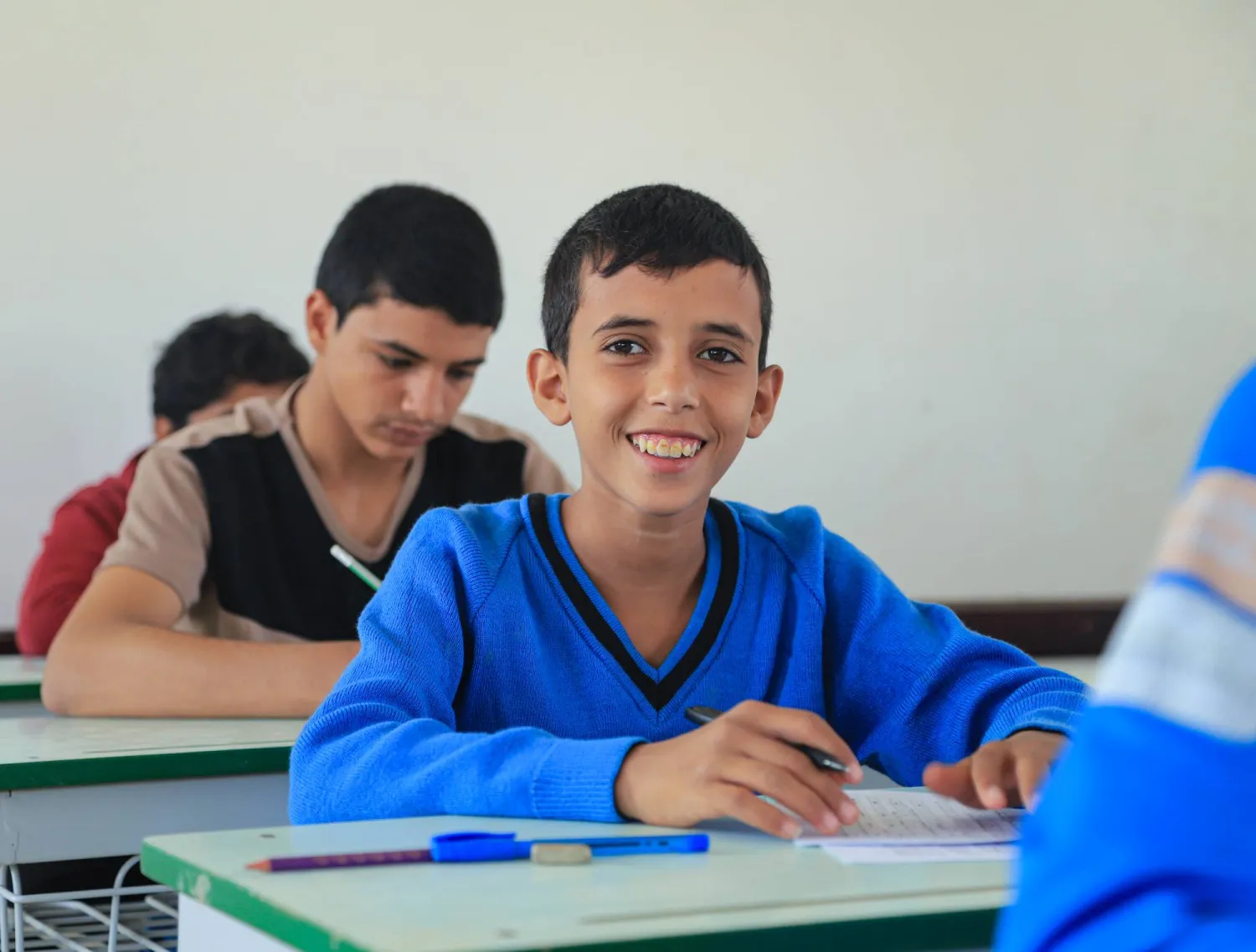
When Asharq Al-Awsat returned to the center, the scene had changed completely. The building that stood silent in 2022 under the shadow of war was alive with students. Laboratories were busy, and classrooms echoed with discussion and scientific experiments.

Since its official opening in 2024, more than 200 high-achieving students have enrolled at the center. Many come from different Yemeni provinces after the war forced their families to flee to Marib.

Here, in a city often described as the last line of defense for the republic, Saudi Arabia is fighting a different kind of battle: a battle to build minds, based on the belief that rebuilding people comes before rebuilding nations.

Dr. Mohammed al-Qairi, director of the gifted students’ complex in Marib, said the center’s opening in 2024 marked a turning point for quality education in the province. Demand, he said, exceeded expectations from the first day.

He told Asharq Al-Awsat that 246 students applied for the first intake, with only 120 selected after a series of scientific tests.
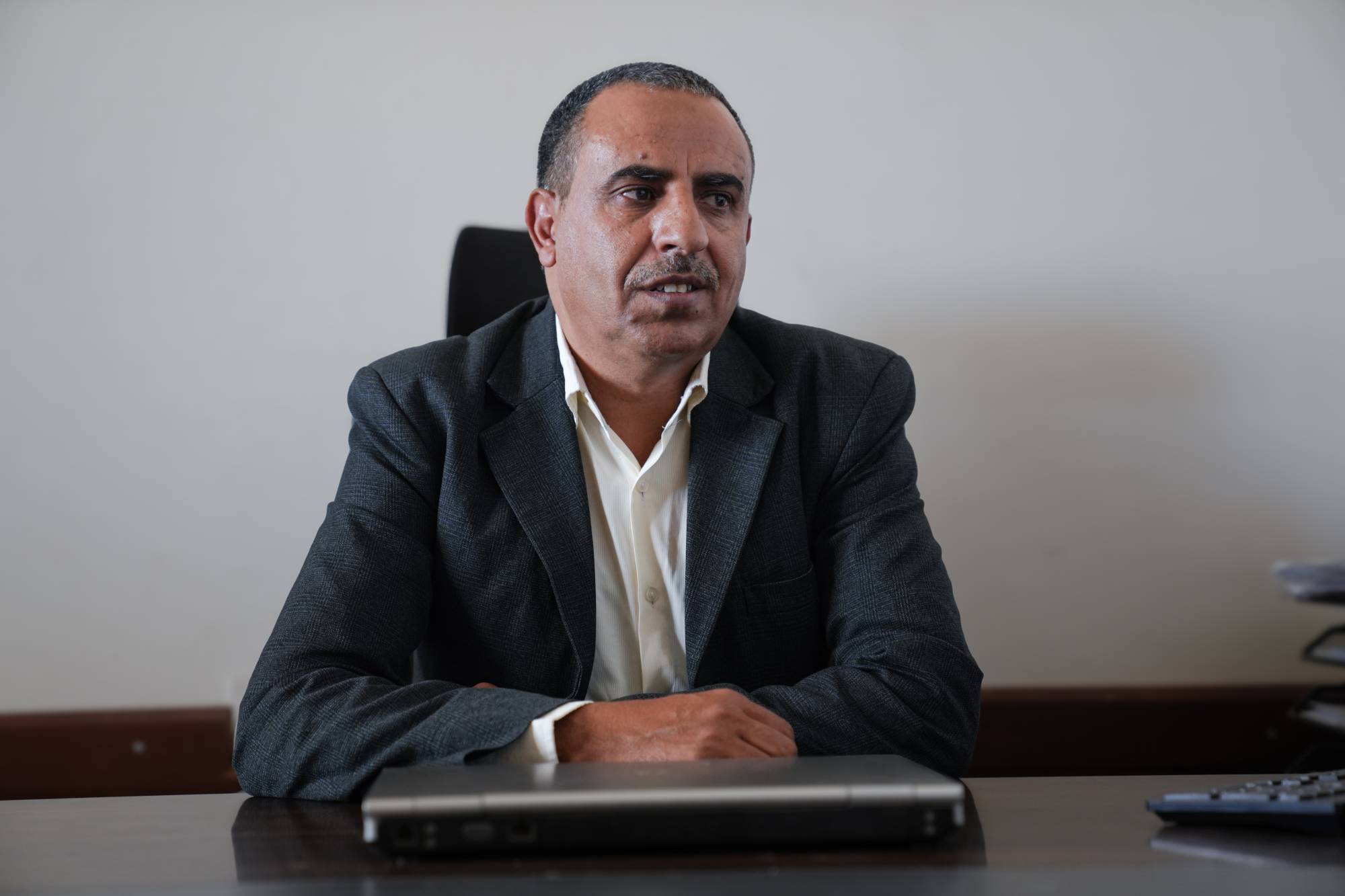
Dr. Mohammed al-Qairi, director of the gifted students’ complex in Marib (Asharq Al-Awsat)

In the current academic year, 213 students applied and only 90 were admitted, after the administration decided to reduce admissions to focus more closely on the quality of educational outcomes.

Qairi said the complex no longer serves Marib alone. It now represents all of Yemen, bringing together students who fled with their families from most Yemeni provinces and turning Marib into a wartime hub for the country’s scientific elite.

Applicants sit rigorous tests in Arabic, English, mathematics and science, as well as a special intelligence assessment. To remain at the complex, students must maintain an average of at least 80 percent.
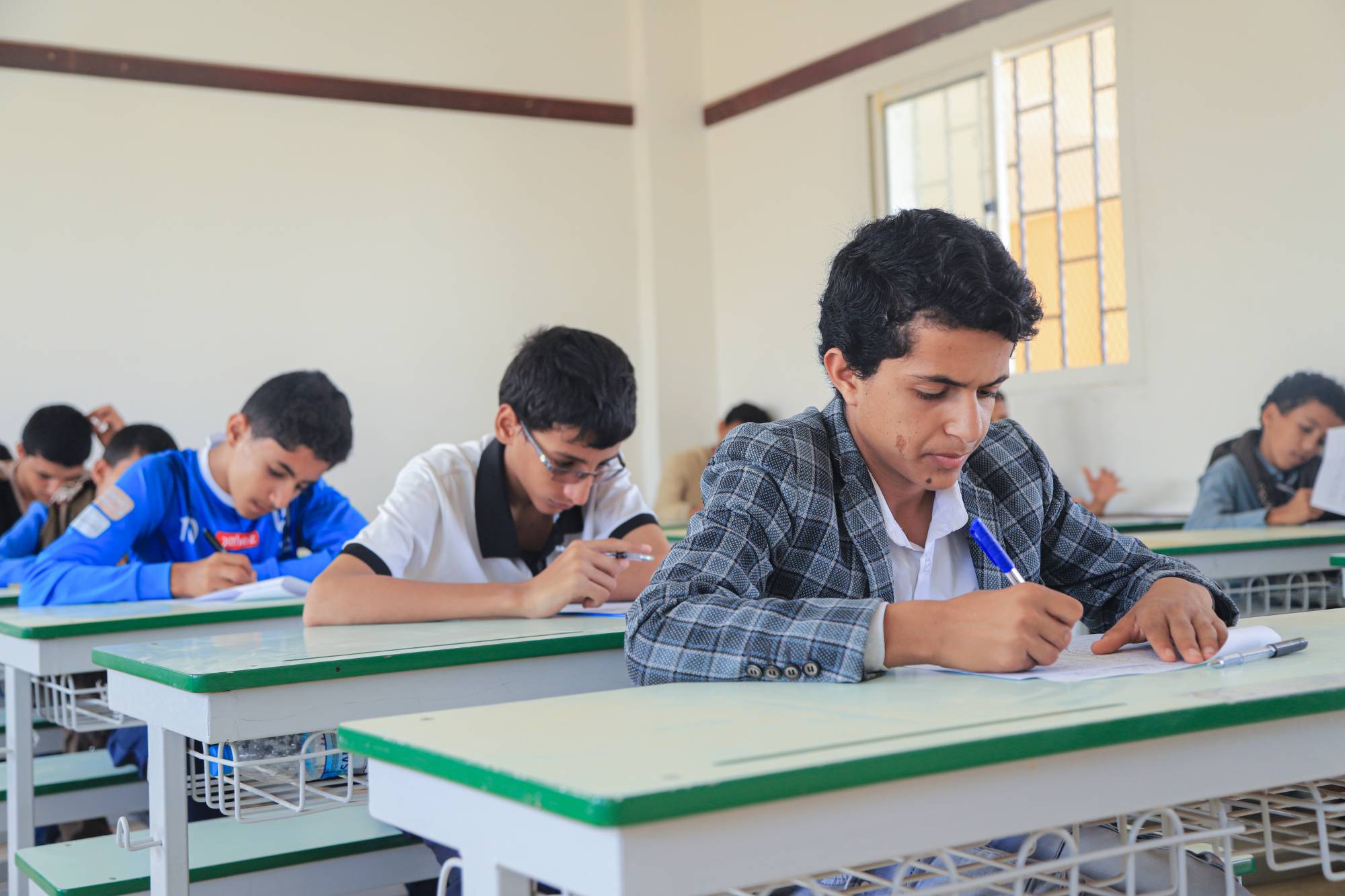
The complex's students achieved first and second place in Physics and Chemistry during the scientific forum in Marib (Asharq Al-Awsat)

Qairi said Marib had long been seen as distant from quality education projects, and few had imagined it would host a model school for top-performing students of this standard.

“We had a limited experience in the capital Sanaa, but establishing a complex for gifted students in Marib was not something anyone expected,” he said.

“What has been achieved here came thanks to the support of our brothers in the Kingdom of Saudi Arabia, whose role was not limited to implementing service projects, but extended to investing in people. The gifted students’ complex was one of the most important of these projects,” he added.
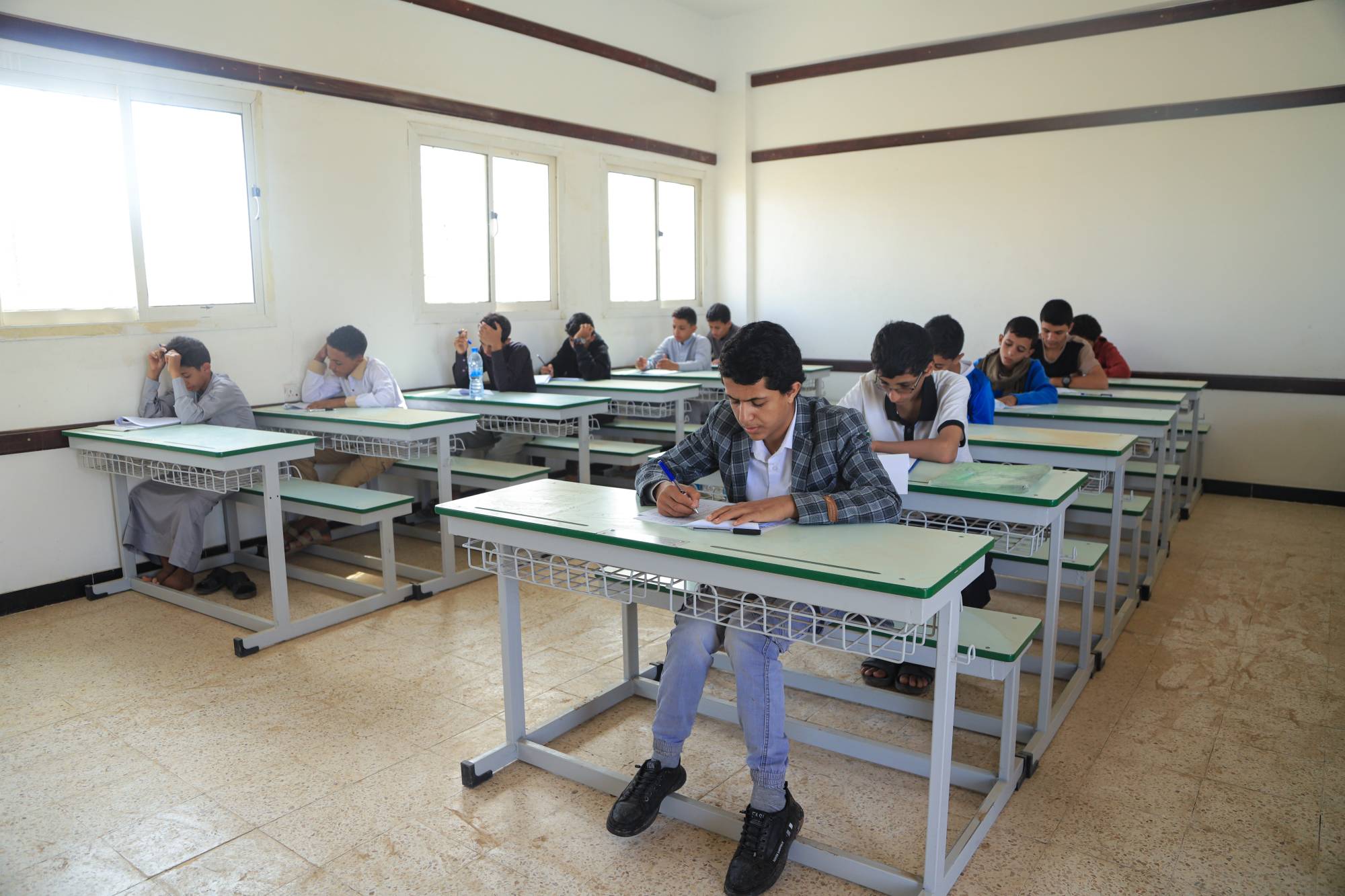
Applicants sit rigorous tests in Arabic, English, mathematics and science, as well as a special intelligence assessment (Asharq Al-Awsat)

The complex currently teaches students in the first and second years of secondary school. Preparations are underway to open the third secondary year next year, a step those in charge describe as the first real test of the experiment.

Their ambition is clear: to see their students rank among the top performers in the Republic of Yemen.

Although the project is still new, results have come quickly. Students from the complex won first place in physics at the Marib province level and second place in chemistry at the scientific forum, achievements that project officials see as an early sign of success.

“We are still at the beginning of the road, but we aspire for this complex to become a factory for the top students of the republic, and a model to be followed in the rest of the provinces,” Qairi said.
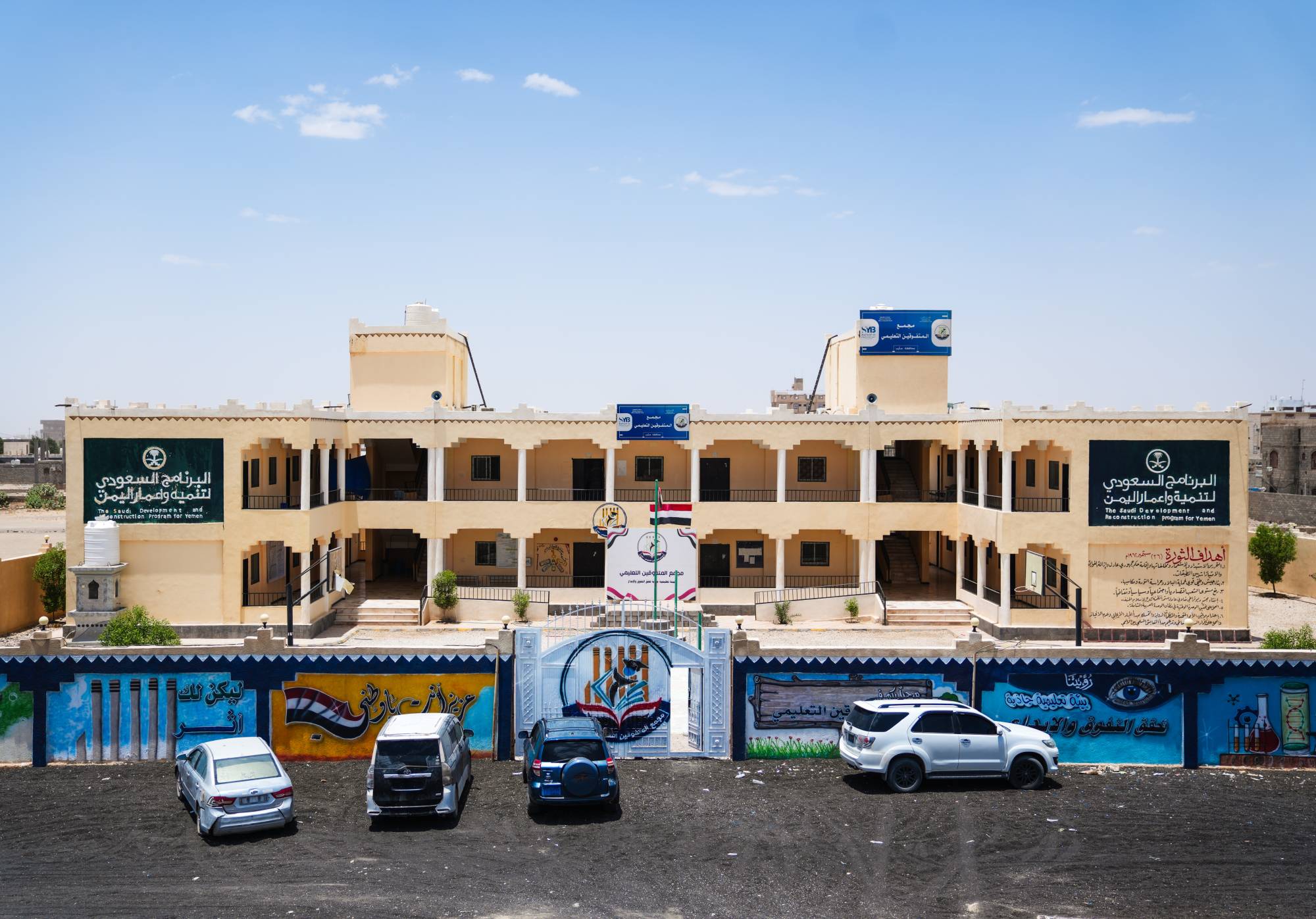
The complex marked a turning point in the journey of quality education in Marib Governorate (Asharq Al-Awsat)

The ambitions are not limited to male students. Qairi said plans would soon be announced to establish a similar complex for high-achieving female students, widening access to quality education.

He said the building is equipped with classrooms, laboratories, furniture and administrative equipment, but still needs supporting facilities, including shaded areas to protect students from the heat and the completion of a guard room.

Such needs, he said, do not diminish the value of the project, but would strengthen its educational environment.

“In a country exhausted by war, discovering a gifted student or preparing a researcher, doctor, or engineer, becomes another form of reconstruction,” he said.



Government Delay Revives Specter of ‘Two Administrations’ in Iraq’s Kurdistan Region

A photo published by the Patriotic Union of Kurdistan website showing Bafel Talabani meeting Masrour Barzani. 
TT

Government Delay Revives Specter of ‘Two Administrations’ in Iraq’s Kurdistan Region

A photo published by the Patriotic Union of Kurdistan website showing Bafel Talabani meeting Masrour Barzani. 

Nearly two years after elections for Iraq’s Kurdistan Region parliament, the winning Kurdish parties have yet to convene the legislature, elect a speaker, or form a new government. Had that process moved forward, it would have produced a fully empowered cabinet to replace Prime Minister Masrour Barzani’s administration, which has been serving in a caretaker capacity since before the October 2024 regional elections.

In May 2023, Iraq’s Federal Supreme Court, which rules on constitutional disputes, declared the extension of the Kurdistan parliament unconstitutional and ruled that Barzani’s cabinet should be considered a caretaker government.

With the political stalemate showing no sign of easing, a senior figure in the Patriotic Union of Kurdistan (PUK) warned that the region could drift toward “two officially separate administrations.”

Speaking to Asharq Al-Awsat on condition of anonymity, the official said Kurdistan already operates under a dual administrative system in practice, but warned that the arrangement could become formal if Kurdish parties remain unable to agree on a new government.

The Kurdistan Region effectively had two separate administrations from the mid-1990s until 2006, following armed conflict between the Kurdistan Democratic Party (KDP) and the PUK. The KDP governed from Erbil and Duhok, while the PUK administered Sulaymaniyah, with separate governments, security forces, and financial institutions.

The split officially ended in 2006 with the formation of a unified Kurdistan Regional Government after years of political negotiations following the 1998 Washington Agreement, although both parties retained strong influence in their traditional strongholds.

The PUK official blamed the KDP for delaying government formation, saying it “wants everything” and is unwilling to relinquish key government positions to other parties. The two dominant Kurdish parties have repeatedly traded blame for the prolonged political paralysis.

A senior KDP official previously told Asharq Al-Awsat that continued failure to form a government could ultimately force the region to hold fresh elections.

According to politicians and activists, the rival bloc — which includes the PUK and the New Generation Movement — is demanding the premiership and an equal share of senior government positions.

The PUK official acknowledged that a return to separate administrations would undermine the region’s future but said the party remains prepared to make concessions to preserve Kurdistan’s unity. He also pointed to a recent meeting between PUK leader Bafel Talabani and the party’s parliamentary bloc, during which Talabani stressed that the PUK is not obstructing the formation of a new cabinet and supports accelerating the process.

However, comments from other senior PUK figures have raised concerns. Yousif Goran, a member of the party’s political bureau and head of its research center, wrote on the party’s official website that the long-term viability of the Kurdistan Region “in its current form” is increasingly in doubt because of internal political dysfunction and shifting regional and international dynamics.

He added that the region has not experienced such deep political polarization since the administrations were unified in 2006 and argued that meaningful political change is now essential. He also warned that Iraqi Kurdistan no longer enjoys the level of international backing it received after 1991, when it effectively separated from Baghdad’s control.

Meanwhile, Kifah Mahmoud, media adviser to KDP leader Masoud Barzani, dismissed talk of separate administrations as “political suicide” that would endanger the region’s highest interests. He described such proposals as part of broader efforts to undermine the Kurdistan Region and its federal model, insisting that parliament is the proper forum for resolving political disputes.

Mahmoud also said early elections remain one option for breaking the deadlock, while arguing that the PUK’s alliance with the New Generation Movement should have been formed before, rather than after, the regional elections.


Lebanon: Aoun Urges Opponents of ‘Framework Agreement’ to Present an Alternative

An Israeli poses for a photograph beside Lebanese and Israeli flags displayed on a monument in the border town of Metula, near the Lebanese frontier (AP). 
TT

Lebanon: Aoun Urges Opponents of ‘Framework Agreement’ to Present an Alternative

An Israeli poses for a photograph beside Lebanese and Israeli flags displayed on a monument in the border town of Metula, near the Lebanese frontier (AP). 

Lebanon has stepped up contacts with US officials to press Israel to proceed with the withdrawals stipulated under the framework agreement signed by both sides in Washington late last week, amid what Lebanese officials describe as troubling indications that Israel may delay the process and take unilateral measures, including installing crossing gates in areas it continues to occupy in southern Lebanon.

Well-informed Lebanese sources told Asharq Al-Awsat that US Central Command (CENTCOM) commander Gen. Brad Cooper, during his recent visit to Beirut, agreed with Lebanese officials on the mechanisms that will govern the pilot areas from which Israel is expected to withdraw.

The sources said one of Cooper’s senior aides has remained in Lebanon to oversee implementation, adding that Beirut has received no notification of any delay or change to the understandings reached with Washington. They stressed that Lebanon remains committed to avoiding direct contact with Israel, with all communication continuing exclusively through US mediation.

Speaking on Wednesday, Lebanese President Joseph Aoun defended the framework agreed in Washington, saying it includes provisions covering an Israeli withdrawal, the return of displaced residents, the release of detainees, and the repatriation of Lebanese remains held by Israel. He emphasized that it is a framework, not a final agreement.

Aoun said Lebanon, as a sovereign state, had independently decided to negotiate on its own behalf without compromising its legal, political, or military principles, rejecting claims to the contrary. He also praised Parliament Speaker Nabih Berri for insisting on two “red lines”: preventing internal strife and protecting the army, saying all Lebanese agree on both principles.

The president called on critics of the negotiations and the framework to offer a viable alternative or present their views through state institutions. While describing political disagreement as legitimate, he warned against fueling divisions or portraying the framework to supporters as “an act of surrender or humiliation.”

Aoun also dismissed reports that Army Commander Gen. Rodolphe Haykal or other security chiefs — apart from the director general of General Security — were to be removed, saying such rumors are intended to undermine the armed forces and security institutions.

Addressing the concept of sovereignty, Aoun argued that genuine sovereignty lies in making independent national decisions. Lebanon’s decision to negotiate for itself, rather than allowing another country to negotiate on its behalf, had unsettled many, he underlined.

He reiterated that negotiations are preferable to war, arguing that past conflicts had failed to achieve lasting results. If opponents reject the framework, they should explain what alternative they propose, he said, noting that repeated requests for one have gone unanswered.

Responding to accusations that the framework legitimizes Israel’s occupation, Aoun stressed that every provision calls for extending Lebanese state authority across the country’s entire territory and for a complete Israeli withdrawal. He added that the framework also addresses the return of displaced people, detainees, Lebanese remains, and international support. While acknowledging that the document is not ideal, the president described it as the best achievable outcome within Lebanon’s national principles.

Aoun vowed to press ahead with the process “for the sake of the country,” arguing that Lebanon has a rare opportunity it should not squander. He noted that if critics prefer war, they should explain what military confrontation has achieved, noting that Lebanon regained the Lebanese section of Ghajar in 2000 only to lose it again in 2006, lost five border positions in 2023, and now has more than 66 towns under Israeli occupation.


Sudanese Army Shifts Battle Back to Darfur

Members of the army-backed Popular Resistance march in Omdurman in support of the military’s campaign in Darfur, Kordofan, and Blue Nile State (AFP). 
TT

Sudanese Army Shifts Battle Back to Darfur

Members of the army-backed Popular Resistance march in Omdurman in support of the military’s campaign in Darfur, Kordofan, and Blue Nile State (AFP). 

Fighting has intensified once again between the Sudanese army and the paramilitary Rapid Support Forces (RSF) across several fronts in the western Darfur region, as military tensions also mount around the city of El Obeid, the capital of North Kordofan state, where both sides are reinforcing their positions.

Over the past two days, the Sudanese army and allied Joint Forces, a coalition of armed groups, have launched operations in West and North Darfur targeting strategic border areas as part of an effort to expand their battlefield presence and open new fronts.

Local sources said army units are advancing toward El Geneina, the capital of West Darfur, under the cover of warplanes that have carried out airstrikes on military positions inside the city. The advance marks one of the army’s most significant military gains in Darfur in months as fighting continues to spread across Sudan.

The renewed clashes come as attention remains focused on El Obeid, where military escalation has intensified amid continued drone attacks and troop buildups despite international calls for a ceasefire and restraint.

Former Sudanese army Chief of Staff Hashim Abdel Muttalib told Asharq Al-Awsat that the army and its allies had carried out what he described as a successful maneuver that returned the fighting to Darfur, reflecting a new phase in military planning. He said the army had regained the initiative and predicted further developments in the region, adding that recent advances in western and northern Darfur were part of plans previously announced by Assistant Commander-in-Chief Lt. Gen. Yasser Al-Atta.

On Monday, the Joint Forces announced they had seized the border town of Kulbus in West Darfur near Chad and said they remained in control of Tina, Karnoi, and Ambro in North Darfur.

The Sudanese army also said it had carried out operations across Darfur, Kordofan, and Blue Nile, inflicting heavy losses on the RSF. The paramilitary group did not immediately comment.

The El Fasher Resistance Committees Coordination, a local civic group, said in a Facebook statement that army forces were approaching El Geneina under the cover of airstrikes targeting military sites inside the city.

The RSF captured Kulbus and nearby towns in October 2025. The town lies about 140 kilometers (87 miles) from El Geneina.

Military analyst Abdullah Mohammed told Asharq Al-Awsat that the renewed fighting in Darfur could prolong and widen the conflict, pushing the war into a more violent phase. He said one of the main objectives of military campaigns is to cut an opponent’s supply lines and deny access to strategic positions, suggesting the army’s operations in West Darfur are aimed at regaining control of the border with Chad.

By contrast, Mohammed Al-Nayer, spokesman for the Sudan Liberation Army Movement, said it was too early to conclude that the war had shifted decisively back to Darfur. He described the operation in Kulbus as a temporary incursion by army-allied Joint Forces that lasted only a few hours before withdrawing after large RSF reinforcements arrived.

Al-Nayer said the objective was to tie down RSF forces in attritional battles inside Darfur, limiting their ability to sustain operations in Kordofan and Blue Nile.