
Palestinians Face Uncertain Future as Gaza Marks 1,000 Days of War

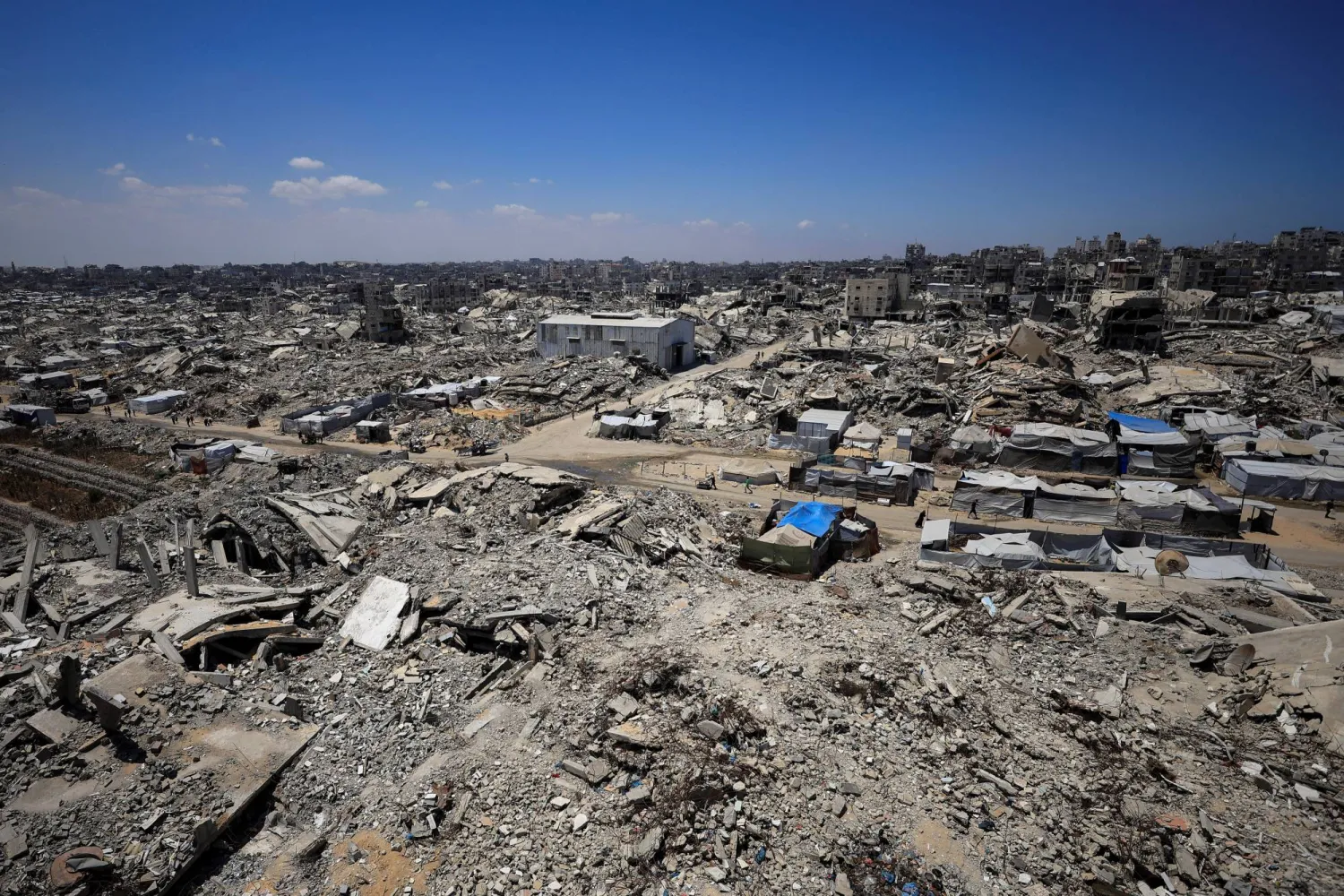
Palestinians make their way past the rubble of residential buildings destroyed during the Israeli offensive as displaced people shelter in tents, in Gaza City, June 15, 2026. REUTERS/Dawoud Abu Alkas
TT

Palestinians Face Uncertain Future as Gaza Marks 1,000 Days of War

Palestinians make their way past the rubble of residential buildings destroyed during the Israeli offensive as displaced people shelter in tents, in Gaza City, June 15, 2026. REUTERS/Dawoud Abu Alkas

It's the 1,000th day of war since a Hamas-led attack on Israel that sparked the war in Gaza. Other conflicts have emerged in the region, and fragile ceasefires show scars of persistent attacks. Both Israelis and Palestinians are weary of the strain.

The fate of over 2 million Palestinians in Gaza, largely displaced and living amid ruins, remains uncertain. Israeli forces controlled over half of the territory under the ceasefire that took effect on Oct. 10, but Israel's government has expanded that and says it aims to hold 70%, The Associated Press said.

Few people can get in or out. Further ceasefire steps, including Hamas' disarmament and the immense task of reconstruction, have stalled.

“Much more needs to be done so that even a semblance of normality can come back, and we are far, far away from this,” the International Committee of the Red Cross regional director, Nicolas von Arx, said this week.

Here’s a look at what has happened over the 1,000 days and what may lie ahead.

Palestinians are still being killed Israeli strikes have lessened considerably since the ceasefire took effect, but they continue almost daily.

Gaza’s Health Ministry counted 1,053 Palestinians dead since the ceasefire as of Tuesday, including over 350 women and children. In recent days, they included a teenage girl on her way to school and a mother with her 1-year-old daughter.

“Where is this ceasefire they keep talking about?! Shame on them,” one Palestinian, Wisal Abu Khater, said this week after another deadly strike, lashing out at Arabs who she said have failed Gaza's people and are busy watching World Cup games instead.

The United Nations on Wednesday warned that the Israeli expansion in Gaza increases deadly risks for civilians in “areas lacking clear demarcation on the ground."

The Health Ministry said over 3,400 people have been wounded since the ceasefire. The ministry is part of the Hamas-led government and maintains detailed casualty records seen as generally reliable by UN agencies and independent experts. It does not give a breakdown of civilians and militants but says women and children make up roughly half the dead.

Israel’s military says it targets Hamas and other militants, often asserting they were planning attacks, and accuses Hamas of using civilians as human shields.

The Oct. 7, 2023, Hamas-led attack on southern Israel killed about 1,200 people and took 251 hostage. All hostages or their remains have been freed or handed over, some of them recounting abuses. Israel's retaliation has killed a total of 73,066 Palestinians as of Tuesday, Gaza’s Health Ministry says.

The Trump-created Board of Peace has made little progress

The top diplomat overseeing the ceasefire, Nickolay Mladenov, has made it clear: The next steps in implementing the US-brokered deal are stalled over the difficult issue of Hamas disarming.

This has been a high-profile test of the Board of Peace created and led by US President Donald Trump. Launched with fanfare and billions of dollars in international pledges earlier this year with the sole aim of Gaza’s recovery from war, the board now says little publicly.

Hamas' disarmament would open the way for other steps, including new administration of Gaza and the deployment of an international stabilization force to assist with security and reconstruction efforts. While Hamas hasn’t outright rejected disarming, it has indicated it wants to hold on to some weapons and demanded further concessions from Israel.

A divided Israel faces an election Israelis over the past 1,000 days have been traumatized by the Oct. 7 attack — the deadliest in Israel's history — and other conflicts that followed: against the Iranian-backed Hezbollah militant group in Lebanon, the Iranian-backed Houthi group in Yemen and Iran itself.

Iran’s armed proxies had attacked Israel, saying they acted in solidarity with Palestinians. Prime Minister Benjamin Netanyahu pressed Trump to jointly attack Iran on Feb. 28. That revived the conflict in Lebanon, where Israeli forces have advanced to their deepest point in over a quarter-century

None of these fronts have completely calmed.

These conflicts and their toll — including mounting deaths for Israeli soldiers, continuing attacks along Israel's border with Lebanon and international allegations of genocide in Gaza, which Israel rejects — are weighing on Israelis and the national mood as Netanyahu seeks reelection this fall.

Netanyahu has projected confidence, but he faces a tough challenge.

Over 60% of Israelis think he shouldn't run again, according to a poll by The Israel Democracy Institute published last month. Anger has been high over the security failures before Oct. 7, the lack of a state commission of inquiry to investigate them and unpopular exemptions from military service granted to Netanyahu's ultra-Orthodox governing partners.

Gaza's in rubble as humanitarian aid still faces obstacles Palestinians in Gaza say they are near their limit. Sheltering in vast tent camps with basic if any utilities, or in the skeletons of bombed-out buildings, they continue to live amid the hum of Israeli drones and the daily threat of strikes.

The ceasefire was meant to bring a surge in humanitarian aid like medicines and fuel. Aid groups and others say that has not happened. All of Gaza’s border crossings remain tightly restricted, and at times they have closed completely. The UN last month said 17 hospitals are still not functional.

“Cumbersome" Israeli approvals and customs procedures limit crucial supplies, UN humanitarian chief Tom Fletcher said last month, adding that even prosthetic limbs have been affected by concerns about having a potential "dual” use as weapons.

Famine was declared in Gaza City last August, but food security experts later said there were “notable improvements” after the ceasefire. The Israeli military body responsible for coordinating civilian affairs in Gaza, COGAT, said Wednesday that “the quantities of food that are being brought in far exceed the nutritional needs of the Gazan civilian population.”

With Israeli forces expanding in Gaza, and Hamas militants accused of illegally executing Palestinians for alleged collaboration with Israel or crimes like looting, people say they are stressed and exhausted.

“We had everything before the war,” said Mahmoud Ashour, a 33-year-old shop owner in Khan Younis. “And now we’re just craving a bite to eat."


Asharq Al-Awsat Follows Sweeping Security Campaign Against Former Regime Remnants in Aleppo

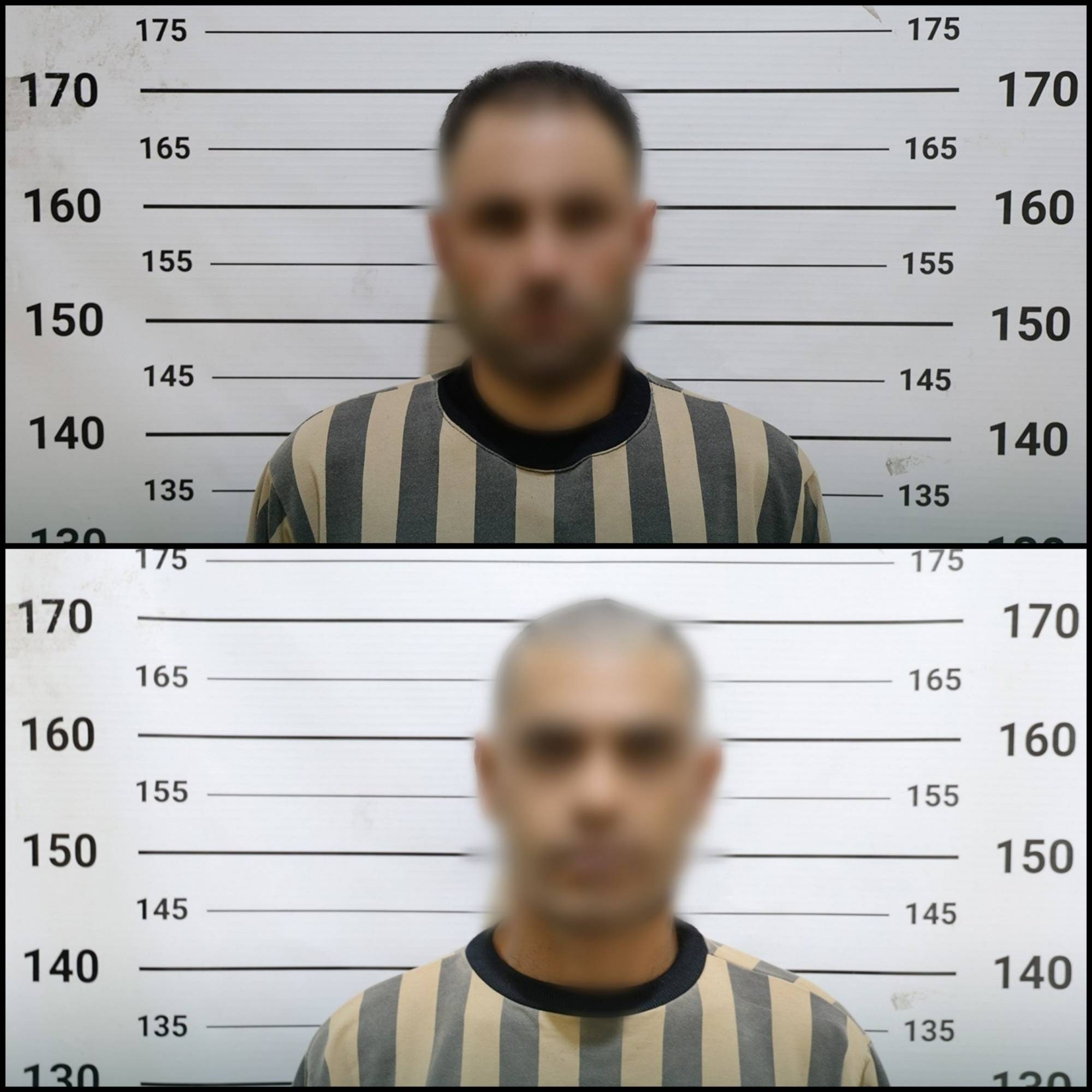
 A number of wanted people arrested during the security campaign in Aleppo (security sources) 
 A number of wanted people arrested during the security campaign in Aleppo (security sources) 
TT

Asharq Al-Awsat Follows Sweeping Security Campaign Against Former Regime Remnants in Aleppo

 A number of wanted people arrested during the security campaign in Aleppo (security sources) 
 A number of wanted people arrested during the security campaign in Aleppo (security sources) 

For a third consecutive day, Syrian security forces continued a sweeping campaign in Aleppo in the north, led by Internal Security forces and the Counterterrorism Department, targeting former leaders and members of the ousted regime of Bashar Assad accused of war crimes.

The operation is the second of its kind in Aleppo this year and has led to the arrest of several former regime officers, most notably Brig. Gen. Hamada Ali Murad, a military pilot, in the town of Nubl. It also targeted a network of former regime members and allied militia personnel.

Sources at Aleppo’s Internal Security Directorate told Asharq Al-Awsat that more than 50 people have been detained so far, including former officers, personnel and informants, in operations across the city and surrounding countryside conducted with the Counterterrorism Service.

Murad was arrested in Nubl over accusations that he was responsible for numerous violations against civilians and facilitated alleged illicit activities by members of his family, including looting homes, seizing properties and selling them.

The sources said the operation followed an extensive assessment of those targeted, surveillance of their activities and the gathering of evidence of their alleged involvement in widespread crimes and abuses against civilians. Accusations and individual complaints against them included war crimes, intimidation, extortion, robbery, and the exploitation and sale of property belonging to civilians and displaced people.

They noted that security operations in Aleppo and its countryside would continue until their objectives were achieved, namely arresting wanted former regime personnel and other suspects found to have been involved with terrorist groups or committed acts of violence against civilians.

A Pilot and Allegations Involving His Family

Murad, from Nubl, graduated with the 30th class of the Air Force Academy as a helicopter pilot. He previously served with the 63rd Helicopter Air Brigade at Taftanaz air base in the Idlib countryside, initially as the brigade’s security officer. He was later transferred to the Air Force Academy as an instructor and subsequently served as an officer at the Air Force Institute.

At the beginning of the Syrian uprising against the former regime, Murad was transferred to the Air Force Intelligence branch in Aleppo as a liaison officer. According to the sources, he coordinated between the branch and pilots, relaying and directing information concerning air sorties and identifying areas targeted for bombardment in Aleppo and its countryside.

After fighting in Aleppo subsided, Murad was appointed director of the Air Force Training Institute. Information cited by the sources also points to the alleged involvement of several members of his family in theft and the seizure of homes during the uprising, exploiting Murad’s position.

In a statement on its official channels, the Internal Security Directorate said a pilot — whom it did not name — had been detained in an operation conducted with the Counterterrorism Department targeting people it described as “wanted individuals involved in committing crimes against civilians.”

It said investigations were continuing “to uncover the full circumstances of his activities during the era of the ousted regime.”

Group Leaders and Members Detained

Sources at Aleppo’s Internal Security Directorate said the latest operation did not target “mere names,” but groups that had been affiliated with and fought alongside the former regime, with both group leaders and members detained.

According to the sources, security forces dismantled a group led by Khaled Hazari that had previously operated in Aleppo’s Old City, arresting Hazari, Firas Kako, Zakaria al-Ahmad and others. Another group led by Hamdi Mardali was also dismantled. Mardali was detained in the Bab al-Hadid neighborhood of the Old City, while Nour al-Din Alwan was also arrested.

Director of Public Relations at the Aleppo Media Directorate, Moataz Khattab, wrote on his personal account that several wanted individuals had been detained, including Hassan Raghed al-Ibrahim and his son, Raghed Hussein al-Ibrahim. The two had served with the Fourth Division’s 555th Regiment before moving to the former Republican Guard’s 155th Battalion.

The father is accused of informing on his brother, who later died in Saydnaya prison, as well as three of his cousins, and of seizing their property. He is also accused of illegally selling more than 40 properties belonging to people displaced from Aleppo during the uprising.

Khattab also named Nour Alwan, whom he described as involved in crimes against Syrians; Hossam al-Saad, a former fighter with Liwa al-Quds; and Khaled al-Shahoud, known as Abu Watan, whom he described as accused of working with Air Force Intelligence under the former regime.

Internal Security Responds to Appeal

The father of one detainee, Khaled Mohammed Abed, submitted an appeal to Internal Security authorities requesting his son’s release and a broader review of his security file and the accusations against him.

He maintained that his son had not been in areas controlled by the former regime throughout the years of the uprising and requested an urgent review because his son suffers from a heart condition.

The father asked security authorities to take whatever action they deemed appropriate after examining his son’s case and what he described as malicious accusations against him. He also requested that his son’s reputation be restored legally and in the media following what he described as defamation and abuse on social media.

Aleppo’s Internal Security Directorate confirmed to Asharq Al-Awsat that Khaled al-Abed had been released because of insufficient evidence and the weakness of the accusations against him. It said his health condition had also been taken into account, prompting authorities to expedite the investigation and his release.


Iraq’s Governing Coalition Sidesteps Arms Issue, Warns of Fallout from Iran Sanctions

The State Administration Coalition meets on Saturday. (INA)
TT

Iraq’s Governing Coalition Sidesteps Arms Issue, Warns of Fallout from Iran Sanctions

The State Administration Coalition meets on Saturday. (INA)

Iraq’s State Administration Coalition, which brings together Shiite, Sunni and Kurdish forces, sidestepped the issue of bringing weapons under state control while warning of the potential repercussions for Iraq from US sanctions on Iran.

The State Administration Coalition, the political umbrella formed in 2022, met late Saturday at the request of Prime Minister Ali al-Zaidi.

It called for filling vacant cabinet positions and advancing the oil and gas bill, while stressing the need to shield Iraq from the effects of US sanctions on “some countries,” an apparent reference to Iran, amid difficult financial conditions.

The statement said the country was going through circumstances that “cannot tolerate risk.”

The government remains incomplete, with nine ministerial posts still vacant, notably the defense and interior portfolios, because of disputes within the Sunni and Shiite camps.

The coalition said gatherers agreed to begin talks next week with the blocs entitled to the remaining portfolios, while maintaining coordination among coalition members and supporting state institutions in confronting current challenges.

They also discussed the draft oil and gas law ahead of its referral to parliament, as well as support for the private sector as a partner in development.

Al-Zaidi under pressure

Observers in Baghdad noted that while al-Zaidi is working to implement a government program endorsed by the coalition, political forces now appear chiefly concerned with completing the cabinet without giving sufficient attention to bringing weapons under state control or combating financial and administrative corruption.

An informed source told Asharq Al-Awsat that the omission of the weapons issue reflected the depth of political divisions within the State Administration Coalition, particularly among forces in the Shiite Coordination Framework, which holds a majority in parliament and within the coalition itself.

The source, who is close to Sunni political forces, said Kurdish and Sunni parties support measures taken by al-Zaidi, but their positions run up against the Shiite majority whenever issues are put to a vote inside the coalition.

It added that Coordination Framework forces publicly support the prime minister but are divided over several issues concerning the Shiite bloc itself, including bringing weapons under state control, deputy prime minister posts and the leadership of the Popular Mobilization Forces.

Fayyad dispute

While some Kurdish and Sunni forces have settled on their ministerial nominees through consensus, majority votes or political trade-offs, the main disputes among Shiite factions center on two issues.

The first is the position of Popular Mobilization Forces chief Faleh al-Fayyad, who is also a leading member of the Coordination Framework.

The second concerns deputy prime minister posts, with Asaib Ahl al-Haq, led by Qais al-Khazali, insisting on obtaining the Shiite share of the position.

The group argues that it has the right to the post because it is the second-largest Shiite parliamentary bloc after former Prime Minister Mohammed Shia al-Sudani’s Reconstruction and Development Coalition and Nouri al-Maliki’s State of Law Coalition.

Asaib Ahl al-Haq now openly opposes al-Fayyad remaining as PMF chief. Disputes within the Shiite camp have shifted to whether he should retire because of his age or be compensated with another position. Meanwhile, the PMF leadership would go to another figure, from Asaib Ahl al-Haq or elsewhere, provided that person is not from al-Maliki’s State of Law Coalition, which supports al-Fayyad remaining in the post.


Israeli ‘Gray Line’ Plan Would See Withdrawal from Most Occupied Lebanese Territory

An excavator digs as rescuers search for survivors amidst the rubble following an overnight Israeli airstrike on the village of Kfar Rumman in southern Lebanon on September 7, 2026. (AFP)
TT

Israeli ‘Gray Line’ Plan Would See Withdrawal from Most Occupied Lebanese Territory

An excavator digs as rescuers search for survivors amidst the rubble following an overnight Israeli airstrike on the village of Kfar Rumman in southern Lebanon on September 7, 2026. (AFP)

An Israeli plan has emerged for a withdrawal from most occupied Lebanese territory, with troops remaining two to four kilometers inside Lebanon along what has been dubbed the “gray line,” replacing the currently occupied “yellow line.”

The plan comes after the Israeli military announced it had established operational control over the Ali al-Taher ridge in South Lebanon and begun destroying an underground tunnel complex built by Hezbollah.

Israeli officials are now speaking of “sensitive days” ahead on the northern front that could send the region down one of two sharply different paths: Hezbollah, and possibly Iran, could retaliate and reignite the war, or they could absorb the blow, allowing the Israeli military to withdraw from the ridge and the “yellow line” and establish a new security belt along the “gray line.”

Under that scenario, Israel would retain control of Lebanese territory extending two to four kilometers from the international border.

Israeli military sources cited by public broadcaster Kan 11 said that after establishing “operational control” and clearing tunnels and other underground infrastructure on the Ali al-Taher ridge, the military was preparing to reduce and redeploy its forces, pulling back to a new “security belt” closer to the Israeli-Lebanese border.

‘Gray line’

According to Kan 11, Israeli security officials have held discussions in recent days on establishing a new security zone closer to the border from which the military would protect Israeli border communities.

Under the proposal, Israeli forces would withdraw from the current “yellow line,” which encompasses a broader security zone and in some areas extends north of the Litani River, including Beaufort Castle and the Ali al-Taher ridge. Troops would instead deploy closer to the border.

Israeli military positions would remain inside Lebanese territory and could serve as staging points for operations deeper into Lebanon if Hezbollah activity were detected.

The military is expected to ask the Israeli government to capitalize on the new situation by reaching a political agreement with Beirut that would establish understandings on Hezbollah’s disarmament.

Hezbollah Secretary-General Naim Qassem has said the group would hand its weapons only to the Lebanese state as part of practical steps demonstrating an Israeli withdrawal from Lebanese territory, insisting there could be no disarmament without a withdrawal.

Israel is setting specific conditions, including that the Lebanese Army take control of evacuated areas and commit to preventing Hezbollah from returning to its positions in the south. Israel also wants an agreed mechanism allowing it to monitor the process and intervene militarily to prevent Hezbollah’s return if the Lebanese Army fails to do so.

Kan 11 reported that the plan remains incomplete and has not yet been approved by Israel’s political leadership. Questions remain, particularly over transferring control to the Lebanese Army and negotiations between the two countries, but the plan envisages a substantial reduction in Israeli forces inside Lebanon.