


Asharq Al-Awsat Reveals Details of Executive Regulations for Non-Saudi Property Ownership

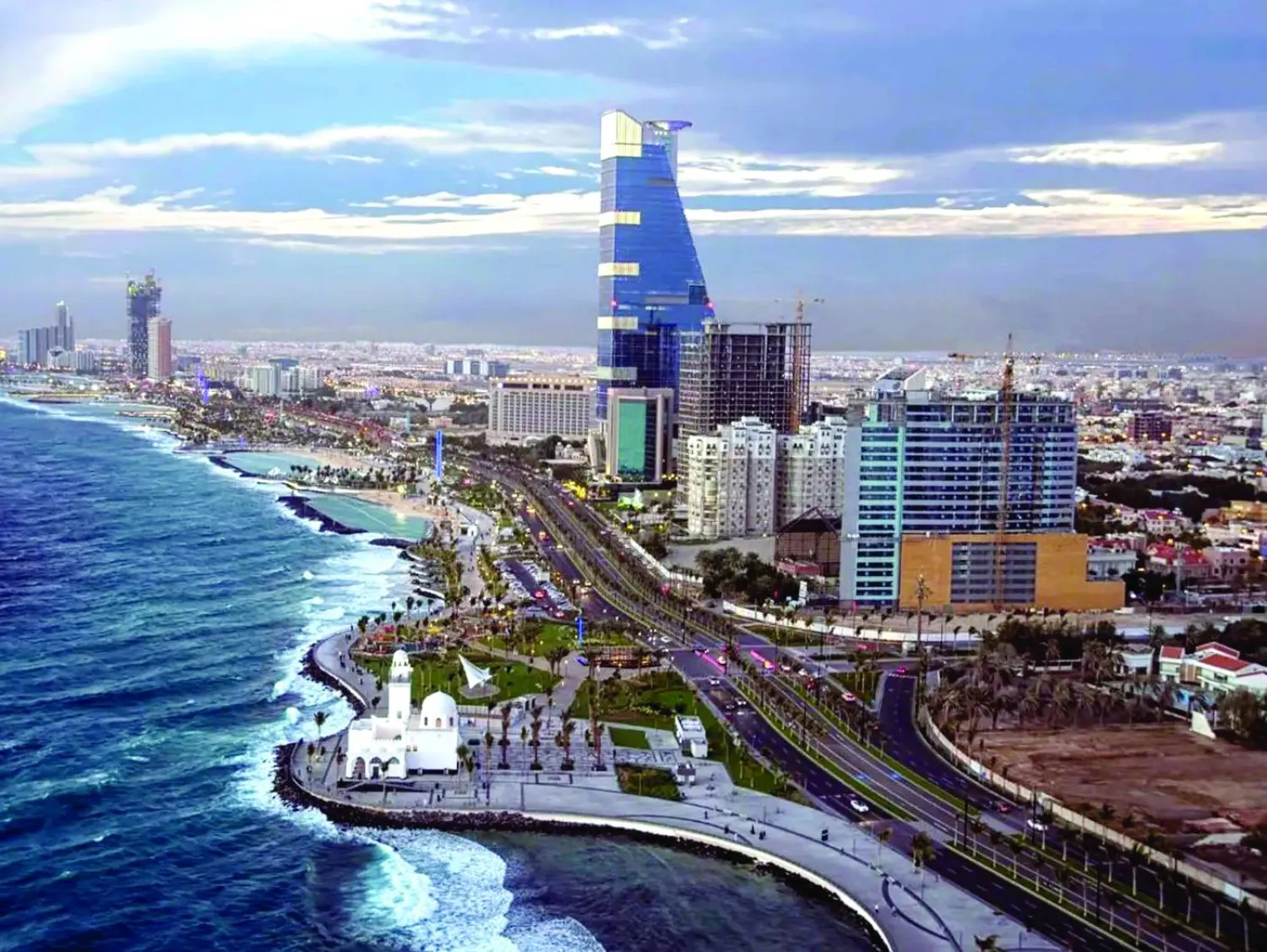
Jeddah Corniche in western Saudi Arabia and nearby neighborhoods (SPA)
TT

Asharq Al-Awsat Reveals Details of Executive Regulations for Non-Saudi Property Ownership

Jeddah Corniche in western Saudi Arabia and nearby neighborhoods (SPA)

The executive regulations governing non-Saudi ownership of real estate are beginning to take shape, placing transparency and financial integrity at the forefront in a major development aimed at strengthening real estate market governance and enhancing its investment appeal.

Asharq Al-Awsat has learned that the next phase will introduce a package of stringent measures, most notably the establishment of a unified electronic portal for real estate transactions linked to the national real estate registry. The regulations will also require full disclosure of the direct and indirect beneficial owners of foreign entities and mandate the use of electronic payment methods for all property-related financial transactions, enhancing the reliability of procedures while improving oversight and regulatory efficiency.

These regulatory measures, included in the executive regulations approved by the Council of Ministers chaired by the Custodian of the Two Holy Mosques, will introduce a new digital and regulatory framework by making electronic payments mandatory for all real estate transactions. The move is intended to strengthen governance and prevent undocumented financial flows in one of the Kingdom's most dynamic economic sectors.

During its meeting last week, the Council of Ministers approved the executive regulations for the Non-Saudi Real Estate Ownership Law and endorsed the geographical areas where non-Saudis will be permitted to own property.

Conditions for foreign individuals and companies

According to a copy of the regulations reviewed by Asharq Al-Awsat, the new rules set out strict requirements based on the type of applicant seeking to acquire property.

Non-resident individuals: The regulations require non-resident natural persons to first obtain a digital identity, open a local bank account, and secure a Saudi mobile number registered in their name and linked to their digital identity.

Foreign companies: Companies must register with the Ministry of Investment in accordance with the procedural guide and fully disclose their direct and indirect owners during registration. The regulations also require the company's legal representative to hold an identity issued under Saudi regulations, while the company must open a bank account in Saudi Arabia under its own name. Once all requirements are met, the ministry will issue the company a dedicated registration number.

Registered foreign companies must notify the Ministry of Investment within 15 days if any of the following occurs: a transfer of ownership amounting to 5 percent or more of the company, whether through one transaction or several; the existence of internal arrangements or regulations issued in the country of incorporation that restrict the company's independence or enable another party, inside or outside the company, to exercise significant influence over its decisions or actions, regardless of whether ownership changes.

Oversight of non-profit entities

For the non-profit sector, the regulations require foreign non-profit entities to register with the National Center for Non-Profit Sector Development before acquiring property or obtaining real rights over real estate, while also disclosing their direct and indirect controlling parties.

The regulations require the entity's legal representative to hold a Saudi identity and mandate the opening of a local bank account in the entity's name to obtain its official registration number. The rules also give such entities 15 days to notify the center of any material changes affecting the entity, individuals with influence over its decision-making, or any arrangements that limit its independence.

Registered foreign non-profit entities must also notify the center within 15 days of any material changes affecting the entity or individuals who influence its decisions, as well as any internal arrangements or regulations issued in the country of incorporation that restrict the entity's independence or enable another party, whether inside or outside the organization, to exercise significant influence over its decisions or actions.

Digitizing procedures

As part of Saudi Arabia's digital transformation and efforts to regulate financial flows, the regulations establish two main channels for property ownership procedures:

1. Unified electronic portal: The Real Estate General Authority will establish a dedicated electronic portal for foreign buyers and Saudi companies with foreign shareholders. The platform will be directly linked to the real estate registry, allowing users to submit ownership applications, conduct property transactions, and issue title deeds.

2. Digital payments only: Non-Saudi investors will be required to complete all property-related financial transactions through approved electronic payment methods in accordance with the Saudi Central Bank's (SAMA) Payments and Payment Services Law, with the aim of strengthening oversight and regulatory efficiency.

Rules for unlisted Saudi companies

The regulations allow Saudi companies that are not listed on the stock market and have foreign shareholders to own property or acquire real rights outside the geographical boundaries of Makkah and Madinah, provided the property is used solely for one of two purposes: carrying out their investment activities or providing housing for their employees.

Paragraph 2 of Article 3 states that unlisted companies may own property or acquire other real rights necessary for conducting their business activities and providing employee housing, whether inside or outside the designated geographical boundaries, in accordance with the regulations.

Companies must obtain approval from the Ministry of Investment before acquiring property or other real rights. They may also acquire property or real rights within the designated geographical areas, including Makkah and Madinah, without obtaining approval from the Ministry of Investment.

Transaction fee

The regulations set a fee of 2 percent of the value of a non-Saudi's disposal of real property rights, collected by the Real Estate General Authority. The unified rate applies to all categories of use, including residential and commercial properties, in the major cities and governorates of Riyadh, Makkah, Madinah, and Jeddah.

The regulations also provide for a zero-rate exemption in several cases, including property transactions carried out as part of estate distribution, transactions executed under a final court judgment or an order issued by a competent judicial authority, and ownership transfers resulting from expropriation for public benefit in accordance with applicable laws and regulations.

Gulf Markets Hold Firm Despite Tensions, US Rate Hike

A man watches stocks fall in the Kuwaiti market (AFP)
TT

Gulf Markets Hold Firm Despite Tensions, US Rate Hike

A man watches stocks fall in the Kuwaiti market (AFP)

Most Gulf stock markets advanced on Thursday despite mounting geopolitical tensions, as investors weighed the fallout from the US Federal Reserve’s first interest-rate hike in more than three years.

Most Gulf Cooperation Council central banks raised their key rates after the Fed lifted rates by 25 basis points on Wednesday.

Most Gulf currencies are pegged to the US dollar, except the Kuwaiti dinar, which is tied to a dollar-dominated currency basket. Gulf monetary policy therefore tends to track the Fed’s moves.

The Saudi Central Bank, known as SAMA, raised its repo and reverse repo rates by 25 basis points to 4.50% and 4.00%, respectively.

The Central Bank of the United Arab Emirates lifted the base rate on its overnight deposit facility by 25 basis points to 3.90%, while the Central Bank of Oman raised its repo rate by the same amount to 4.50%. Qatar Central Bank also increased its key rates by 25 basis points.

Subdued shipping through the Strait of Hormuz continued to weigh on investor sentiment, with attention turning to US President Donald Trump’s expected meeting with Gulf leaders next week.

Strong domestic fundamentals could continue to support the markets despite geopolitical pressures, said Milad Azar, a market analyst at XTB MENA.

Hopes that the Fed’s move would begin to rein in inflation helped calm a global bond selloff and curb a sharp recent rise in yields.

Mixed market performance

Saudi Arabia’s benchmark index surrendered early gains to close flat. Saudi National Bank fell 1.3%, while Saudi Aramco lost 0.5%.

Dubai’s main index gained 0.3%, helped by a 0.5% rise in Emaar Properties.

Abu Dhabi climbed 0.5%, while Qatar added 0.2%.

Bahrain fell 0.3% and Kuwait lost 0.4%, while Oman advanced 0.7%.

Outside the Gulf, Egypt’s blue-chip index rose 1.2%, supported by a 0.6% gain in Commercial International Bank.

Market closings:

Saudi Arabia: Flat at 10,778 points.

Abu Dhabi: Up 0.5% at 10,161 points.

Dubai: Up 0.3% at 5,987 points.

Qatar: Up 0.2% at 9,659 points.

Egypt: Up 1.2% at 55,499 points.

Bahrain: Down 0.3% at 1,924 points.

Oman: Up 0.7% at 7,603 points.

Kuwait: Down 0.4% at 9,244 points.


Syrian Energy Minister Revises Fuel Prices, Announces Subsidized Diesel

A fuel station in Damascus displays prices following a recent increase that sparked protests in several Syrian cities. (Reuters)
TT

Syrian Energy Minister Revises Fuel Prices, Announces Subsidized Diesel

A fuel station in Damascus displays prices following a recent increase that sparked protests in several Syrian cities. (Reuters)

Syrian Energy Minister Mohammed al-Bashir announced on Thursday that subsidized diesel would be sold at 115 Syrian pounds per liter, saying the ministry had approved practical measures to ease the burden on citizens while maintaining supplies.

Speaking at a news conference with Syrian Petroleum Company Chief Executive Youssef Qablawi on developments in the oil sector, Bashir said several grades of diesel would be offered at different prices and specifications to reduce living costs.

He also said several small local refineries would be restarted under the management and supervision of the Syrian Petroleum Company, with a combined capacity of up to 35,000 barrels of crude oil per day.

The Permanent Committee for Pricing Petroleum Products and Mineral Resources issued a temporary price list for petroleum products on Sunday. Syrians were caught off guard by the decision, which raised prices by between 25% and 40%, reflecting regional and global developments.

The decision triggered widespread public anger, particularly in eastern and northern Syria, where residents face complex economic, administrative, security and living conditions. Concerns have mounted that higher fuel prices will further increase already steep everyday expenses.

Bashir said at the news conference, carried by the state news agency SANA, that he met President Ahmed al-Sharaa on Wednesday to discuss practical alternatives.

They approved a proposal to offer several grades of diesel at different prices and specifications according to their intended use, rather than limiting the market to a single, high-grade and costly product, he said.

“We recognize that higher energy prices have a direct impact on people’s livelihoods and on the agricultural, production and service sectors,” Bashir said.

“Our responsibility is not limited to securing petroleum products. It also includes seeking solutions that ease the burden while maintaining continuity of supply.”

Bashir said subsidized diesel priced at 115 Syrian pounds per liter would be allocated primarily for heating, agriculture and groups eligible for government support.

Diesel meeting specifications suitable for transportation and for production and service-sector uses would be offered at 150 pounds per liter, he added.

The minister said crude petroleum products cost less than finished products. Syria spends about $140 million a month purchasing gas for power generation to meet the needs of its electricity plants, he said.

Syria imports 5.3 million cubic meters of gas per day from several countries, Bashir said, adding that the state treasury could not bear additional costs.

He said accumulated electricity-sector debt and losses from petroleum products had affected investment projects and capital spending. Unpaid electricity bills and illegal connections to the power grid had also increased losses at the Syrian Electricity Company.

“The state has adopted a policy of moving from a socialist economy to a free-market system, and we recognize the difficulties that this entails,” Bashir said.

“The return of the Baniyas refinery to operation and an increase in domestic production will have a positive effect on petroleum product prices.”

Qablawi said the Syrian Petroleum Company had begun preparing an implementation plan for the measures after discussing the relevant mechanisms with the Energy Ministry.

The company had spent the previous period studying the technical and operational details and working to remove potential obstacles to ensure smooth implementation, he said, according to Syria’s state-run Al-Ikhbariya television.

Qablawi said he hoped implementation would begin in the coming days, depending on technical and administrative readiness, adding that further details would be announced gradually.

Only designated fuel stations in the provinces would sell products processed by the small local refineries, he said.

The pricing committee issued its new temporary price list on Sept. 13.

The Energy Ministry later said the increase in Syrian petroleum product prices resulted from an exceptional rise in global procurement costs coinciding with a comprehensive overhaul of the Baniyas refinery.

It said the adjustment was temporary and intended to maintain supplies and ensure that petroleum products remained available on the domestic market.

Syria has been affected by higher global procurement costs for gasoline, diesel and fuel oil at a time when the Baniyas refinery is undergoing an overhaul expected to last about two months, temporarily increasing the country’s reliance on imported finished products.


Gold Rises as Traders Reassess Positions after Fed Rate Hike, Oil Rally Eases

Gold bracelets and necklaces displayed for sale at a gold shop in Istanbul's Grand Bazaar (AFP)
TT

Gold Rises as Traders Reassess Positions after Fed Rate Hike, Oil Rally Eases

Gold bracelets and necklaces displayed for sale at a gold shop in Istanbul's Grand Bazaar (AFP)

Gold climbed more than 1% on Thursday as a softer dollar and easing oil prices lent support, while investors assessed the Federal Reserve's latest rate hike and prospects for further policy tightening.

Spot gold was up 1.2% at $4,312.05 per ounce, as of 0848 GMT, after hitting a near six-week low on Wednesday. US gold futures for December delivery were down 0.8% ‌to $4,351, said Reuters.

"I suspect ‌the market may have gotten itself over ‌positioned on ⁠the expectation of ⁠a rate hike, as the likelihood grew. And now that it's happened, those positions are being squared out," said independent analyst Ross Norman.

Meanwhile, the dollar eased from a seven-week high, making greenback-priced bullion more affordable for holders of other currencies, while oil prices extended their fall on diminishing fears of supply disruptions.

The Fed raised ⁠rates on Wednesday and flagged more hikes ‌in the coming months, with new ‌chief Kevin Warsh joining a unanimous decision that effectively acknowledges the Trump administration's ‌inability so far to control inflation that policymakers worry could ‌worsen.

Although gold is considered an inflation hedge, a high interest rate environment reduces its appeal by boosting the attractiveness of interest-bearing assets.

The Bank of England looks set to keep rates on hold on Thursday, while ‌the Bank of Japan could raise interest rates to a 31-year high on Friday.

"The Fed ⁠is tightening ⁠policy at a time when inflation is being driven primarily by energy prices and supply shocks, meaning higher interest rates could weaken growth without quickly resolving all price pressures," said Linh Tran, Market Analyst at XS.com.

"This environment remains supportive of demand for gold as a hedge, particularly while geopolitical uncertainty persists."

Spot silver rose 1.4% to $63.83 per ounce, platinum firmed 1.2% to $1,772.19 and palladium climbed 1.8% to $1,291.89.
