


Sources Reveal to Asharq Al-Awsat How Hamas Identified Suspects in the Assassinations of Haddad and Ouda

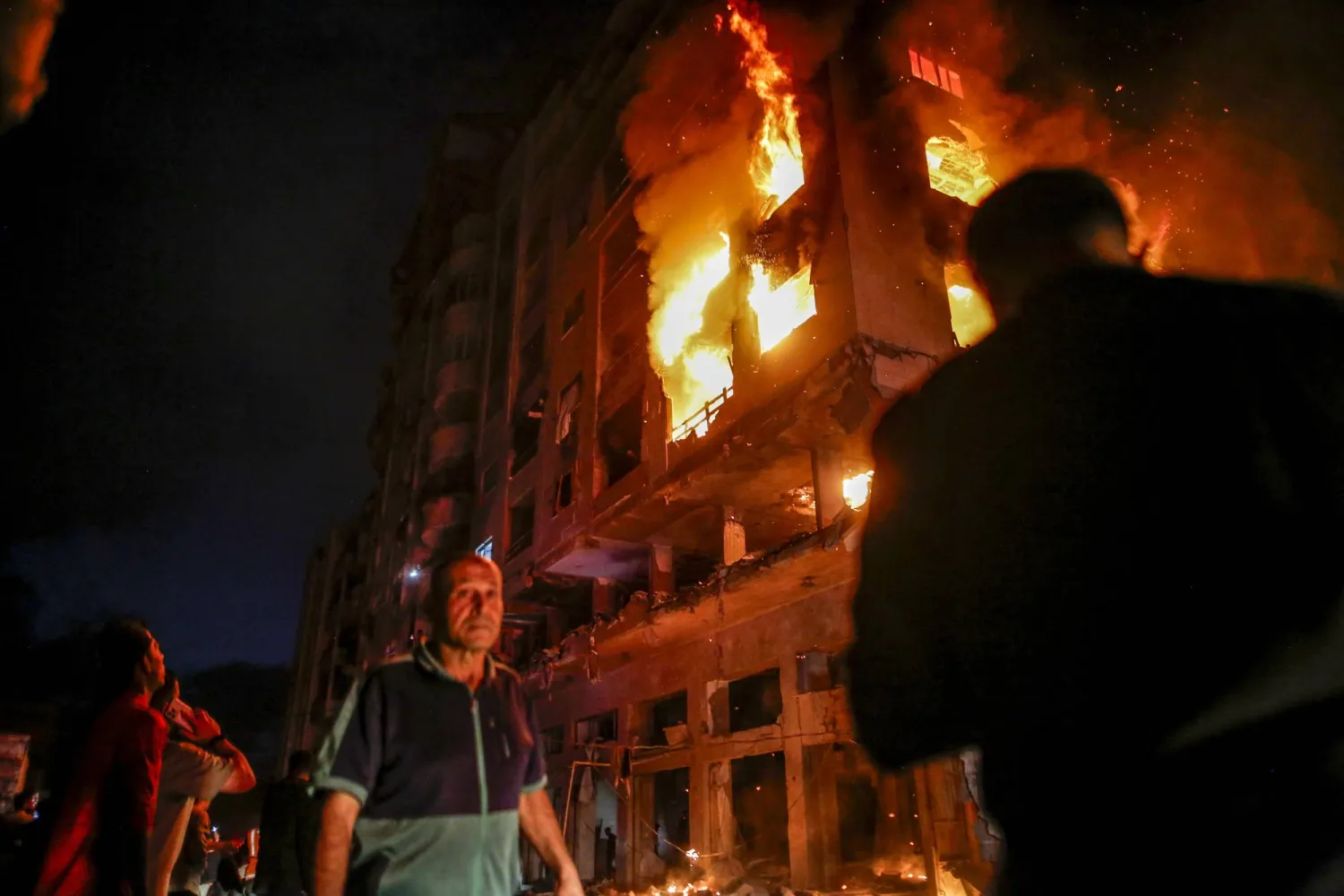
 Palestinians inspect the site of a destroyed building as smoke billows following an Israeli airstrike in the Al Rimal neighborhood of Gaza City, Gaza Strip, 15 May 2026 EPA/MOHAMMED SABER
Palestinians inspect the site of a destroyed building as smoke billows following an Israeli airstrike in the Al Rimal neighborhood of Gaza City, Gaza Strip, 15 May 2026 EPA/MOHAMMED SABER
TT

Sources Reveal to Asharq Al-Awsat How Hamas Identified Suspects in the Assassinations of Haddad and Ouda

 Palestinians inspect the site of a destroyed building as smoke billows following an Israeli airstrike in the Al Rimal neighborhood of Gaza City, Gaza Strip, 15 May 2026 EPA/MOHAMMED SABER
Palestinians inspect the site of a destroyed building as smoke billows following an Israeli airstrike in the Al Rimal neighborhood of Gaza City, Gaza Strip, 15 May 2026 EPA/MOHAMMED SABER

The announcement by security bodies affiliated with Hamas in Gaza that they had executed a Palestinian convicted of "collaborating" in the killing of the late Izz al-Din Haddad, former commander of the Izz al-Din al-Qassam Brigades, the movement's armed wing, drew attention inside and outside Gaza. The announcement came nearly two months after Israel killed Haddad and his successor, Mohammed Ouda, in separate strikes less than two weeks apart.

Hamas sources told Asharq Al-Awsat some details of how suspects in the killings of Haddad and Ouda were identified, revealing that the movement's security services are preparing to announce another execution involving a second individual accused of providing information that helped facilitate Ouda's assassination.

Although a ceasefire was supposed to have taken effect in Gaza last October, Israel has continued to kill members and senior figures of Hamas and the Qassam Brigades.

A statement issued Wednesday evening by the so-called "Resistance Security" in Gaza said it had executed an individual identified only by the initials "M.M." after completing what it described as all "revolutionary procedures." The statement said the man had been convicted of collaborating with Israeli intelligence and providing information that led to several attacks resulting in the deaths of Palestinians, including leaders of armed factions, most recently Haddad.

Two Hamas sources, one with field knowledge and the other from the movement's security apparatus, separately described to Asharq Al-Awsat how the suspect was apprehended.

Went to the Hospital to Confirm Victims' Identities

The field source said the suspect was arrested immediately after Haddad's assassination on May 15, 2026, at the scene of the attack after being observed communicating with an Israeli intelligence officer.

The security source, however, said the suspect was arrested the following day after he was spotted at the attack site. The source said he was also seen at Al-Shifa Hospital on the day of the strike to verify the identities of those killed and wounded. He allegedly returned to the hospital the next day, searching the buildings for resistance members who had been injured in earlier airstrikes.

Both sources claimed the suspect confessed immediately after his arrest to collaborating with Israeli intelligence, which they said had recruited him to monitor several locations linked to the Haddad family. They said he admitted moving between those locations and being present at the scene after Haddad, his wife and his daughter were targeted while traveling in a vehicle on Al-Wahda Street east of Gaza City.

According to the security source, the 47-year-old suspect also confessed to providing information that contributed to the killings of around 30 fighters from the Qassam Brigades and other armed factions, most of them from the Sheikh Radwan Battalion. The source added that surveillance equipment and devices used to track entry and exit routes were found in his possession when he was arrested at Al-Shifa Hospital.
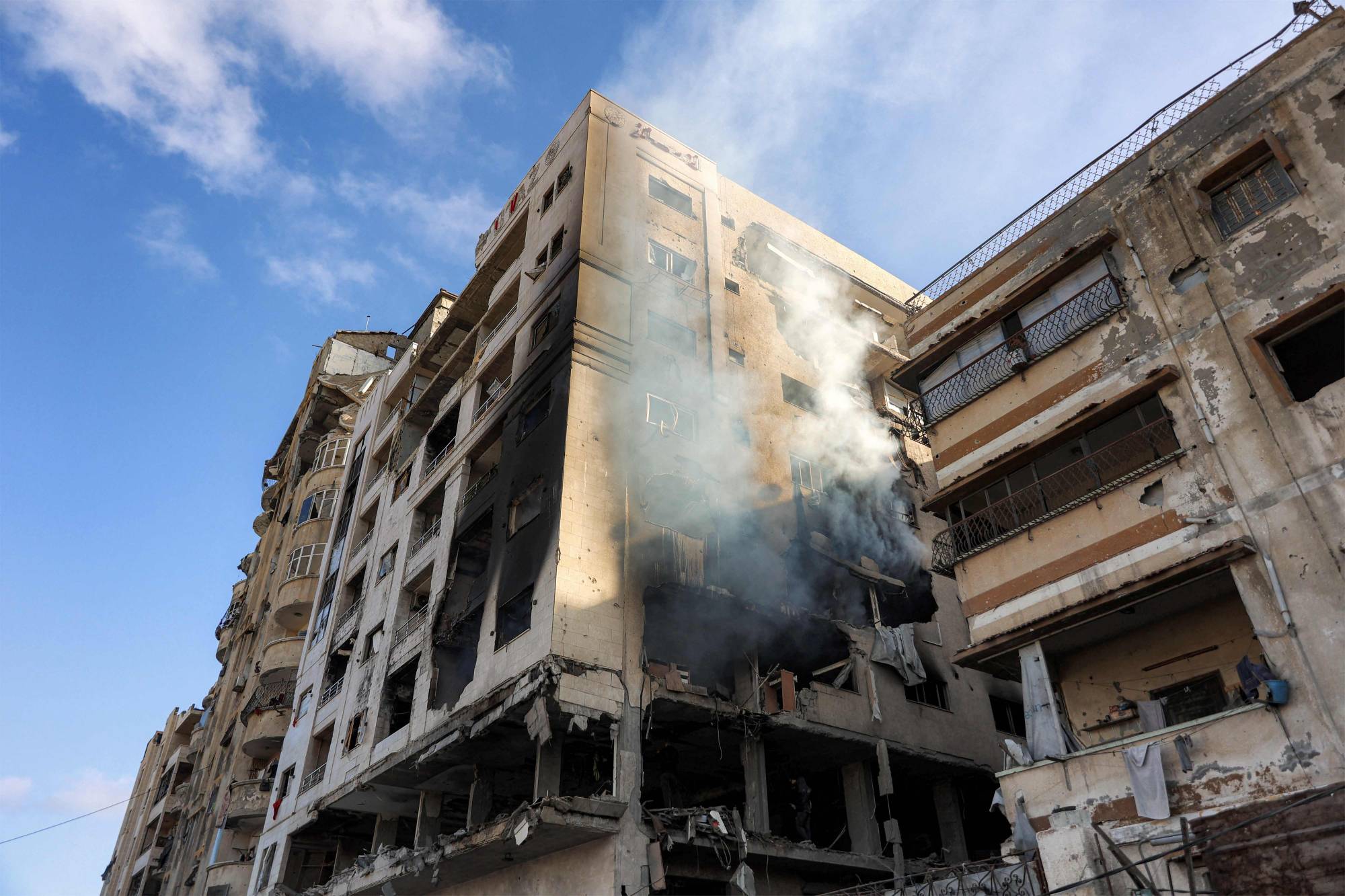
Smoke billows from a residential building that was hit by an Israeli strike the previous day in the Rimal neighbourhood of Gaza City on May 16, 2026.(Photo by Omar AL-QATTAA / AFP)

Intensive Surveillance of Mohammed Ouda's Wife

The two sources said Hamas is continuing efforts to track down and arrest individuals it describes as collaborators.

The security source said another suspect was arrested two days after the killing of Mohammed Ouda, who had assumed command of the Qassam Brigades' General Staff following Haddad's death before being killed by Israel on May 26.

The source said the detainee in the Ouda case was not a Hamas member and would also be executed after all "revolutionary procedures" had been completed.

According to sources in Gaza, the term "revolutionary procedures" refers to informing the suspect's family, the families of those allegedly killed as a result of information he provided, and the armed factions of the investigation's findings.

The Hamas security source said the suspect in Ouda's assassination admitted collaborating with Israeli intelligence and contributing to the killing of several prominent field operatives, in addition to his alleged role in Ouda's assassination. According to the source, the suspect's Shin Bet handler provided him with information related to the Haddad family's identity and whereabouts and specifically instructed him to monitor Ouda's wife.

The field source added that on the day Ouda was killed, his wife was under close surveillance by the alleged collaborator as she prepared the evening meal for the Day of Arafah fast. She reportedly left the family's newly rented apartment to prepare the meal while Ouda was on his way to join them. He later arrived and ate with his family before the apartment was struck, after the detained suspect allegedly confirmed to his handlers that they were all inside.

The source said Hamas security personnel had become suspicious of several individuals in the vicinity of the apartment targeted in the strike on Ouda and monitored the suspect for some time before arresting him.

According to the two sources, modern communication devices were seized from both suspects accused in the assassinations of Haddad and Ouda.

During the war and after the ceasefire, Hamas security services have executed several people convicted of collaborating with Israel in connection with a series of assassinations targeting senior leaders, including the late Qassam Brigades commander Mohammed Deif. According to the sources, some of those executed were Hamas members, although most were not affiliated with the movement.



Syria Arrests Five Former Officers over Assad-era Airstrikes

A man holds Syrian opposition flags as he celebrates after Syria's army command notified officers that President Bashar al-Assad's 24-year authoritarian rule has ended, in Aleppo, Syria December 8, 2024. REUTERS/Karam al-Masri
TT

Syria Arrests Five Former Officers over Assad-era Airstrikes

A man holds Syrian opposition flags as he celebrates after Syria's army command notified officers that President Bashar al-Assad's 24-year authoritarian rule has ended, in Aleppo, Syria December 8, 2024. REUTERS/Karam al-Masri

Syrian security forces said on Friday they had arrested five former air force officers accused of involvement in airstrikes on civilians during the rule of ousted President Bashar al-Assad.

Over more than 13 years of a civil war that claimed more than half a million lives, Syrian forces relentlessly shelled areas held by the opposition forces before Assad was toppled in December 2024 and the current government came to power.

The Internal Security Forces said in a statement that they carried out a series of operations that led to "the arrest of five senior Air Force officers and commanders from the former regime".

The force said investigations were ongoing ahead of the suspects' referral to the judiciary.

The detainees were involved "in planning, managing and carrying out aerial bombardment operations, and in using the air force, air bases and field command centers to conduct intensive combat airstrikes targeting populated areas", the statement said.

Since Assad was overthrown in December 2024, Syria's new authorities have arrested dozens of former security officials, while trials began in April.

Earlier this month Syrian authorities said they had arrested nine former pilots including three generals accused of taking part in lethal bombings of towns and villages under Assad's rule.

Syria sentenced Bashar al-Assad, his brother Maher al-Assad, and five other security officials to death in absentia in August for atrocities committed during the civil war.

The former president fled Syria as his government fell and is believed to be living in Russia.


‘Mechanism’ Defuses Lebanese-Israeli Military Standoff

Lebanese soldiers deploy on the outskirts of Deir Mimas in southern Lebanon after Israeli forces advanced toward the town, positioned tanks, and threw stun grenades (AFP)
TT

‘Mechanism’ Defuses Lebanese-Israeli Military Standoff

Lebanese soldiers deploy on the outskirts of Deir Mimas in southern Lebanon after Israeli forces advanced toward the town, positioned tanks, and threw stun grenades (AFP)

Tensions flared between the Lebanese army and Israeli forces on the outskirts of the southern Lebanese town of Deir Mimas on Friday after an Israeli unit advanced toward a newly established army position and demanded that it be evacuated.

Contacts through the ceasefire monitoring “mechanism” helped contain the situation, and the Israeli force later withdrew to its position at Tall al-Nahhas. The Lebanese army maintained its deployment in the area and reinforced its presence along the main road in Burj al-Muluk.

The confrontation began when an Israeli force advanced toward the outskirts of Deir Mimas, reaching an intersection near a position recently established by the Lebanese army to support local residents and secure their movement in the area, particularly during the olive harvest.

According to information from the scene, the Israeli force ordered Lebanese soldiers to dismantle the position and leave the area before throwing stun grenades nearby in an attempt to drive them away. The incident prompted a military alert but no exchange of fire.

The Lebanese army initially sent reinforcements to the newly established position, as contacts were initiated through the relevant military channels to prevent the confrontation from escalating.

Dispute over position’s location

The Israeli military said the Lebanese position was located inside what it calls the “Yellow Line,” an Israeli designation for the area that Lebanon does not recognize as an official border or demarcation line.

The military coordination group for Lebanon, operating under the “mechanism,” intervened to address the dispute. Intensive contacts sought to prevent the confrontation from developing into a direct clash between the two armies.

The Lebanese army temporarily evacuated the contested position during efforts to resolve the standoff, allowing the Israeli force to move into the area for a limited period.

The Israeli troops withdrew about 90 minutes later from the position near the entrance to Deir Mimas and returned to their post at Tall al-Nahhas.

Lebanon’s state-run National News Agency said Israeli troops searched several homes in Deir Mimas during their presence in the area.

The Lebanese army, meanwhile, maintained its deployment, with units remaining stationed along the main road in Burj al-Muluk as they monitored Israeli movements and other developments along the route.

The confrontation was among the most significant recent incidents of direct contact between the Lebanese army and Israeli forces. It centered on a dispute over the location of an army position and occurred as discussions continued through the “mechanism” over conditions in southern Lebanon and the Lebanese army’s deployment there.

Israeli movements on several fronts

The tensions in Deir Mimas coincided with Israeli movements elsewhere in southern Lebanon. Israeli military vehicles advanced from the direction of the town of al-Tiri toward the outskirts of Hadatha, near Haris in the Bint Jbeil district.

Israeli artillery shelling also resumed on Friday morning against the towns of al-Mansouri and Majdal Zoun following heavy bombardment before and after midnight. Explosions were heard in the city of Tyre and several surrounding towns and villages.

Several shells struck Wadi al-Azziyeh, while artillery fire also hit Wadi Nahle on the outskirts of Shaqra.

Israeli forces fired illumination flares over the towns of Hadatha and Aita al-Jabal in the Bint Jbeil district overnight. Explosions were heard at dawn across large parts of southern Lebanon, reaching the city of Sidon and its surrounding areas.

The escalation comes as political and military contacts continue over the implementation of arrangements for southern Lebanon. Confrontations on the ground have repeatedly occurred at several locations amid continuing Israeli movements and military operations along the border region and inside a number of southern towns.


Gaza ‘Armed Gangs’ Abduct Two Palestinians, Including Faction Operative

Young Palestinians amid the rubble of buildings destroyed during the war at Jabalia refugee camp in the northern Gaza Strip (File photo: Reuters)
TT

Gaza ‘Armed Gangs’ Abduct Two Palestinians, Including Faction Operative

Young Palestinians amid the rubble of buildings destroyed during the war at Jabalia refugee camp in the northern Gaza Strip (File photo: Reuters)

Armed gangs in the Gaza Strip, operating mainly in Israeli-controlled areas, abducted two Palestinians from their home at dawn on Thursday after a force infiltrated an area east of the Bureij refugee camp in central Gaza.

The abductees, cousins from the Issa family, prompted their relatives to appeal to the Red Cross to contact Israel and try to determine their fate. Armed gangs that abduct Palestinians in Gaza are known to hand them over to Israel, as has happened in several cases.

Some were later released after it was established that they had no links to any Palestinian faction.

Torture and abduction

Field sources told Asharq Al-Awsat that one of the abductees belonged to a prominent Palestinian faction and was seized from his home along with his cousin, more than 800 meters (875 yards) from the boundary of the “Yellow Line.”

Bloodstains were found at the site of their abduction, suggesting that the two men may have been wounded or subjected to interrogation and torture, the sources said. They added that the operation took place in an area considered relatively vulnerable to security breaches.

Some of the home’s contents were stolen, the sources said, adding that the operation was carried out under the cover of Israeli drones that fired in various directions across the area.

The sources said armed gangs have recently stepped up efforts to abduct members of Palestinian factions living about 1 km (0.6 mile) from the Yellow Line and hand them over to Israel.

They said the operations were managed entirely by Israeli intelligence officers overseeing the gangs’ areas of operation, primarily in an effort to create chaos and demonstrate the gangs’ ability to advance Israeli security objectives.

One source said Palestinian factions regularly issue warnings to their members about the gangs’ operations.

Other attempts

Another source told Asharq Al-Awsat that an attempt was made about a week ago to abduct a member of a different faction in the Nuseirat refugee camp in central Gaza.

The man escaped but sustained moderate injuries while fleeing from the vehicle in which he had been held, the source said.

On Sept. 4, the Al-Quds Brigades, the armed wing of Palestinian Islamic Jihad, said members of the armed gangs had attempted to abduct one of its fighters on Al-Jumayza Street in the town of Al-Qarara, northeast of Khan Younis.

The group said the gunmen had advanced into the area with support from Israeli drones before they were detected, triggering clashes that killed and wounded several members of the gang, according to a statement issued at the time.

The Al-Quds Brigades said Israeli drones intervened to help the force withdraw, while members of the force shot and killed an Al-Quds Brigades fighter, Fadi al-Abadla, and left him at the scene.

A field source told Asharq Al-Awsat at the time that Abadla arrived at Nasser Medical Complex with his hands bound. This suggested that his abduction had nearly succeeded and that he may have been interrogated before the attempted abduction and subsequently executed, the source said.

Continued violations

Israeli forces continued their violations of the ceasefire in the Gaza Strip.

A Palestinian was reported to have died from wounds sustained on Thursday evening when Israeli military vehicles opened fire north of the Nuseirat refugee camp in central Gaza.

Five Palestinians, including two women, were wounded on Friday in similar Israeli fire east of Bureij and Deir al-Balah in central Gaza. A woman was critically wounded in Israeli artillery shelling east of Jabalia al-Balad in northern Gaza, while two Palestinians were wounded by fire from Israeli military vehicles south of Khan Younis.

Israeli forces also intensified artillery shelling as they carried out demolitions in several parts of the Gaza Strip.