
Fate of Gaza Strip Eclipsed by Middle East War

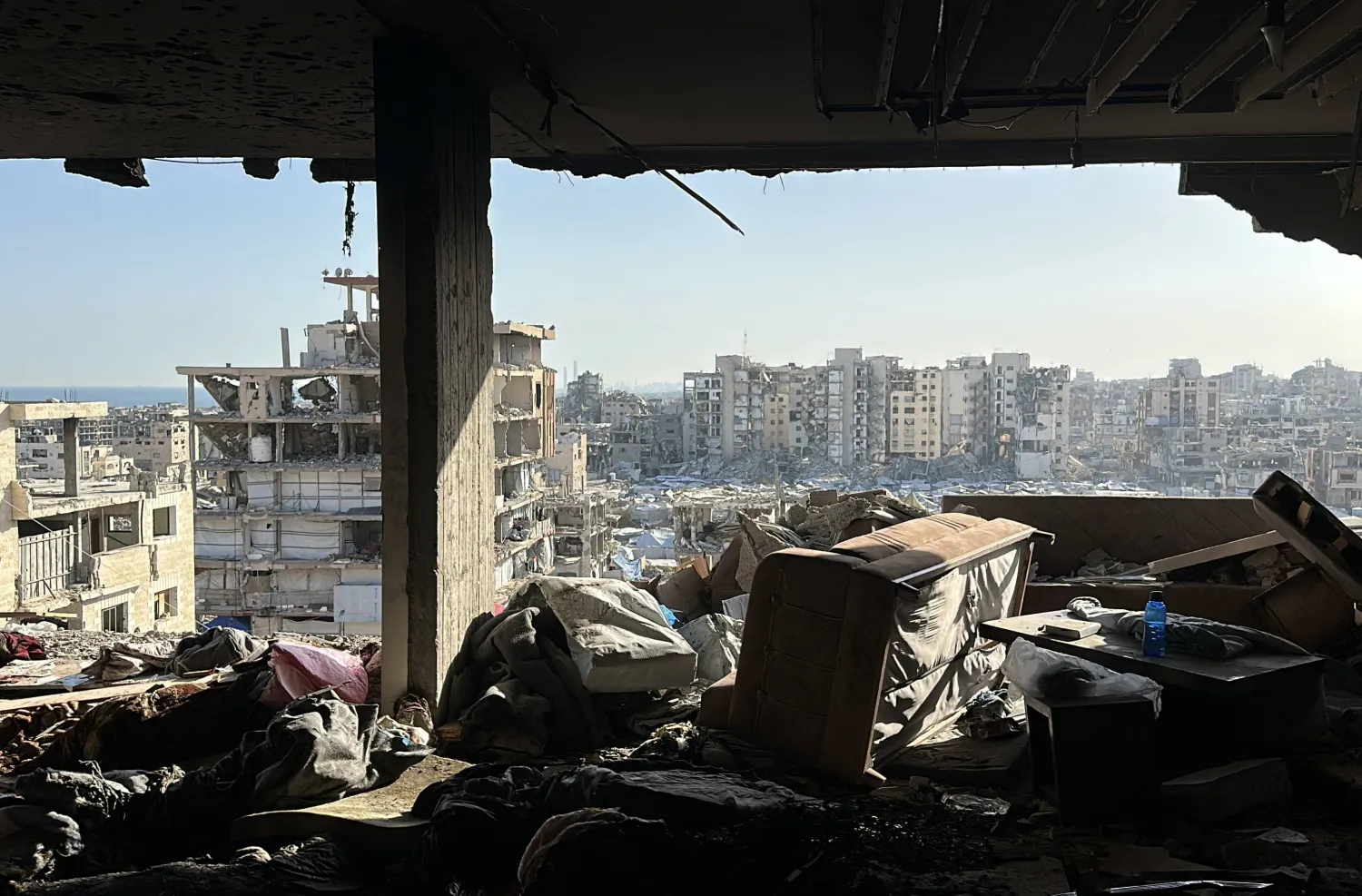
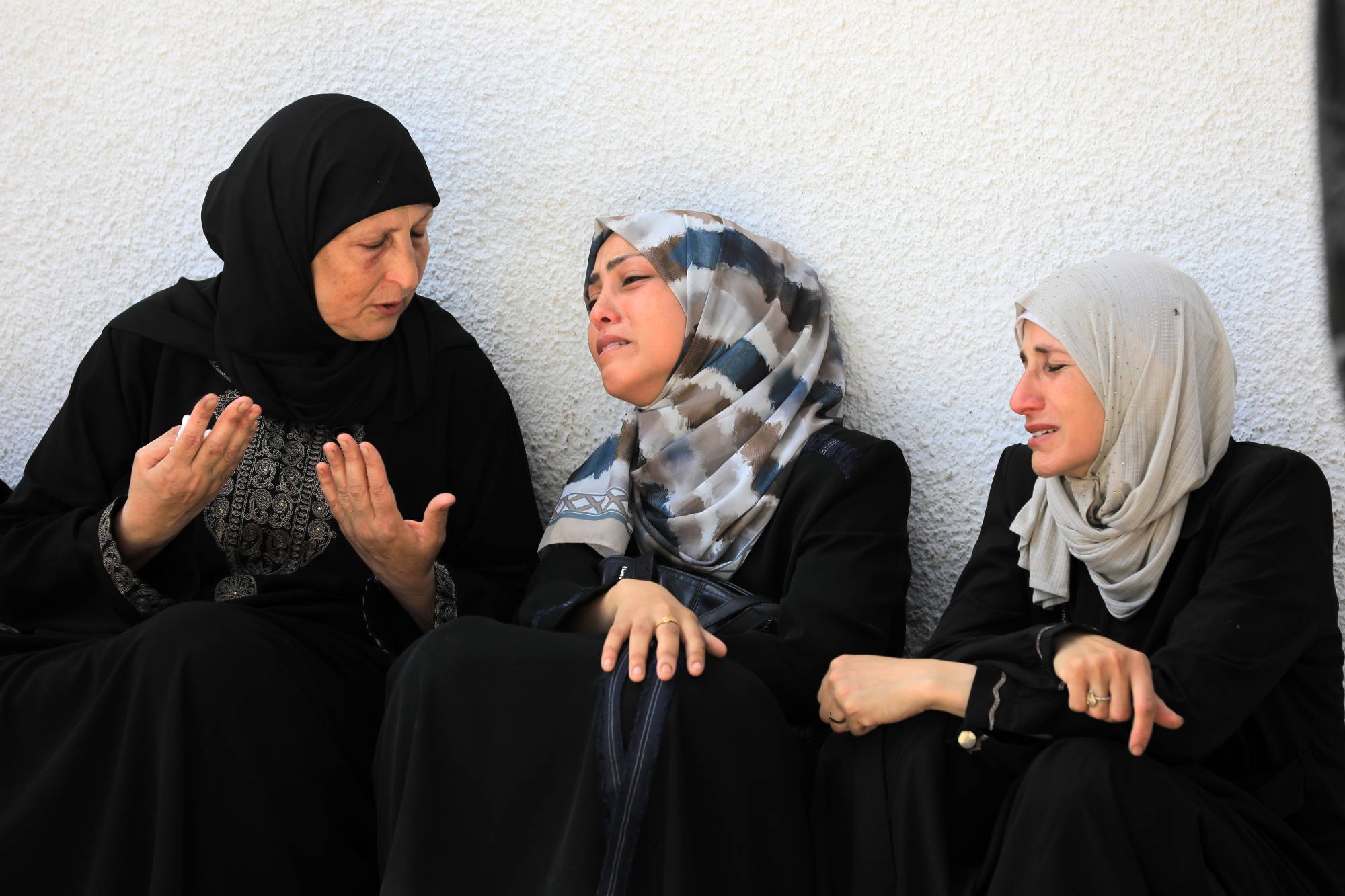
04 June 2026, Palestinian Territories, Gaza: Palestinians inspect a damaged house following an Israeli airstrike that targeted an apartment belonging to the Labad family in Gaza City. Photo: Hadi Daoud/APA Images via ZUMA Press Wire/dpa
TT

Fate of Gaza Strip Eclipsed by Middle East War

04 June 2026, Palestinian Territories, Gaza: Palestinians inspect a damaged house following an Israeli airstrike that targeted an apartment belonging to the Labad family in Gaza City. Photo: Hadi Daoud/APA Images via ZUMA Press Wire/dpa

The Gaza war was the spark that touched off years of Middle East conflict culminating in the US-Israeli war with Iran, but as Washington and Tehran wrangle over terms for peace, the devastated territory's fate seems largely out of mind.

"Ever since the United States went to war with Iran, the whole world has forgotten Gaza and its tragedy. We no longer have anyone standing by us," Palestinian Ahmed Jamali, 53, told AFP from the displacement camp in Gaza where he lives.

"We are weak and oppressed, and Israel is doing whatever it wants: killing, destroying and occupying Gaza, while no one in the world lifts a finger."

The apparent inattention paid to the Palestinian territory is all the more striking because it sits at the heart of the chain of events that plunged the region into its most dangerous confrontation in decades.
07 June 2026, Palestinian Territories, Gaza: Mourners gather to bid farewell to several Palestinians, including a child and his father, at al-Shifa Hospital in Gaza City. Photo: Bilal Osama/APA Images via ZUMA Press Wire/dpa

Hamas's unprecedented October 7, 2023 attack on Israel triggered a devastating military response in Gaza, drawing in Tehran-backed allies like Hezbollah in Lebanon and Yemen's Houthis -- and eventually Iran itself.

What began as a local war between Israel and Hamas evolved into a regional conflict and, in turn, a direct confrontation between arch-foes Tehran and Washington.

More than two-and-a-half years later, Gaza remains mired in a severe humanitarian crisis, and despite a fragile ceasefire reached between Israel and Hamas in October 2025, efforts to bring the war to a definitive end have stalled for months.

Although Iranian officials initially spoke of an agreement to end the Middle East war that would encompass the entire region, the preliminary text endorsed by Tehran and Washington last month contains no mention of Gaza.

For analysts, that shows a shift in regional priorities.

"It reflects Hamas's declining strategic value in Iran's eyes," Hugh Lovatt of the European Council on Foreign Relations, told AFP.

Iran has long armed and financed Hamas as part of its "axis of resistance" -- an array of regional forces opposed to Israel and the US -- but the October 2023 attack appears to have fundamentally altered that relationship.

"Iranians do not really care about Gaza. Hamas was an ally, not an Iranian tool," said Israeli military expert Eado Hecht.

"It betrayed them. They did not want war in autumn 2023, it was too early for them."
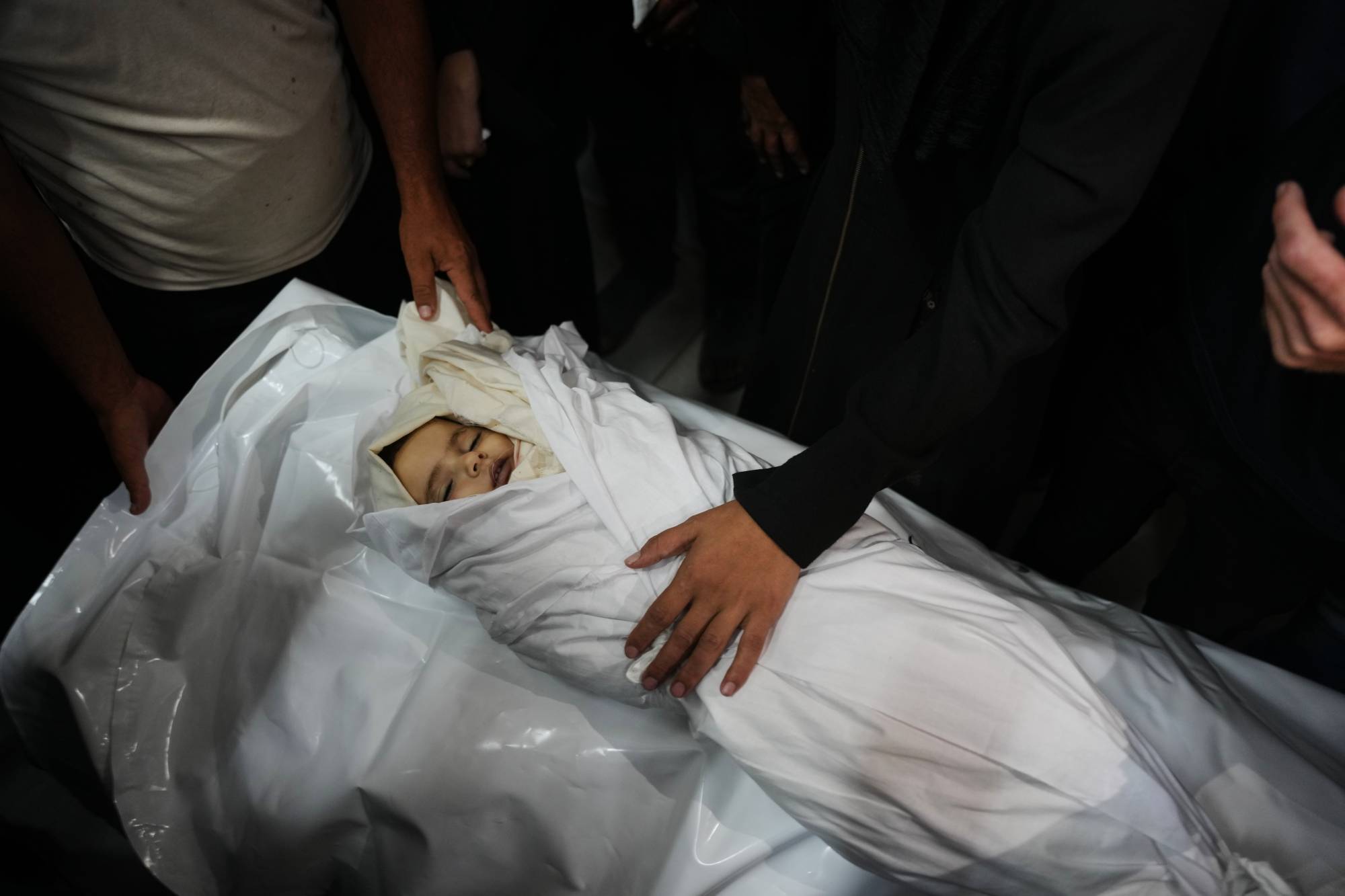
Palestinians mourn the bodies of Diana Abu Daraz, and her infant daughter, Sewar, who were killed in an Israeli airstrike that struck a tent camp for displaced Palestinians in Khan Younis, Gaza Strip, Tuesday, June 30, 2026. (AP Photo/Abdel Kareem Hana)

Michael Milshtein, another Israeli military analyst, argued that Tehran's calculations have shifted elsewhere.

"It places greater value on preserving Hezbollah as a pillar of the regional balance," he said.

The diplomatic focus has also shifted, with a growing sense of international fatigue over Gaza.

"Gaza is gradually fading from international attention," said Lovatt.

One diplomat involved in negotiations described a widespread belief among governments that "most actors see the issue as insoluble in the short to medium term".

Another veteran diplomat based in Jerusalem told AFP that Gaza's absence from the discussions reflected political paralysis rather than progress.

"Gaza is absent from the agreement not because the war is over, but because no credible political framework exists for the day after," he said.

Israel insists that Hamas must fully disarm before any political transition can begin, while Hamas refuses to surrender its weapons without guarantees that an alternative Palestinian governing authority will replace it.

Neither an international stabilization force nor a credible transitional mechanism has emerged in the months since the ceasefire took effect, both of which were called for in the US-brokered framework that halted the fighting.

Behind the scenes, negotiations over Gaza's future continue in Cairo.

The talks bring together Palestinian factions, including Hamas, alongside the Board of Peace set up by US President Donald Trump and regional players including Qatar and Türkiye.

"Trump may want to give this process a chance," said a source close to the negotiations.

"Whether it succeeds remains to be seen."

Although few details have emerged publicly, diplomatic and security sources told AFP that negotiators are working on a roadmap combining the gradual disarmament of Hamas with the creation of transitional governing authorities for Gaza.

Israeli media has reported that the government would reject such a framework.

"For now, this diplomatic process exists only around the negotiating table," Lovatt said.

"There has been progress, but reconstruction remains a distant prospect, and nothing is changing for the people on the ground."

With diplomacy stalled, concerns are mounting that the fighting could yet resume.

Israeli media have reported military preparations for a possible summer 2026 offensive against Hamas should political negotiations fail.

But military expert Hecht cautioned against assuming that contingency planning meant another war was inevitable.

"Having the military opportunities is not the same as having the political opportunity," he said.

"Preparations are not the same as implementation."

Analyst Milshtein argued that Israel had little leverage left.

In his view, Washington could ultimately pressure Israel to accept a phased disarmament of Hamas alongside a transitional political framework -- or even to withdraw from Gaza.

"Alternatively, Israel could embark on another military adventure. Given this government's record... (it) cannot be ruled out," Milshtein said, adding that Israeli leaders still lacked a coherent long-term strategy.

Gaza Health Officials Say Israeli Strike on Port Kills Six

A Palestinian inspects the site of an Israeli strike on a cafe, at the seaport of Gaza City, August 18, 2026. (Reuters)
TT

Gaza Health Officials Say Israeli Strike on Port Kills Six

A Palestinian inspects the site of an Israeli strike on a cafe, at the seaport of Gaza City, August 18, 2026. (Reuters)

Gaza health officials said Tuesday that an Israeli airstrike killed six people in the port of Gaza City and wounded a dozen more, while the Israeli army said it had targeted several Hamas commanders.

Mahmoud Bassal, a spokesperson for Gaza's civil defense agency, which operates under Hamas authority, told AFP, that at least six were killed, "including a child, and a large number were wounded, as a result of an Israeli raid on tents of displaced people in Gaza port."

The Al-Shifa hospital in Gaza City said it had received five bodies and 13 injured, one of whom died later in the evening.

Eyewitness Mohammed Alghoul told AFP: "Israeli warplanes fired two missiles at the 'Sweet and Bitter' cafe on the fishermen's port west of Gaza City."

The Israeli army said it carried out a "precise aerial strike" against "several Hamas commanders" who "planned to carry out terror attacks against Israeli troops operating in the Gaza Strip" and that "steps were taken to mitigate harm to civilians."

According to Israeli media reports, the Israeli army has curbed its operations in the Gaza Strip in recent days under US pressure, and has only been carrying out strikes to remove imminent threats to its troops, or to eliminate those who participated in the October 7, 2023, attack against Israel that sparked the Gaza war.

The strike came one day after White House envoy Jared Kushner met Israeli Prime Minister Benjamin Netanyahu, who reiterated his position that a withdrawal of the Israeli army would only take place after Hamas is fully disarmed.

The Palestinian group, whose leader Khalil al-Hayya sat down with Kushner on Sunday, has said it is committed to the US-sponsored peace plan, and has demanded that the US administration pressure Netanyahu to adhere to it.


Iran Parliament Speaker to Visit Iraq on Wednesday

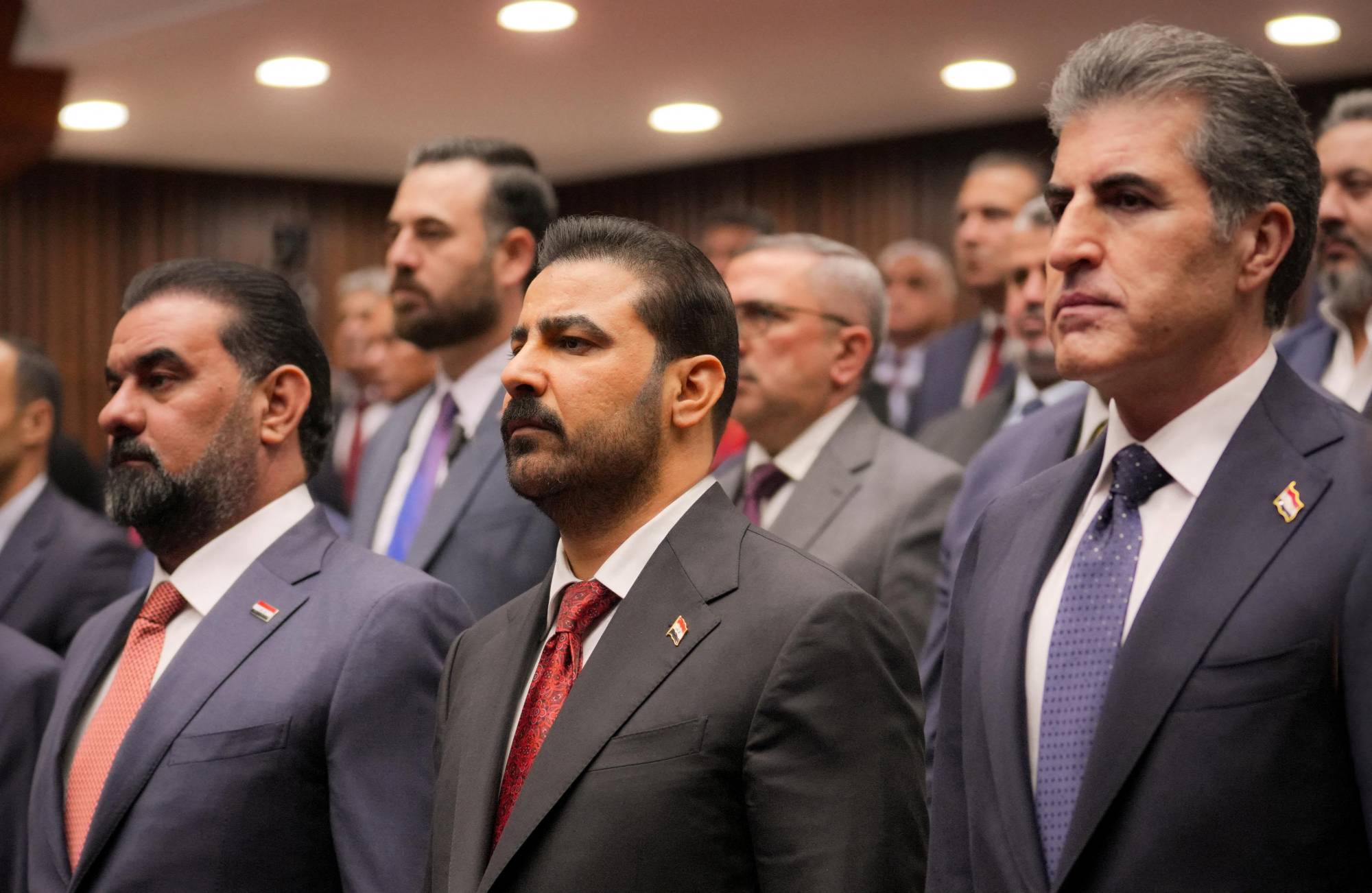
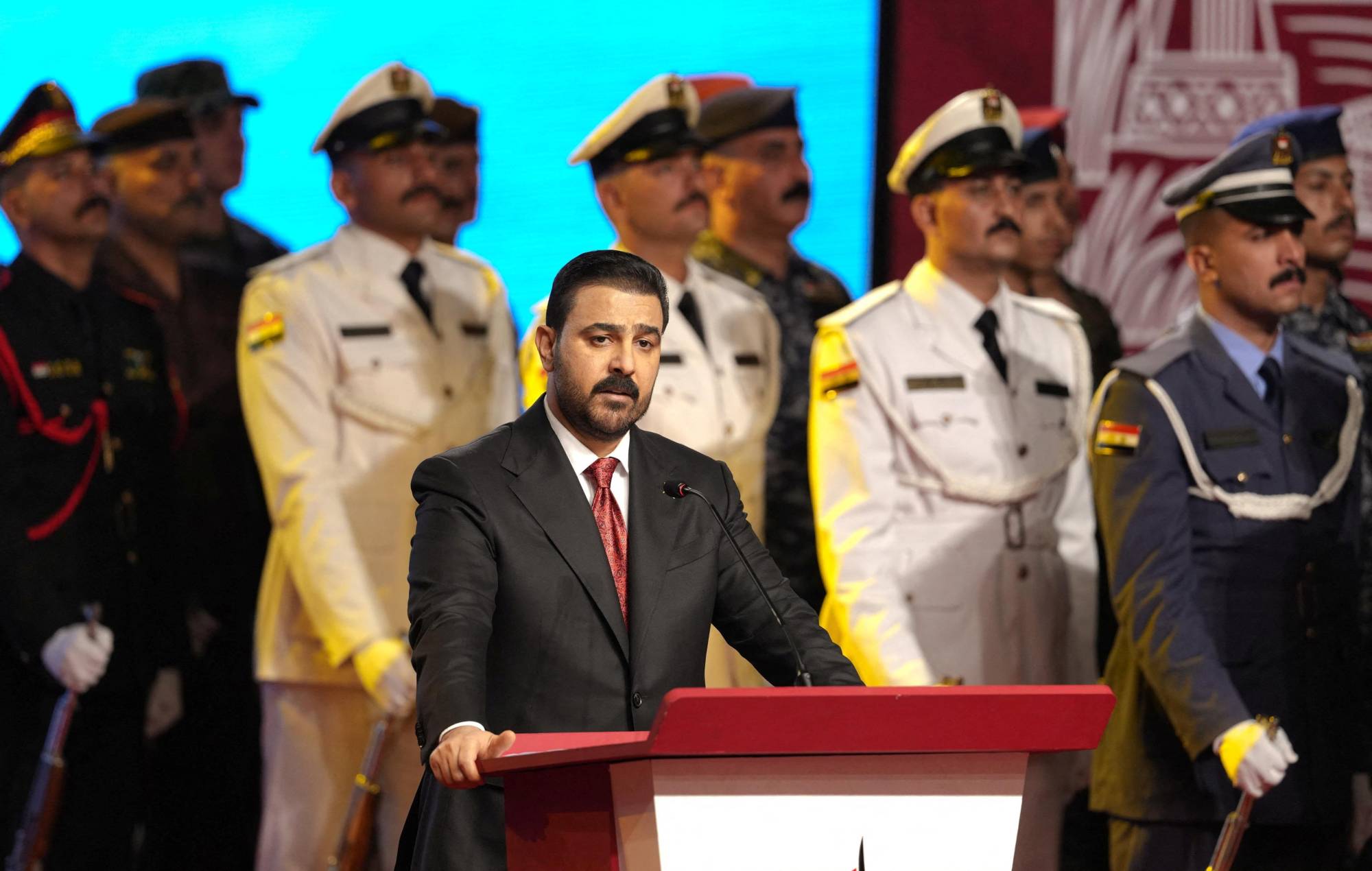
Iranian parliament Speaker Mohammad Bagher Ghalibaf (R) and Iraqi Prime Minister Ali al-Zaidi meet in Tehran in July. (AFP)
TT

Iran Parliament Speaker to Visit Iraq on Wednesday

Iranian parliament Speaker Mohammad Bagher Ghalibaf (R) and Iraqi Prime Minister Ali al-Zaidi meet in Tehran in July. (AFP)

Iranian parliament Speaker Mohammad Bagher Ghalibaf will travel to Iraq on Wednesday at the head of a high-level parliamentary delegation to hold talks on regional developments.

Iran’s IRNA news agency reported on Tuesday that Ghalibaf will depart on Wednesday morning for Iraq to discuss regional developments, ways to boost strategic cooperation between Tehran and Baghdad, and joint mechanisms to help consolidate stability and security in West Asia.

Ghalibaf's visit comes amid discussions within Iraq's ruling coalition about the fate of the weapons of pro-Iran armed factions following the planned withdrawal of US forces on September 30. Tensions are mounting in Iraq after the arrest of a leader in the pro-Iran Al-Nujaba Movement.

Ghalibaf is scheduled to meet with several senior Iraqi officials to discuss developing bilateral relations, border security, countering terrorism, expanding economic cooperation, and implementing joint agreements between the two countries, said IRNA.

Iraq is under pressure from Washington to disarm powerful Iran-backed armed factions that have gained significant political and financial influence in the country.

Ghalibaf's visit comes two days after the office of the Prime Minister of the Iraqi Kurdistan Region, Masrour Barzani, and the residence of the local intelligence director in Erbil were targeted by two drones that Erbil said were launched from Iran.

Barzani slammed the "reckless and unacceptable" attacks that are a "dangerous escalation and a direct threat to the region's security and stability."

Iraqi Prime Minister Ali al-Zaidi ordered a probe into the attacks on Monday.

In a statement, the Iraqi Ministry of Foreign Affairs said that Iranian Foreign Minister Abbas Araghchi informed his Iraqi counterpart, Fuad Hussein, that "he does not possess information indicating the attacks originated from Iranian territory," and that "there is no justification for such actions."

He underscored "the positive and solid relations between the Iranian government with the Kurdistan Regional Government, particularly with the two main parties in the region".

"Kurdish friends must exercise caution regarding false flag ploys aimed at sowing discord between neighbors," he warned.


Lebanese President to Visit Rome for Talks on UN Force’s Future, Says Official

A UN vehicle drives, during a Reuters' visit at Camp Shamrock where Irish and Polish peacekeepers of the United Nations Interim Force in Lebanon (UNIFIL) are stationed near Maroun al-Ras village close to the Lebanese-Israeli border, in southern Lebanon November 29, 2023. (Reuters)
TT

Lebanese President to Visit Rome for Talks on UN Force’s Future, Says Official

A UN vehicle drives, during a Reuters' visit at Camp Shamrock where Irish and Polish peacekeepers of the United Nations Interim Force in Lebanon (UNIFIL) are stationed near Maroun al-Ras village close to the Lebanese-Israeli border, in southern Lebanon November 29, 2023. (Reuters)

Lebanese President Joseph Aoun will head to Rome this week for talks focusing on future of the United Nations peacekeeping force in south Lebanon, whose mandate ends this year, a Lebanese official told AFP.

The visit scheduled for Thursday comes after Italy and France said in June that they wanted to set up a multinational coalition to succeed the UN Interim Force in Lebanon (UNIFIL).

Both countries have large troop contingents in UNIFIL.

Aoun is to meet his counterpart Sergio Mattarella and Prime Minister Giorgia Meloni, to discuss "the future of the international forces, particularly in light of the French-Italian initiative to set up a force to replace UNIFIL", the official told AFP, speaking on condition of anonymity.

Aoun will also meet Pope Leo XIV at the Vatican and brief him on "the contacts Lebanon has been making since negotiations began" with Israel, the official added.

Lebanon and Israel launched US-sponsored direct talks after the Iran-backed Hezbollah group drew Lebanon into the Middle East war in March by attacking Israel, which responded with airstrikes and a ground invasion.

Rome has hosted the last two rounds of talks.

Aoun has said Lebanon's preferred choice is an extension of UNIFIL's mandate, a move opposed by Israel.

On Monday, he said that "the second choice is adopting a formula that ensures the continued presence of international forces in the south" alongside Lebanon's army "and in coordination with it".

A framework agreement reached in June between Israel and Lebanon calls for the disarmament of Hezbollah, a gradual withdrawal of Israeli forces from south Lebanon and the deployment of the Lebanese army to the region, starting in "pilot zones".

Despite a weeks-long lull in fighting, Israel has kept up intermittent strikes and heavy demolition operations in south Lebanon, where its forces are operating in a strip of territory around 10 kilometers (six miles) deep inside the Lebanese border.

Lebanon and several other countries fear a security vacuum if UNIFIL pulls out without an alternative in place.

In a June report, UN chief Antonio Guterres said peacekeepers would be needed after UNIFIL's mission ends and proposed three options ranging from nearly 2,000 to more than 5,500 UN personnel.

Last month, 86 Lebanese lawmakers signed a letter urging the Security Council to keep the peacekeepers.

UNIFIL, which now counts some 7,500 personnel from nearly 50 countries, has been in place since 1978, although its presence has not prevented repeated outbreaks of conflict.