


Fitch Affirms Saudi Arabia at 'A+', Outlook Stable

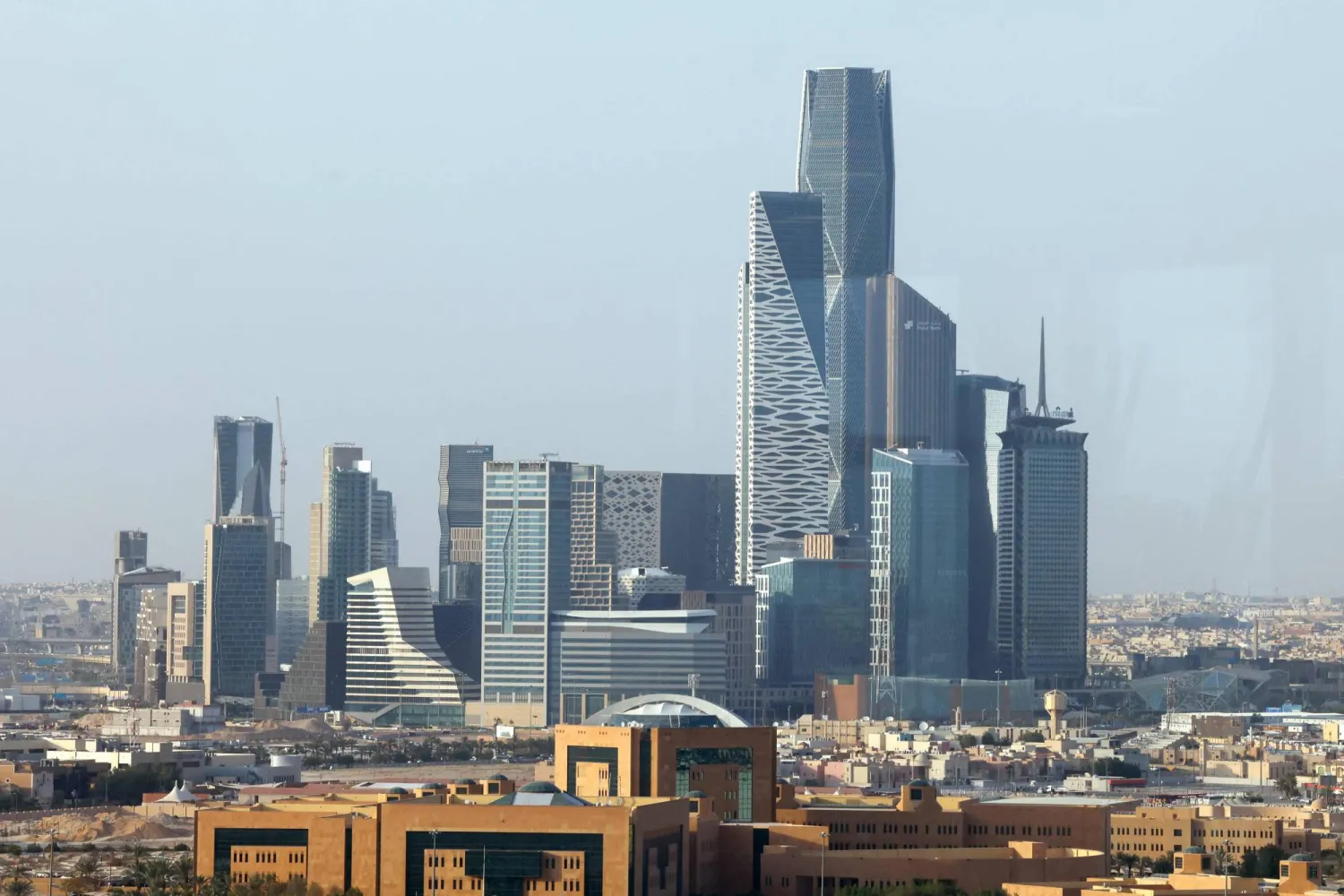
A view of the Saudi capital, Riyadh. (SPA)
TT

Fitch Affirms Saudi Arabia at 'A+', Outlook Stable

A view of the Saudi capital, Riyadh. (SPA)

Fitch Ratings has affirmed Saudi Arabia's Long-Term Foreign-Currency Issuer Default Rating (IDR) at "A+" with a Stable Outlook, the agency said on Friday.

The rating reflects strong fiscal and external balance sheets, with government debt/GDP and sovereign net foreign assets (SNFA) considerably stronger than the "A" and "AA'" medians, and significant fiscal buffers in the form of deposits and other public sector assets, it added.

"Oil dependence and World Bank Governance Indicators (WBGI) have improved but remain weaknesses. Geopolitical risk is high, but the economy and public finances have been resilient to the US-Iran war," it stressed.

"Fitch forecasts real GDP growth will slow to 0.6% in 2026 due to disruption to trade caused by the closure of the Strait of Hormuz," it continued.

"Flows through the East-West pipeline supported oil production during the war and we expect output to be ramped up to meet external demand following the reopening of the Strait and to rebuild domestic stocks, but at an annual average of 9m b/d it will be below the 2025 level," it said.

"Non-oil growth will be hit by an inability to export petrochemicals during the closure of the Strait, but consumer spending held up and business confidence is recovering."

"Growth will rebound in 2027 as the normalization of flows through the Strait allows higher oil and petrochemicals production, before easing to 2.9% in 2028 The phased opening of gigaprojects (many of which have launched initial operations), the proximity of key events and guidance that the Public Investment Fund will keep domestic spending largely unchanged in its new five-year plan, will also support growth," Fitch noted.
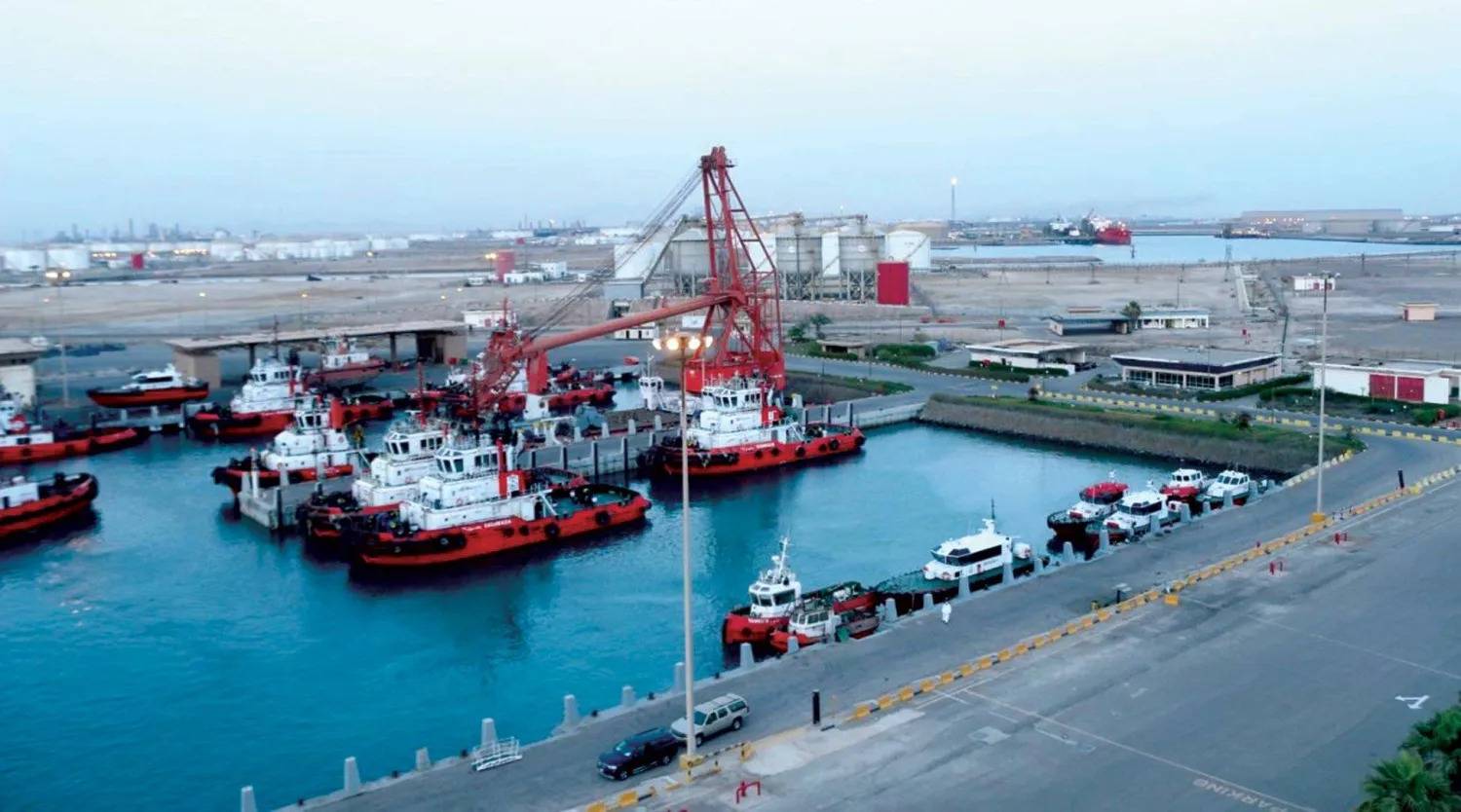
The King Fahd Industrial Port in Yanbu, Saudi Arabia (SPA)

"The fiscal deficit is projected to narrow in 2026 owing to higher oil revenues, as prices will offset lower volumes. Spending will also rise, reflecting the impact of the war, but much of the jump in 1Q was the precautionary frontloading of spending from later in the year," it said.

Fitch forecasts that lower oil revenues will widen the deficit to 4.7% in 2027, consistent with a fiscal breakeven oil price of USD94/b.

Spending is expected to decline in 2027, due to an easing of war-related pressures, lower capex and ongoing efforts to reduce rigidities in current spending. Expenditure adjustment will allow the deficit to narrow in 2028 despite a projected further fall in oil prices.

"Our fiscal projections are consistent with a further increase in debt/GDP, which we project at 41.3% at end-2028 (projected peer median of 58.1%), from 31.8% at end-2025. based on deposits remaining around 10% of GDP," said Fitch.

"Fitch forecasts a small current account surplus for 2026 due to higher oil export revenues. Lower oil prices and ongoing domestic demand growth that has a heavy component of imported goods, services and labor, will lead to a deficit of 5% of GDP by 2028. Current account deficits will be financed by external borrowing and the ongoing reorientation of public assets to domestic from foreign investments," it continued.

"Banks have been resilient to the war and did not require any support measures from the central bank," it stressed. "At end-1Q, non-performing loans were 1.1% and the Tier 1 capital ratio 19.2%, both improved from end-2024. Credit growth has slowed, particularly mortgages, in response to policy measures, and is being outpaced by deposit growth."

Fitch maintained its mid-year 2026 sector outlook for Saudi banks at "neutral".


Gold Slips as Focus Remains on Middle East, Rate Outlook

Gold bars, each weighing 1000 grams, displayed at a gold and silver refinery in Vienna (AFP)
TT

Gold Slips as Focus Remains on Middle East, Rate Outlook

Gold bars, each weighing 1000 grams, displayed at a gold and silver refinery in Vienna (AFP)

Gold prices slipped on Monday as market participants assessed developments in the Middle East and their implications for inflation and interest rates.

Spot gold fell 0.3% to $4,362.60 per ounce by 0417 GMT after hitting a one-week high on Friday. US gold futures were down 0.6% at $4,400.20, Reuters reported.

Iran and the United States exchanged new threats, with President ‌Donald Trump ‌warning Iran would fail economically or face its ‌leadership ⁠being wiped out ⁠if it didn't make a deal, and the Iranian military saying it would retaliate harshly to any fresh attack.

"The focus remains on geopolitics, oil and the reaction in bond yields. For gold to gain meaningful upside traction, a clear move lower in oil and/or bond yields is likely required," said Tim Waterer, chief market ⁠analyst at KCM Trade.

"Gold may trade in a ‌roughly $4,200 to $4,580 range in the near ‌term."

Oil prices fell on hopes diplomacy in the Iran war will ‌get a chance this week amid a UN meet.

The prospect of a new global rate-tightening cycle has come into focus as some of the world's top central banks ‌raise rates and signal more may be needed to tame inflation fueled by the Iran war.

The Bank ⁠of Japan ⁠became the latest big central bank to tighten on Friday, following rate increases by the Federal Reserve earlier that week and the European Central Bank the week before.

Though gold is often seen as an inflation hedge, rising rates tend to curb its demand by making interest-bearing assets more attractive.

Analysts at Standard Chartered said in a note that gold remains volatile but continues to find firm downside support from official-sector demand. They said structural drivers remain in place to lift prices, albeit at a slower pace.

Among other metals, spot silver rose 0.2% to $66.37, platinum fell 0.1% to $1,798.31 and palladium added 0.6% at $1,309.65.


Qatar Launches Wealth Fund Division for Domestic Investments

Qatari flag flutters in Doha - AAWSAT/File
TT

Qatar Launches Wealth Fund Division for Domestic Investments

Qatari flag flutters in Doha - AAWSAT/File

Qatar's prime minister announced on Sunday the creation of a new division of the Qatar Investment Authority dedicated to developing domestic investments.

"We aim to expand the role of the private sector in driving Qatar's economic growth," Sheikh Mohammed bin Abdulrahman Al Thani said as he announced the new division, Doha Investment, at a special edition of the Qatar Economic Forum in New York.

The annual gathering was cancelled in May, following weeks of Iranian missile and drone attacks on Gulf states, including Qatar, according to Reuters.

"It will support our strongest companies, help emerging businesses grow, deepen capital markets and attract international capital and expertise to contribute to this effort," he added.

The new division will operate as the dedicated manager of QIA's local portfolio, initially overseeing 45 state-owned enterprises that represent roughly one-third of the wealth fund's total assets, according to Sheikh Faisal bin Thani Al Thani, Qatar's minister of commerce and industry. He will serve as managing director and vice-chairman of Doha Investment.

Sheikh Faisal described the division not as a new creation but a consolidation, adding that the step has been under consideration for more than a decade.


PIF Launches Tawrid to Provide Supply-Chain Financing Products in Saudi Arabia

PIF Tower at the King Abdullah Financial District in Saudi Arabia’s capital, Riyadh (Asharq Al-Awsat)
TT

PIF Launches Tawrid to Provide Supply-Chain Financing Products in Saudi Arabia

PIF Tower at the King Abdullah Financial District in Saudi Arabia’s capital, Riyadh (Asharq Al-Awsat)

The Public Investment Fund (PIF) on Sunday announced the launch of Tawrid Company for Financing Solutions, an innovative digital platform providing supply-chain financing products to companies in the Saudi Arabian market. Tawrid has obtained the Saudi Central Bank (SAMA) permit to operate under the regulatory Sandbox environment.

The financial services industry is a strategic enabler of the six ecosystems that PIF announced recently as part of its 2026-2030 strategy.

Supply-chain financing products help companies to fund their broader activities. Tawrid’s digital offering will further strengthen the Saudi private sector, particularly small and medium-sized enterprises, SPA reported.

Tawrid will play a significant role in connecting buyers, suppliers, and funders through its digital platform. It will offer products such as early settlement options against approved invoices, enabling businesses to expand their operations, enhance their working capital efficiency, and improve their liquidity management.

The launch of Tawrid is in line with PIF’s strategy to increase the Saudi private sector’s contribution to PIF’s projects and portfolio companies and to grow the private sector’s share of the local economy. Its platform will enable local banks registered on its network to engage with registered suppliers, strengthening supply chains and further supporting the diversification of financial services and the digitalization of trade in Saudi Arabia.

PIF’s investment in supply-chain financing is a natural evolution that builds on its efforts to advance the growth, resilience, and robustness of supply chains in the Saudi market. PIF has expanded opportunities for local suppliers and stimulated them to develop their capabilities in line with PIF’s strategic objectives to engage the private sector and enable it to contribute to a more diversified economy with deep, local, tech-enabled supply chains.

Head of Financial Institutions in MENA Investments at PIF Sultan Alsheikh said: “Tawrid will make Saudi supply chains stronger and more resilient by further enabling companies to access financing and improve their liquidity management. Its supply-chain financing products will enable businesses to operate with greater agility and efficiency, creating opportunities for the Saudi private sector in particular.”

Tawrid has started operations and has already signed binding agreements with local banks and companies, including Gulf International Bank (GIB), Saudi National Bank (SNB), Banque Saudi Fransi (BSF), ROSHN Group and Nesma & Partners.
PIF is one of the world’s most impactful investors, with a long-term investment strategy to further drive the economic transformation of Saudi Arabia and deliver sustainable financial returns.
