


Oil Prices Rise as Hostilities Worsen in the Middle East

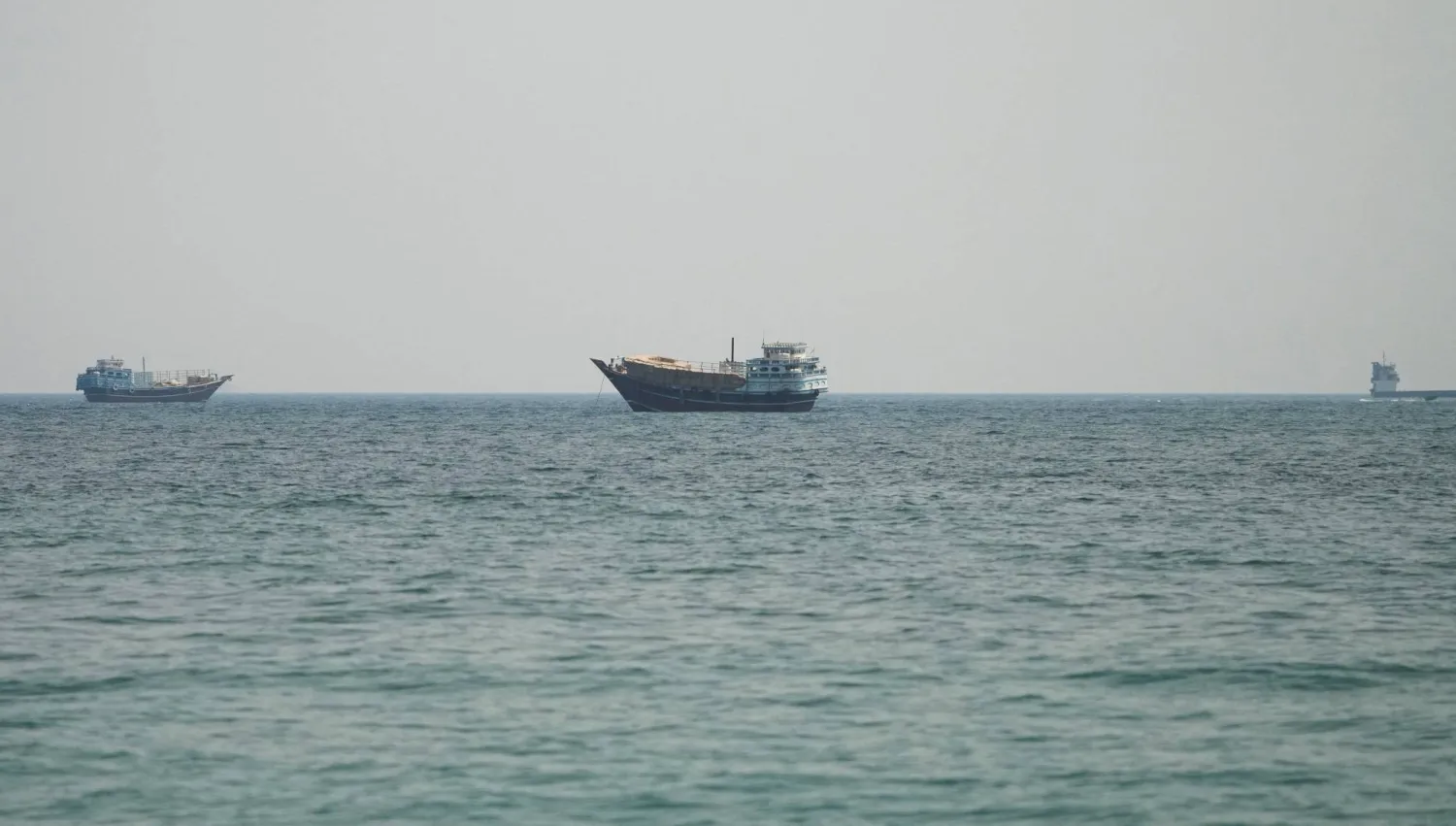
FILE PHOTO: Vessels at the Strait of Hormuz, as seen from Musandam,Oman, July 12, 2026. REUTERS/Stringer/File Photo
TT

Oil Prices Rise as Hostilities Worsen in the Middle East

FILE PHOTO: Vessels at the Strait of Hormuz, as seen from Musandam,Oman, July 12, 2026. REUTERS/Stringer/File Photo

Oil extended gains on Wednesday as President Donald Trump reimposed a naval blockade on all Iranian ports and Tehran launched strikes on US infrastructure in the region.

Brent futures climbed 99 cents, or 1.2%, to $85.72 a barrel at 0400 GMT. West Texas Intermediate futures gained 64 cents, or 0.8%, to $79.98 a barrel, Reuters reported.

Oil prices closed up 2% at a one-month high on Tuesday as attacks exacerbated a supply disruption in the Strait of Hormuz, through which about a fifth of the world's oil and liquefied natural gas passed prior to the beginning of the US-Israeli war on Iran.

"While the physical oil market remains adequately supplied, any further ⁠escalation involving the ⁠Strait of Hormuz or additional sanctions on Iranian exports could quickly tighten market sentiment and add further risk premiums," said Priyanka Sachdeva, senior market analyst at Phillip Nova.

Early on Wednesday, the US also began a fresh round of strikes "to continue degrading Iranian capabilities used to attack commercial shipping in the Strait of Hormuz," the US military said.

Tehran says it has ⁠again closed the strait after hostilities between Iran and the US reignited last week, fraying an already fragile truce reached in June after several months of fighting.

"I'll save the energy targets for last, but ultimately we'll hit energy targets," Trump told Fox News in an interview aired Tuesday night on "Special Report with Bret Baier".

The flare-up over the last few days has heightened doubts that a memorandum of understanding signed last month would lead to a permanent halt to the war.

"The chances of oil moving back toward $100 in the reasonably near term are still meaningful if hostilities intensify which damages energy infrastructure around the Gulf," Tim Waterer, chief market analyst at KCM Trade said, noting Brent prices could remain at $75-$80 a barrel if diplomatic efforts helped reopen the strait.

"For now, the risk premium is still embedded, but it's not a one-way bet given that there remain incentives for both sides to find a diplomatic solution."



Crude Shipments from Saudi Arabia's Yanbu Port Near Maximum Levels

King Fahd Industrial Port in Yanbu, Saudi Arabia (SPA)
TT

Crude Shipments from Saudi Arabia's Yanbu Port Near Maximum Levels

King Fahd Industrial Port in Yanbu, Saudi Arabia (SPA)

Daily crude loadings at Saudi Arabia's Red Sea port of Yanbu are close to maximum levels this week, according to data and industry sources.

Shipments from Yanbu reached 4.7 million barrels per day around July 13, up from 3.36 million bpd around July 10 and broadly in line with 4.6 million bpd around July 2, ⁠according to Signal Ocean data.

Loadings have averaged above four million bpd since June, compared with 973,000 bpd around the same period 2025, the data showed.

Kpler data also show daily loadings averaging around four million barrels in recent weeks.

Saudi Arabia has relied increasingly on Yanbu to export crude amid disruptions to shipping through the Strait of Hormuz during the US-Iran conflict.


BP Sees Boost from Energy Prices in Second Quarter, Expects Lower Net Debt

An illuminated BP logo is seen at a petrol station in Gateshead, Britain September 23, 2021. (Reuters)
TT

BP Sees Boost from Energy Prices in Second Quarter, Expects Lower Net Debt

An illuminated BP logo is seen at a petrol station in Gateshead, Britain September 23, 2021. (Reuters)

BP expects its oil trading result to be slightly higher in the second quarter after an exceptionally strong first quarter, as it continues to profit from a surge in oil prices caused by the Iran war.

The British major flagged higher oil realizations said stronger prices were expected to add a $1.8 billion to $2.1 billion boost to earnings in its oil production and operations business compared with the first quarter.

In its gas and low carbon energy segment, realizations are expected to add a further $500 million to $700 million, it said on Tuesday.

Gas trading results are expected to be broadly unchanged from the previous quarter.

Global benchmark Brent crude prices hit multi-year highs and averaged around $97 per barrel during the April-to-June quarter, up from around $78 in the first quarter and about $67 a year earlier.

BP said refining margins averaged $29.6 per barrel, versus $16.9 in the first quarter.

The company expects upstream production to fall in the second quarter to between 2.17 million and 2.22 million barrels of oil equivalent per day from around 2.34 million boed in the previous three months, due in part to the effects of the crisis.

BP expects net debt to stand at $22 billion to $23 billion at end-June, down from $25.3 billion at the end of March, with a target to reduce this further to $14 billion to $18 billion by the end of next year.

The company made a $2.9 billion payment to redeem €2.5 billion of perpetual hybrid bonds, leaving it with a total of about $13 billion outstanding. It also paid $1.1 billion in Gulf of Mexico settlement liabilities.

Overall, BP expects net debt, hybrid bonds and Gulf of Mexico settlement liabilities to decrease by around a combined $6.3 billion to $7.3 billion from the previous quarter.

Exploration write-offs are seen totaling around $500 million in the second quarter, primarily related to the sale of its stake in the Bay du Nord project offshore Canada.


China's Economy Grew at 4.3% Annual Pace in the 2nd Quarter, Slowest Since Late 2022

People walk in the Central Business District (CBD) area in Beijing, China, 15 July 2026. EPA/WU HAO
TT

China's Economy Grew at 4.3% Annual Pace in the 2nd Quarter, Slowest Since Late 2022

People walk in the Central Business District (CBD) area in Beijing, China, 15 July 2026. EPA/WU HAO

China’s economy slowed sharply to a 4.3% annualized pace of growth in the April-June quarter, the government said Wednesday, the weakest in over three years.

The official data fell short of forecasts and was far below the economy's strong 5% pace of growth in January-March, despite a surge in exports driven partly by the boom in artificial intelligence, and by robust global demand for Chinese electric vehicles.

China has largely shrugged off wider economic impacts from the Iran war as soaring energy prices pushed up global inflation. Exports rose 17.6% in the first half of the year from a year earlier, and 27% in June, according to customs data.

But domestic spending and investment have lagged, limiting the boost from export manufacturing for an economy that has struggled to regain momentum since parts of China were locked down during the COVID-19 pandemic, The Associated Press reported.

“This was the slowest growth in any quarter since the lockdown-impacted fourth quarter of 2022,” said Lynn Song, chief economist for Greater China at ING Bank in a note.

Some economists say China’s economy is becoming increasingly unbalanced as heavy state support and private investments pour into frontier technologies like AI, computer chips and robotics while other areas such as lower-value manufacturing and jobs creating services industries languish.

Exports of high-tech products such as electric vehicles, computer chips and other electronic equipment have risen sharply, helped by hefty government support since China’s leaders have made development of advanced technologies a top priority.

China ran a record $1.2 trillion global trade surplus last year, drawing complaints from policymakers in other countries over their trade imbalances with the world’s second-largest economy. Many have pointed to those heavy state subsidies, which they say contribute to an oversupply of manufactured goods that end up being exported overseas.

As is true in many countries, the expansion of AI and robotics has also raised worries at home over whether businesses will create enough jobs to sustain growth in the longer term.

Chinese families have cut back on big purchases, their appetite for spending constrained by a prolonged property slump and uncertainties over jobs and wages.

As China remains reliant on its exports to sustain overall growth, “China’s growth model has become increasingly imbalanced,” said Eswar Prasad, a professor of economics and trade policy at Cornell University. Substantially increasing domestic demand will be tough as confidence remains weak, he added.

Mao Shengyong, deputy head of China's National Bureau of Statistics, told reporters that given the increasingly unstable and uncertain global situation, the imbalance between strong supply and weak demand “remains acute” at home.

As China focuses on high-tech manufacturing and pursues “higher-quality economic growth,” it will work to build a robust domestic market and offer support to keep employment stable, he said.

China’s economy is going through a “significant transition,” said Wei Li, Head of Multi-Asset Investments at BNP Paribas Securities (China).

For the whole of 2026, Chinese leaders have set a growth target of 4.5% to 5%, slower than last year’s 5%. Overall economic growth for the first half of the year was at 4.7%, the data released Wednesday showed.

The International Monetary Fund recently raised its forecast for China’s annual growth by 0.2 percentage point to 4.6%. It expects China’s economy to expand just 4.1% in 2027.