


Israel Kills Four People in Gaza, Including a Child, Medics Say

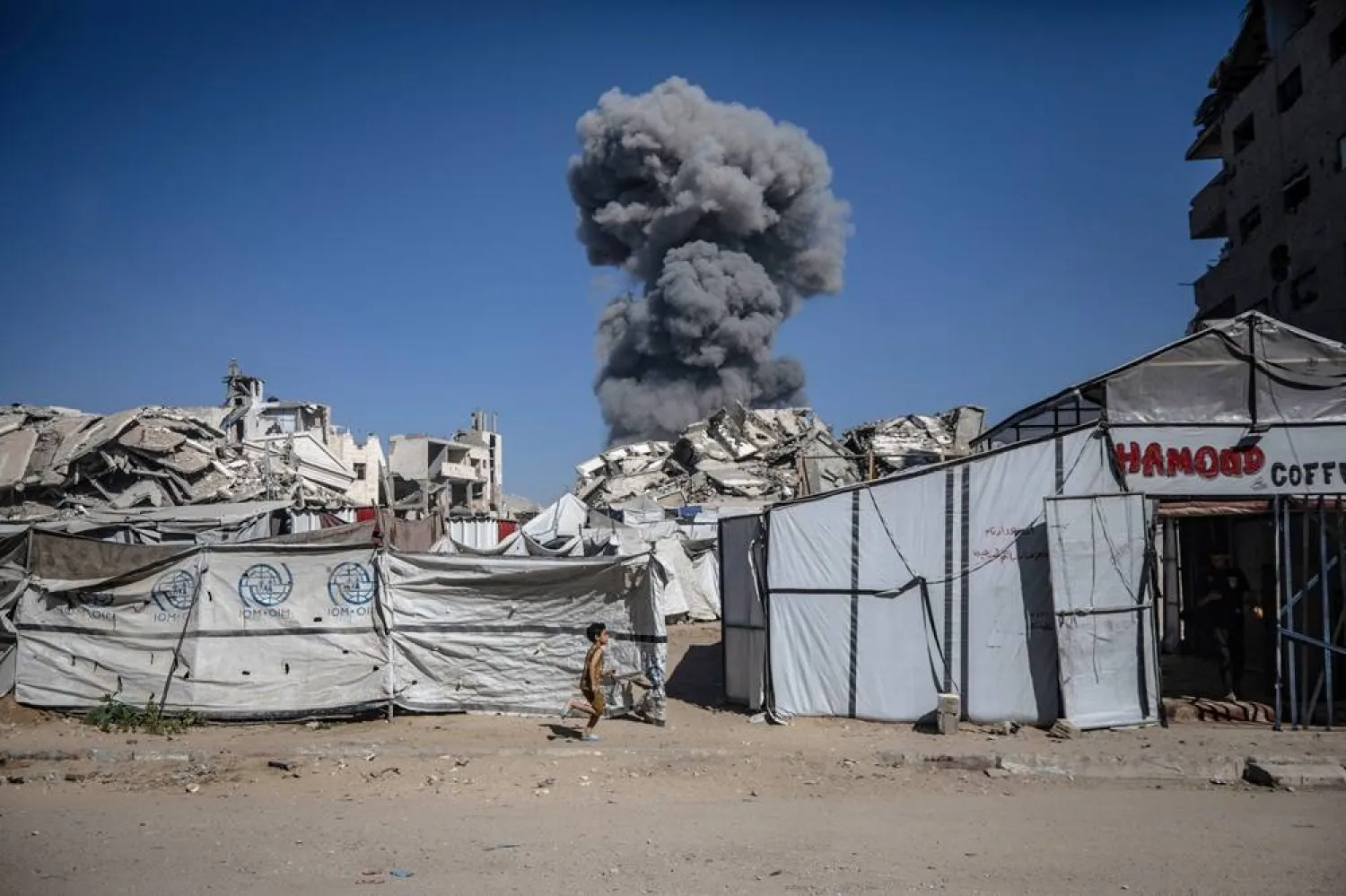
Smoke rises following an Israeli airstrike in southern Gaza City, 12 July 2026. (EPA)
TT

Israel Kills Four People in Gaza, Including a Child, Medics Say

Smoke rises following an Israeli airstrike in southern Gaza City, 12 July 2026. (EPA)

An Israeli airstrike killed a man, his wife and their six-year-old daughter in the Gaza Strip on Wednesday, Palestinian health officials said as talks to advance the US-brokered Gaza ceasefire deal faltered.

The strike on an apartment building in Deir Al-Balah in central Gaza killed Omar Abu Qassem, his wife, Asma, and their daughter, Habeeba, medics said. Their son survived, but was injured, medics said.

The Israeli military said the strike targeted a Hamas fighter.

In Sheikh Radwan neighborhood in Gaza City, an Israeli airstrike killed one person, medics said.

The Israeli military didn't immediately comment on this incident.

The deaths add to a toll of more than 1,100 Palestinians, mostly civilians, killed by Israeli attacks since an October ceasefire between ‌Israel and Hamas ‌to end the war took effect, according to health officials in the ‌enclave. ⁠Hamas doesn't usually disclose ⁠information about its fatalities.

The truce halted major fighting, but has failed to stop near-daily Israeli strikes. Four Israeli soldiers have been killed by fighters in Gaza over the same period.

CEASEFIRE FALTERS

The latest violence comes as Hamas leaders wrapped up another round of truce talks in Cairo on Tuesday.

The discussions — mediated by Egypt, Türkiye and Qatar — were aimed at implementing the second phase of US President Donald Trump's Gaza peace plan.

The talks included the disarmament of Hamas and the Israeli military's withdrawal from the strip, according to sources ⁠close to the talks, who said there had been little progress amid deep distrust ‌between the two sides.

The second phase also includes allowing ‌a US-backed Palestinian technocratic committee to assume power from Hamas, the deployment of an international security force, and the ‌start of the reconstruction of Gaza, which has been devastated by the war.

Five countries — Indonesia, Morocco, Kazakhstan, ‌Kosovo and Albania — have committed to providing troops to the US-backed International Stabilization Force. However, none have yet been deployed as negotiations between Trump's Board of Peace and Hamas have stalled for months.

Speaking at an aid donor meeting in Brussels on Monday, Nickolay Mladenov, the Board of Peace envoy for Gaza, said he would be visiting Morocco on ‌Tuesday to "sign Morocco's contribution to the International Stabilization Force, and soon we hope to see them on the ground undertaking their tasks."

Mladenov said the ⁠October ceasefire was holding ⁠but "imperfectly" with violations continuing, adding that Hamas has yet to agree to what he called a "roadmap" for negotiations.

Hamas official Basem Naim accused Mladenov of supporting Israel’s position in negotiations, and failing to hold the country accountable for violating the ceasefire and not upholding the terms of the first phase of the Trump plan.

The plan called for Israel to withdraw its troops to a demarcated "yellow" line, but Israel has been slowly moving its troops forward and now effectively occupies more than 60% of the strip.

Hamas has repeatedly said that it cannot advance to the second phase of the peace plan until the terms of the first phase are fulfilled.

Nearly all of Gaza's 2 million people, most of whom have been displaced several times, now live on a tiny strip of land along the coast, mainly in makeshift tents or damaged buildings, under Hamas control.

Hamas-led fighters killed 1,200 people during their cross-border attack into Israel on October 7, 2023, according to Israeli tallies. The Gazan health ministry said Israel’s subsequent offensive on the strip killed more than 73,000 Palestinians.


Uganda and Burundi Military Officials Visit Israel to Discuss Gaza Troop Deployment

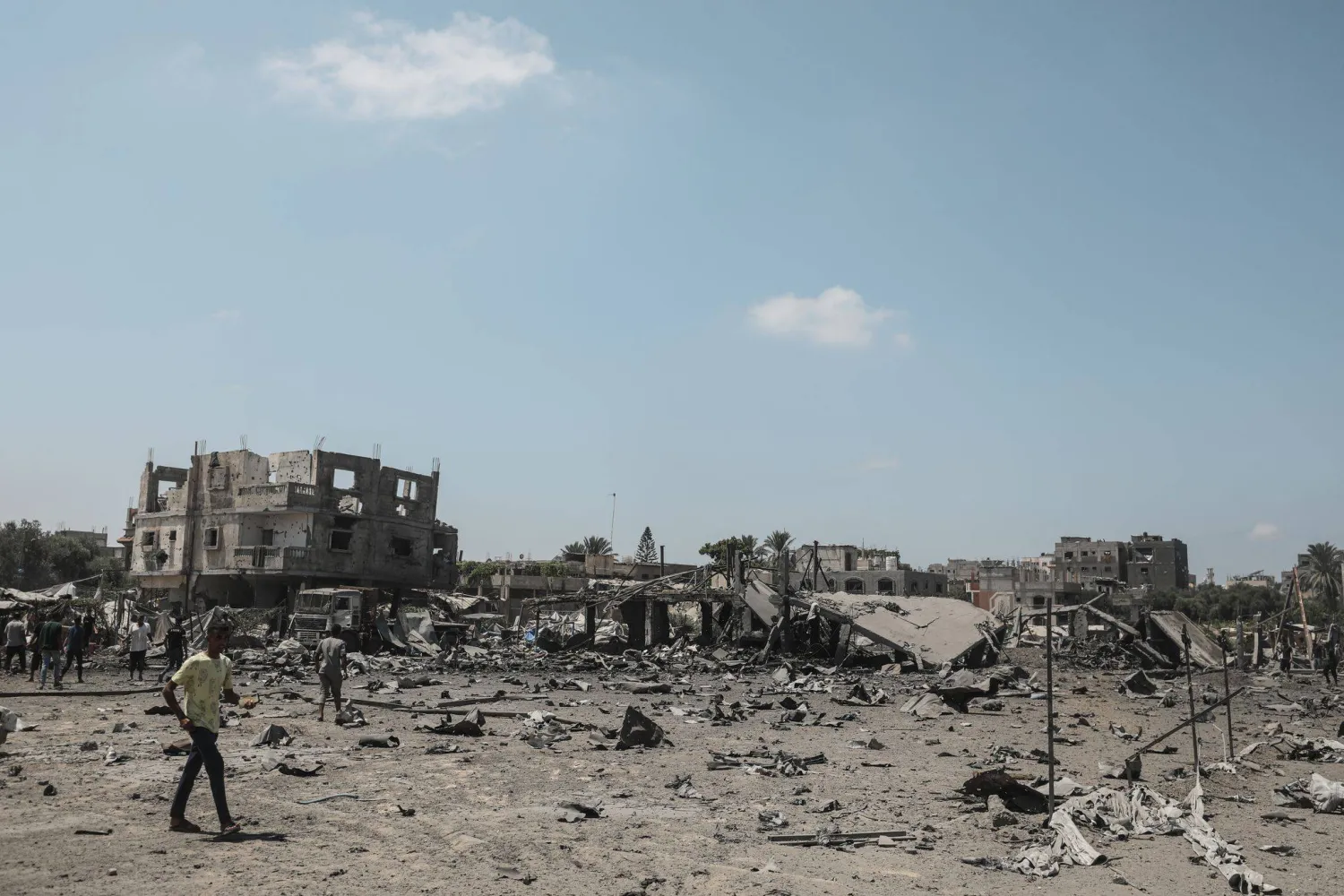
23 August 2026, Palestinian Territories, Gaza Strip: People check the damage after an Israeli airstrike on a house belonging to the Al-Awwar family, damaging several neighboring homes in the Al-Maghazi camp. Photo: Moiz salhi/dpa
TT

Uganda and Burundi Military Officials Visit Israel to Discuss Gaza Troop Deployment

23 August 2026, Palestinian Territories, Gaza Strip: People check the damage after an Israeli airstrike on a house belonging to the Al-Awwar family, damaging several neighboring homes in the Al-Maghazi camp. Photo: Moiz salhi/dpa

Military officials from Uganda and Burundi visited Israel last week to discuss deploying troops to Gaza as part of an international security force envisioned by US President Donald Trump’s Board of Peace for the fragile ceasefire, according to officials.

A Board of Peace official told The Associated Press that Ugandan officials joined a Burundian military delegation, and that Uganda is finalizing details of its participation after its parliament approved the troop contribution this month, The Associated Press said.

Nothing has been finalized with Burundi, but the official said they look forward to starting the process.

“We shared significant knowledge with one another, and the Burundi representatives expressed interest in our mission,” the official said, speaking on condition of anonymity because they weren’t authorized to discuss talks with potential troop-contributing countries ahead of any agreement.

A Burundian military official told the AP that three other senior military officers led the delegation to Israel and that Burundi appeared intent on joining. The official spoke on condition of anonymity because he was not authorized to speak to the media.

It was not clear what Uganda or Burundi might be offering or what they might receive in return. Spokespersons for their militaries did not respond to requests for comment.

Progress on the international force has been slow

If Burundi moves ahead, the African nations would be the latest to join the international force for Gaza after Morocco, Kosovo, Kazakhstan and Albania made commitments. Uganda has committed around 1,200 personnel, and Morocco has committed up to 500. Kosovo, Kazakhstan and Albania in total have committed around 80.

Indonesia earlier said it was preparing to send 8,000 troops — by far the largest commitment — but put that on hold after the US and Israel attacked Iran.

The 20,000-strong force would be led by US Maj. Gen. Jasper Jeffers. Troops committed remain far short of that goal.

Last month, Trump announced a deal for Hamas to disarm and for Israel to withdraw its forces from Gaza. According to the deal, the International Stabilization Force would be deployed to areas of the Palestinian territory administered by an incoming technocratic committee, and Israeli forces would withdraw.

The force would help monitor the ceasefire, train Palestinian police and secure the delivery of aid, among other tasks.

The ceasefire that took effect in Gaza last October has stalled due to disagreements regarding Israel’s withdrawal from the strip and Hamas’ disarmament. A US delegation met for hours earlier this month with the Hamas leader and then with Israeli Prime Minister Benjamin Netanyahu to press them forward. Hamas has agreed to the new US deal.

Netanyahu has rejected it, saying Israel will not withdraw from any of the roughly 60% of the territory it controls in Gaza until Hamas has been completely disarmed. Even after Netanyahu's meeting with the US team, which included negotiator Jared Kushner, officials offered no concrete commitment by Israel.

Uganda and Burundi have peacekeeping experience from Somalia Paul D. Williams, director of the security policy studies program at The George Washington University, said Uganda and Burundi have gained considerable peacekeeping experience through long-term deployments in Somalia as part of an African Union force resisting the al-Qaida-linked al-Shabab extremist group.

Their countries' leaderships have “shown they are willing to tolerate high numbers of casualties without withdrawing,” he said.

Williams added that, with the mission in Somalia winding down, both countries will be searching for ways to accrue financial and material support for their militaries: “Deploying to Gaza with US support is one way to do that."

A Ugandan military officer with knowledge of the upcoming deployment said troops were being selected to go to Gaza. The officer spoke on condition of anonymity because they weren’t authorized to speak to the press.


Syria, Israel Hold US-Mediated Talks to Ease Tensions

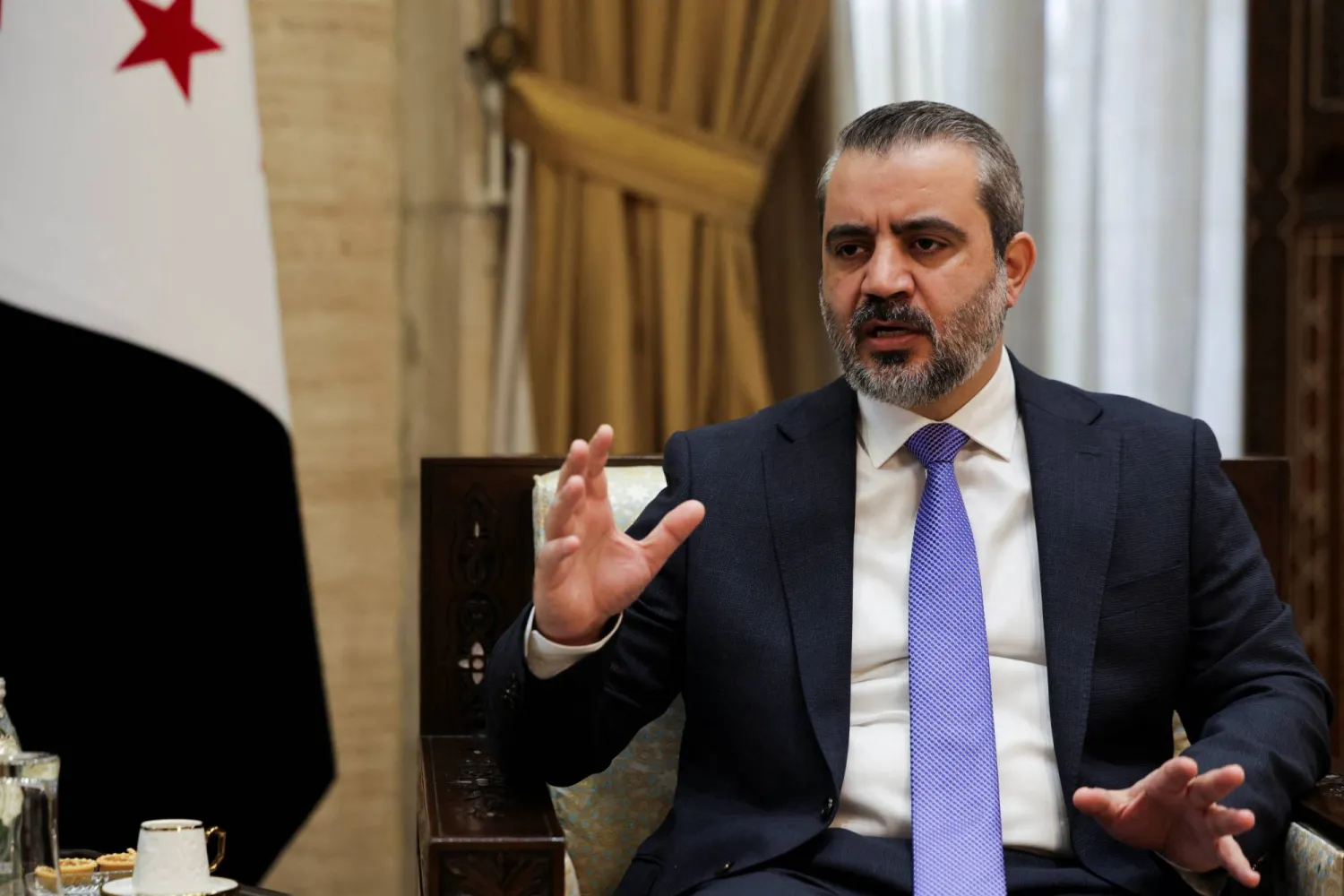
 Syrian Foreign Minister Asaad al-Shaibani, speaks during an interview with Reuters in Damascus, Syria, August 22, 2026. (Reuters)
Syrian Foreign Minister Asaad al-Shaibani, speaks during an interview with Reuters in Damascus, Syria, August 22, 2026. (Reuters)
TT

Syria, Israel Hold US-Mediated Talks to Ease Tensions

 Syrian Foreign Minister Asaad al-Shaibani, speaks during an interview with Reuters in Damascus, Syria, August 22, 2026. (Reuters)
Syrian Foreign Minister Asaad al-Shaibani, speaks during an interview with Reuters in Damascus, Syria, August 22, 2026. (Reuters)

Syria and Israel held high-level, US-mediated talks in Jordan on Sunday aimed at easing tensions following recent Israeli strikes on Syrian territory, Syria's state news agency SANA reported, citing a diplomatic source at the foreign ministry.

The talks focused on practical mechanisms to halt Israeli strikes, arrests and targeted operations, and on reviving negotiations towards a security ‌agreement that could ‌lay the groundwork for a broader future accord, SANA ‌said.

The ⁠two sides also discussed ⁠efforts to ease tensions between Israel and Türkiye and to prevent their rivalry from spilling onto Syrian territory.

A diplomatic source and a Syrian government source told AFP that Foreign Minister Asaad al-Shaibani met the head of Israel's Mossad intelligence agency Roman Gofman.

Shaibani told Reuters on Saturday that Damascus expected security negotiations with Israel to resume soon, although he added that there was a lack of trust between them.

Talks had been suspended since the start of the Iran war, while Syria cut off contact entirely after Israeli strikes on Syria’s Abu al-Duhur airbase ⁠last week, according to Shaibani.

Washington has for more than a ‌year sought to broker a security agreement between ‌Israel and the government of Syrian President Ahmed al-Sharaa.

Shaibani said the two sides had agreed ‌on paper to “almost everything” around the beginning of the year, including arrangements for security ‌zones in southern Syria and a buffer zone where only United Nations forces would be present, but Damascus doubted Israel's willingness to implement the agreement.

The Israeli prime minister's office did not reply to a request for comment on Shaibani's remarks.

At Sunday’s meeting, SANA said, Syria indicated ‌that its immediate priorities remained an Israeli withdrawal to positions held before Bashar al-Assad's overthrow on December 8, 2024, and the full ⁠restoration of a ⁠1974 disengagement agreement.

Damascus also told the Israeli delegation it would not accept arrangements restricting its right to rebuild and develop its armed forces or determine its alliances and partnerships, SANA said.

Syria reiterated that the Israeli-occupied Golan Heights were Syrian territory but said discussions over the region's final status were premature, according to the SANA report.

Israel has carried out repeated strikes on Syrian military sites since Assad's fall, saying its actions were necessary to protect its security.

Syria has denied posing a threat to Israel and has demanded an end to Israeli strikes and incursions.

Syria and Israel have technically been at war since 1948. Israel captured the Golan Heights from Syria in the 1967 Six-Day War and later annexed it, a move recognized by the United States but not by most of the international community.

Security agreement

In his interview with Reuters on Saturday, Shaibani said Syria respected Israel's security concerns, but that Israel must respect those of Syria, including Israel's use of its airspace, Israeli raids and arrests in the south.

He said that around the ‌beginning of the year, the sides had "agreed on paper to almost everything" regarding a security deal that would require Israel to stop attacking Syria and was tied to its withdrawal from ⁠territory seized after Assad fell.

The ⁠deal would include several security zones in Syrian territory near the Israeli border, including a buffer zone where only the United Nations would be present, and others where Syrian forces would deploy in varying degrees of force.

But he said Israel had sought to evade implementation, adding: "We did not see they had the real will to reach an agreement."

The priority now is to "stop Israeli aggression even before reaching a security agreement", Shaibani said. "Then perhaps we can open the topics of peace and the Golan."

US special envoy for Syria Tom Barrack said on Tuesday that Washington was working to establish a mechanism to prevent conflict among Syria, Türkiye and Israel.

Shaibani said there was no agreement yet on the mechanism, which he said must stop attacks and pave the way for the security deal rather than "entrenching ... Israeli occupation."

Shaibani said negotiations over the security agreement had been frozen since the start of the Iran war, but he expected ‌them to restart. Contact ‌between Syria and Israel was cut after the airbase strike, he said.

"We believe there should be ‌contact, ⁠especially with a ⁠party that constantly threatens the security of Syria. But if this contact doesn’t bring results, then we don’t need it," Shaibani said. "We do not trust Israel currently."

"Israel has tried to maintain its security through brute force and it hasn’t succeeded" anywhere, ‌Shaibani said. "I believe negotiations will resume soon."

No date has been set.

"The US is trying ‌continuously to put pressure on Israel to return to the dialogue table," he added.

Asked how optimistic he was, Shaibani said: "It’s very hard to bet on ‌Israel." But Syria had "very great hope" of building stable relationships with its neighbors.

"Syria is extending its hand for understandings, for peace, for ‌diplomacy" and regional stability.


10 Convicted of Terrorism-Related Crimes Executed in Eastern Libya

Military Prosecutor General of the General Command of the Libyan National Army (LNA). Photo: General Command
TT

10 Convicted of Terrorism-Related Crimes Executed in Eastern Libya

Military Prosecutor General of the General Command of the Libyan National Army (LNA). Photo: General Command

Authorities in eastern Libya have carried out execution sentences by firing squad against 10 individuals convicted of “terrorist crimes” and assassinations targeting military personnel and civilians.

In a statement issued Sunday, the Office of the Military Prosecutor General of the General Command of the Libyan National Army (LNA) said the executions were carried out pursuant to rulings by the Supreme Military Court following deliberations that lasted several years.

The statement stressed that the trials had fulfilled all legal requirements, including prosecution and defense procedures.

According to the military prosecutor, the charges ranged from membership in banned terrorist organizations to carrying out assassinations against military personnel and civilians.

He said the executions were intended to achieve justice and deter anyone considering joining organizations designated as terrorist groups both locally and internationally.

The prosecutor’s office added that all legal and executive procedures necessary to enforce the final and binding court rulings had been completed in line with applicable Libyan legislation.

Human rights activists said those executed had been incarcerated at Al-Qarnada Military Prison in eastern Libya and raised questions regarding the status of other defendants and the methods used in their trials, particularly since the military prosecutor’s statement did not provide such details.

Local media, citing a security source, reported that the executions were carried out after the detainees had been tried before a military court and that their families had been informed to collect their bodies from 1200 Hospital in Benghazi.