
Pilot Zone Tests Hezbollah’s Commitment to Withdraw South of the Litani

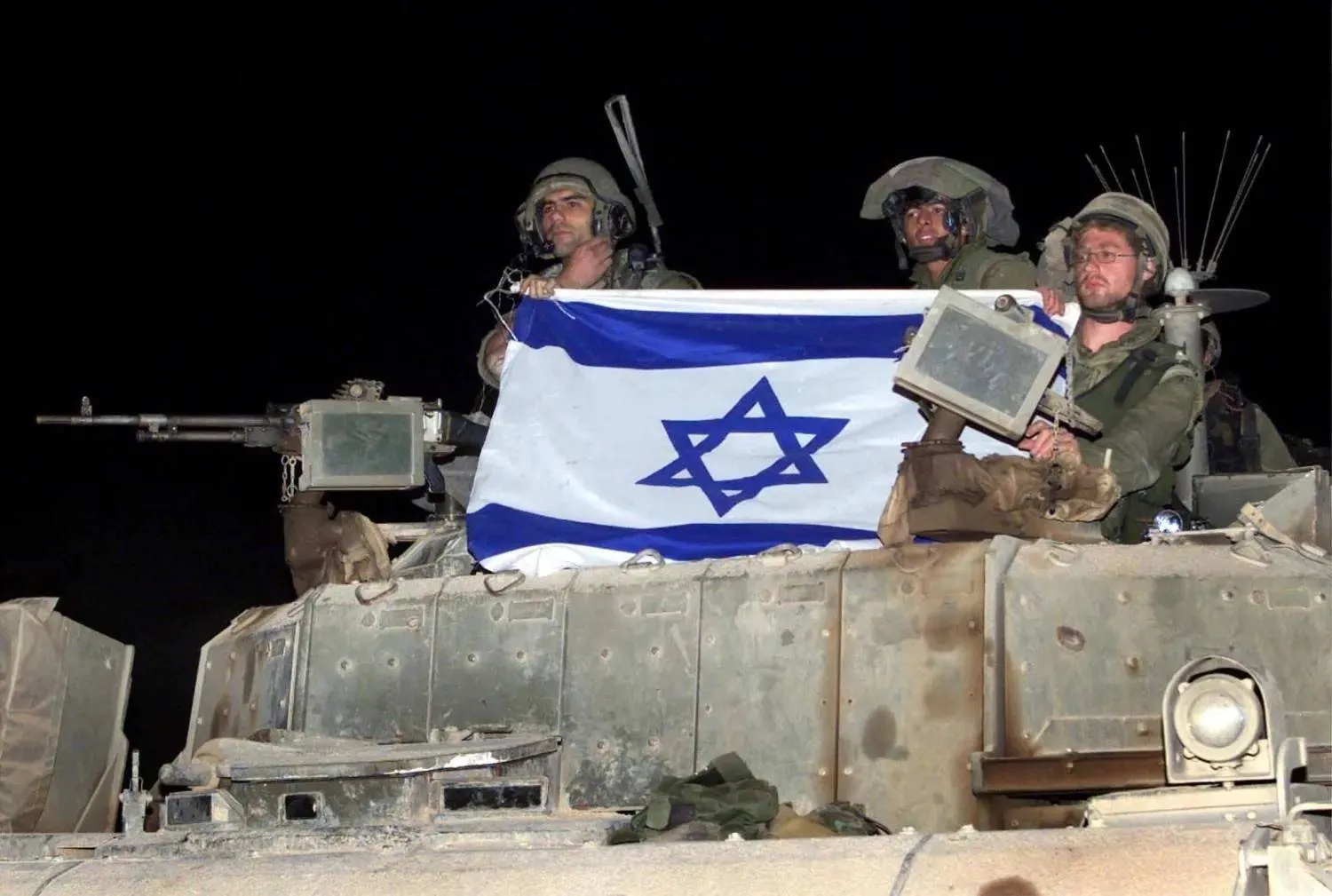
Israeli soldiers aboard an armored vehicle along the Lebanon border (file photo – Reuters) 
TT

Pilot Zone Tests Hezbollah’s Commitment to Withdraw South of the Litani

Israeli soldiers aboard an armored vehicle along the Lebanon border (file photo – Reuters) 

A proposed pilot zone in South Lebanon has been narrowed to six villages as part of the sixth round of Lebanese-Israeli negotiations held Tuesday and Wednesday in Rome. The plan is intended to test implementation of reciprocal withdrawals by Israel and Hezbollah.

The proposed zone includes Western Zawtar (Zawtar al-Gharbiyeh), Froun, Ghandouriyeh, Qalaouiyeh, Burj Qalaouiyeh, and Srifa. Parts of one village remain under Israeli occupation, while the other five are under Israeli fire control. The area is divided into two sectors: Eastern Zawtar (Zawtar al-Sharqiyeh), north of the Litani River, and the remaining villages south of the river.

Srifa lies about five kilometers from the nearest Israeli ground position in Wadi al-Hujayr. Israeli forces never entered the town after withdrawing to the border security zone in South Lebanon in 1985, before their full withdrawal from the country in 2000.

Lebanese sources familiar with the contacts told Asharq Al-Awsat that the pilot zone remains only a proposal. They said the Lebanese Army has not yet been briefed on the outcome of the negotiations because none of its representatives are participating directly in the talks.

Withdrawal for Withdrawal

The proposal effectively divides the area into two sectors: one where Israeli forces are deployed on the outskirts and another where Hezbollah maintains a presence. Under the plan, both sides would withdraw simultaneously, allowing the Lebanese Army to deploy only after Israeli troops and Hezbollah fighters have vacated their respective positions.

The Litani River runs along the outskirts of Eastern Zawtar, Froun, and Srifa. The Israeli military believes the interconnected deep valleys contain Hezbollah rocket-launching sites, citing the intensive strikes it carried out there during the recent war. Israeli ground forces also conducted incursions into the outskirts of Froun last month.

Ghandouriyeh, Qalaouiyeh, and Burj Qalaouiyeh occupy strategic high ground overlooking villages east of Wadi al-Hujayr that are still occupied by the Israeli military. The three villages lie more than 10 kilometers from the Lebanese-Israeli border.

Hezbollah has not commented on the proposal. Last month, Secretary-General Naim Qassem said that “the ceiling of sovereignty can be achieved by remaining within the framework of the November 27, 2024 agreement, on the basis of areas south of the Litani River only.” He also called for an unconditional Israeli withdrawal and for a comprehensive review of Lebanon’s national security strategy after such a withdrawal.

Lebanese Army Measures

Ahead of technical talks between the Lebanese and Israeli armies, expected Friday under US auspices and facilitation to discuss implementation mechanisms — including an Israeli withdrawal and Lebanese Army deployment — the Lebanese military began field measures in one of the proposed pilot-zone villages.

Local media reported that the army set up a large checkpoint at the entrance to Srifa from Deir Kifa and tightened inspections of vehicles and motorcycles entering the town.

Meanwhile, the Israeli military carried out demolition operations in Beit Yahoun, Bint Jbeil, Khiam, and Kounine, bulldozed roads linking Bint Jbeil to the border town of Maroun al-Ras, and opened fire on residents attempting to inspect orchards near Majdal Zoun and Mansouri.


Israel Defense Minister Vows to Keep Troops in Syria During Visit

25 June 2024, Jerusalem: Israeli Defense Minister Israel Katz is pictured in Jerusalem. (dpa)
TT

Israel Defense Minister Vows to Keep Troops in Syria During Visit

25 June 2024, Jerusalem: Israeli Defense Minister Israel Katz is pictured in Jerusalem. (dpa)

Israeli Defense Minister Israel Katz made a rare visit to troops in southern Syria on Tuesday, reiterating a pledge to keep forces in the area as long as there were "threats" to his country's security.

Damascus slammed Katz's "illegal entry" into the country, which came a week after Israel bombed the disused Abu al-Duhur base in northwestern Syria, claiming it wanted to prevent Turkish troops deploying to the facility. Ankara has denied any visit to the site.

In southern Syria, Israeli forces have been stationed in a "security zone" since the fall of longtime ruler Bashar al-Assad in December 2024.

They occupy what was previously a buffer zone patrolled by the United Nations that had separated Israeli and Syrian forces in the Israeli-occupied Golan since 1974.

"There is daily activity here to thwart threats, to eliminate remnants of the old regime, to prevent dangerous consolidation of the new regime," Katz said according to a video statement from his office.

"The message is clear to the president of Syria as well: when you wake up in the morning in your palace in Damascus, look up at Mount Hermon and see the Israeli army -- you know we are here to protect our communities and our border," he added.

"As long as there are threats, the army will remain here to guarantee our security -- this is what we have done and this is what we intend to continue doing in the future," Katz said.

Syria's foreign ministry said Katz's visit was a "flagrant violation of the country's sovereignty and territorial integrity".

It went on to urge the international community to take "the necessary measures to force the occupying authorities to halt these repeated violations".

Israel has carried out hundreds of strikes in Syria since the fall of Assad and made repeated incursions into Syrian territory.

Officials have also repeatedly vowed to keep troops in the security zone, where Israel is seeking a broader demilitarized area.

Israeli army chief Lieutenant General Eyal Zamir visited troops in the security zone last week, saying the military would not allow threats to "establish themselves" on the border.

During his visit on Tuesday, Katz addressed the strike on the Abu al-Duhur air base, saying Israel had "acted against a Turkish attempt to entrench itself in Syria, at the risk of Israel's security interests".


Kurdish-Led SDF Says It Has Dissolved After Merging with Syrian Army

 Syrian President Ahmad al-Sharaa, right, meets with the commander of the Kurdish-led Syrian Democratic Forces, Mazloum Abdi, center left, at the presidential palace in Damascus, Syria, Tuesday, Aug. 25, 2026. (AP)
Syrian President Ahmad al-Sharaa, right, meets with the commander of the Kurdish-led Syrian Democratic Forces, Mazloum Abdi, center left, at the presidential palace in Damascus, Syria, Tuesday, Aug. 25, 2026. (AP)
TT

Kurdish-Led SDF Says It Has Dissolved After Merging with Syrian Army

 Syrian President Ahmad al-Sharaa, right, meets with the commander of the Kurdish-led Syrian Democratic Forces, Mazloum Abdi, center left, at the presidential palace in Damascus, Syria, Tuesday, Aug. 25, 2026. (AP)
Syrian President Ahmad al-Sharaa, right, meets with the commander of the Kurdish-led Syrian Democratic Forces, Mazloum Abdi, center left, at the presidential palace in Damascus, Syria, Tuesday, Aug. 25, 2026. (AP)

The commander of the Kurdish-led Syrian Democratic Forces on Tuesday announced the official dissolution of the group, which once controlled a de facto autonomous zone in Syria's northeast.

Speaking during a news conference at the presidential palace in Damascus, Mazloum Abdi said the SDF has completed a merger with the Syrian army and would cease to operate as an independent force. The Kurdish-led force lost most of its territory in northeast Syria to a government offensive in January and then signed the deal to merge with the army.

The SDF was once the main partner of the United States in Syria as it battled the ISIS group. But after the ouster of former Syrian President Bashar al-Assad in December 2024, Washington formed close ties with the new government in Damascus led by interim Syrian President Ahmad al-Sharaa.

The SDF “carried a heavy responsibility during one of the most difficult periods in Syria’s history,” Abdi said.

“Today, circumstances have changed, and the country has entered a new phase, one of peace and participation in building a new Syria,” he said, announcing the “end of the SDF’s mission” and “its dissolution as an independent military force.”

Under the 50-year rule of the Assad dynasty in Syria, Kurds were marginalized, with many denied citizenship.

Shortly after the uprising against the Assad government began in 2011, the Kurds filled the vacuum created by the withdrawal of government forces from wide areas of Syria’s northeast. The SDF at one point controlled about 25% of Syria.

The Kurds were initially circumspect about the new post-Assad government and unwilling to give up their de facto autonomy. Some of the opposition groups that took part in the offensive that ousted Assad were Turkish-backed forces that had clashed with the SDF in the past.

Türkiye considered the SDF to be a terrorist organization because of its ties to the Kurdistan Workers’ Party, or PKK, a separatist group that staged a decades-long insurgency in Türkiye. A peace process is now underway.

Kurds questioned whether the new authorities would give them true representation in the new government, while al-Sharaa tried to woo them.

During ceasefire negotiations with the SDF in January, he issued a decree strengthening Kurdish rights. It made Kurdish an official language along with Arabic, and adopted Nowruz as a national holiday. It also restored the citizenship of tens of thousands of Kurds in northeastern Hasakeh province after they were stripped of it during the 1962 census.

Abdi said that al-Sharaa had promised that Kurds would have the right to education in their own language, an important issue for the country’s Kurdish population.

Questions remain, including the fate of the SDF's all-female fighting units.

But the success of the integration agreement with the SDF is a major boost to al-Sharaa's government, which has struggled to unify the country as it begins to recover from a nearly 14-year civil war. Most of the country is now under the control of the central government in Damascus.

The exception is southern Syria's Sweida province, which is now controlled by Druze factions that are hostile to Damascus after clashes last year. The Druze factions have received support from Israel, which is also occupying a strip of land in southern Syria near the border with the Israeli-annexed Golan Heights.


Iraq’s Ruling Coalition Discusses Arrests of Armed Faction Members

Iran’s Supreme National Security Council Secretary Mohsen Rezaei receives Iraq’s top judge Faiq Zidan in Tehran on Tuesday (Mehr)
TT

Iraq’s Ruling Coalition Discusses Arrests of Armed Faction Members

Iran’s Supreme National Security Council Secretary Mohsen Rezaei receives Iraq’s top judge Faiq Zidan in Tehran on Tuesday (Mehr)

Mohsen Rezaei, secretary of Iran’s Supreme National Security Council, said on Tuesday that regional countries would shape their own future and that the United States would have no place in the region.

Rezaei made the remarks in Tehran during talks with Faiq Zidan, head of Iraq’s Supreme Judicial Council.

He said Iran wanted a strong and independent Iraq and called for a resolution to the status of Iranian opposition groups based along the two countries’ border, an apparent reference to Iranian Kurdish parties in Iraq’s Kurdistan region.

His comments came days after Iranian parliament Speaker Mohammad Baqer Ghalibaf visited Baghdad, as Iraqi Prime Minister Ali Faleh al-Zaidi’s government faces growing pressure to press ahead with its plan to bring all weapons under state control.

During Ghalibaf’s visit, Iraqi National Security Adviser Qasim al-Aboudi said the government was moving forward with the plan.

He said the constitution did not allow armed groups to threaten the security of other countries and reaffirmed Baghdad’s commitment to its security agreement with Tehran.

The circumstances surrounding the visit suggested that armed factions were a central focus of the talks, even if the issue did not formally appear on every publicly announced agenda.

Iraqi reports said Ghalibaf conveyed Tehran’s position on government measures targeting the factions’ weapons as Baghdad’s deadline for completing the process approached.

Separately, leaders of the Coordination Framework discussed the arrests of Popular Mobilization Forces (PMF) members and commanders at a meeting in Baghdad attended by Mohsen Qomi, a representative of Iran’s supreme leader.

Local media said the leaders objected to how the arrests were carried out. They argued that those wanted by the authorities could have been summoned through formal judicial procedures instead of military force.

Underscoring the sensitivity of the issue, PMF later said what it called a “misunderstanding” over the arrests of several members had been resolved. It said they had been handed over to PMF security services to pursue their cases in court.

The developments come as al-Zaidi’s government seeks to enforce a state monopoly on weapons, bringing it into direct confrontation with armed factions that wield extensive political and security influence.

The weapons issue poses a sensitive test for al-Zaidi, who is also under US pressure to dismantle armed groups operating outside state control.

Baghdad ‘appreciates Tehran’s support’

In Tehran, Rezaei and Zidan focused their talks on security and judicial ties.

Zidan said Iraq appreciated Iran’s support and stressed the need for regional cooperation and security along the shared border.

He arrived in Tehran on Tuesday at the head of a senior judicial delegation following an official invitation. The delegation included the heads of the Judicial Supervision Commission and the Public Prosecution Service, as well as the director-general of the Judicial Protection Department.

Zidan was received by the Iranian judiciary’s deputy chief for international affairs and Nasser Seraj, secretary of the judiciary’s Human Rights Council.

During the visit, Zidan also met Iranian judiciary chief Gholam-Hossein Mohseni-Ejei to discuss closer judicial and legal cooperation.

Ejei said more than 131 Iranian convicts had been transferred from Iraqi prisons over the past year. He called for better prisoner-transfer and exchange mechanisms and measures to ease the difficulties facing their families.

He also said Iranian and Iraqi security were interconnected and urged closer coordination against activities threatening their shared border.

Zidan praised relations between the two countries and said the Iraqi government and people stood with Iran against what he described as “US and Israeli aggression.” He also recalled Iran’s support for Iraq during its war against ISIS.

Zidan also discussed several issues of common interest with Ghalibaf, according to Iraq’s state news agency.