
Transport Costs: A Daily Burden Weighing on Khartoum Residents

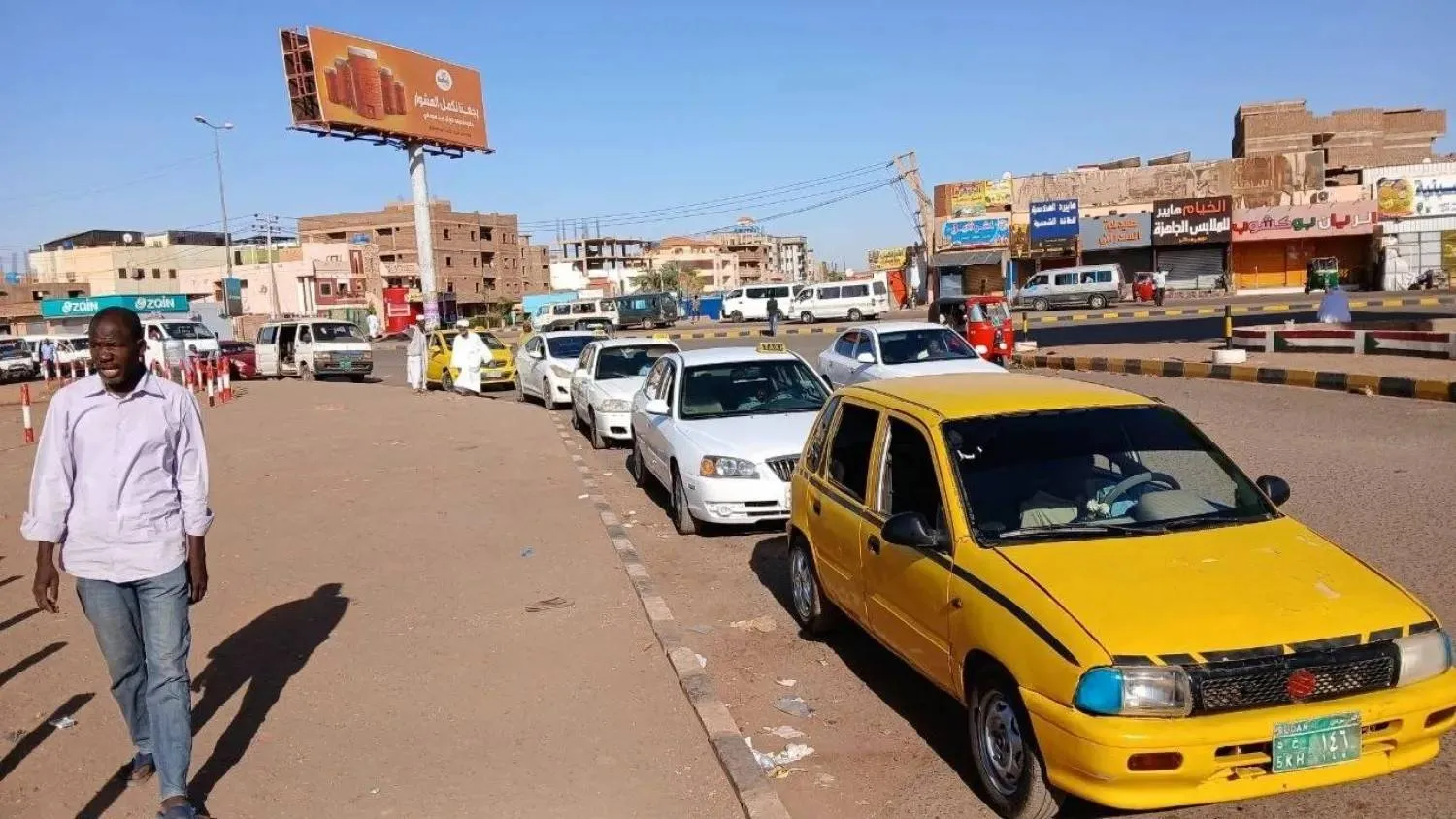
A general view of a public transport terminal in Khartoum (Asharq Al-Awsat)
TT

Transport Costs: A Daily Burden Weighing on Khartoum Residents

A general view of a public transport terminal in Khartoum (Asharq Al-Awsat)

Getting to work, hospital or university in Sudan’s capital, Khartoum, has become a test of survival in a city battered by war.

As transport fares rise, incomes fall and unemployment spreads, thousands of families are being forced to choose between commuting and paying for food, medicine and education.

The crisis has deepened as displaced people return to Khartoum and its three cities while services remain limited and the number of operating vehicles falls far short of demand. Higher fuel, spare parts and operating costs have pushed fares up further.

Passengers face long waits, frequent fare changes and shortages of vehicles on several routes. Damaged infrastructure and road closures have altered routes, lengthened journeys and forced many commuters to use more than one vehicle, sharply increasing daily costs.

Official figures reflect the wider economic strain. Gold export revenues reached about $370 million in the first quarter of this year, while fuel imports exceeded $697 million over the same period, highlighting the gap between export earnings and the cost of essential imports as large parts of the economy remain shut by the war.

For bus driver Abdullah Ali, 50, the transport crisis mirrors his personal losses. His bus was stolen when fighting began, and he was wounded by shrapnel in his right hand before fleeing to Gezira state, then Atbara and Shendi.

After returning to Khartoum about six months ago, he began working as a hired driver on a bus he does not own.

Ali told Asharq Al-Awsat that his income barely covered his daily needs and was not enough to renew his driver’s license. Many drivers were also unable to pay licensing and maintenance fees as fuel, oil, tire and spare-parts prices continued to rise, he said.

Moussa al-Safi, a laborer supporting four children, said transport consumed much of his daily income.

“The war has not only raised prices, but also reduced job opportunities,” he told Asharq Al-Awsat. “A worker pays to travel there and back without any guarantee of finding work or earning money by the end of the day.”

Private-sector employee Sami Abdel Qayoum said he often used more than one vehicle to reach work, taking up a large part of his monthly salary. To save money, he gets off before his destination and walks long distances.

University student Shehab Othman said some students arrived late or missed lectures because they could not afford transport, while others walked long distances to cut daily expenses.

Ezzedine Jaber, a member of the bus union, said short-route fares were about 2,000 Sudanese pounds, while some longer routes cost up to 6,000 pounds. Lower fuel prices were the main way to reduce operating costs and ease the burden on passengers, he said.

The impact extends beyond passenger transport.

“The price of a gallon of diesel has exceeded 40,000 pounds, raising the cost of transporting goods from Port Sudan and production areas to markets and export ports,” economist Mohamed al-Nayer told Asharq Al-Awsat. “That is ultimately reflected in the prices of goods and services.”

In Khartoum, where displaced people and refugees continue to return, transport fares have become part of the cost of survival.

Each increase can mean one less meal for a family, delayed medicine for a patient, a missed lecture for a student or kilometers of walking for a worker trying to protect what remains of their income.

Türkiye’s Erdogan Urges World to ‘Immediately’ Start Rebuilding Gaza

Türkiye’s President Recep Tayyip Erdogan addresses the 81st United Nations General Assembly at UN headquarters in New York City, US, September 22, 2026. (Reuters)
TT

Türkiye’s Erdogan Urges World to ‘Immediately’ Start Rebuilding Gaza

Türkiye’s President Recep Tayyip Erdogan addresses the 81st United Nations General Assembly at UN headquarters in New York City, US, September 22, 2026. (Reuters)

The world must immediately start the reconstruction of the devastated Gaza Strip, Turkish President Recep Tayyip Erdogan said on Tuesday.

"We must begin the reconstruction of Gaza immediately," he told the United Nations General Assembly, urging world leaders to "exert greater pressure on Israel."

Since Hamas fighters launched their October 7, 2023 attack on Israel, triggering a massive response, the tiny Palestinian territory has been devastated by countless Israeli airstrikes, which by October 2025 had left 84 percent of all structures damaged or destroyed, UN figures show.

Despite a US-brokered ceasefire in October 2025, Israel has continued its airstrikes and restricted entry of equipment that international NGOs say is needed for the territory's reconstruction, which has yet to begin.

According to a joint assessment published by the United Nations, the World Bank and the European Union in April, Gaza will require $71.4 billion in recovery and reconstruction spending over the next decade.

Erdogan also urged all nations that have yet to recognize Palestine as an independent state to "reconsider," with his words prompting the Israeli delegation to walk out of the hall.

"I would like to call upon all those countries who have yet not recognized the state of Palestine to reconsider their decisions," he said.

A year ago, France led a special UN summit to recognize a Palestinian state at which 10 countries formally made the move, among them Britain, Canada and Australia, bringing the number of UN member states to do so to around 157, more than four-fifths of the UN membership.

The move has been roundly rejected by Israel.


In UN Farewell, Macron Denounces Trump’s Gaza Diplomacy as Spectacle of Shame

President of France, Emmanuel Macron speaks during the 81st session of the UN General Assembly at UN Headquarters on September 22, 2026 in New York City. (Getty Images/AFP)
TT

In UN Farewell, Macron Denounces Trump’s Gaza Diplomacy as Spectacle of Shame

President of France, Emmanuel Macron speaks during the 81st session of the UN General Assembly at UN Headquarters on September 22, 2026 in New York City. (Getty Images/AFP)

France's President Emmanuel Macron on Tuesday dismissed US President Donald Trump's claims of having secured peace in Gaza, saying not a single humanitarian corridor had been reopened in the enclave despite the proclaimed peace.

In his final address to the United Nations before leaving office next year, Macron said the world was witnessing a spectacle that should shame everyone, rebuking Trump's portrayal of his Gaza peace plan as a diplomatic triumph.

He spoke at the United Nations General Assembly hours after Trump had from the same rostrum hailed his Gaza peace plan as a diplomatic triumph.

"A year ago, here in this very hall, about a dozen states had recognized Palestine. I hear the cynicism of some people: 'Recognition is just a ‌piece of paper, ‌look at the reality,'" Macron said, banging his fist on the podium ‌in ⁠his last speech at ⁠the United Nations before stepping down next May.

"But what credibility do we have if we continue to remain inactive in the face of Gaza? Some boast of a supposed peace. But that peace has not reopened humanitarian access for a single second. Are we simply to stand by and watch this spectacle that should shame us all?"

WHITE HOUSE RESPONDS

In response to Macron's criticism, White House spokeswoman Anna Kelly said: “President Trump ended the war between Israel and Hamas, freed all living hostages, returned the bodies of the deceased to their loved ones, and ⁠is now leading the implementation of the 20-Point Plan for Peace in ‌Gaza. While others talk, this President took this complex problem head ‌on. No one has done more for peace and stability in the region.”

Macron has faced criticism among some politicians ‌and activists in France that he has done little since recognizing a Palestinian state last September.

Despite the ‌criticism, Paris has toughened its stance on settler violence against Palestinians in the West Bank, imposing some national sanctions and launching a process to ban products from Israeli settlements in the occupied West Bank.

"Look at what is happening in the West Bank, where every day violations are committed. In whose name? Hamas has never operated in the West Bank," ‌Macron said.

"What is happening there is building, day by day, the impossibility of a project that should be based on respect for the legitimate right ⁠of the Palestinian people ⁠to exist."

France's ties with Israel have been particularly strained over the last year. Macron said those who believed that violating the sovereignty of all of Israel's neighbors would ensure its security were mistaken.

"They are weakening Israel's security, both today and in the future," he said.

'LONG LIVE THE UNITED NATIONS'

Seven months from France's next presidential election, Macron was making his last appearance after first taking to the rostrum in 2017.

Often showing a keen eye for the trappings of diplomacy — the grand settings, the symbolism, the personal connections — he has at the same time failed to translate this into lasting strategic gains, analysts say.

However, he has always been a staunch defender of the multilateral system and the United Nations.

Macron warned against a global "return to the law of the jungle", saying countries faced a choice between a world governed by power and coercion and a "civilized international society."

"Our duty, more than ever, is to stand alongside the United Nations. We cannot accept the new order of impunity that some would like to build," he said.

He ended his speech with "Long Live the United Nations!"


Yemen Govt Expands Community Mobilization to Support Fighters on Frontlines

This frame grab taken from AFPTV video footage shows fighters affiliated with the Yemeni government engaging in clashes with Houthi militants in Al-Jawf province on September 15, 2026. (AFPTV / AFP)
TT

Yemen Govt Expands Community Mobilization to Support Fighters on Frontlines

This frame grab taken from AFPTV video footage shows fighters affiliated with the Yemeni government engaging in clashes with Houthi militants in Al-Jawf province on September 15, 2026. (AFPTV / AFP)

The Yemeni government has expanded community support for the armed forces and frontlines by mobilizing various social groups and provinces to participate in backing fighters and providing essential supplies to the frontlines.

Nayef Al-Bakri, Minister of Youth and Sports and head of a committee for popular support and government backing for the armed forces, told Asharq Al-Awsat that the committee operates under the directives of Chairman of the Presidential Leadership Council Dr. Rashad Muhammad Al-Alimi, council members, and the prime minister.

The committee aims to organize and activate popular support for the armed forces and fighters across various frontlines, which includes providing food, petroleum products, fuel, and essential materials needed for fighters to maintain their positions, he added.

The committee includes representatives from several ministries, including Interior, Defense, Social Affairs, Transport, Health, and Industry. A broader committee includes representatives from more than 15 provinces, aiming to unify popular efforts and strengthen the state of mobilization.

Several provinces, including Socotra, are preparing to dispatch relief convoys to battle areas, Al-Bakri revealed.

Community support encompasses the health sector through blood donations and backing provincial blood banks. Various social groups have become part of the support system, he went on to say.

Taiz, Hodeidah, Lahij, Dhale, Marib, Al-Jawf and Shabwa are priority frontlines, the minister said.

Taiz is witnessing a "decisive battle," he stressed.

On whether the support committee would handle preparing youths to join the frontlines, Al-Bakri explained that the responsibility for recruitment is the responsibility of military authorities.

The minister said that the Iran-backed Houthi group is threat to Yemen and regional stability, especially in light of its "attempts to undermine the security of navigation and regional waters."

He stressed that Saudi Arabia stands as the primary supporter of Yemen, a role that encompasses all economic, political, and military sectors, in addition to relief and development aid.

Al-Bakri was optimistic that the Yemeni armed forces would make progress on several fronts, including in Taiz, Kahbub, and Shabwah.