GACA and Vertical Aerospace Sign MoU on Advanced Air Mobility

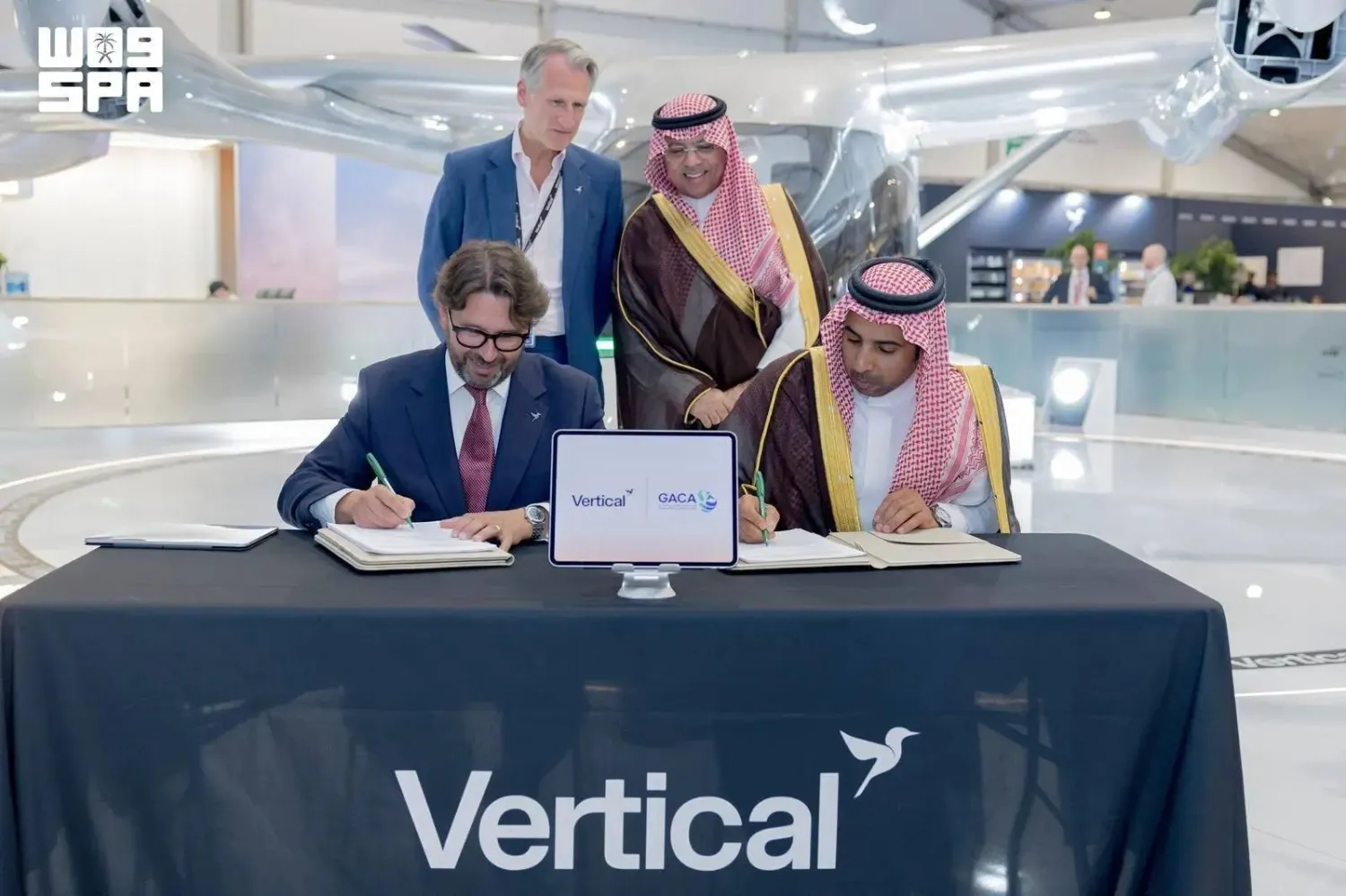
The General Authority of Civil Aviation (GACA) signed a memorandum of understanding (MoU) with Vertical Aerospace. (SPA)
TT

GACA and Vertical Aerospace Sign MoU on Advanced Air Mobility

The General Authority of Civil Aviation (GACA) signed a memorandum of understanding (MoU) with Vertical Aerospace. (SPA)

The General Authority of Civil Aviation (GACA) signed a memorandum of understanding (MoU) with Vertical Aerospace, one of the world's leading companies in advanced air mobility (AAM), to help establish the regulatory and operational foundations needed to enable the Kingdom's advanced air mobility sector, the Saudi Press Agency reported on Monday.

The MoU was signed on the sidelines of the Farnborough International Airshow 2026, currently being held in the United Kingdom, in the presence of GACA President Abdulaziz Al-Duailej.

The MoU builds on GACA's efforts to achieve the objectives of the Kingdom's Advanced Air Mobility Roadmap.

It also facilitates the exchange of technical expertise and best practices in certification and approvals with leading international civil aviation authorities.

The signing reflects GACA's commitment to creating a flexible, enabling regulatory framework that supports the adoption of the latest innovative aviation technologies and the next generation of environmentally friendly aircraft. This is intended to advance the Kingdom's air transport ecosystem and strengthen Saudi Arabia's position as a leading global logistics hub, in line with the objectives of the Saudi Aviation Program and Saudi Vision 2030.

Additionally, on the sidelines of the Farnborough International Airshow 2026, and in the presence of the GACA president, Cluster2 Airports Company signed a MoU with Vertical Aerospace to support infrastructure solutions for electric vertical take-off and landing (eVTOL) aircraft.


Saudi-Egypt Electricity Interconnection Nears Operation

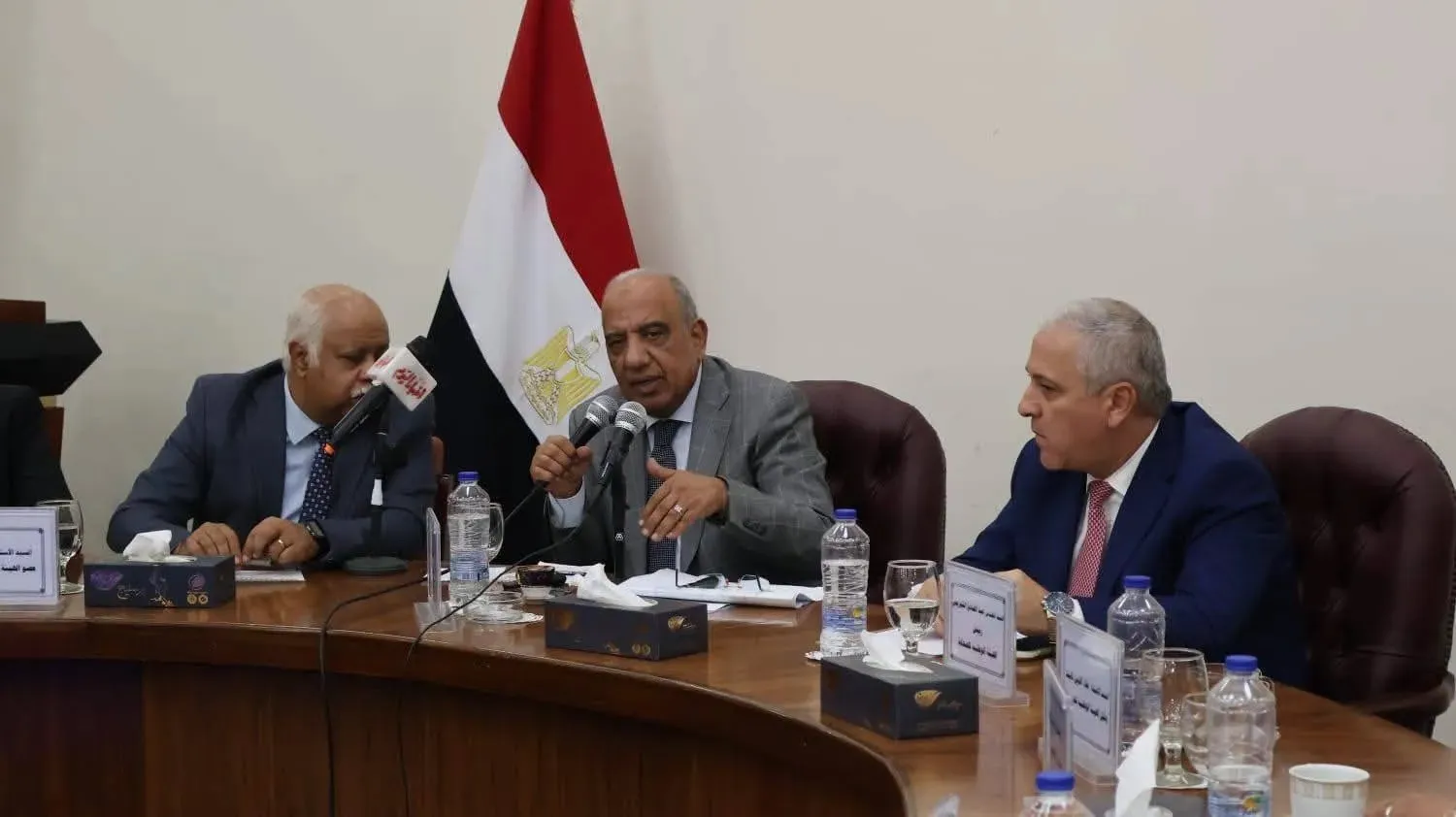
Egyptian Electricity Minister Mahmoud Esmat during a seminar at the National Press Authority on Sunday evening (Electricity Ministry’s Facebook page)
TT

Saudi-Egypt Electricity Interconnection Nears Operation

Egyptian Electricity Minister Mahmoud Esmat during a seminar at the National Press Authority on Sunday evening (Electricity Ministry’s Facebook page)

The Saudi-Egypt electricity interconnection, one of the region’s largest and most ambitious energy projects, is nearing actual operation after an official Egyptian announcement that work on the Egyptian side has been completed and the project has entered trial operations.

The strategic project, with investments of about $1.8 billion and an exchange capacity of up to 3,000 megawatts, is not only a step toward improving the efficiency of the two countries’ national grids, but also represents a pivotal shift in the regional and international energy landscape.

By connecting the two largest electricity grids in the Arab world, the project lays the initial foundation for a common Arab electricity market and reinforces the two countries’ positions as key hubs for energy trading and transmission between Asia, Africa and Europe.

Egyptian Side Ready

Egyptian Electricity and Renewable Energy Minister Mahmoud Esmat said on Sunday that the project aims to exchange 3,000 MW of electricity along a 1,320-kilometer route.

He noted that the pace of implementation and progress accelerated between July 2024 and June 2025, bringing the project to the trial-operation stage.

Esmat confirmed that all engineering and construction work on the Egyptian side of the interconnection with Saudi Arabia had been completed, with only a small portion of work, technical testing and final preparations remaining on the Saudi side.

Work in Egypt included construction of the 500-kilovolt Badr converter station and the 320-kilometer Badr-Taba overhead line, as well as giant Suez Canal crossing towers rising more than 220 meters to ensure the smooth and safe transmission of electricity ahead of the start of actual exchanges between the two countries.

Esmat said during a Feb. 15 meeting with President Abdel Fattah al-Sisi that the interconnection would play an important role in stabilizing Egypt’s national electricity grid during the summer, when consumption peaks.

Technical Specifications

According to official Egyptian information, the project is one of the region’s largest electricity interconnection projects, with investments estimated at about $1.8 billion and an exchange capacity of up to 3,000 MW.

It consists of three major high-voltage converter stations: one east of Madinah and another in Tabuk, Saudi Arabia, and a third in Badr, east of Cairo.

The stations are connected by overhead lines extending about 1,350 kilometers, in addition to submarine cables crossing the Gulf of Aqaba.

Strategic Shift in Regional Energy Security

Khaled El-Shafei, an economist and head of the Capital Center for Economic Studies, said the interconnection represents a strategic shift in the region’s energy landscape and security.

He noted that the project strengthens energy security in both countries with a capacity of up to 3,000 MW through high-voltage direct-current lines extending 1,320 kilometers, equivalent to about 8 to 10 percent of Egypt’s total operating reserve capacity.

El-Shafei underlined that this would support the stability of the national grid without the need to operate additional generating plants with high operating costs. It would also reduce carbon emissions by millions of tons annually through optimal use of the two countries’ renewable-energy mix.

He continued that once the interconnection becomes fully operational, it would generate substantial economic savings in fossil-fuel consumption and power-plant maintenance costs.

Gateway to Europe

Esmat also discussed existing electricity interconnection projects with neighboring countries, including Sudan, Libya and Jordan, saying studies for interconnection projects with Greece and Italy are currently being finalized, which would make Egypt a bridge to Europe, according to a ministry statement.

On the regional level, El-Shafei said the Saudi-Egypt project’s entry into the operational phase is the essence for establishing a common Arab electricity market, as it connects the two largest electricity grids in the Arab region, which together account for more than 60 percent of total electricity generated in the Arab world.

The development also opens broad prospects for Egypt to capitalize on its unique geographical position as a key regional energy-trading hub. It would allow the Egyptian grid to manage a multilateral interconnection system extending to the Arab east through Saudi Arabia and Jordan, the Maghreb through Libya, and Africa through the existing interconnection with Sudan.

Egypt would also serve as a future gateway to Europe through interconnection projects being studied and implemented with Greece, Cyprus and Italy to transmit up to 2,000 MW, boosting direct economic returns and making the region a key pillar for regional and international energy stability and sustainability.



Acwa-WTCO Consortium Holds Preparatory Meeting in Syria to Launch Water Partnership Studies

The Saudi and Syrian delegations meet in Damascus on Monday. (SPA)
TT

Acwa-WTCO Consortium Holds Preparatory Meeting in Syria to Launch Water Partnership Studies

The Saudi and Syrian delegations meet in Damascus on Monday. (SPA)

The consortium comprising the Water Transmission Company (WTCO) and Acwa Power held on Monday a preparatory meeting in Damascus on the tripartite agreement concluded with the Syrian Ministry of Energy.

The meeting aimed to activate the agreement's provisions and develop an implementation plan to support and develop water sector projects in Syria.

The agreement aims to prepare preliminary feasibility studies based on an assessment of Syria's current water resources, determine current and future water needs, and examine the optimal mix of seawater desalination and the use of surface and groundwater resources.

This will pave the way for the development of integrated water desalination and transmission projects with production and transmission capacities of up to 1.2 million cubic meters per day, with transmission networks extending approximately 400 kilometers.

The meeting reviewed the work plan and reaffirmed the agreement's objectives and implementation timeline. It also covered the allocation of tasks and mechanisms for communication and joint work among the consortium parties and the consulting and implementing entities.


Saudi Arabia, Australia Discuss Climate Cooperation Opportunities

Saudi Minister of Energy and Minister of Industry and Mineral Resources Prince Abdulaziz bin Salman bin Abdulaziz and Australian Minister for Climate Change and Energy Chris Bowen meet in Jeddah. (SPA)
TT

Saudi Arabia, Australia Discuss Climate Cooperation Opportunities

Saudi Minister of Energy and Minister of Industry and Mineral Resources Prince Abdulaziz bin Salman bin Abdulaziz and Australian Minister for Climate Change and Energy Chris Bowen meet in Jeddah. (SPA)

Saudi Minister of Energy and Minister of Industry and Mineral Resources Prince Abdulaziz bin Salman bin Abdulaziz met in Jeddah on Monday with Australian Minister for Climate Change and Energy Chris Bowen.

They discussed opportunities for cooperation on climate action and joint efforts in connection with the 31st Conference of the Parties to the United Nations Framework Convention on Climate Change (COP31), scheduled to be held in Türkiye in November this year.

Talks focused on advancing the objectives and principles of the United Nations Framework Convention on Climate Change and the Paris Agreement, with a view to achieving inclusive, balanced and practical outcomes that take into account the national circumstances of member states.

They reviewed Saudi Arabia’s initiatives and efforts to address the impacts of climate change, including the deployment of renewable energy, emissions management, reduction and removal, the Saudi Green Initiative, as well as the implementation of the Circular Carbon Economy approach and its technologies and other national and regional programs and initiatives.

Bowen toured the Shuaibah Solar Power Project, one of the largest projects under Saudi Arabia’s National Renewable Energy Program.

His visit also included a tour of Historic Jeddah, one of the Kingdom’s leading cultural and tourism destinations, as well as a visit to King Abdullah University of Science and Technology (KAUST), where he was briefed on the university’s research environment and academic programs in science, engineering and biotechnology.