
A senior Yemeni official has revealed what he described as efforts by the Houthi group, in coordination with Iran's Revolutionary Guard Corps (IRGC), to establish an administrative entity dedicated to managing and collecting levies from commercial vessels transiting the Red Sea. He warned that the move aims to turn threats to international shipping into a sustainable source of funding for the group.
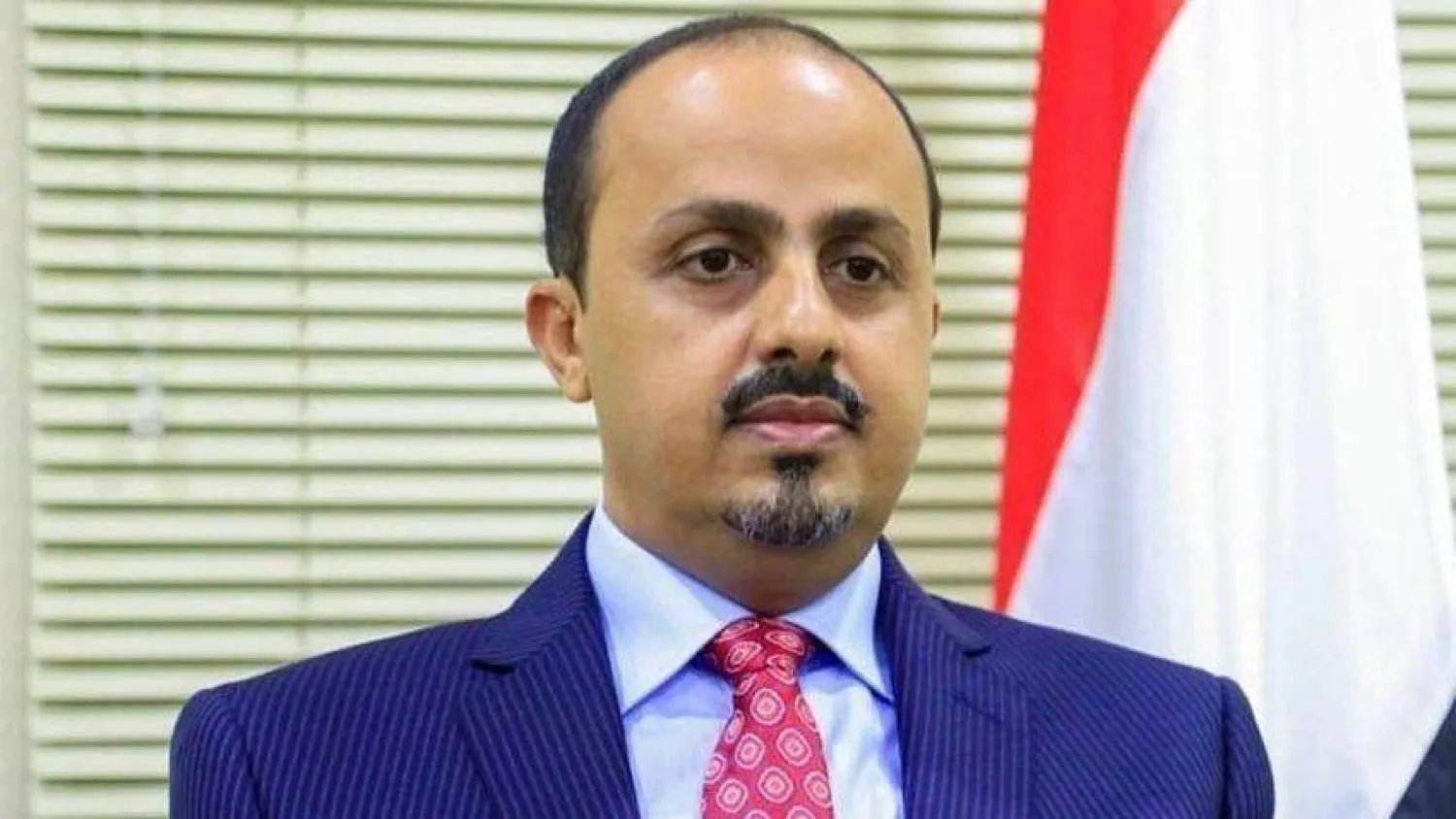
In exclusive remarks to Asharq Al-Awsat, Yemeni Information Minister Moammar Al-Eryani said the IRGC's role in the project extends beyond military support to designing the financial and administrative mechanisms that would enable the Houthis to transform maritime extortion into an organized operation and a permanent source of revenue.
The Yemeni government has raised its state of readiness to address various scenarios stemming from Houthi threats in the Red Sea, reflecting official concerns over the impact of attacks on commercial vessels and international shipping lanes on the country's economic and humanitarian conditions. The move comes amid continued debate over the worsening living conditions in areas under Houthi control.
Al-Eryani said that "the Houthi militia and Iran's Revolutionary Guard Corps, under the supervision of Iranian experts, are working to establish an administrative entity specializing in managing and collecting levies from commercial ships." He said the plan goes beyond collecting money and represents an attempt by the group to impose itself as a de facto authority in the Red Sea.
He added that, through this entity, the Houthis seek to place shipping companies in a position where they are compelled to deal with the group as though it were an official authority authorized to grant vessels safe passage through one of the world's most important international maritime routes.
The Yemeni minister warned that if successful, the plan could lead to the creation of "the first contemporary model in which a terrorist group sustainably finances itself by imposing levies on trade passing through one of the world's most important waterways."
"What we are facing today is not merely isolated attacks on ships," he said. "It is an attempt to establish a terrorist economy based on extorting international maritime trade and turning a security threat into an integrated financial and administrative system."
Al-Eryani stressed that what he described as the Iranian plan is aimed not only at threatening navigation and disrupting shipping traffic in the Red Sea, but also at "turning this international waterway into a permanent source of income to finance terrorism and strengthen Tehran's influence and its proxies in the region."
The Yemeni Presidential Leadership Council had previously affirmed that the state would not allow the continuation of the policy of extortion and intimidation practiced by the Iran-backed Houthi group. It stressed that decisions on war and peace must remain in the hands of state institutions and that any future arrangements would not result from pressure or the imposition of a fait accompli.
Presidential Leadership Council Chairman Rashad Al-Alimi also stressed that the Houthis' continued attempts at escalation require the highest level of vigilance and that they must not be allowed to drag Yemen once again into what he described as futile confrontations. He warned that the consequences of any escalation would not be confined to Yemen but would also affect regional security, particularly that of countries bordering the Red Sea.