



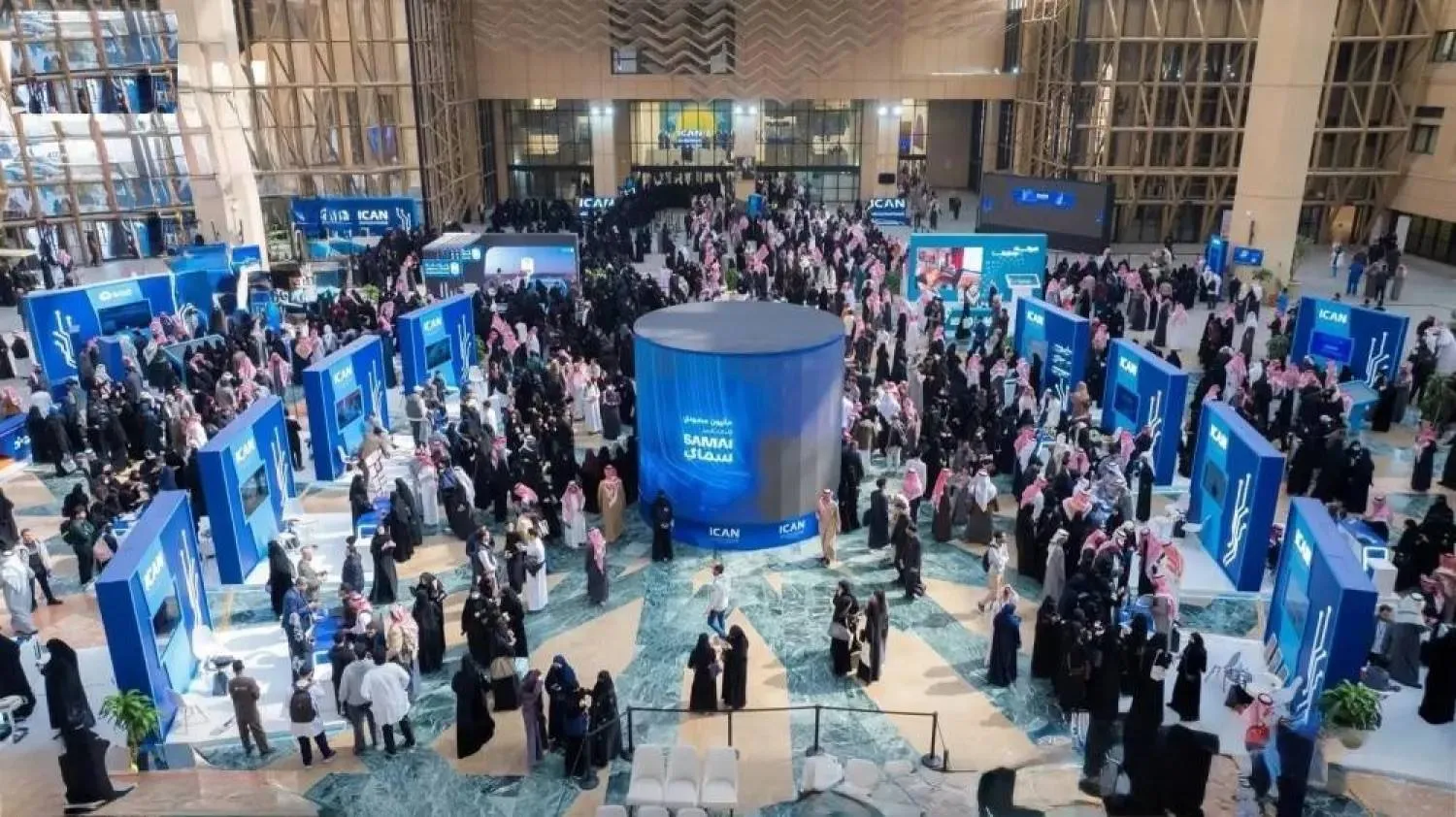

Saudi Arabia is poised for a new phase of rapid expansion in artificial intelligence, driven by major investments in data centers and digital infrastructure and strategic partnerships with leading global companies, according to experts.
The expansion is expected to strengthen the Kingdom’s position as a regional and global hub for the data economy and advanced technologies, supporting Vision 2030 goals of building a more diversified and sustainable knowledge-based economy.
Experts expect the next phase to move beyond attracting advanced technologies toward localizing AI-related industries, particularly cloud computing, hyperscale data centers, space technologies and satellites, enabling Saudi Arabia to lead emerging sectors of the digital economy and compete globally.
AI as a pillar of economic diversification
Abdulrahman Baeshen, chairman of the Al-Shorouq Center for Economic Studies in Jazan, told Asharq Al-Awsat that Saudi Arabia has made AI a key driver of economic development under Vision 2030 because of its reach across economic sectors and its potential to support the transition toward a diversified, sustainable economy.
International partnerships have produced significant projects in data and technology industries, while the National Strategy for Data and AI, launched by the Saudi Data and Artificial Intelligence Authority (SDAIA), has helped strengthen the Kingdom’s position in the global digital economy.
According to Baeshen, Saudi Arabia is moving rapidly to establish itself among the world’s leading AI nations by enabling the public and private sectors to deploy advanced technologies across Vision 2030 programs while developing an integrated ecosystem encompassing national talent, regulation and digital infrastructure.
The Kingdom has also developed a comprehensive plan for human capital in data and AI, including training Saudi professionals, establishing a flexible regulatory environment and providing advanced digital infrastructure that allows developers and entrepreneurs to create new applications and technologies.
Investment incentives and dedicated funds have helped attract global companies and high-value investments. Baeshen also highlighted the role of research institutions in driving innovation, developing advanced technology industries and turning smart cities into platforms for AI applications.
Digital infrastructure, he noted, is no longer limited to roads, ports and energy networks. It now encompasses data centers, fiber-optic networks, subsea cables, smart logistics and digital energy systems - all critical to supporting a knowledge economy and attracting advanced industries.
From technology consumer to producer
Khaled Ramadan, chairman of the International Center for Strategic Studies in Cairo, sees a historic opportunity for Saudi Arabia to shift from consuming advanced technologies to producing and exporting them, capitalizing on substantial public and private investment and partnerships with major global companies.
While international cooperation on AI and data centers provides an important foundation, the next phase requires localizing knowledge and technology and linking AI to the space and satellite industries, which together form a key part of the global digital economy’s infrastructure.
Ramadan proposed establishing an international Saudi center specializing in AI and the data industry, bringing together scientific research, international partnerships and technology development to strengthen the Kingdom’s technological sovereignty and create long-term economic value.
The real investment, in his view, lies not in importing technology but in developing national capabilities to create, export and compete with it globally.
Space economy
Abdullah bin Zaid Al-Meleihi, CEO of Saudi Excellence Holding, pointed to the space economy as evidence that Saudi Arabia is already beginning to reap the benefits of its investments in AI and the knowledge economy.
In remarks to Asharq Al-Awsat, he said that the Saudi space economy reached about $8.7 billion in 2024, according to the Saudi Space Market Report issued by the Communications, Space and Technology Commission. The direct space market, including satellites, services, infrastructure and space applications, was valued at approximately $1.9 billion.
He further pointed to estimates that put the space economy at about $31.6 billion by 2035, representing a compound annual growth rate of nearly 12%, while the direct market is projected to reach around $5.6 billion.
Al-Meleihi expected that growth to open significant investment opportunities in AI-linked sectors, including satellites, space communications, remote sensing, space-data analytics, satellite internet, space security and geospatial services, as well as manufacturing satellite components and space systems.
He added that the trend reflects Saudi Arabia’s drive to build an economy based on knowledge and advanced industries while expanding opportunities for investment, technology transfer and national talent development, strengthening its position as a regional and international hub for AI, space and the digital economy.


