
Al-Burhan’s Agreement to Conditional Dialogue Sparks Debate in Sudan

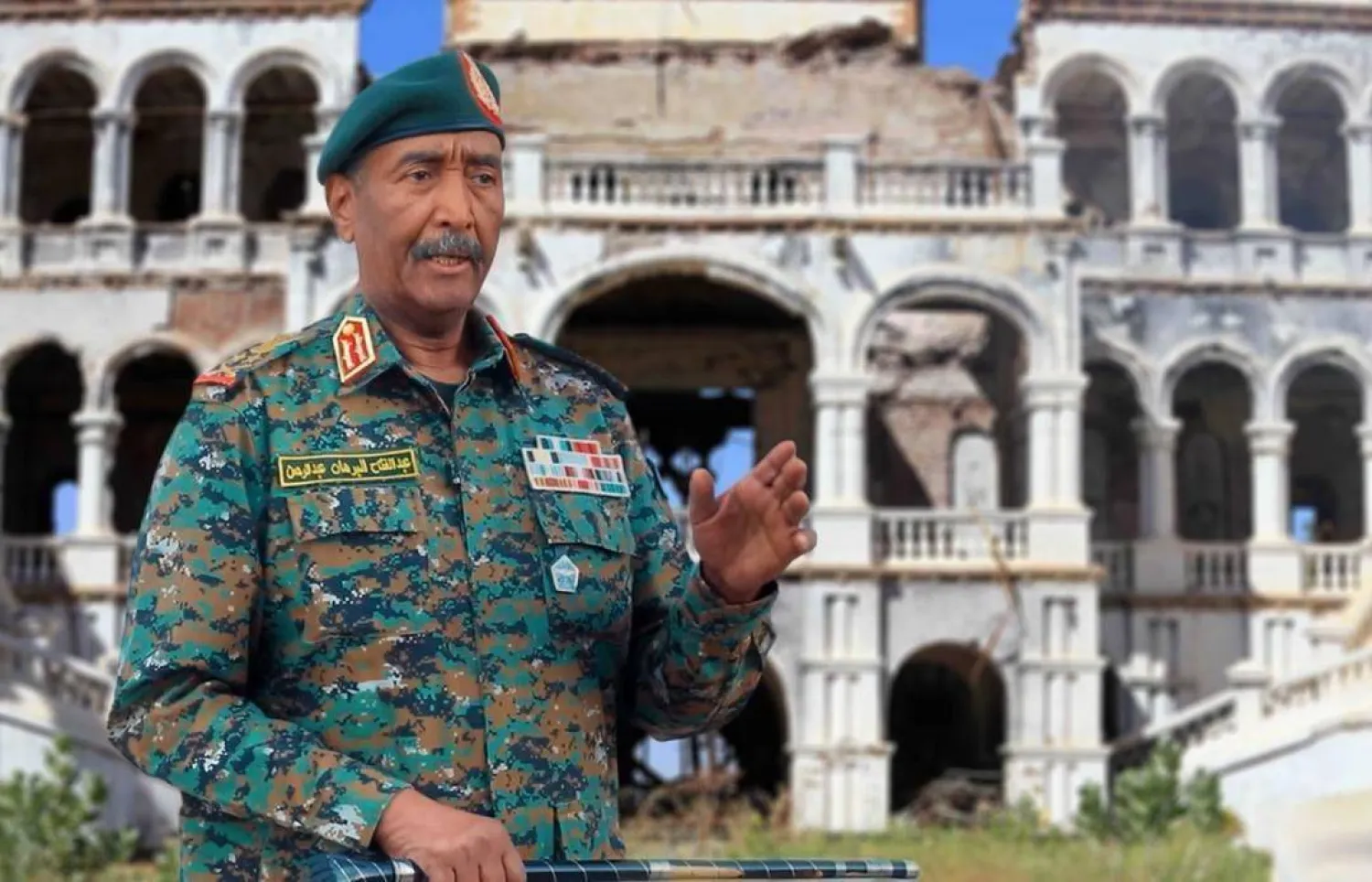
 Chairman of the Transitional Sovereignty Council and Commander of the Sudanese Army Abdel Fattah al-Burhan delivers a speech at the presidential palace in Khartoum. (SUNA)
Chairman of the Transitional Sovereignty Council and Commander of the Sudanese Army Abdel Fattah al-Burhan delivers a speech at the presidential palace in Khartoum. (SUNA)
TT

Al-Burhan’s Agreement to Conditional Dialogue Sparks Debate in Sudan

 Chairman of the Transitional Sovereignty Council and Commander of the Sudanese Army Abdel Fattah al-Burhan delivers a speech at the presidential palace in Khartoum. (SUNA)
Chairman of the Transitional Sovereignty Council and Commander of the Sudanese Army Abdel Fattah al-Burhan delivers a speech at the presidential palace in Khartoum. (SUNA)

The agreement by Chairman of the Transitional Sovereignty Council and Commander of the Sudanese Army Abdel Fattah al-Burhan to launch intra-Sudanese dialogue has sparked debate among political forces in the war-torn country.

The questions raised went beyond whether to take part or boycott, but to whether political dialogue held during war can stop the fighting and unify the country, or will it just be confined to regions held by the army.

Burhan declared last week that he was agreeing to an initiative to form an independent national mechanism that would prepare “comprehensive dialogue”. He vowed to provide legal, security, political and logistic guarantees for the participants, saying no foreign powers would be involved.

While agreeing to the dialogue, al-Burhan also rejected peace that would return the paramilitary Rapid Support Forces (RSF) and its supporters to power.

Peace begins with the RSF laying down its weapons, otherwise the army will continue its operations against it, he warned.

Prime Minister Kamil Idris said on Sunday that his government wants to restore peace and preserve Sudan’s unity.

He also added that the RSF should be designated a terrorist organization, vowing that the army will not be lenient with its forces.

Lawyer Nabil Adib, who was part of the committee that proposed the dialogue, told local media that his committee does not aim to end the war, but reaching political consensus.

He hastily added, however, that that “ending the war may be one of the outcomes of the dialogue if the participants agree to it.”

His statements reveal a dilemma: if the dialogue participants reach a consensus demanding an end to the war, implementing it would require the approval of both warring parties. Should the RSF remain outside the process, the dialogue may succeed in producing a political stance against the war, but it lacks a mechanism to enforce a ceasefire.

Adib notably kept the door open to members of the RSF-aligned Sudan Founding Alliance (Tasis) to take part in the dialogue. The alliance includes political and armed factions that are opposed to the army.

“Alliance parties that do not carry weapons can take part in the dialogue,” he confirmed.

The pro-army Democratic Bloc welcomed the dialogue initiative, saying it was a step forward in “resolving the crisis through national political means”.

On the other side of the divide, the Somoud civilian alliance, led by former PM Abdalla Hamdok, rejected any dialogue held while the war rages.

In a statement, it said that any “political process - independent of the warring parties - must start with an end to the war and addressing the humanitarian catastrophe.”

It warned against holding dialogue in areas held by the army, saying it would “consolidate the unofficial division” of Sudan.

Sudan’s People's Liberation Movement-Revolutionary Democratic Current (SPLM-RDC), led by Yasir Arman, said the current crisis “goes beyond the war.”

It is tied to building the state and the presence of several armies and militias in the country, it noted in a statement. It warned against dialogue that does not address the root causes of the crisis.

The National Umma Party demanded dialogue that includes all segments of society, except for the National Congress Party.

Umma Party leader Mubarak al-Fadil al-Mahdi called for an end to the fighting, as well as national reconciliation and negotiations over security arrangements that would lead to the unification of the army.

He echoed warnings that holding the dialogue in army-held regions would consolidate divisions in the country and fuel the fighting.

The army believes that excluding the RSF from power is a refusal to grant political legitimacy to a force that took up arms against it. However, the RSF’s continued control over parts of the country will undermine any constitutional or governmental arrangements produced by the dialogue in areas under its authority.

Erdogan Plans Syria Visit, Reaffirms Türkiye’s Support for Stability

Turkish President Recep Tayyip Erdogan receives Syrian President Ahmed al-Sharaa during his first visit to Türkiye in February 2025. (Turkish Presidency)
TT

Erdogan Plans Syria Visit, Reaffirms Türkiye’s Support for Stability

Turkish President Recep Tayyip Erdogan receives Syrian President Ahmed al-Sharaa during his first visit to Türkiye in February 2025. (Turkish Presidency)

Turkish President Recep Tayyip Erdogan plans to visit Syria soon, reviving a trip initially scheduled for April but postponed after the outbreak of the Iran war in February.

Erdogan pledged that Türkiye would do everything possible to bolster stability in its neighbor, stressing that Syria “will not be alone,” according to excerpts from a television interview carried by Turkish media on Sunday.

He predicted that Syrian Kurds would play a role in peace and stability and pledged to strengthen Türkiye’s ties with Kurdish communities across the region.

Erdogan also cited parliament’s approval of legislation on “Strengthening National Solidarity and Social Integration,” known as the “framework law,” allowing members of the Kurdistan Workers’ Party (PKK) to return and reintegrate into Turkish society as part of the “Terror-Free Türkiye” process.

The Kurdish side calls the initiative the “Peace and Democratic Society Process,” centered on the PKK’s dissolution and disarmament, along with affiliated groups.

SDF integration

Erdogan’s remarks coincided with comments attributed by the pro-government Türkiye newspaper to Mahmoud Berkhedan, a Syrian Democratic Forces (SDF) commander in Ain al-Arab, or Kobani.

Berkhedan praised Erdogan and his ally, Nationalist Movement Party (MHP) leader Devlet Bahceli, for their role in Türkiye’s new peace process.

According to Berkhedan, 99% of outstanding issues over military integration with Damascus have been resolved, with some 10,000 to 12,000 members of the Kurdish People’s Protection Units (YPG), the main component of the SDF, integrated into the Syrian army.

He added that the YPG would be dissolved within days and the Autonomous Administration structure in northern and northeastern Syria would disappear.

“We have buried our weapons and are not demanding an independent state,” Berkhedan declared. “There is no turning back. We will participate side by side in building a new Syria within one army, one state, one flag and a shared homeland.”

Military integration is nearly complete, he added, though the status of the Women’s Protection Units (YPJ) and Turkish nationals serving in the Kurdish forces remains unresolved.

Syria trip

Turkish Ambassador to Damascus Nuh Yilmaz revealed Friday that Erdogan had been considering a visit around April 21, but the Iran war and closure of airspace prevented it.

The date had not been finalized before regional developments intervened, Yilmaz explained, but the trip remains planned and will be announced by the Turkish presidency once arrangements are complete.

He expects Erdogan to visit before the end of the year.

Erdogan last traveled to Damascus in January 2011, when he was Türkiye’s prime minister, about two months before the Syrian uprising and the subsequent rupture in diplomatic relations over Ankara’s opposition to the Assad government’s crackdown on protests.

Syrian President Ahmed al-Sharaa has made four visits to Türkiye since the fall of the Assad regime in December 2024, while exchanges between senior officials have increased and political, economic, security and defense ties have deepened.

Yilmaz noted that four strategic security threats along Türkiye’s border — human smuggling, drug trafficking, irregular migration and terrorism — had disappeared since the collapse of the regime.

Trade between the two countries has also risen 40% to $3.75 billion, with a medium-term target of $10 billion. Talks are continuing on a free-trade agreement, joint industrial zones and opening all crossings along the more than 900-kilometer border.

Türkiye’s foreign and interior ministries are also working on new visa arrangements to make it easier for Syrians who have returned home to visit Türkiye, according to Yilmaz.


Did the US Give Israel a Green Light to Seize Lebanon's Ali al-Taher?

 The Ali al-Taher heights, overlooking destruction in the southern Lebanese town of Kfar Tebnit. (Asharq Al-Awsat)
The Ali al-Taher heights, overlooking destruction in the southern Lebanese town of Kfar Tebnit. (Asharq Al-Awsat)
TT

Did the US Give Israel a Green Light to Seize Lebanon's Ali al-Taher?

 The Ali al-Taher heights, overlooking destruction in the southern Lebanese town of Kfar Tebnit. (Asharq Al-Awsat)
The Ali al-Taher heights, overlooking destruction in the southern Lebanese town of Kfar Tebnit. (Asharq Al-Awsat)

Political sources in Tel Aviv said Israel’s escalation in South Lebanon over the past three days has Washington's understanding, provided it does not reignite the war and is accompanied by steps to advance US-sponsored negotiations between the Lebanese and Israeli governments.

The sources noted that the US understands Israel’s response because Hezbollah has continued operations that killed two Israeli soldiers and seriously wounded three others in a drone attack in the Ali al-Taher area.

The Israeli military subsequently launched intensive airstrikes and shelling across numerous areas it claimed were linked to Hezbollah, killing several civilians, including children.

Israel’s Maariv newspaper reported that political sources said the US had given Israel a “green light,” while Haaretz cited political sources as saying the American administration had expressed understanding for Israeli operations but asked Tel Aviv to take diplomatic steps to help advance negotiations with Beirut and exercise restraint on other fronts.

According to the Israeli account, the fierce battle over the Ali al-Taher hills is driven not only by their commanding position over the Nabatieh area, a Hezbollah stronghold, but also by a large underground tunnel complex with eight entrances that Israel describes as Hezbollah’s southern “Kirya.”

The Kirya is the name of the Israeli military headquarters complex in Tel Aviv, which also houses the Defense Ministry and an underground command center.

Israel claims that more than 40 senior Hezbollah operatives were initially trapped in the underground complex and have been encircled for two months.

Their number has since fallen to about 15, according to the Israeli assessment. Israel believes some are officers and trainers from Iran’s Revolutionary Guard Corps and wants to expose their presence publicly.

Israeli Prime Minister Benjamin Netanyahu hopes their surrender could provide an image of victory over Hezbollah. Israel is demanding that those still inside emerge either in surrender or be killed.

Hezbollah, meanwhile, is seeking to thwart the Israeli plan and exact a heavy price from the military, using explosive-laden drones, planted explosives and clashes.

Each Israeli casualty has increased pressure on Netanyahu and military commanders, prompting heavier strikes on Lebanese homes and neighborhoods.

For Netanyahu, the mounting losses also carry political costs as he faces a difficult election battle. They undermine his claim to have achieved the war’s objectives of dismantling and disarming Hezbollah, which Israel says is regrouping and rebuilding its capabilities. The elections are set for October.

A wide gap nevertheless remains between Washington and Tel Aviv over diplomacy.

The US administration believes the most effective blow against Hezbollah would be a political agreement with Lebanon and progress toward a peace treaty.

Washington views Israel’s emphasis on military action as benefiting Hezbollah and its Iranian backers by weakening the Lebanese government and state.

Iran has threatened in recent days to intervene if Israel continues operations in Ali al-Taher. The warning has made the Israeli military cautious about launching a ground assault on the underground command center.

Instead, it has maintained fire around the complex’s eight entrances, seeking to prevent those trapped inside from escaping and block reinforcements or relief, while cutting off water and electricity.

Israel’s public broadcaster Kan cited a source close to US Lt. Gen. Joseph Clearfield, who heads the committee overseeing the ceasefire agreement between Israel and Hezbollah, as saying Israel could seize the Ali al-Taher area and expand its military operations if Hezbollah does not halt its attacks.

Israeli Defense Minister Israel Katz said Tel Aviv would leave “no score unsettled” on any front and would defend its soldiers and citizens, amid reports of preparations for more strikes.

National Security Minister Itamar Ben-Gvir called for a broader military escalation against Lebanon, saying Israel should do more than simply thwart threats.

He hoped Israel was heading toward an escalation with Lebanon, calling for an end to what he described as a “cat-and-mouse game,” and urged that strikes be expanded to Beirut.


Kushner to Hold Talks with Netanyahu after Rare Meeting with Hamas

FILE - Jared Kushner waits to walk into the ring after the lightweight championship bout at UFC Freedom 250 on the South Lawn of the White House, June 15, 2026, in Washington. (AP Photo/Alex Brandon, File)
TT

Kushner to Hold Talks with Netanyahu after Rare Meeting with Hamas

FILE - Jared Kushner waits to walk into the ring after the lightweight championship bout at UFC Freedom 250 on the South Lawn of the White House, June 15, 2026, in Washington. (AP Photo/Alex Brandon, File)

Israeli Prime Minister Benjamin Netanyahu is due to meet Donald Trump's envoy and son-in-law Jared Kushner on Monday, a day after he held a rare meeting with Hamas officials in Cairo, in a bid to push forward the US president's Gaza peace plan.

A diplomatic source said Hamas leader Khalil Al-Hayya was present at some of the meetings ‌that mediators held ‌with Kushner and Trump's Board ‌of ⁠Peace envoy for ⁠Gaza, Nickolay Mladenov, in Cairo on Sunday, said Reuters.

It marks Kushner’s second known meeting with representatives of Hamas, the Palestinian militant group designated a terrorist movement by the United States.

Kushner previously met Hamas officials alongside US envoy Steve ⁠Witkoff in October 2025, helping clinch ‌a deal that ‌led to a ceasefire in Gaza and the ‌release of remaining hostages seized by Hamas in ‌the October 7, 2023 attacks on Israel.

Trump said in late July a deal was reached for the complete disarmament of Hamas and other ‌armed groups in Gaza.

But Netanyahu, who is seeking re-election at ⁠a ⁠vote due in October, has publicly rejected Trump's plan.

Trump had said the deal would be carried out in phases, with Israeli forces withdrawing from Gaza as disarmament proceeded and an International Stabilization Force working with a new Palestinian police force to secure the enclave.

Hamas has said it agreed to the plan but the deal's implementation would depend on Israel first meeting its own commitments, including withdrawal and halting attacks.