

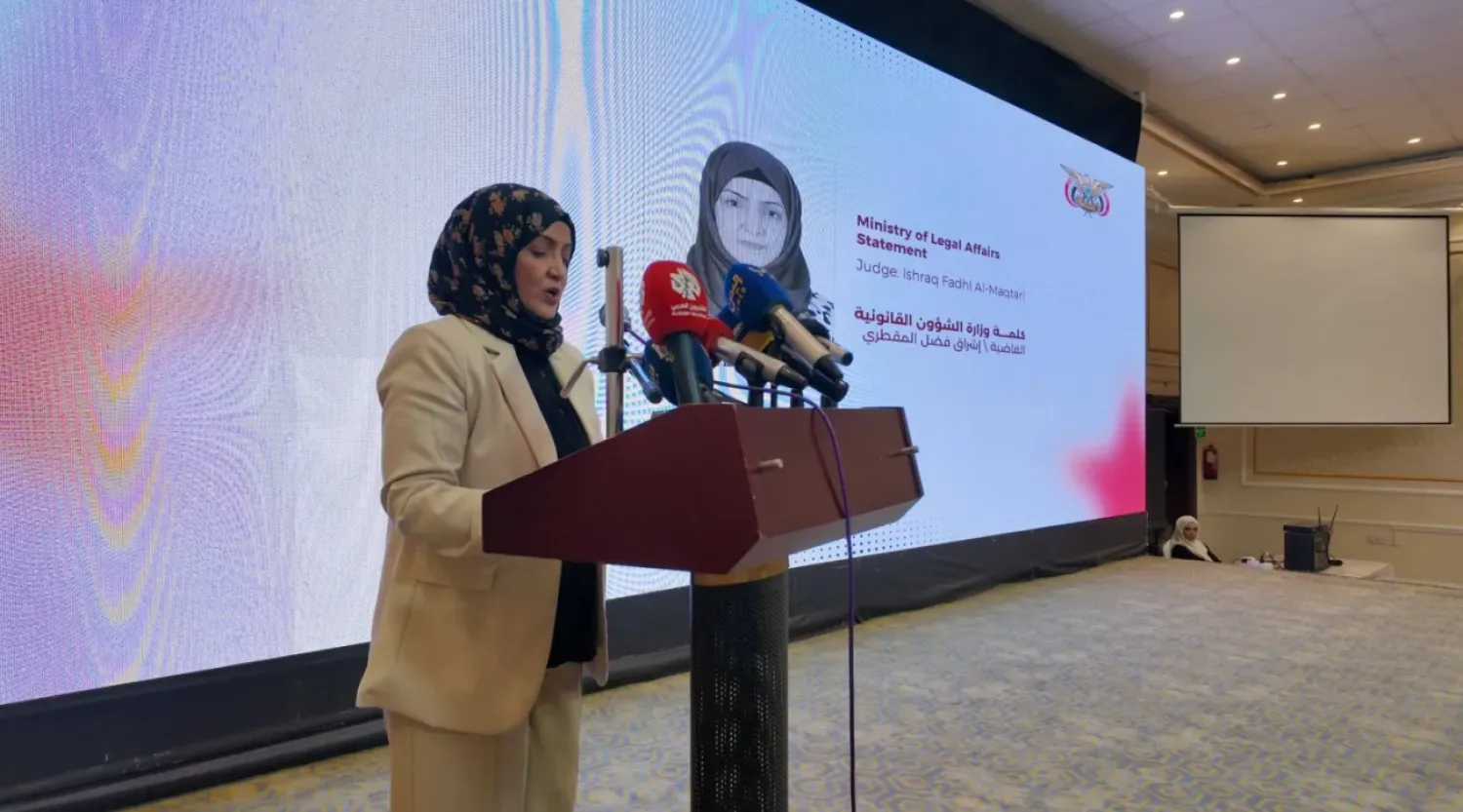

Al-Maqtari to Asharq Al-Awsat: We Are Documenting Houthi Attacks...No Immunity for Perpetrators of Grave Crimes

Yemen needs a comprehensive legislative review to address the effects of war, the coup and division, according to Al-Maqtari (Saba).
TT

Al-Maqtari to Asharq Al-Awsat: We Are Documenting Houthi Attacks...No Immunity for Perpetrators of Grave Crimes

Yemen needs a comprehensive legislative review to address the effects of war, the coup and division, according to Al-Maqtari (Saba).

Yemen's Minister of Legal Affairs, Judge Ishraq Al-Maqtari, said that any future political settlement will not grant immunity to perpetrators of grave crimes, stressing that legal responsibility will not be limited to those who directly carried out the crimes, but will extend to the leaders who planned, issued orders, financed, and facilitated their execution.

In an interview with Asharq Al-Awsat, Al-Maqtari said that the relevant national authorities are working to document violations committed by the Iran-backed Houthi group and gather evidence related to its crimes against cities, ports, economic facilities, and infrastructure across the country.

She explained that Yemen needs a comprehensive legislative review to address the effects of war, the coup, and division, and to keep pace with economic, technological, and social changes. She said the legislative reform roadmap rests on three tracks: updating sovereign and institutional legislation, developing the economic and investment environment, and keeping pace with digital transformation and protecting rights.

Distortions Caused by the Coup

Al-Maqtari said the coup by the Houthi terrorist militias and their war against the state had caused deep distortions in the constitutional and institutional structure. These included the disruption of state institutions, undermining judicial independence, imposing parallel bodies, plundering public resources, issuing decisions outside the framework of the constitution and law, and the proliferation of weapons outside state institutions.

She added that restoring the rule of law begins with ending the coup, restoring state institutions, placing weapons exclusively in the state's hands, unifying the judiciary and law enforcement agencies, and enabling the legitimate government to exercise its powers throughout the national territory.

She continued: "A state governed by the rule of law cannot be established in the presence of armed sectarian militias that impose their will by force and treat state institutions and resources as tools to serve their project."

Responsibility Extends to Leaders

The minister described Houthi militia attacks on cities, ports, economic facilities, and infrastructure as crimes punishable under Yemeni law and grave violations of international humanitarian law, particularly when they target civilians and civilian objects or are carried out indiscriminately or inappropriately.

She stressed that responsibility "is not limited to those who directly carried out the crimes, but extends to the leaders who planned, issued orders, financed, and facilitated their execution."

She affirmed that any future political settlement will not grant immunity to perpetrators of grave crimes, nor erase victims' rights or prevent those responsible from being pursued and held accountable.

Documenting Houthi Crimes

Regarding the documentation of violations, Al-Maqtari said the relevant national authorities are gathering evidence related to crimes committed by the Houthi militias. She explained that the National Commission to Investigate Alleged Violations of Human Rights, as an independent and specialized national body accredited by the Human Rights Council, plays a central role in investigating and documenting violations in accordance with international legal standards.

She added that the Ministry of Legal Affairs, within the limits of its jurisdiction and in coordination with the relevant authorities, is working to strengthen the legal basis for these efforts, preserving the right of the state and victims to accountability and allowing the documented files to be used in the future before national courts and relevant international bodies and mechanisms.

Legislation in Need of Comprehensive Review

According to the minister, Yemen needs a comprehensive legislative review to address the effects of war, the coup, and division, and to keep pace with economic, technological, and social changes that some existing laws are no longer capable of addressing.

She explained that the Ministry of Legal Affairs has already begun exercising its powers in this area by reviewing laws that require updating or amendment and preparing a list of priority legislation.

She said technical legislative committees at the ministry are currently working on these laws in accordance with national priorities and the needs of state institutions and society.

Three Tracks for Reform

Regarding the legislative reform roadmap, Al-Maqtari said it rests on three tracks: updating sovereign and institutional legislation, developing the economic and investment environment, and keeping pace with digital transformation and protecting rights.

She explained that priorities include regulating the protection of personal data and information, combating cybercrime, drafting legislation governing the oil sector, human organ transplantation, the Cancer Patients Support Fund, and public-private partnerships, as well as reviewing press, media, and investment laws.

"We base this on identifying the actual legislative need, the extent to which the law can protect the public interest, and its ability to keep pace with the needs of the state, economy, and society," she said.

Protecting Public Funds

The minister described the law as the foundation that gives economic reforms their legitimacy and sustainability, stressing that public funds cannot be protected and corruption cannot be fought without effective oversight and genuine accountability.

She noted that the state has important legal frameworks governing oversight, tenders, and accounting, but said the main problem lies in weak implementation, overlapping jurisdictions, and slow accountability procedures.

She said that, as part of the government's approach under Prime Minister Dr. Shaya Al-Zindani, the Ministry of Legal Affairs is currently carrying out its core duties of legally reviewing new contracts that state institutions intend to conclude, in order to verify their validity, protect the rights of the state and public funds, and prevent unclear or unlawful financial or legal obligations from being created.

Justice Does Not Mean Impunity

Al-Maqtari stressed that Yemen urgently needs a comprehensive national transitional justice project that places victims and their rights at the heart of any political process and includes truth-seeking, accountability, reparations, restoration of rights, institutional reform, and guarantees against the recurrence of violations.

She affirmed that reconciliation does not mean erasing crimes or equating the state with coup militias that took up arms against it. Nor should a political settlement become a cover for granting immunity to perpetrators of grave crimes, she said.

"Lasting peace is not built on forgetting or escaping accountability, but on fairness, safeguarding victims' rights, and building a state that protects its citizens through the law," she said.

Postwar Files

The minister expected the most difficult issues to include addressing the effects of decisions issued by the Houthi militias in areas under their control, disarming and placing weapons exclusively under state institutions, recovering public funds and assets, resolving the status of employees and military personnel, and addressing issues involving property, confiscations, displaced people, missing persons, and detainees.

She concluded by stressing that transitional justice would be among the foremost of these challenges, because the success of any settlement will be measured by its ability to restore the state and its institutions, protect rights, and prevent impunity, rather than merely bringing military operations to an end.


UN Peacekeeping Force Says Shots Fired at Post on Lebanon-Israel Border

UNIFIL currently has 7,500 blue helmets from around 50 countries. (Reuters)
TT

UN Peacekeeping Force Says Shots Fired at Post on Lebanon-Israel Border

UNIFIL currently has 7,500 blue helmets from around 50 countries. (Reuters)

The United Nations Interim Force in Lebanon said one of its posts was targeted on Wednesday near the border with Israel by small-arms fire, but there were no casualties.

"This morning, several rounds of small arms fire impacted a UNIFIL position near Kfar Shouba along the Blue Line in Sector East," the UN force said in a statement, referring to the de facto border between Lebanon and Israel.

The blue helmets described the shooting as "unacceptable".

"Such deliberate attacks gravely endanger the lives of peacekeepers," it said, adding that it was investigating the incident.

Under US pressure, the UN Security Council decided in August to fix December as the end of the mandate for UNIFIL, which has been deployed since 1978.

Last month, Lebanon's Prime Minister Nawaf Salam insisted at the UN on the need to "avert the vacuum" that would be caused by withdrawing the peacekeeping mission deployed in the country's south without a viable replacement.

UNIFIL currently has 7,500 blue helmets from around 50 countries.

Violence has decreased since a ceasefire following a memorandum of understanding in the US-Iran war struck in June, while Lebanon and Israel concluded a US-sponsored framework agreement later that month.

The Lebanon-Israel deal involves the disarmament of Hezbollah, a gradual withdrawal of Israeli forces from Lebanon's south and the deployment of the Lebanese army to the region, starting in test areas known as "pilot zones".


Israelis Mark Three Years Since October 7 as Palestinians Mourn Gaza’s Destruction

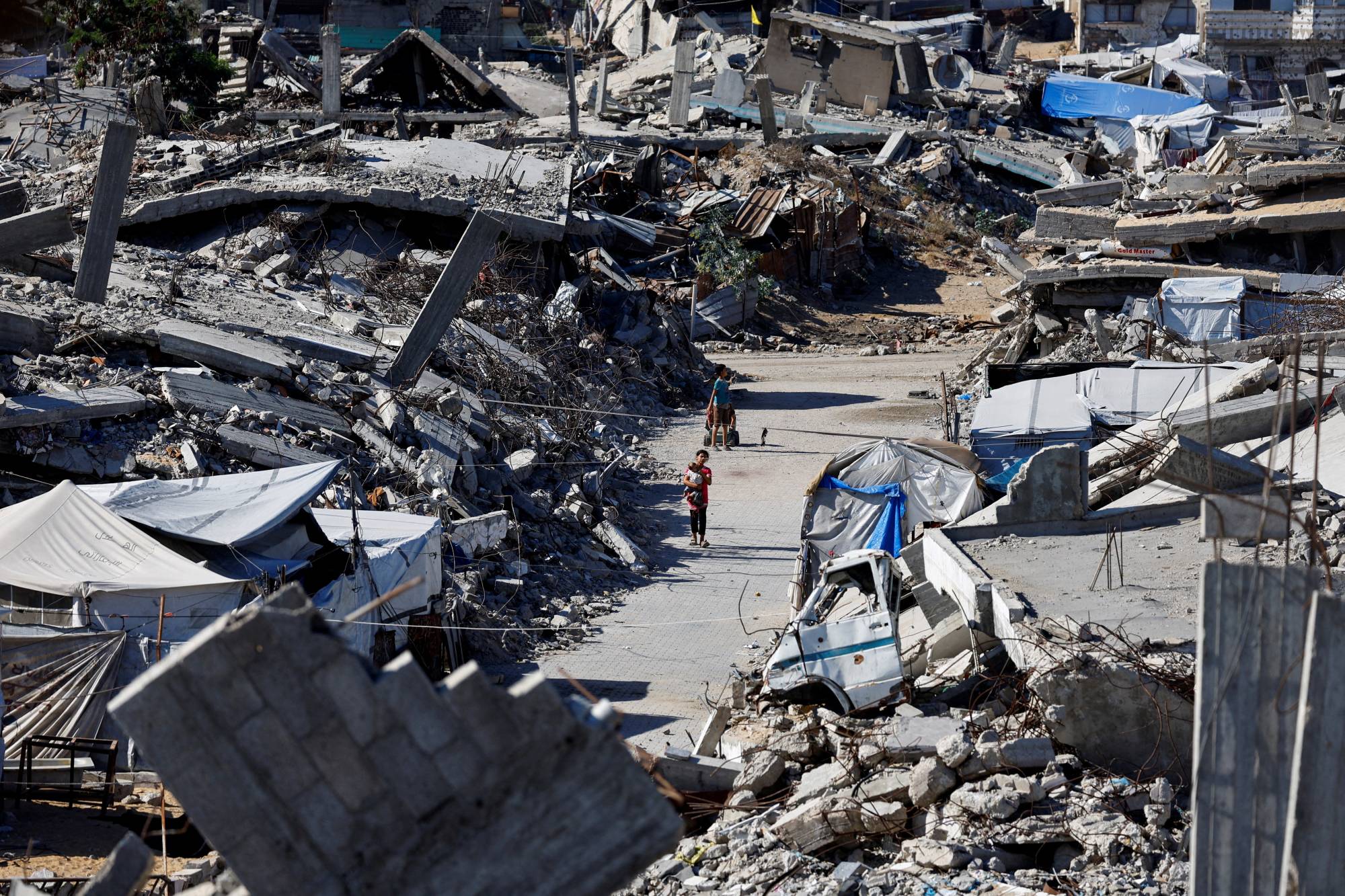
A Palestinian man works amid the rubble of a building damaged during the war, overlooking a makeshift tent camp at the Islamic University, in Gaza City, October 3, 2026. (Reuters)
TT

Israelis Mark Three Years Since October 7 as Palestinians Mourn Gaza’s Destruction

A Palestinian man works amid the rubble of a building damaged during the war, overlooking a makeshift tent camp at the Islamic University, in Gaza City, October 3, 2026. (Reuters)

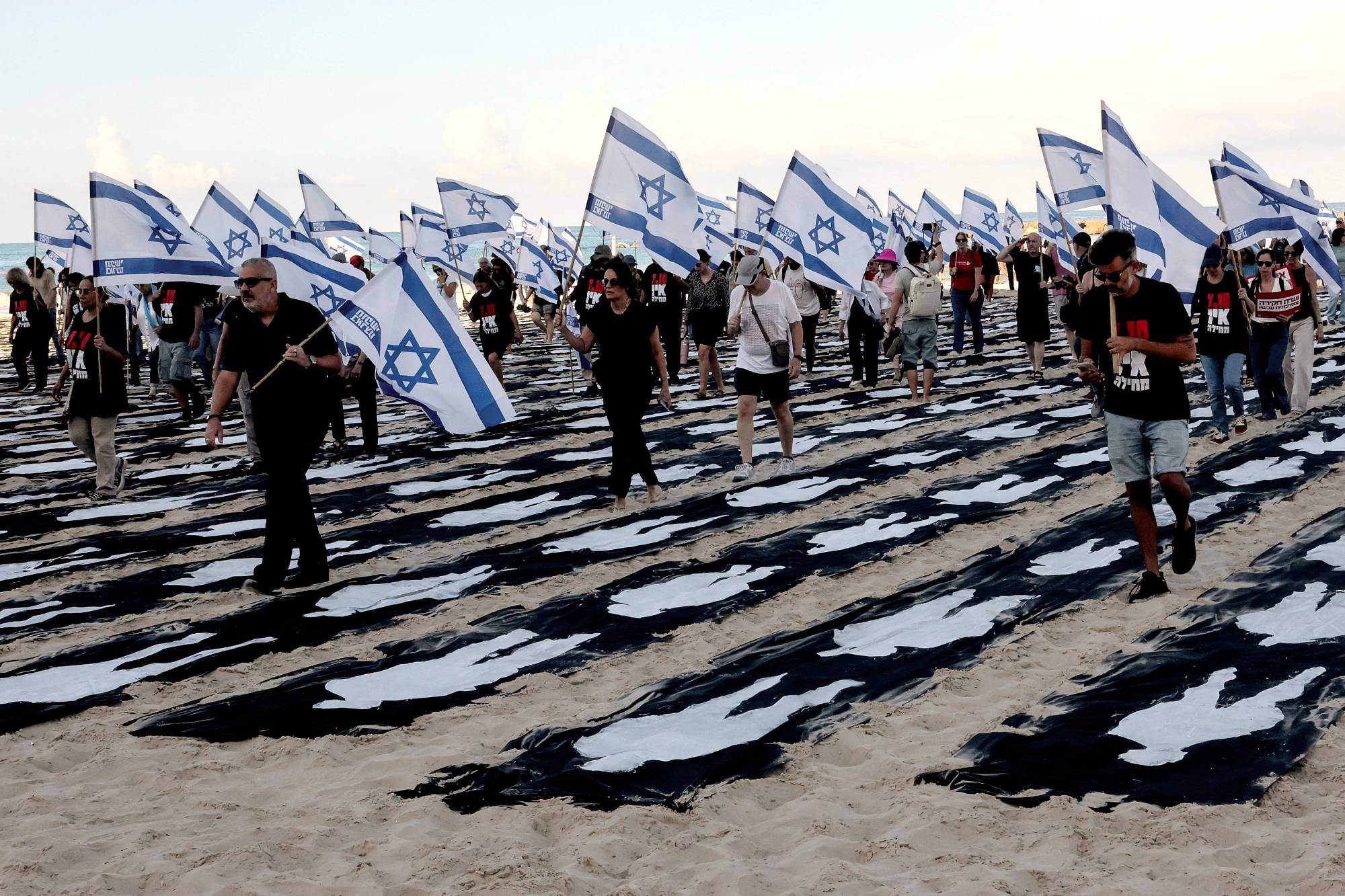
Israelis gathered in silence on Wednesday in a kibbutz near the Gaza border that was overrun by Hamas on October 7 three years ago, mourning victims of attacks that set off Israel's assault in Gaza and plunged the Middle East into war.

In the Gaza Strip, devastated by three years of Israeli bombardment, Palestinians sheltering among the ruins of destroyed cities recalled life before a war that displaced nearly the entire population and tore apart families.

The attacks of October 7, 2023, were the deadliest day in Israel's history. Militants led by Hamas killed 1,200 people and took 251 hostages, a cross-border incursion that traumatized Israelis who have demanded government accountability.

Israel's subsequent bombardment and ground operations in Gaza have killed more than 74,000 people, including at least 1,400 killed in the past year since a US-brokered ceasefire, which halted major fighting but has failed to stop Israeli attacks or secure the disarmament of Hamas.

Palestinian children walk amid the rubble of buildings destroyed during the war in Gaza City, October 7, 2026. (Reuters)

'A ‌VERY DIFFICULT DAY'

In ‌Kfar Aza, where Hamas fighters killed dozens of Israelis before taking 19 hostages back into Gaza, ‌residents ⁠held a vigil for ⁠those killed, standing in silence as a trumpet played a solemn bugle call. A resident read out a roll call of the dead.

Zion Regev, a community leader in the kibbutz, said most residents remain displaced and have yet to return, the trauma of October 7 continuing to shape their lives.

"This is the first time we are doing all the things here in the kibbutz," Regev said of the vigil. "It's a very emotional day, it's a very difficult day for our community, three years after October 7th."

Elsewhere in Israel, protesters against what they view as a lack of accountability for the security failure gathered outside parliament in Jerusalem, blaming Prime Minister Benjamin Netanyahu for refusing an independent inquiry into the attack.

Some protesters held ⁠signs reading: "The people will remember October 7 on October 27," a reference to an Israeli general election ‌20 days away that is being viewed as a referendum on Netanyahu's long tenure ‌in power.

"We need the change and we need hope and we need to know that we have a government that cares about the public ‌and doesn't work also only for themselves," said protester Shaked Arrad.

Netanyahu has rejected blame for the security breach and resisted calls for an independent ‌investigation. That has frustrated many in Israel, including families of those killed in the attacks, some of whom have joined the election race.

In a statement released by his office, Netanyahu said: "The nation unites on this day in the longing for our dear ones."

Referring to his country's ongoing attacks in Gaza, he added: "We will complete the mission: we have settled the score and will continue settling the score with all the murderers."

Election polls show neither Netanyahu nor ‌his main competitors would muster enough seats in parliament to form a coalition if a vote were held today.

People carrying Israeli flags walk through a commemorative installation set up on the beach in Tel Aviv to mark the third anniversary of Hamas's October 7 attack on Israel, on October 7, 2026. (AFP)

DISPLACED GAZANS RECALL LIFE BEFORE ISRAELI ASSAULT

The anniversary is the first since the ⁠October 10, 2025, ceasefire deal, which has ⁠left Israel in control of around two-thirds of Gaza, where it has demolished remaining buildings and ordered residents out.

Hamas controls the remaining third of the territory, a narrow strip on the coast where the 2 million population mostly live in makeshift tents and bombed-out buildings.

In the latest violence, Gaza medics said on Wednesday Israel's military had carried out air strikes in Beit Lahia in northern Gaza and in Khan Younis in the south, killing at least two Palestinians and wounding others.

The Israeli military said it struck and killed two people it described as militants with Hamas, which did not immediately provide comment. The military did not provide comment on the strike in Khan Younis.

Umm Mohammad, a mother of five displaced from Gaza City and now living with her husband and children in a tent encampment in Deir Al-Balah, said the war had ripped her family apart.

"We were one happy family. The war displaced us. My son left Gaza, the other went to a separate tent, my daughters left with their husbands to other parts of the Strip and we rarely meet," she said.

On this day, she said, "we recall how happy, despite all problems, we were before the war broke out, destroying everything we loved."


Syria Says Northeast Pipeline Damaged in Sabotage Attack

Security forces in Syria. (SANA file)
TT

Syria Says Northeast Pipeline Damaged in Sabotage Attack

Security forces in Syria. (SANA file)

Syria's state petroleum company said on Wednesday that an oil pipeline in the country's northeast was damaged in a "sabotage attack", the third such incident in recent weeks.

Years of civil war before the fall of longtime ruler Bashar al-Assad in late 2024 devastated Syria's oil, gas and electricity sectors, with the country becoming heavily reliant on imports to meet its needs.

In a statement, the Syrian Petroleum Company said the pipeline near "the Tal Hamis area in Al-Hasakeh Governorate was subjected to a sabotage attack at 6:00 am on Wednesday, October 7, resulting in damage to the pipeline".

It added that maintenance crews were working to "isolate the damaged section and begin repair and maintenance work".

The company said authorities arrested the alleged perpetrators and referred them to the judiciary.

On September 29, sabotage targeting a gas pipeline in eastern Syria caused an explosion, according to state news agency SANA.

In early October, an explosion at a gas pipeline near the capital Damascus took three power stations offline.

The incidents come after demonstrations last month over rising fuel prices, which authorities linked to price hikes caused by the Middle East war.
