


Oil Extends Gains, Stocks Drop as Trump Issues Fresh Iran Warning

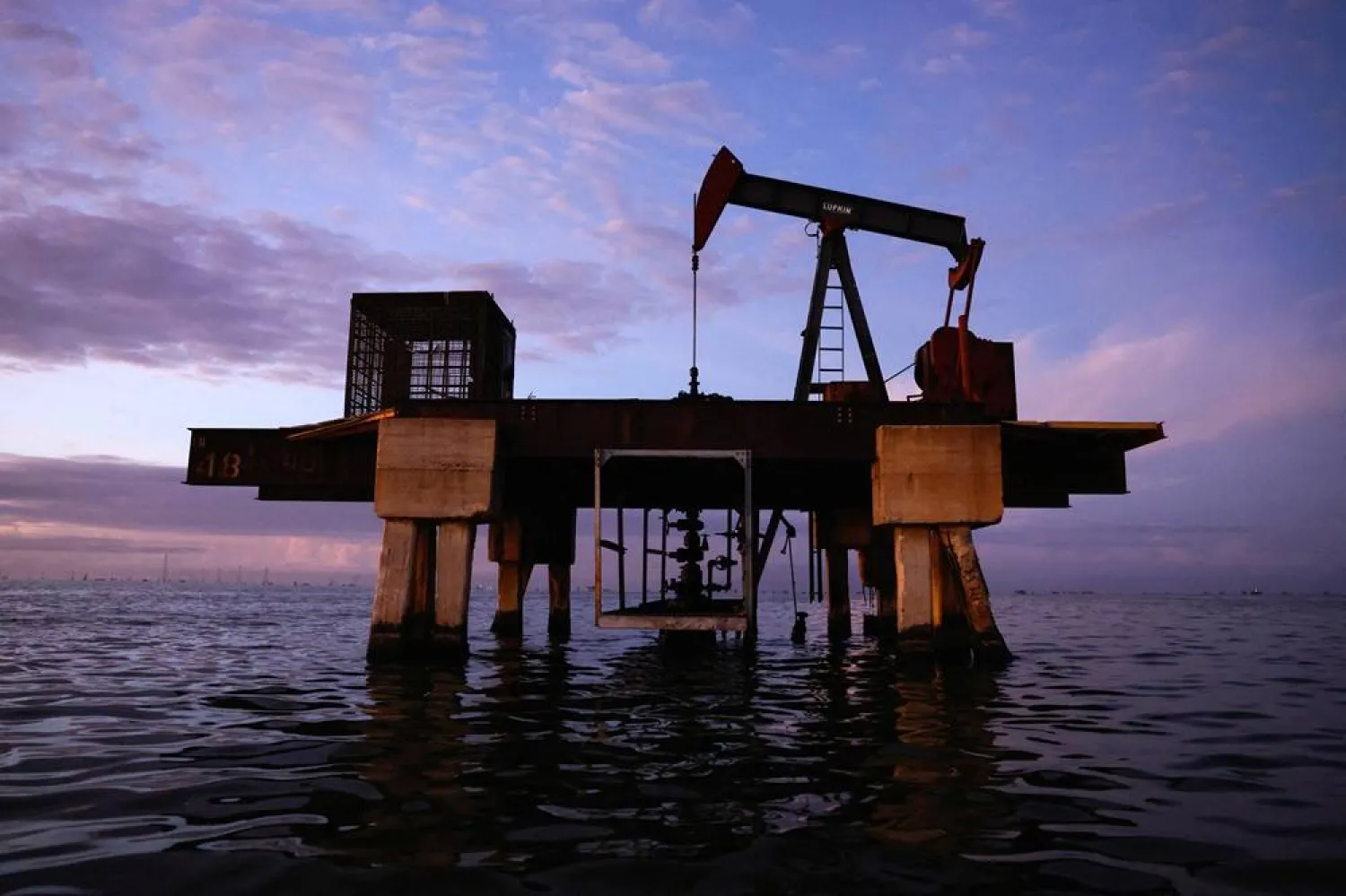
An oil pumpjack at Lake Maracaibo in Cabimas, Venezuela, January 27, 2026. (Reuters)
TT

Oil Extends Gains, Stocks Drop as Trump Issues Fresh Iran Warning

An oil pumpjack at Lake Maracaibo in Cabimas, Venezuela, January 27, 2026. (Reuters)

Oil prices extended gains Tuesday amid fears of a fresh bout of military exchanges between the United States and Iran following a flare-up at the weekend and Donald Trump's warning that he will hit the country "hard".

The latest bout of strikes between the foes has further stoked worries about inflation that has put pressure on central banks to hike interest rates, which has in turn jolted equity markets.

After six months of war, the conflict remains at an impasse, with Tehran keeping the strategic Strait of Hormuz closed and Washington continuing a counter-blockade of Iranian ports.

The United States carried out strikes on an Iranian island in the waterway on Sunday, with Tehran quickly retaliating by attacking US military targets in the Middle East.

The exchange raised fears of a return to major hostilities, with the US president vowing to respond.

"We're going to hit them hard," Trump said, according to a Fox News reporter who spoke to him briefly. "There will be a response."

US officials said it hit rocket launchers on the island of Larak to prevent Tehran planting mines in the strait, while Iran targeted US forces in Jordan and the United Arab Emirates. The UAE denied reports of the attack.

The exchange of fire came after weeks of relative calm, with the Trump administration recently pivoting to "economic warfare".

US Treasury Secretary Scott Bessent said: "We are going to continue exerting pressure, and we've had very good discussions here already."

He told reporters at a G20 meeting in North Carolina that a turning point in the pressure campaign could come "within weeks or months".

Both main crude contracts rose Tuesday, extending the previous day's jump of more than two percent.

"The calibrated nature of the initial actions suggests neither side is actively seeking a return to sustained conflict, but stalled talks and the strategic importance of keeping the Strait open leave the situation vulnerable to further escalation," said National Australia Bank's Rodrigo Catril.

Trump will be meeting oil refining executives on Tuesday in a bid to tame soaring US domestic gas prices that have been a political headache for his Republican Party heading into November's midterm elections.

Stocks mostly fell, with traders now awaiting the release of key data this month ahead of the Federal Reserve's policy meeting on September 16.

Tokyo, Hong Kong, Seoul, Shanghai, Sydney, Singapore and Wellington were all down, though Taipei, Manila and Jakarta rose.

The jobs and consumer price index reports could play a major role in whether the bank hikes rates, with bets on an increase surging after boss Kevin Warsh's hawkish speech on Friday.

Expectations for elevated inflation and rising borrowing costs pushed the yield on 10-year US Treasuries to their highest level since January 2025.

That has bled into Asia, with 10-year Japanese government bond yields touching a 30-year high on Monday.

In company news, fast-fashion giant Shein fell more than nine percent on its long-awaited Hong Kong trading debut, having raised US$1.7 billion in a high-profile initial public offering.

And shares in MediaTek soared nearly 10 percent after US tech giant Nvidia announced it has injected US$3.5 billion into the Taiwanese chipmaker.



Euro Zone Yields Fall after Iran Raises Prospect of Hormuz Reopening

Euro banknotes (Reuters)
TT

Euro Zone Yields Fall after Iran Raises Prospect of Hormuz Reopening

Euro banknotes (Reuters)

Euro zone bond yields fell for a second straight day on Tuesday, hitting their lowest in almost two weeks after Iran raised the prospect of reopening the Strait of Hormuz and Washington hinted it could restart talks with Tehran, pushing oil prices lower.

Germany's 10-year bond yield, the benchmark for the bloc, fell 1 basis point to 3.44% after rising as much as 4 bps earlier in the session. It fell 7 bps on Monday as energy prices retreated.

A senior Iranian official told Reuters that the strait, which carried about a fifth of global energy supplies before the war, could reopen within seven days if the US also lifts its blockade of Iranian ports.

The official added that Iran's delegation to a UN meeting in New York this week has full authority to revive diplomacy over the conflict.

US Secretary of State Marco Rubio told NBC's "Today" show that Washington was open to speaking with Tehran.

The dip in energy prices helped pull yields lower globally after a surge in recent weeks fuelled by expectations of further interest-rate hikes to combat energy-driven inflation. Traders are pricing in around 35 bps of additional European Central Bank tightening this year, down from 40 bps on Friday.

Germany's two-year bond yield, which is sensitive to interest-rate expectations, fell 1 bp to 3.19%, following a 6-bp drop on Monday.

Rabobank senior rates strategist Lyn Graham-Taylor said lower oil prices following the Iranian comments were weighing on bond yields.

Brent crude futures were last down 1% to $100 a barrel after earlier falling to $97.40, the lowest in two weeks.


Libya's NOC Says Sharara Crude Pipeline Closure Losses at 130,000 bpd

General view of the Sharara oil field in Libya (Reuters)
TT

Libya's NOC Says Sharara Crude Pipeline Closure Losses at 130,000 bpd

General view of the Sharara oil field in Libya (Reuters)

Libya's National Oil Corporation said on Tuesday that the Sharara-Zawiya crude loading pipeline closure has led to daily losses of about 130,000 barrels per day, Reuters reported.

An armed military group closed valve seven on the Sharara crude pipeline to Zawiya port on Monday, resulting in a significant decline in production at the Sharara oilfield, the National Oil Corporation said in a statement.


Sources: Saudi Arabia Restarts East-West Oil Pipeline

FILE PHOTO: A model of an oil pump is seen in front of a Saudi Arabian flag in this illustration taken January 9, 2026. REUTERS/Dado Ruvic/Illustration/File Photo
TT

Sources: Saudi Arabia Restarts East-West Oil Pipeline

FILE PHOTO: A model of an oil pump is seen in front of a Saudi Arabian flag in this illustration taken January 9, 2026. REUTERS/Dado Ruvic/Illustration/File Photo

Saudi Arabia has restarted operations at its East-West Pipeline and could resume exports from the Red Sea port of Yanbu later on Tuesday, three sources briefed on the matter said.

Drone attacks forced Saudi Arabia to shut its East-West Pipeline on September 13, halting crude loadings at the kingdom's Yanbu port.

The resumption of supplies on Tuesday helped to drive selling on global oil markets, traders said. Brent crude futures fell by more than $2 a barrel to its lowest since September 8.

Two trading sources said traders were getting ready for Saudi oil loadings by moving tankers to Egypt's Mediterranean Port Said for ship-to-ship transfers and also to Sidi Kerir.