
Lenovo Set to Begin Saudi Production in Late 2026

Lenovo unveils its Saudi-made laptop at LEAP 2026 (Asharq Al-Awsat)
TT

Lenovo Set to Begin Saudi Production in Late 2026

Lenovo unveils its Saudi-made laptop at LEAP 2026 (Asharq Al-Awsat)

Saudi Arabia is seeking to cement its position as a regional technology manufacturing hub as Lenovo prepares to begin commercial production at its new Riyadh plant in late 2026.

The facility, Lenovo’s largest outside China, will be the company’s first worldwide to manufacture laptops, desktops, servers and Motorola smartphones at a single site. It will serve markets across the Middle East, Türkiye and Africa.

Lenovo unveiled its first laptop manufactured in Saudi Arabia at the LEAP 2026 technology conference in Riyadh, marking a shift in its partnership with Alat, a company owned by the Public Investment Fund, from investment and capacity-building to the domestic production of technology devices.

Salman Faqeeh, Lenovo’s vice president and general manager for Saudi Arabia, told Asharq Al-Awsat that the laptop represented an important milestone for the company. He said large-scale production was expected to begin in late 2026.

“The Riyadh facility has been designed to produce Lenovo’s product portfolio over time, including PCs, desktop computers, servers and Motorola smartphones,” Faqeeh said.

“Our Riyadh facility is Lenovo’s first worldwide to produce all four product categories and is also the company’s largest factory outside China.”

Faqeeh said Lenovo remained on track to begin large-scale commercial production in late 2026. The company is focused on developing a world-class manufacturing ecosystem that supports Saudi Arabia’s industrial ambitions, serves regional markets and connects with Lenovo’s global supply chain, he added.

Lenovo’s largest plant outside China

The Riyadh facility has been designed to produce a broad range of Lenovo products, including laptops, desktops, servers and Motorola smartphones.

It will be the first plant in Lenovo’s global manufacturing network to bring production across all four categories together at a single site, as well as the company’s largest factory outside China.

The facility is being built on a site covering about 200,000 square meters at Riyadh Integrated, operated by the Special Integrated Logistics Zone near King Khalid International Airport.

The project is part of a strategic partnership between Lenovo and Alat aimed at developing an industrial and technology manufacturing base serving the Middle East, Türkiye and Africa.

Lenovo officially opened its regional headquarters in Riyadh in April 2026 as part of its plans to expand its manufacturing and research and development operations.

Saudi Arabia as a manufacturing and innovation hub

Faqeeh said Saudi Arabia was becoming increasingly important to Lenovo’s global strategy, not only as a regional market but also as a center for leadership, innovation, talent development, and manufacturing.

The company has established its Middle East, Türkiye, and Africa regional headquarters in Riyadh and is expanding its innovation initiatives and local talent development programs.

Saudi Arabia will play a larger role in Lenovo’s global manufacturing, innovation, and supply-chain network in the coming years, Faqeeh said, citing accelerating investment in the Kingdom’s technology and industrial sectors.

Growing demand for AI solutions

Faqeeh said Lenovo was seeing growing demand in Saudi Arabia and the wider region for artificial intelligence-enabled devices, infrastructure, and services as organizations moved beyond experimentation towards deploying the technology more broadly.

Government, financial services, energy, manufacturing, retail, education, healthcare, and sports were among the sectors driving that growth, supported by heavy investment in digital infrastructure, he said.

Those investments were creating opportunities across the technology ecosystem, ranging from AI-ready devices to data-center solutions and edge-computing infrastructure.

Research, development and talent

Lenovo is continuing work to establish a research and development center and a customer experience center in Saudi Arabia, Faqeeh said.

The company has appointed Dr. Rabeah Alzaidy to lead its local research and development initiatives.

Areas under consideration include artificial intelligence, device innovation, smart manufacturing, and technologies tailored to local market requirements, including support for Arabic-language use.

The customer experience center will allow customers, partners, and policymakers to interact directly with Lenovo’s latest technologies and innovation capabilities, Faqeeh said.

The first group of Saudi engineers has completed training at Lenovo manufacturing facilities around the world and is now supporting the company’s local operations.

Lenovo will continue investing in programs that build expertise in advanced manufacturing, engineering, research and development, and emerging technologies, allowing Saudi talent to participate in the technology industries of the future, Faqeeh said.

Partnership with Alat

Faqeeh said Lenovo’s partnership with Alat had moved from vision to implementation, citing progress in constructing the plant, the unveiling of the first Saudi-made Lenovo laptop, and the launch of initiatives to develop Saudi talent.

The partnership combines Lenovo’s global manufacturing expertise with Saudi Arabia’s industrial ambitions, he said.

It is intended to strengthen domestic capabilities, develop high-value skills, support knowledge transfer, and help build a technology manufacturing ecosystem capable of competing globally.
Diversified Oil Export Routes Pave the Way for Strong Saudi Economic Recovery in 2027

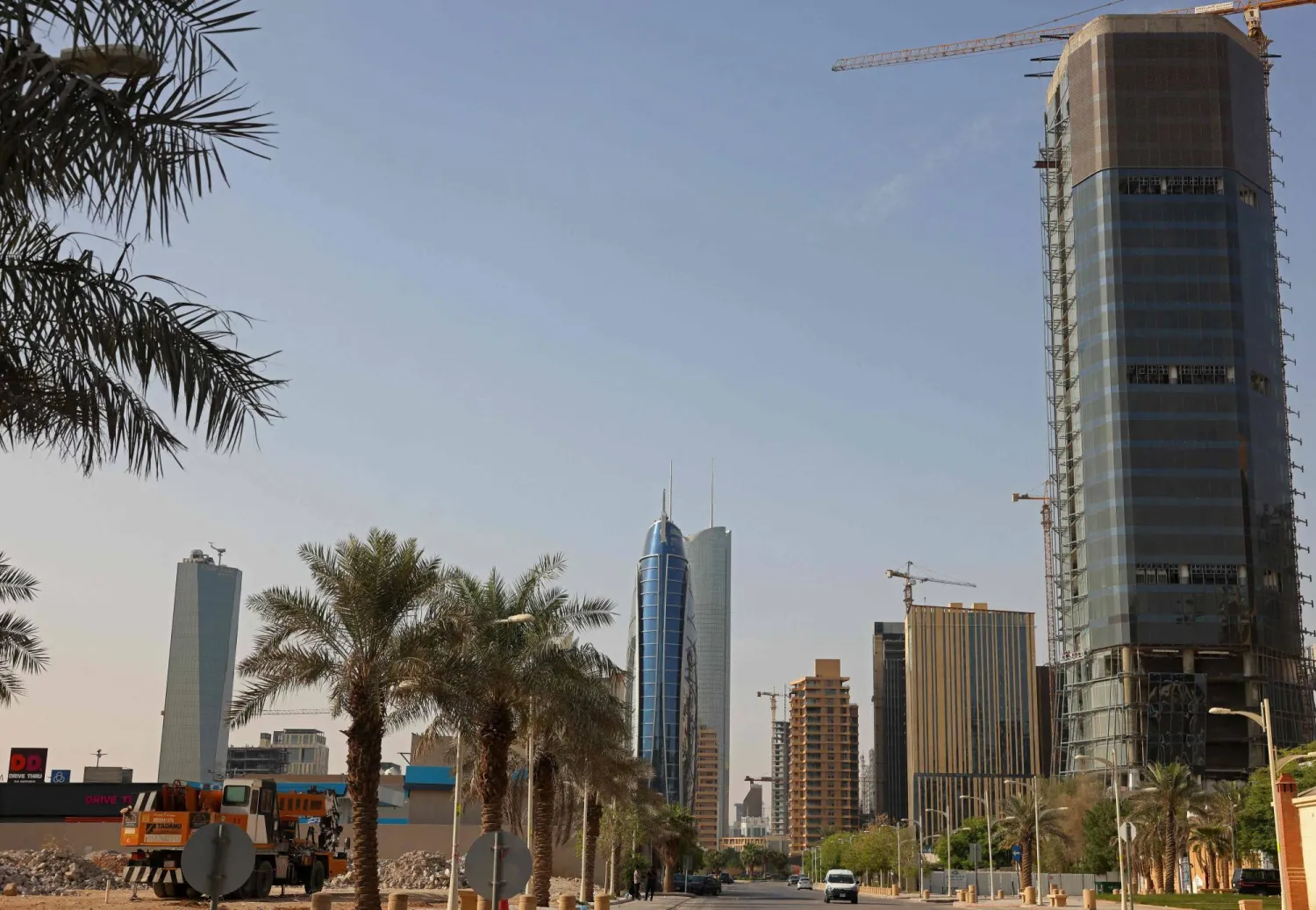
Cars drive past city skyscrapers in Riyadh on October 11, 2026. (Photo by Fayez Nureldine / AFP)
TT

Diversified Oil Export Routes Pave the Way for Strong Saudi Economic Recovery in 2027

Cars drive past city skyscrapers in Riyadh on October 11, 2026. (Photo by Fayez Nureldine / AFP)

As war reshapes energy flows across the region, the International Monetary Fund (IMF) is forecasting a strong recovery for Saudi Arabia's economy in 2027, with growth projected at 7.9 percent, driven by renewed momentum in production and exports as disruptions to shipping ease. Compared with Gulf economies more exposed to disruptions in transit through the Strait of Hormuz, this forecast rests on Saudi Arabia's diversified oil export routes, which help cushion the impact of the shock.

The IMF has also revised its outlook for the Saudi economy in 2026, projecting a smaller contraction than in its previous forecasts. The trajectory of the recovery will therefore depend on how long the disruptions persist and how quickly energy and trade flows return to normal.

The IMF's forecasts reflect both the scale of the shock facing regional economies and the recovery expected as its effects subside. In its World Economic Outlook report, titled Resilience Under Strain, Urgent Choices, the IMF projects that the economies of the Middle East and Central Asia will contract by 0.3 percent in 2026, followed by growth of 6.3 percent in 2027.

Compared with its April estimates, the IMF lowered its 2026 forecast by 2.2 percentage points while raising its 2027 projection by 1.7 percentage points. The revisions reflect an assumption that the Strait of Hormuz will remain closed longer than previously expected, intensifying pressure on regional economies this year but setting the stage for a stronger recovery once it reopens and production, exports and transportation resume.

Under this scenario, the IMF expects GDP to contract by 16.7 percent in Kuwait, 16 percent in Iraq, 15.6 percent in Qatar and 11.3 percent in Bahrain in 2026. In 2027, all four economies are projected to rebound sharply, with Iraq growing by 19 percent, Qatar by 18.8 percent, Kuwait by 17.1 percent and Bahrain by 13.9 percent, as production, exports and logistics return to normal operations.

Saudi Arabia's Economic Outlook

By contrast, the IMF expects the disruptions to have a relatively less severe impact on Saudi Arabia. It has revised its estimate for the Saudi economy's contraction in 2026 to 3.3 percent, compared with 5 percent in its July forecast and 6.4 percent in April. At the same time, it raised its forecast for Saudi economic growth in 2027 to 7.9 percent, up from 2.4 percent in its July update and 3.4 percent in April. The Ministry of Finance, meanwhile, expects stronger growth of 12.8 percent, according to its pre-budget statement. Although the estimates differ in magnitude, they reflect optimism about the recovery next year, amid hopes that production, exports and trade will regain momentum as shipping disruptions ease.

This outlook is consistent with World Bank projections. In its October report on the economic outlook for the Middle East, North Africa, Afghanistan and Pakistan, the bank anticipated a strong rebound in regional growth in 2027, forecasting expansion of 7.8 percent for the region's economies, excluding Iran, if the conflict subsides by the end of 2026. It attributed the recovery primarily to the resumption of hydrocarbon production and exports as trade routes reopen and energy flows gradually normalize. In Saudi Arabia, the bank noted that the East-West Pipeline had enabled exports to be rerouted to the Red Sea port of Yanbu, helping the Kingdom limit the impact of disrupted shipping through the Strait of Hormuz.

The IMF's projected contraction for the Saudi economy this year is smaller than the Ministry of Finance's estimate of a 3.6 percent decline in real GDP in 2026. The recovery outlook also aligns with the IMF's findings during its July Article IV consultations with Saudi Arabia, when it highlighted the economy's resilience to disruptions in oil and trade flows, supported by diversified energy and logistics infrastructure and the ability to reroute shipments.

Oil Export Routes

Against this backdrop, Saudi Arabia is benefiting from multiple oil export routes and working to strengthen its ability to deliver supplies to global markets through the Red Sea. Energy Minister and Minister of Industry and Mineral Resources Prince Abdulaziz bin Salman announced a target of increasing oil export capacity to approximately 10 million barrels per day within two to three years by upgrading the East-West Pipeline and expanding its associated infrastructure. He also pointed to the possibility of temporarily converting a gas pipeline to transport oil, adding approximately 1.2 million barrels per day of capacity within seven to eight weeks before returning it to its original use to meet summer demand.

These measures strengthen the Kingdom's ability to diversify its export outlets, while the IMF's 2027 forecasts assume that production, exports and trade will return to normal as shipping disruptions ease.

In this context, data from Kpler showed that Saudi crude oil exports rose to 6.67 million barrels per day in September, reaching their highest level in seven months and returning to prewar levels. This reflects renewed momentum in the Kingdom's oil flows, supported by increased exports through the Strait of Hormuz since September, alongside the benefits of diversified export outlets.

Alongside the anticipated recovery, credit rating agency Moody's had forecast that spending restraint and a reprioritization of government investments would support a fiscal recovery in 2027 and help the Kingdom preserve fiscal space to continue its economic diversification projects. The agency noted that prolonged trade disruptions and additional spending had limited the fiscal improvement it previously expected, while disruptions to strategic maritime shipping routes could persist until mid-2027, potentially affecting oil production.

As for economic indicators, the IMF expects inflation in Saudi Arabia to reach 1.9 percent in 2026 and rise to 2.2 percent in 2027. It also projects a current account deficit equivalent to 3.5 percent of GDP this year, narrowing to 1.3 percent next year.

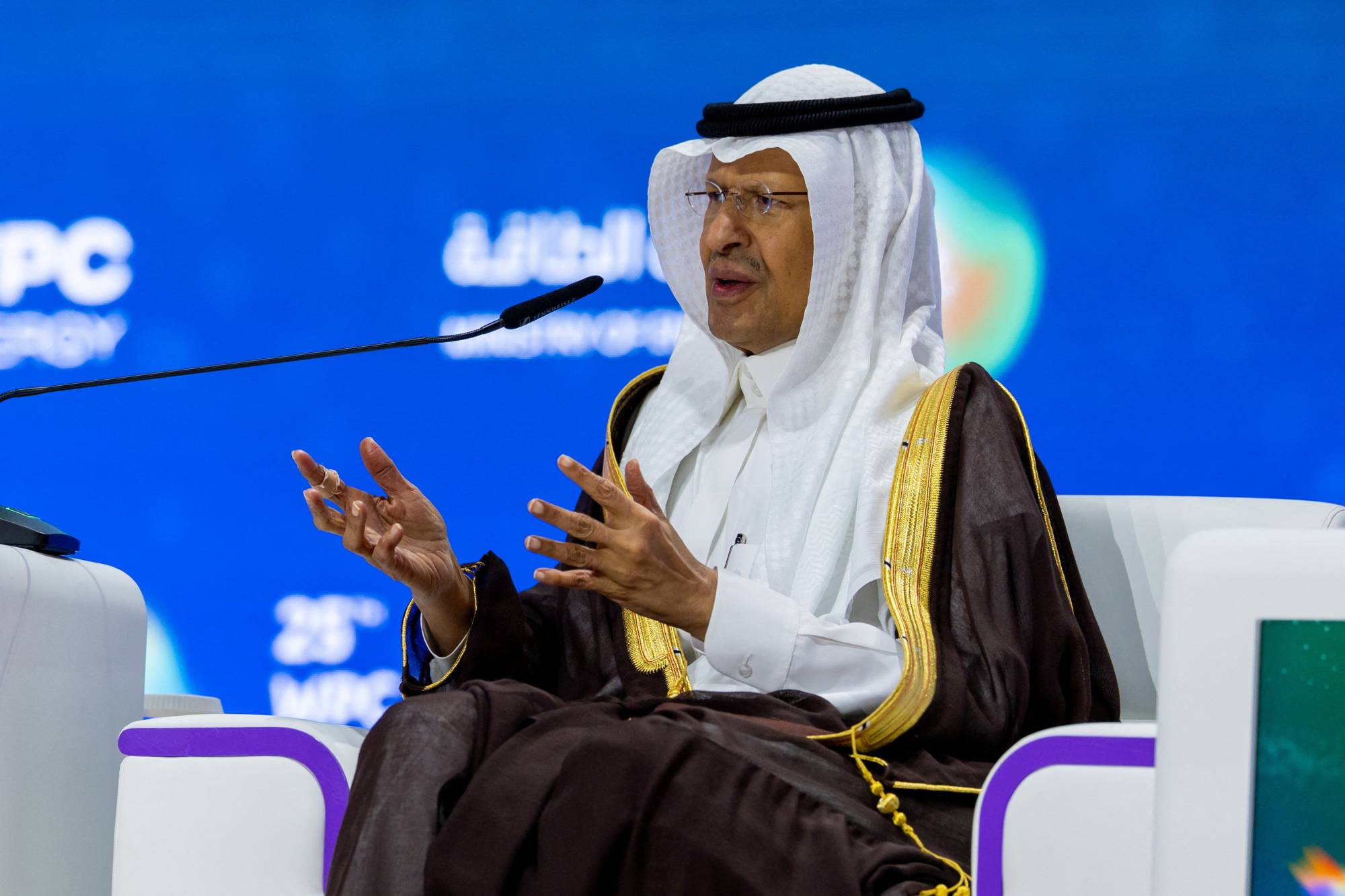
Saudi Minister of Energy Prince Abdulaziz bin Salman Al Saud speaks at the 25th WPC Energy Congress in Riyadh, Saudi Arabia, October 12, 2026. REUTERS

International Monetary and Financial Committee Meeting

These forecasts come as the repercussions of the war and its effects on growth, trade and energy flows dominate the agenda of the IMF and World Bank Group Annual Meetings, taking place in Bangkok from October 12 to 18.

Saudi Finance Minister Mohammed Al-Jadaan is leading the Kingdom's delegation to the meetings and chairing a meeting of the IMF's International Monetary and Financial Committee, which is discussing the global economic outlook, risks to growth, economic policy priorities and the Fund's role in helping member countries address current challenges. These discussions are particularly significant given the differing effects of the conflict on regional economies, from pressures caused by disruptions to production and trade to opportunities for recovery as energy flows and exports resume.

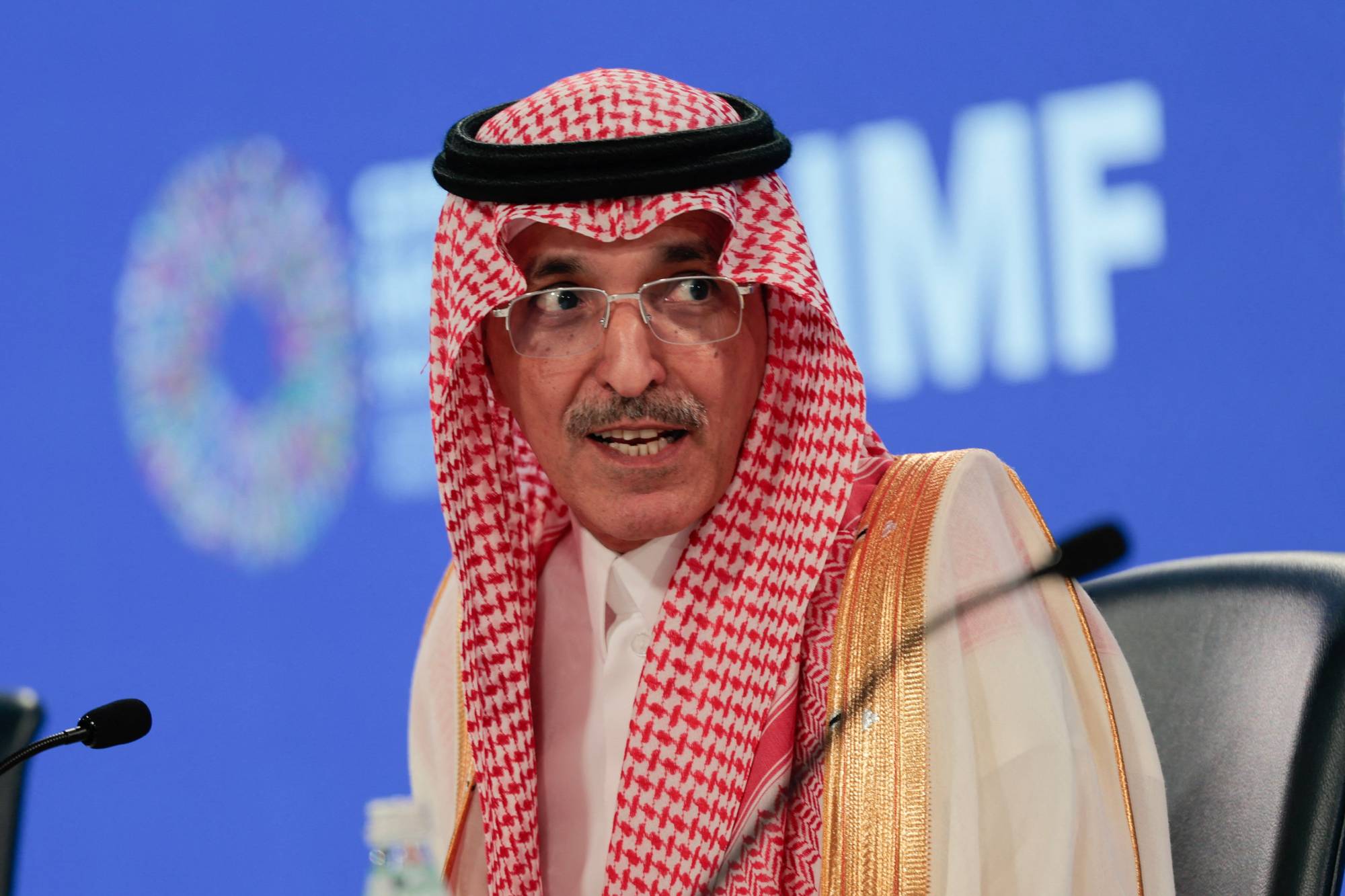
Saudi Arabia's Finance Minister Mohammed Al-Jadaan speaks during a press briefing following a meeting of the IMFC (International Monetary and Financial Committee) at the 2026 IMF and World Bank Group Spring Meetings in Washington, DC, on April 17, 2026. (Photo by Kent Nishimura / AFP)

Ultimately, the trajectory of Saudi Arabia's recovery in 2027 will remain tied to how quickly energy and trade flows are restored. Meanwhile, diversified export outlets and non-oil activities, together with the reprioritization of spending and investment, provide support for the economy's ability to overcome the repercussions of regional disruptions.


Saudi Aramco Targets 80% Growth in Gas Sales by 2030

3D-printed oil pump jacks and the Saudi Aramco logo appear in this illustration taken March 2, 2026. (Reuters)
TT

Saudi Aramco Targets 80% Growth in Gas Sales by 2030

3D-printed oil pump jacks and the Saudi Aramco logo appear in this illustration taken March 2, 2026. (Reuters)

Saudi Arabia is moving to expand its gas and liquefied gas production capabilities by developing facilities and infrastructure across the sector, amid growing demand for gas and its increasing role in the energy mix. Saudi Aramco aims to increase gas sales by 80 percent by 2030 compared with 2020 and 2021 levels.

Abdulkarim Al-Ghamdi, Executive Vice President of Gas at Saudi Aramco, disclosed the target during a panel discussion at the WPC Energy Congress in Riyadh on Tuesday. He also revealed plans to build and commission six to seven gas and liquefied gas facilities between 2025 and 2027.

Al-Ghamdi said Saudi Arabia's oil production assets and export capabilities are spread across different parts of the Kingdom, strengthening its ability to respond to disruptions and unforeseen scenarios. He added that the country has an extensive gas network, including the Master Gas System, which stretches thousands of kilometers from east to west.

He explained that more than 90 percent of the materials Aramco needed during disruptions linked to global conflicts were sourced locally. The company also relies on partnerships across several assets and facilities, including refineries and pipeline networks.

According to Al-Ghamdi, resilience in the energy sector is not limited to responding to crises after they occur. It also involves anticipating potential disruptions, protecting assets, diversifying their geographic locations and ensuring they can continue operating under exceptional circumstances.

He added that Aramco relies on integrated operating systems, interconnected supply chains and advanced data analytics solutions to help protect facilities and reduce the risk of operational disruptions.


OPEC Raises 2027 Oil Demand View, Citing Need to Rebuild Stocks

FILE PHOTO: OPEC logo is seen in this illustration taken June 25, 2026. REUTERS/Dado Ruvic/Illustration/File Photo
TT

OPEC Raises 2027 Oil Demand View, Citing Need to Rebuild Stocks

FILE PHOTO: OPEC logo is seen in this illustration taken June 25, 2026. REUTERS/Dado Ruvic/Illustration/File Photo

OPEC on Tuesday raised its forecast for world oil demand growth in 2027, citing the need for the world to rebuild inventories that have been depleted by the Iran war.

The Organization of the Petroleum Exporting Countries also lowered its forecast for 2026 oil demand growth, the report on OPEC's website showed, marking the sixth straight downward revision.

OPEC also reported a jump in oil production by the wider OPEC+ producer group in September.

The top OPEC producer told OPEC that it pumped 8.372 million barrels per day of crude in September, up more than 2 million bpd from August.