


Oslo Accords After 33 Years: Neither Alive Nor Dead — What Remains?

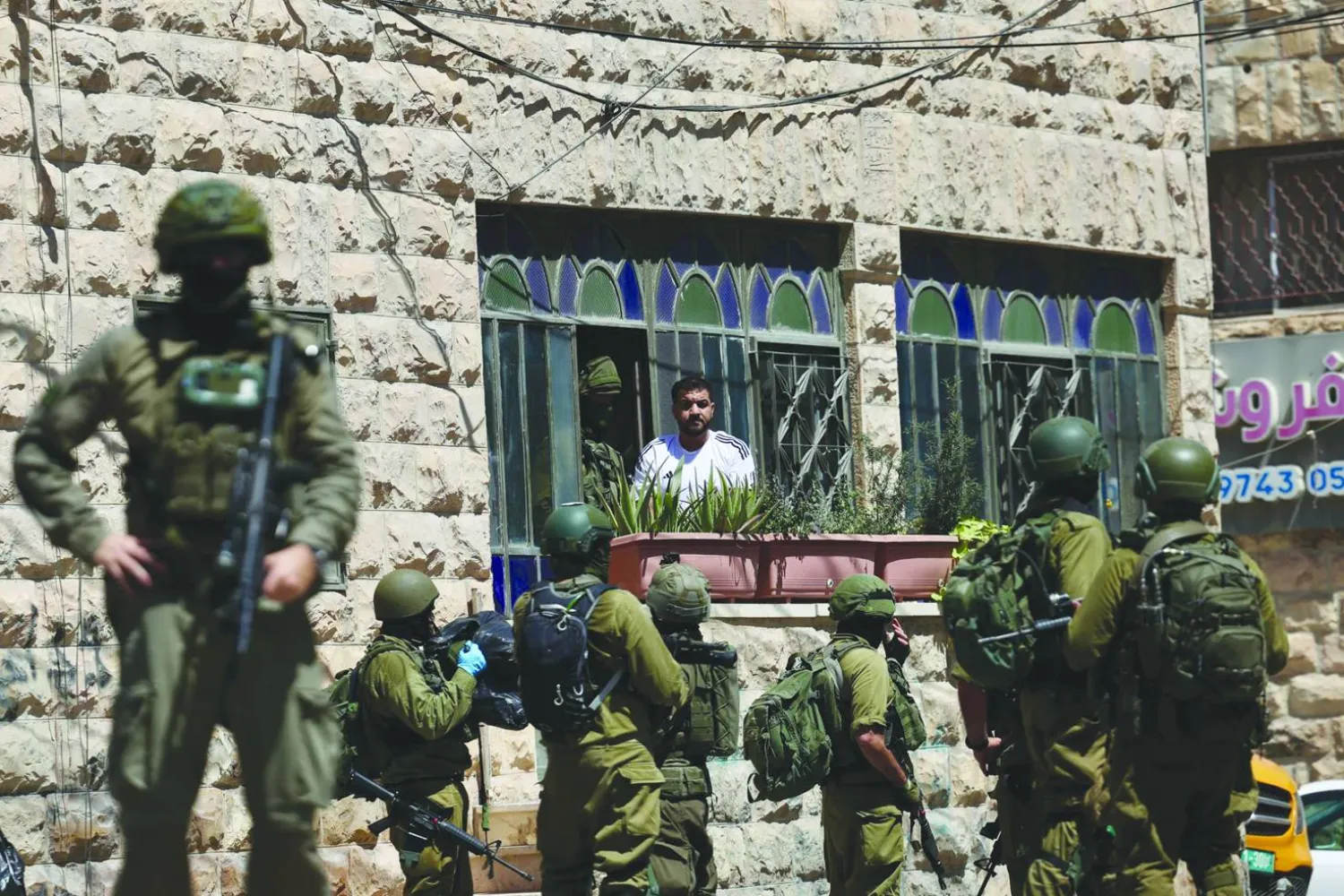
FILED - 08 September 2026, Palestinian Territories, Anata: Israeli forces raid the town of Anata in the West Bank. Photo: Jamal Awad/dpa
TT

Oslo Accords After 33 Years: Neither Alive Nor Dead — What Remains?

FILED - 08 September 2026, Palestinian Territories, Anata: Israeli forces raid the town of Anata in the West Bank. Photo: Jamal Awad/dpa

Perhaps all that remains of the Oslo Accords, signed 33 years ago between the Palestinians and Israelis, is an authority without real authority in the West Bank, widespread chaos, destruction and bloodshed in the Gaza Strip, and an East Jerusalem resembling West Jerusalem, both under full Israeli control.

All three — the West Bank, Gaza and East Jerusalem — were supposed to constitute the Palestinian state just five years after the agreement was signed in 1993, or so Palestinians believed and hoped at the time.

Yet Oslo’s main problem cannot simply be considered its failure to deliver the hoped-for state. Since it was signed, the Palestinian Authority’s ability to govern has declined, while the territory under its control has shrunk day by day.

The PA’s role has changed considerably. Israeli governments have left it besieged, powerless and nearly bankrupt, facing numerous financial and security problems and countless internal problems affecting it and all Palestinians — in politics, security, public safety, salaries, health, the economy, electricity, water, fuel and the banking system.

Today, 33 years after the agreement, Palestinians find themselves in a central struggle to prevent the liquidation of the Palestinian cause and their displacement from their land. After Oslo, their struggle had been to establish a state.

All the blame can be placed on Oslo, its course and the decision to pursue it, as many Palestinians do. But its other party cannot be overlooked: Israel, which did not sign the agreement for it to succeed. This was precisely what then-Israeli Prime Minister Yitzhak Shamir had promised: negotiations that would begin but never end, until nothing remained to negotiate over.

Nor can it be overlooked that a large segment of Palestinians themselves did not want the agreement either. Armed factions worked relentlessly to thwart it to the end, using all the power and weapons at their disposal.

Many on both sides regarded it as a dagger in their side and openly said they did not want it. In reality, it gave them neither peace nor security. Yet it has remained alive, refusing to die, even after Hamas launched the Al-Aqsa Flood attack in October 2023, sweeping away many things but not what remained of Oslo.

What is the Oslo agreement?

The Declaration of Principles on Interim Self-Government Arrangements was signed on Sept. 13, 1993. It provided for the phased withdrawal of Israeli forces from the West Bank and Gaza Strip and the establishment of a Palestinian Interim Self-Government Authority during a five-year transitional period, culminating in a permanent settlement based on UN Security Council Resolutions 242 and 338.

The agreement spoke of ending “decades of confrontation and conflict” and recognizing each side’s “mutual legitimate and political rights.”

The agreement clearly addressed the transitional period and permanent-status negotiations. The five-year transitional period was to begin with the withdrawal from the Gaza Strip and Jericho area. Permanent-status negotiations between the Israeli government and representatives of the Palestinian people were to begin as soon as possible, but no later than the beginning of the third year of the transitional period.

It also stipulated that those negotiations would cover the remaining issues, including Jerusalem, refugees, settlements, security arrangements, borders, relations and cooperation with other neighbors, and other matters of common interest.

The agreement also resulted in the establishment of a Joint Israeli-Palestinian Liaison Committee to address issues requiring coordination, other matters of common interest and disputes.

The Oslo agreement divides the West Bank into Areas A, B and C. Area A includes the main Palestinian population centers and is under Palestinian security and administrative control, comprising 18% of the West Bank. Area B, comprising 21%, is under Palestinian administrative control and Israeli security control. Area C, comprising 61%, is under Israeli security and administrative control.

After October 2023, Israel no longer recognized these divisions.

What happened after Oslo?

A few years after the signing, Israel stopped completing the scheduled withdrawal of its forces. Instead, it repeatedly entered Area A, territory under full Palestinian security jurisdiction, and took measures that disrupted the transitional phase intended to achieve independence.

Israel carried out assassinations and killings, raided Area A, built more settlements and tightened political, security and economic pressure on the PA as though Oslo did not exist, while demanding greater security coordination from the PA under the agreement.

Israelis who opposed Oslo did not formally abolish it. They wanted it in intensive care — neither alive nor dead. Palestinians did not like Oslo either, but struggled to keep it alive even though they repeatedly declared it finished.

The Palestinians could not rid themselves of it because they simply could not maintain the PA without Oslo. That would mean a return to occupation — a thousand steps backward. For the Israelis, declaring themselves free of Oslo would mean dissolving the PA and returning to the occupation of the West Bank, the last outcome they wanted.

In short, everyone despised Oslo, but they wanted it. It continued to constrain them and produce further agreements.

Oslo’s extensions

It can be said that for many years, Palestinians and Israelis found themselves tied to Oslo. In an effort to keep it alive, the Palestinians concluded further agreements with Israel that could be described as extensions of Oslo.

Israel did not abide by any agreement it signed. Instead, it brought the PA to an unprecedented level of weakness after significantly changing its role. The PA entered one of the worst periods in its history, with the territory under its control shrinking, no political or economic horizon, a crippling financial crisis and another security crisis.

The Israeli left-wing group Peace Now has said that the Oslo agreement contributed significantly to increasing the number of settlements and settlers in the Palestinian territories.

Whether this amounted to marking time or moving backward, it was the reality Israel wanted, and it continued until the Al-Aqsa Flood war that began on Oct. 7, 2023.

After the war, everything changed. Israel began what resembled a war against the PA, the Palestinians and the dream of statehood. Israel appeared to want to reverse Oslo altogether and erase it, and no longer wanted the Palestinians or an agreement binding it to them.

Oslo, Netanyahu and Oct. 7

Israeli Prime Minister Benjamin Netanyahu has made no secret of his opposition to Oslo. Months into the Gaza war, Netanyahu called the Oslo agreement Israel’s great mistake, claiming that “the Palestinian Authority in the West Bank and Hamas in Gaza want to destroy Israel. One side says so openly, while the other does so through education and the International Criminal Court.”

Netanyahu’s attack on the PA was not new, but it was the clearest in revealing part of his plan to undermine the authority.

Since Oct. 7, 2023, Israel has begun treating the PA as though it did not exist. Israel escalated in the West Bank, with the army attacking cities, refugee camps and towns and permanently occupying some of them. It killed Palestinians in airstrikes, arrested them and destroyed infrastructure, while settlers were given free rein to kill, attack and seize vast areas by force.

At the same time, Israel advanced a plan to expand existing settlements and establish new ones, linking them through contiguous settlement belts. The plan served to expand settlement activity on the one hand, and to encircle and fragment the West Bank and create a barrier between the West Bank and Israel on the other.

PA remains committed to Oslo’s peaceful approach

After 33 years, what remains of Oslo is an Israel that continues to expand, with greater powers, and a Palestinian Authority with a president, security forces and ministries, but no state and fewer powers — along with more settlers, a devastated Gaza and a Jerusalem under Israeli control.

Yet the PA, now going through one of the worst periods in its history, remains fully committed to the Oslo agreement.

In May, Palestinian President Mahmoud Abbas said he remained committed to Oslo and subsequent agreements, the Palestine Liberation Organization and its program based on the unity of the Palestinian political system and a single legitimate weapon, as well as reforms and presidential and legislative elections, reaffirming his commitment to a peaceful approach amid a series of bloody wars in the region.

Contrary to what many believe or demand, Abbas told Fatah’s Eighth General Conference in Ramallah in May that inflicting a new Nakba on Gaza, killing and wounding more than 270,000 Palestinians there, making the territory uninhabitable, working to annex the West Bank through laws aimed at stealing land, unleashing settler terrorism in the West Bank, continuing to withhold Palestinian funds, besieging the economy, committing violations against Muslim and Christian holy sites in Jerusalem and attempting to divide Al-Aqsa Mosque required a return to implementing the signed agreements.

These included the Oslo Accords, the Paris Protocol on Economic Relations and the 2023 Aqaba and Sharm el-Sheikh understandings, as well as an end to unilateral measures that violate international law.

“We want the ‘treacherous’ Oslo agreement. We want to preserve it,” Abbas said sarcastically, mocking criticism of the agreement.

Abbas immediately attacked Hamas’s Oct. 7 assault.

“Whatever the assessment of what happened on Oct. 7 — the ‘glorious’ Oct. 7,” he said sarcastically, “things are judged by their outcomes.”

“We were slaughtered, displaced and our country was destroyed because of this act,” he added.

It was as though Abbas wanted to voice what many of his supporters and Fatah members say: “Oslo brought the Palestinians back to their homeland, laid the foundations of the state and brought an airport and a seaport to Gaza, while Oct. 7 destroyed everything and displaced Palestinians abroad.”

Opponents of Abbas and Fatah respond to that argument by asking: “Why is Israel ravaging the West Bank, which did not carry out Oct. 7? And why does Oslo not protect you?”

The confrontation between the two arguments does not appear close to being resolved. History remains the judge between the two experiences, while Israel continues to encroach on the dream of a Palestinian state.



Khalil al-Hayya: Hamas’ Unexpected Leader at a Turning Point

Hamas political bureau chief Khalil al-Hayya (File photo/AP)
TT

Khalil al-Hayya: Hamas’ Unexpected Leader at a Turning Point

Hamas political bureau chief Khalil al-Hayya (File photo/AP)

Before Oct. 7, 2023, Khalil al-Hayya, now about 65, was a prominent figure in Hamas. But few inside or outside the movement saw him as a leading contender for its top job.

“Al-Aqsa Flood” changed that.

The attack reshaped the roles and fortunes of Hamas leaders, along with Gaza and the landscape beyond it. Hayya now heads the movement’s political bureau, steering it through one of the most sensitive turning points in its history.

His victory over Khaled Meshaal, a former Hamas leader and one of its best-known figures, was announced in July. It surprised some outside the movement. Others inside had seen it coming, as leaders from Gaza tightened their hold on key portfolios and senior posts.

When “Al-Aqsa Flood” began, Hayya was deputy to Hamas’ Gaza leader, Yahya Sinwar. He handled contacts with Palestinian factions, UN bodies and mediators over conditions in Gaza and its recurring rounds of escalation with Israel.

Hayya first rose to prominence when Hamas contested the 2006 parliamentary election, before seizing military control of Gaza in 2007.

He moved through leadership posts in Gaza City, then across the territory, before joining the movement’s wider leadership. Along the way, he drew sustained support from commanders of Hamas’ military wing in Gaza, including Ahmed al-Jaabari and Izz al-Din al-Haddad.

Where was he — and what did he know?

Before the Oct. 7 attack, Sinwar asked Hayya and other members of Hamas’ Gaza political bureau to leave the territory to handle specific matters abroad. None knew the full extent of his plans.

Hamas sources told Asharq Al-Awsat that Hayya knew more about some aspects of the attack than other political bureau members.

“But his information was neither complete nor precise. Only Sinwar knew the full details, while commanders in the military wing knew specific elements of the attack,” one source said.

In an interview published in April 2024 by the Hamas-affiliated Palestinian Information Center, Hayya said “the Oct. 7 attacks that ignited the Gaza war were intended to be a limited operation by Hamas to capture a number of soldiers and exchange them for Palestinian prisoners.”

“The Gaza Division of the Zionist army collapsed completely,” he added, referring to the Israeli military.

A senior Hamas source abroad told Asharq Al-Awsat that Hayya knew a relatively large-scale attack was being prepared, but did not know its timing or all its details.

“He was among the leaders who voted in favor of the attack. But everyone who voted believed it would be a limited operation, including Ismail Haniyeh, who was then head of the political bureau,” the source said.

Haniyeh was preparing to travel from Türkiye to Iraq with Hayya, Meshaal and other leaders on their first visit to the country.

Personal losses, a depleted leadership

The bloodshed since Oct. 7 has reached deep into Hayya’s family. Three years of fierce Israeli war have inflicted devastating losses on Gaza — and on Hayya, even while he was abroad.

In May, he mourned his son Azzam, following the death of another son, Hammam, in September. Israel killed them in separate attacks. Two other sons, Hamza and Osama, were killed by Israel in 2008 and 2014, respectively.

A Hamas source inside Gaza said repeated Israeli attacks on Hayya’s home, and the killing of several of his sons, particularly during the latest war, had strengthened his standing and positioned him to lead the movement ahead of other longstanding figures.

Another Hamas source pointed to the gaps left by the killing or absence of senior leaders.

“The assassination of Ismail Haniyeh and Saleh al-Arouri, then Yahya Sinwar’s unexpected death in fighting inside Gaza, the assassination of figures such as Rawhi Mushtaha and Osama al-Mazini, and the absence of others for health reasons, including Mahmoud al-Zahar — all of this made Hayya the most prominent figure available to take on responsibility,” the source said.

Leaders from Gaza also held key posts in the political bureau and Shura Council, the source added.

“This does not diminish Hayya’s own standing. He proved his ability to lead and shoulder responsibility in the many portfolios and posts he held,” the source said.

“He became very close to Ismail Haniyeh in Gaza, and later when he joined him abroad. He also faced previous assassination attempts, most notably in Doha in September 2025, while reviewing a US ceasefire proposal with other leaders.”

Hayya’s consistent backing for Sinwar’s plans, inside and outside the movement, also broadened his support, the source said — particularly among Sinwar’s close associates and supporters, and the leadership of the Qassam Brigades.

The Qassam leadership in Gaza backed Hayya for the top job and pushed for his election.

“They saw him as an important choice representing Gaza’s leadership, which they believed should be honored and continue to lead the movement after leading the ‘Al-Aqsa Flood’ battle and sacrificing its senior leaders,” the source said.

Ties with Iran

Within Hamas and among Palestinian factions, Hayya is known for backing Sinwar’s drive, supported by the Qassam leadership, to rebuild ties with the so-called “axis of resistance,” particularly Iran.

That appears to have been a key factor in his growing influence. He handled contacts with Syria’s former government and visited Damascus to meet Bashar al-Assad in October 2022 — the first visit by a Hamas official since the movement left in 2012 amid mounting popular protests against Assad’s rule.

A senior source from Gaza said the territory’s political and military leaders agreed on the need to restore relations with Iran.

Hayya and Sinwar threw their weight behind renewed ties with Tehran, backed overwhelmingly by the Qassam Brigades’ longstanding leadership, from Mohammed Deif and Mohammed Sinwar to all members of its military council.

Some within Hamas supported the move with reservations, a source abroad said.

“There were voices that backed this step cautiously, given the difficulties the movement had faced in its relationship with Iran at certain times, and demands that it support Iran-aligned parties in other arenas,” the source said.

“The movement rejected this and insisted on the independence of its positions.”

Hayya’s path as Hamas leader is strewn with thorns.

In Gaza, he must work to end the war and confront immense humanitarian pressures after the killing of more than 70,000 people and the occupation of more than 60% of the territory.

That task carries a price. He is negotiating through mediators with Israel, which says it will not compromise on disarming Gaza — a demand that would mark one of the most consequential shifts in Hamas’ history.

Hayya and Hamas face a difficult equation: preserving the movement’s existence and cohesion while confronting the possible loss of its weapons, one of its strongest sources of leverage.

The path to political participation is also obstructed. Hamas would need to abide by the Palestinian Authority’s agreements with Israel, a red line for the movement.

Hayya’s rise was a striking and unexpected shift. His tenure now brings a further test, one likely to determine his own fate and the course of the movement he leads.


Stability in Southern Lebanon Tops Agenda for Next Round of Talks with Israel

Smoke rises from Mansouri in southern Lebanon after Israeli detonations on Sept. 28. (Reuters)
TT

Stability in Southern Lebanon Tops Agenda for Next Round of Talks with Israel

Smoke rises from Mansouri in southern Lebanon after Israeli detonations on Sept. 28. (Reuters)

Preparations for the next round of Lebanese-Israeli talks in Tampa, Florida, have stirred debate in Lebanon: Do they mark a shift from political negotiations over withdrawal and sovereignty to military administration of the south?

Lebanese sources following the talks reject that interpretation, saying the focus is on resolving outstanding military and security issues.

A ministerial source told Asharq Al-Awsat that those issues require decisions and action on the ground before other tracks can advance.

“We have not moved to military administration of the south. Most issues that remain unresolved are military matters on the ground: halting bulldozing, house demolitions, gunfire and combat operations; securing Israeli withdrawal; identifying new model areas; addressing the issue of prisoners; and returning residents to their villages,” the source said.

“These are not political, economic or legal issues for specialists in those fields. We are discussing details on the ground: where withdrawal takes place, where operations stop, how the Lebanese army deploys and which areas residents can return to. It is natural for military personnel to discuss these details.”

Combat operations continue, though at a lower intensity, the source said. Other steps cannot advance seriously until a minimum level of security and stability is achieved.

“How can the Lebanese army deploy without an Israeli withdrawal or an end to gunfire? How can residents return to their villages while demolitions, bulldozing and military operations continue?”

Resolving military issues

The United States is focused at this stage on resolving outstanding military and security issues with Israel, the source said. These include completing the withdrawal, identifying model areas and halting bulldozing, demolitions and gunfire so other issues can move forward.

“This does not mean a military track is replacing the political track,” the source said.

“Negotiations have followed two tracks from the outset, political and military. But progress on political issues has remained closely tied to conditions on the ground. No political process can be built upon without a degree of stability and an effective ceasefire.”

That explains the military and security focus of the current meetings, the source said.

“What is needed is decisions on the ground. That is why this stage involves a meeting focused on military and security matters, to resolve outstanding points through US pressure on Israel.”

The US role, according to the ministerial source, is to press Israel to resolve those issues, rather than establish an alternative military administration for the south.

A shift in direction

Lawmaker Ashraf Rifi sees a broader shift. In his view, the growing military emphasis is more than a temporary technical measure: It reflects a change in how the situation is being managed.

Rifi told Asharq Al-Awsat he expected “a very violent round” of fighting in the south, with escalation potentially concentrated in Rihan, Soujoud and surrounding areas.

“I do not think the escalation will extend to Beirut unless assassinations take place,” he said.

Asked whether negotiations over Israeli withdrawal were giving way to a military approach to managing the south, Rifi said the region was heading toward “military, intelligence and security administration under US supervision.”

The process, he said, had moved beyond negotiating Israeli withdrawal to broader military and security administration of the south. Withdrawal would remain part of that process, under US supervision.

“We have moved from negotiating withdrawal to military, intelligence and security administration of the south under US supervision. This administration naturally includes Israeli withdrawal, but places it within broader arrangements overseen by the United States,” he said.

“The military dimension has come to the fore at this stage,” Rifi added. The arrangements would become clearer as conditions on the ground developed and the anticipated round of fighting ended.

No separate military track

Lebanon’s former ambassador to Washington, Antoine Chedid, disputed that reading. A greater military emphasis, he said, does not change the process or its political authority, given the limits of the Lebanese army’s powers.

“Lebanon has not moved from political negotiations over withdrawal and sovereignty to military negotiations or military administration of the south,” Chedid told Asharq Al-Awsat.

The Tampa discussions continue the existing process, he said, even if the venue and participants suggest a military character.

“Tampa is a military hub, but that does not mean Lebanon has entered military negotiations with Israel,” he said.

“The Lebanese army implements decisions made by the government, the political authorities and the president. It cannot independently enter military negotiations with the Israelis, even under US mediation, or make decisions that fall within the authority of Lebanon’s political leadership.”

The talks, Chedid said, continue the political framework and discussions that began in Washington and Rome.

“The Tampa talks are not strictly military discussions. They are a continuation of the political framework and the discussions that began in Washington and Rome, but in a different format. The venue and those present may give the impression of military negotiations.”

“The Lebanese army cannot decide in Tampa on matters that fall within the authority of Lebanon’s political leadership,” he added.

“The army operates under political authority, as it should. I therefore do not see what is happening in Tampa as a shift to a separate military track.”


Yemen Armed Forces Advance in Taiz, Coalition Carries out Operation to Protect Marine Navigation

This image taken from undated video released Monday, Oct. 5, 2026, by the Yemeni government-allied Southern Giants Brigades media office shows its fighters firing a weapon mounted on a pickup truck during clashes with the Iran-backed Houthi group in Dhubab district, Taiz, Yemen. (Southern Giants Brigades Media Office via AP)
TT

Yemen Armed Forces Advance in Taiz, Coalition Carries out Operation to Protect Marine Navigation

This image taken from undated video released Monday, Oct. 5, 2026, by the Yemeni government-allied Southern Giants Brigades media office shows its fighters firing a weapon mounted on a pickup truck during clashes with the Iran-backed Houthi group in Dhubab district, Taiz, Yemen. (Southern Giants Brigades Media Office via AP)

The Yemeni army announced on Tuesday that it has seized control of new positions in the Haifan district, south of the Taiz province, as battles continued to rage across several of the province's frontlines.

Meanwhile, the Coalition to Support Legitimacy in Yemen announced that its naval forces carried out a military operation in the Hodeidah province as part of its objectives to protect the security of maritime navigation in the Bab al-Mandeb Strait.

Coalition spokesperson Major General Turki al-Malki said that a plot for imminent attacks targeting waterways in the southern Red Sea had been thwarted, confirming the destruction of weapons depots, warehouses for booby-trapped boats, and naval mines.

Later, the Coalition announced the destruction of a ballistic missile launched in Sanaa, as well as a warehouse in a mountain storing 20 missiles in Saada.

Saudi Defense Minister Prince Khalid bin Salman had said that the meeting of the Strategic-Political and Defense Committee of the Makkah Alliance for Defense reaffirmed the solidarity of its member states and their unified stance in confronting attacks against Saudi Arabia and holy sites.

The meeting underscored the activation of collective deterrence against these attacks and anyone behind them within the framework of the alliance, he added.

The committee decided to move immediately to the practical implementation of the collective defense commitments and to take the necessary measures to provide the agreed military forces and capabilities and ensure their rapid deployment in the Kingdom, in line with the approved arrangements and the national legislation of the parties, thereby boosting readiness, military integration, and the collective capacity to confront and counter threats.