As the Last US Troops Pack Up in Iraq, Factions Signal Their Weapons Will Stay

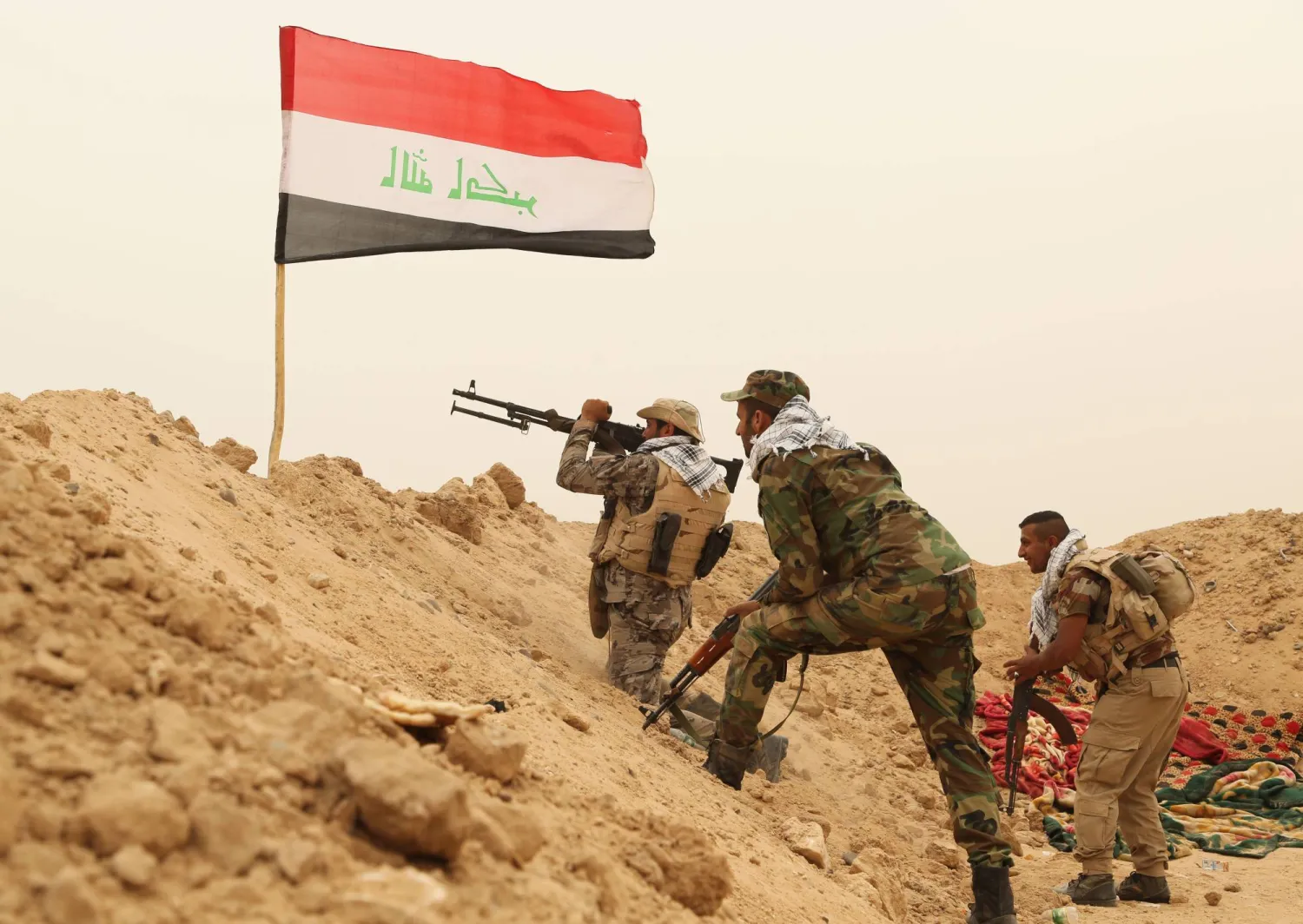
Fighters from the Badr Brigades clash with the ISIS group at the front line on the outskirts of Fallujah in the Anbar province of Iraq, June 1, 2015. (AP)
TT

As the Last US Troops Pack Up in Iraq, Factions Signal Their Weapons Will Stay

Fighters from the Badr Brigades clash with the ISIS group at the front line on the outskirts of Fallujah in the Anbar province of Iraq, June 1, 2015. (AP)

Two deadlines are looming for Iraq at the end of the month: the end of a decades-long US military presence and the disarmament of non-state armed groups.

The US withdrawal is underway, and officials say the hundreds of troops remaining in northern Iraq will be out by the Sept. 30 deadline.

The Iraqi government has linked the US withdrawal to an ultimatum for factions to lay down their weapons. But most have indicated they have no plans to do so.

That leaves major questions about what the day after will look like in Iraq.

Iranian-backed Iraqi factions have struck US-linked targets both inside and outside of Iraq since the US and Israel attacked Iran on Feb. 28. They also have coordinated with Yemen’s Houthis to attack Saudi Arabia.

With the war between the US and Iran raging, Tehran is unlikely to give up the leverage it has in neighboring Iraq. US officials are concerned about the factions' ability to continue carrying out attacks, but not enough to delay their withdrawal.
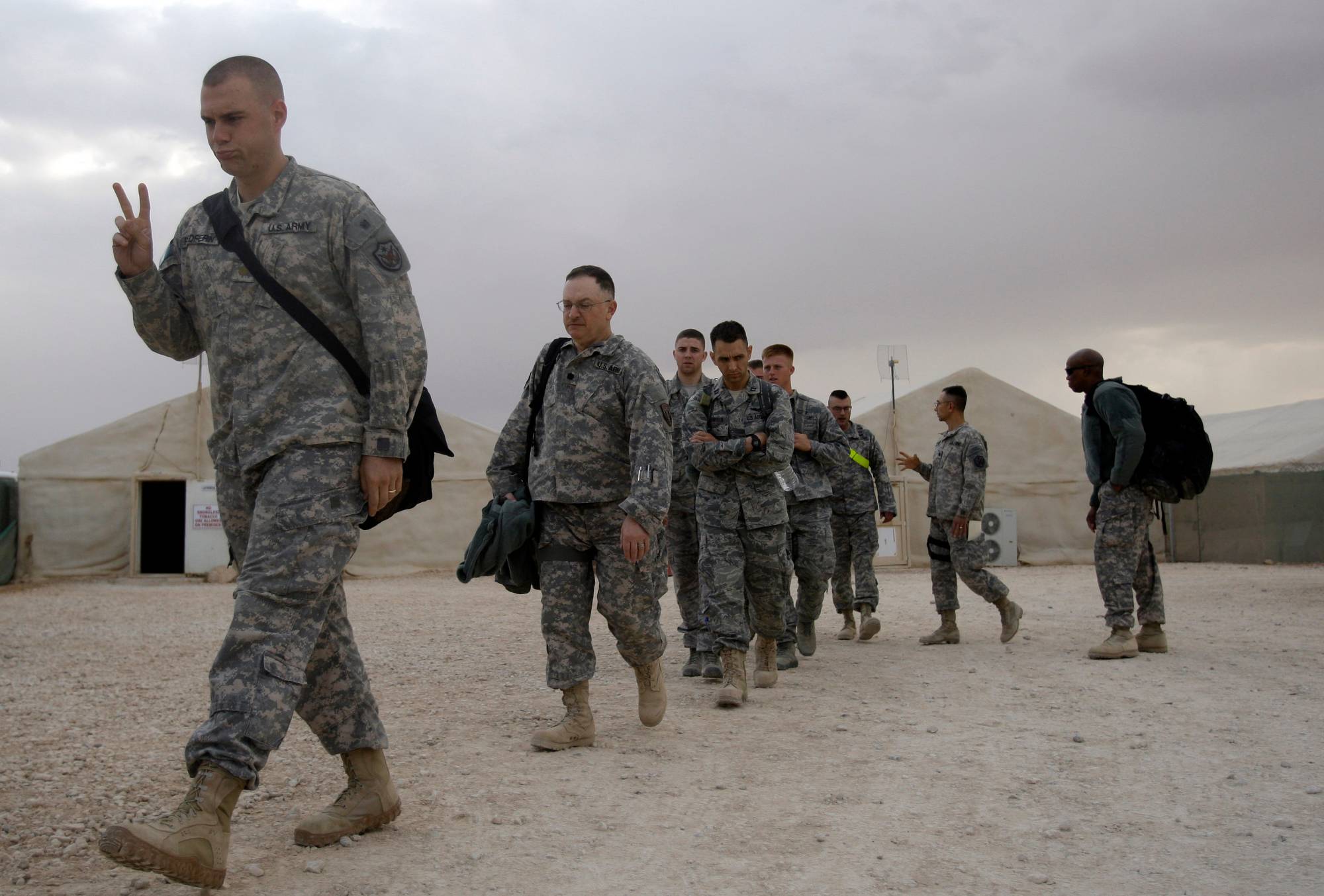
A US army soldier flashes a V for victory sign as he begins his journey home, at the al-Asad Air Base west of Baghdad, Iraq, Nov. 1 , 2011. (AP)

The end of the US mission

US troops invaded Iraq in 2003 to topple Saddam Hussein. They departed in 2011, but three years later, Iraqi authorities invited a smaller US-led mission to fight the ISIS group, which had rampaged across Iraq and Syria, seizing large swaths of territory.

With the extremist group now reduced to scattered sleeper cells — a result of the intervention of Iran-backed factions, as well as the US-led coalition -- Washington and Baghdad agreed in 2024 to wind the mission down.

US troops pulled out of bases in most areas of Iraq last year but maintained a presence in the semiautonomous northern Kurdish region. Bases there have regularly come under attack since the US and Israel launched their war against Iran.

A US military official said the withdrawal would be completed by Sept. 30, and the hundreds of troops still present in northern Iraq would mostly be redeployed to other countries in the region. Military equipment, including air defense systems, will also be removed. He spoke on condition of anonymity because he was not authorized to comment publicly.

A “normal bilateral security cooperation” agreement could then be negotiated with the central government in Baghdad, he said, but it remains unclear what form that would take.

The official said that the counterterrorism base in Erbil had lost its importance for US troops with the ISIS threat receding.

During the war with Iran, northern Iraq for the most part did not serve as an “offensive platform,” but US forces there were frequently targeted by Iran and Iran-backed Iraqi factions, so pulling troops out “will reduce our risk,” he said.

But the US military remains concerned about the ability of the Iraqi factions to launch attacks on targets elsewhere in the region, including in Saudi Arabia, Jordan and Israel, and about the presence of Houthi militants in Iraq, he said.

In the past, the US has sometimes struck faction sites in Iraq in retaliation for attacks. Washington has slapped sanctions on some of the groups and could impose more.

Factions take a hard line on disarmament

Iraqi government officials have waffled over whether Sept. 30 is a hard deadline for disarmament of factions or merely the starting point for negotiations.

“There will be no disarming of any groups by the 30th of September,” said Iraqi analyst Sajad Jiyad, speaking at a panel convened by the Atlantic Center think tank last week. “I think that’s probably clear to anybody who watches Iraqi politics.”

While a handful of less-influential factions have agreed to turn over their weapons, the most powerful groups — and closest to Iran — Kataib Hezbollah, Harakat al-Nujaba and Kataib Sayyid al-Shuhada have rejected the prospect or set conditions for disarming that they know the government is unlikely to meet in the near future.

Those include bringing the Kurdish peshmerga security forces in northern Iraq under control of the central government’s military and expelling Iranian Kurdish dissident groups and the Kurdistan Workers’ Party, or PKK, that have bases in the region.

“After establishing these parameters, discussions will focus on regulating weapons, not surrendering them,” an official with one of the Iran-backed Iraqi factions said. “There is absolutely no decision among the factions to surrender weapons, and we have not surrendered any weapons.”

A government official said the government’s strategy currently focuses on bringing armed factions under the control of the Iraqi military. Already many of the factions are part of the Popular Mobilization Forces, a coalition of armed groups that is officially part of the Iraqi armed forces, although the individual factions often act on their own.

The official said the government wants the armed factions to hand over “dynamic weapons” including missiles and long-range aircraft, to the central leadership of the PMF and for the individual factions to be dissolved and placed under the command of the PMF and the Iraqi army.

The officials spoke on condition of anonymity because they were not authorized to speak publicly.

Iraqi government spokesperson Sabah al-Numan said last week that “discussions and dialogues are ongoing, and the file will be resolved after the withdrawal of the international coalition forces."
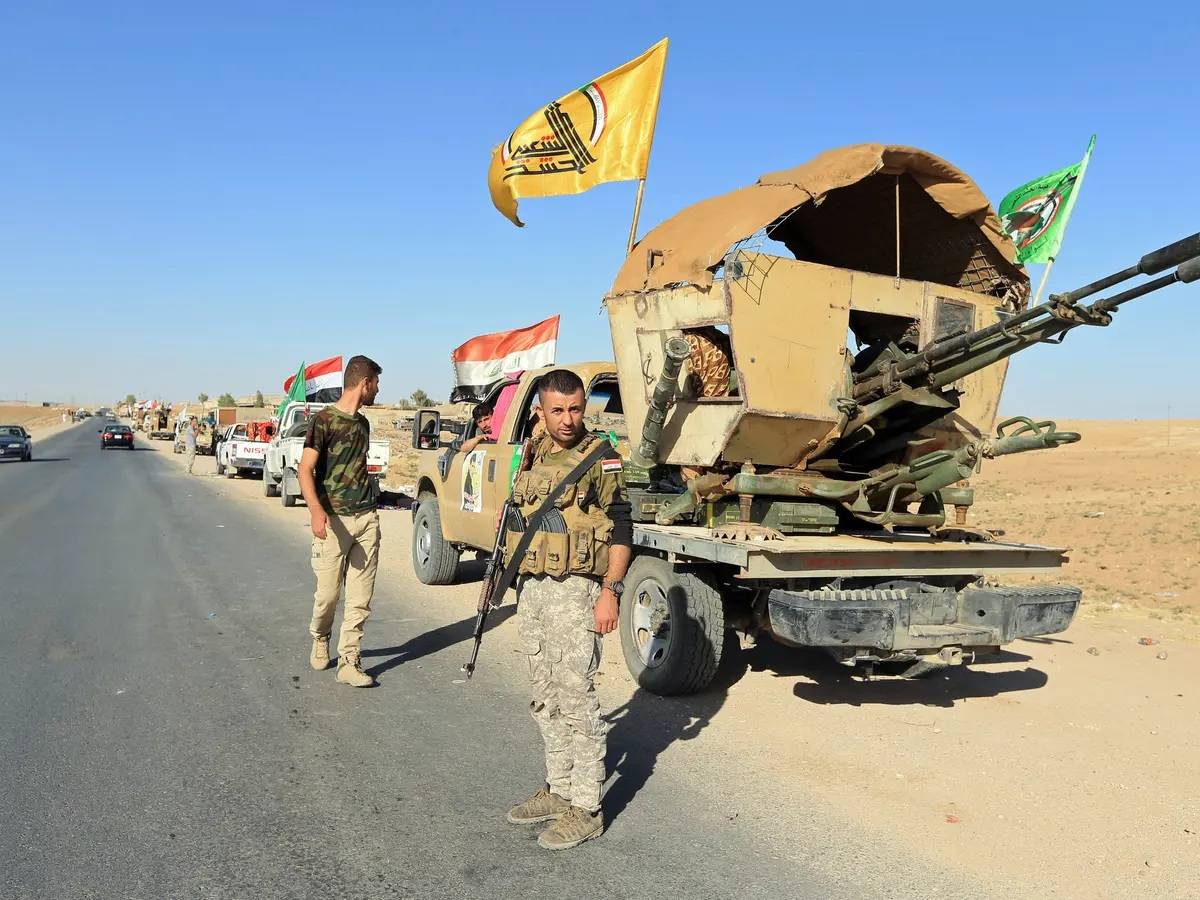
While a handful of less-influential factions have agreed to turn over their weapons, the most powerful groups and closest to Iran have not. (Reuters file)

Kurds are anxious about the day after Sept. 30

While the withdrawal of US troops removes one target from the Kurdish region, it may not halt the attacks.

Mohammed A. Salih, a non-resident senior fellow at the US-based Foreign Policy Research Institute, and an expert on Kurdish and Iraqi affairs, noted that Iran and affiliated groups “have targeted other locations in the Kurdistan region that have not been related to the US troops’ presence.”

Those include the bases of exiled Iranian Kurdish dissident groups, energy facilities, and even the office of the Kurdish region’s Prime Minister Masrour Barzani.

“The withdrawal will expose the Kurdistan region even further and make it an even easier target,” Salih said.

Regional government officials declined to comment, but Barzani has publicly expressed anxiety that the removal of US air defenses would leave the area more vulnerable.

Numan said last week that the Iraqi government was close to procuring new air defense systems from South Korea, Türkiye and the US

He told The Associated Press that the new systems “will be deployed according to carefully devised military plans to ensure the complete protection of Iraqi airspace, including the Kurdistan region.”


Egypt Keeps Communication Channels Open Over Mediterranean Maritime Disputes

Egyptian Foreign Minister Badr Abdelatty and his Turkish counterpart Hakan Fidan during a previous meeting (Egyptian Foreign Ministry). 
TT

Egypt Keeps Communication Channels Open Over Mediterranean Maritime Disputes

Egyptian Foreign Minister Badr Abdelatty and his Turkish counterpart Hakan Fidan during a previous meeting (Egyptian Foreign Ministry). 

Egypt said it remains in contact with Türkiye, Libya, Cyprus and Greece to resolve maritime boundary disputes through dialogue and international law, despite its rejection of a disputed Turkish-Libyan maritime agreement.

Cairo’s remarks came after Ankara renewed its offer to negotiate a maritime boundary agreement with Egypt that would serve both countries’ interests. The proposal followed Egypt’s rejection of the Libyan parliament’s ratification last week of a maritime memorandum signed with Türkiye in late 2019.

Egyptian Foreign Ministry spokesman Ambassador Nader Zaki told Asharq Al-Awsat that Cairo believes maritime differences must be resolved through “serious dialogue, adherence to international law and mutual respect for sovereign rights.”

“Channels of communication remain open with all parties, including Cyprus, Greece, Türkiye and Libya,” he said, citing Egypt’s commitment to its longstanding ties with countries on both shores of the Mediterranean.

Zaki stressed that those relations must be built on respect for international law and sovereign rights that “cannot be compromised,” while avoiding disputes that could undermine stability and relations among Mediterranean states.

Cairo Reaffirms Rejection of Turkish-Libyan Agreement

Libya’s House of Representatives voted last week to approve two agreements with Türkiye covering maritime boundaries and security cooperation, prompting Cairo to reiterate its rejection of the maritime deal as “absolutely null and void.”

Zaki said Egypt’s latest objection was consistent with its position since 2019, arguing that the memorandum infringes on its sovereign rights in the exclusive economic zone and continental shelf.

“Egypt’s position on this invalid memorandum is based on national interests and the rejection of any infringement upon them,” he said.

The spokesman also challenged the agreement’s legal basis, saying it violates several binding principles of international law, including the principle that treaties do not create obligations for third parties.

“An agreement signed by two states is not binding on other states,” he explained.

Zaki also cited the prohibition against infringing on the rights of third countries and the principle of equitable maritime delimitation, arguing that the memorandum disregards these established legal rules.

“Egypt’s legal position is extremely strong and is shared by many countries,” he said.

Erdogan Calls for Regional Dialogue

The Turkish-Libyan memorandum has also drawn objections from Greece, Cyprus and the European Union.

Responding to criticism on Monday, Turkish President Recep Tayyip Erdogan said Ankara was not seeking political gains at the expense of any party in the Eastern Mediterranean.

He called for dialogue with all countries in the region and pledged to maintain Türkiye’s relations with all parties involved in Libya.


Türkiye, Egypt to Hold Naval Drills Amid Eastern Mediterranean Tensions

Egypt and Türkiye resumed the Sea of Friendship naval exercises in September 2025 after a 13-year suspension. (Turkish Defense Ministry)
TT

Türkiye, Egypt to Hold Naval Drills Amid Eastern Mediterranean Tensions

Egypt and Türkiye resumed the Sea of Friendship naval exercises in September 2025 after a 13-year suspension. (Turkish Defense Ministry)

Türkiye and Egypt will hold joint naval exercises in Alexandria from November 4 to 9, Ankara announced, amid renewed tensions over a disputed maritime boundary agreement between Türkiye and Libya.

The announcement follows the Libyan parliament’s ratification of the 2019 agreement, drawing objections from Egypt, Greece, Cyprus, the European Union and Israel.

The Turkish Defense Ministry said the Sea of Friendship 2026 exercises would involve naval units and personnel from both countries in surface warfare, anti-submarine operations, air defense and underwater assault training involving combat divers.

Defense Ministry spokesman Zeki Akturk said the Turkish warship TCG Burgazada would visit Alexandria from November 1 to 3, following a port call in Souda, Greece, from October 25 to 28.

Growing military cooperation

The exercises reflect expanding military cooperation between Cairo and Ankara, including defense industry agreements, technology transfers, high-level military exchanges and joint training.

Turkish Land Forces Commander Gen. Metin Tokel visited Egypt on October 26 and 27, although the ministry provided no details about his meetings or itinerary.

The two countries resumed the Sea of Friendship exercises in September 2025 at the Aksaz naval base in Mugla, southwestern Türkiye, following a 13-year suspension amid tensions over the ouster of Egypt’s Muslim Brotherhood government. Cairo designates the Brotherhood a terrorist organization.

The drills had previously been held annually from 2009 to 2013.

Following the normalization of relations in 2024, Egypt and Türkiye signed a letter of intent on defense cooperation in July 2026 during Egyptian Defense Minister Ashraf Salem Zaher’s visit to Ankara.

Zaher held talks with his Turkish counterpart, Yasar Guler, on expanding military cooperation, particularly in joint training, defense manufacturing, technology transfer and exchanges of expertise.

The two countries have since conducted several joint exercises, including Golden Eagle, involving Egyptian paratroopers and commandos alongside Turkish special forces, as well as air force training.

Egyptian aircraft also participated in the annual Anatolian Eagle 2026 exercise in Konya, central Türkiye, in June, alongside Azerbaijan and a NATO airborne early warning aircraft.

Regional tensions

The exercises come against a backdrop of renewed tensions following the Libyan House of Representatives’ October 20 ratification of a maritime boundary memorandum signed on November 27, 2019, between Türkiye and Libya’s former Government of National Accord, led by Fayez al-Sarraj.

The agreement remains contested by neighboring countries and the European Union.

Ankara has renewed its offer to negotiate maritime boundaries with Egypt, saying that an agreement with Türkiye would give Cairo more than 15,000 additional square kilometers of maritime jurisdiction compared with a potential deal with Greece.

Greek Foreign Minister Giorgos Gerapetritis rejected the proposal’s underlying approach, telling the newspaper Kathimerini that maritime zones were “not up for auction.”

He reaffirmed Greece’s strategic ties with Egypt and their shared commitment to international law, warning that disregarding maritime rules could have repercussions for global trade, food and energy security, and ocean protection.

Gerapetritis also pointed to a joint statement issued Monday by the UN representatives of Egypt, Greece, Cyprus, Bahrain, the United Arab Emirates and the European Union opposing the Türkiye-Libya agreement.

He noted that Egypt’s permanent representative to the United Nations stood alongside him in New York as he delivered the statement.

Despite the maritime dispute, Türkiye and Greece are continuing military confidence-building efforts.

Akturk said the commander of Greece’s Tactical Air Force and an accompanying delegation would visit Türkiye’s Combat Air Force Command from November 3 to 5 under the two countries’ confidence-building plan.


Lebanese Forces Boycott Cabinet Meeting Over Hezbollah Explosives Case

Prime Minister Nawaf Salam chairs a cabinet meeting in the absence of Lebanese Forces ministers. (Prime Minister’s Office)
TT

Lebanese Forces Boycott Cabinet Meeting Over Hezbollah Explosives Case

Prime Minister Nawaf Salam chairs a cabinet meeting in the absence of Lebanese Forces ministers. (Prime Minister’s Office)

Ministers from the Lebanese Forces party boycotted a cabinet meeting on Thursday over the government’s failure to refer a case involving Hezbollah explosives seized in Dahr al-Baidar to Lebanon’s Judicial Council.

The boycott marked an escalation in the dispute after the case was left off the agenda of a meeting chaired by Prime Minister Nawaf Salam at the Grand Serail and devoted to waste management.

Lebanese Forces sources told Asharq Al-Awsat that the party could continue boycotting cabinet sessions as long as its demands remained unmet, although it might participate in meetings addressing matters of major strategic importance.

The standoff follows the cabinet’s decision at its previous meeting to postpone a ruling on whether to refer the case to the Judicial Council, pending further progress in the investigation.

Hezbollah has acknowledged responsibility for the explosives shipment, but the Lebanese Forces argue that the seriousness of the case warrants an immediate referral.

Ahead of Thursday’s meeting, Justice Minister Adel Nassar, who is affiliated with the Lebanese Forces, vowed to press the issue.

“I will raise the question of referring the Dahr al-Baidar explosives case to the Judicial Council. There will be no concessions or compromise,” he declared.

Nassar added that he would demand a date for discussing the referral if Salam refused to address it during the session.

Lebanese Forces sources accused the government of repeatedly avoiding a decision on the explosives case.

“The waste management issue is certainly important, but there are more pressing priorities today, foremost among them a case of the magnitude of the Dahr al-Baidar explosives,” they told Asharq Al-Awsat.

They criticized the repeated postponements, arguing that successive Cabinet meetings had failed to produce a decision on referring the case to the Judicial Council.

The party had taken a clear position against attending Cabinet sessions until the matter was resolved, the sources explained.

“A case of this magnitude cannot continue to be handled through repeated delays while meetings are held to discuss other issues, however important they may be,” they added.

The Lebanese Forces stepped up criticism of the judicial investigation, accusing authorities of overlooking public admissions by senior Hezbollah officials while pursuing lower-ranking operatives who lacked the authority to order the explosives shipment.

In a statement, the party’s media office noted that senior Hezbollah officials, including lawmakers and party leaders, had publicly acknowledged that the group was transporting the explosives and that they belonged to it.

The Lebanese Forces described the Dahr al-Baidar case as a matter of national security affecting all Lebanese citizens.

Whatever justification was offered for transporting the explosives, the shipment posed a serious danger even if Hezbollah’s claim that the materials were intended for use against Israel proved true, it added.

The explosives represented a grave threat to residents of South Lebanon in particular and to the Lebanese population as a whole, the statement warned.