
Saudi Arabia is moving to strengthen its pharmaceutical security on two parallel fronts: expanding domestic production of biologic medicines and building a system better able to anticipate supply-chain disruptions.
Sudair Pharma said it would begin producing insulin locally in 2027 through an investment exceeding 280 million riyals ($74.6 million) in what the company described as the world’s largest insulin plant.
Meanwhile, NUPCO has reached the final stage of deploying artificial intelligence to predict drug shortages and supply disruptions before they occur.
The initiatives bring manufacturing and inventory management under a single system, aimed at reducing reliance on foreign supply chains and strengthening the kingdom’s ability to respond to potential global shortages.
Reliable supplies in the sector depend directly on the availability of active pharmaceutical ingredients, production capacity and the speed at which products reach healthcare facilities.
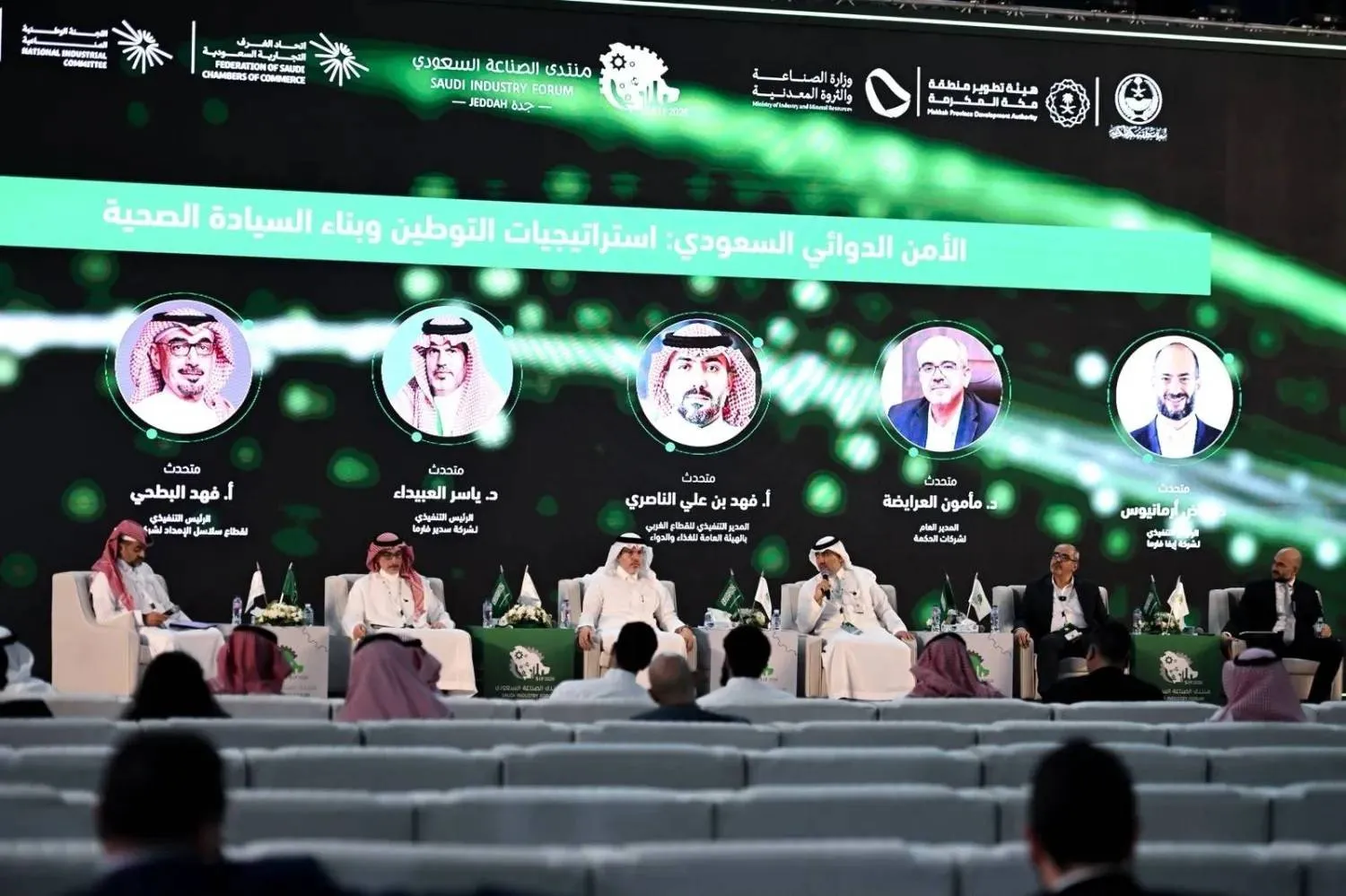
The plans were unveiled during a session titled “Saudi Pharmaceutical Security: Localization Strategies and Building Health Sovereignty” at the Saudi Industry Forum 2026 in Jeddah.
The session focused on achieving self-sufficiency in essential and life-saving medicines, attracting investment in biotechnology and vaccines, transferring technology to domestic factories and improving the sector’s ability to withstand global crises.
Production inputs
Dr. Yasser Alobaidaa, chief executive of Sudair Pharma, said the company would begin producing insulin locally next year, adding that the project would cover every stage of manufacturing in Saudi Arabia rather than merely filling and finishing.
The project, which will cost more than 280 million riyals, will produce advanced types of long- and short-acting insulin, he said, describing the facility as “the world’s largest insulin plant.”
The project also extends to securing production inputs. Alobaidaa said the factory would maintain a three-year stock of active pharmaceutical ingredients, or APIs, allowing local insulin production to continue even if foreign supplies were disrupted.
Work to localize insulin production has been underway for more than four years, he said, adding that NUPCO’s involvement helped accelerate the project. He also highlighted the company’s role in supporting domestic manufacturers and expanding access to healthcare facilities for their products.
Supply chains
On the other front of pharmaceutical security, Fahd Al-Bat’hi, chief executive of NUPCO’s supply-chain division, said the company had reached the final stage of deploying artificial intelligence at its Command and Control Center.
The technology will be used to predict potential shortages or supply-chain disruptions, allowing contingency plans and alternatives to be prepared before problems arise.
Al-Bat’hi said the company produces internal monthly reports that track forecasts and warnings about disruptions that could affect supplies in the coming months, drawing on indicators and information related to global markets and companies.
NUPCO also works with the Saudi Food and Drug Authority through an Availability and Indicators Committee that meets almost weekly, he said. The committee monitors global shortage indicators and potential supply risks, and identifies coverage mechanisms and available alternatives.
Vital products
Al-Bat’hi said the company aimed to maintain a three-month inventory of non-life-saving items, alongside measures to ensure vital products remain available.
NUPCO’s Mawsool project and direct-delivery operations have improved visibility over inventory movements from warehouses to healthcare facilities, he said.
A further measure, due to begin in 2027, will allow manufacturers to view inventory and consumption levels, giving them the flexibility to increase or reduce production in response to actual demand.
Al-Bat’hi said localization was among the most important solutions to supply-chain risks because domestic manufacturers could respond more quickly to demand and adjust production as needs changed.
With a new insulin plant, a three-year stock of active pharmaceutical ingredients, and AI systems designed to anticipate shortages, Saudi pharmaceutical security is shifting beyond managing inventory after products reach the market.
The emerging system begins with active ingredients and domestic manufacturing, and extends to demand and risk forecasting, reducing exposure to external shocks and increasing the local industry’s share of the pharmaceutical value chain.