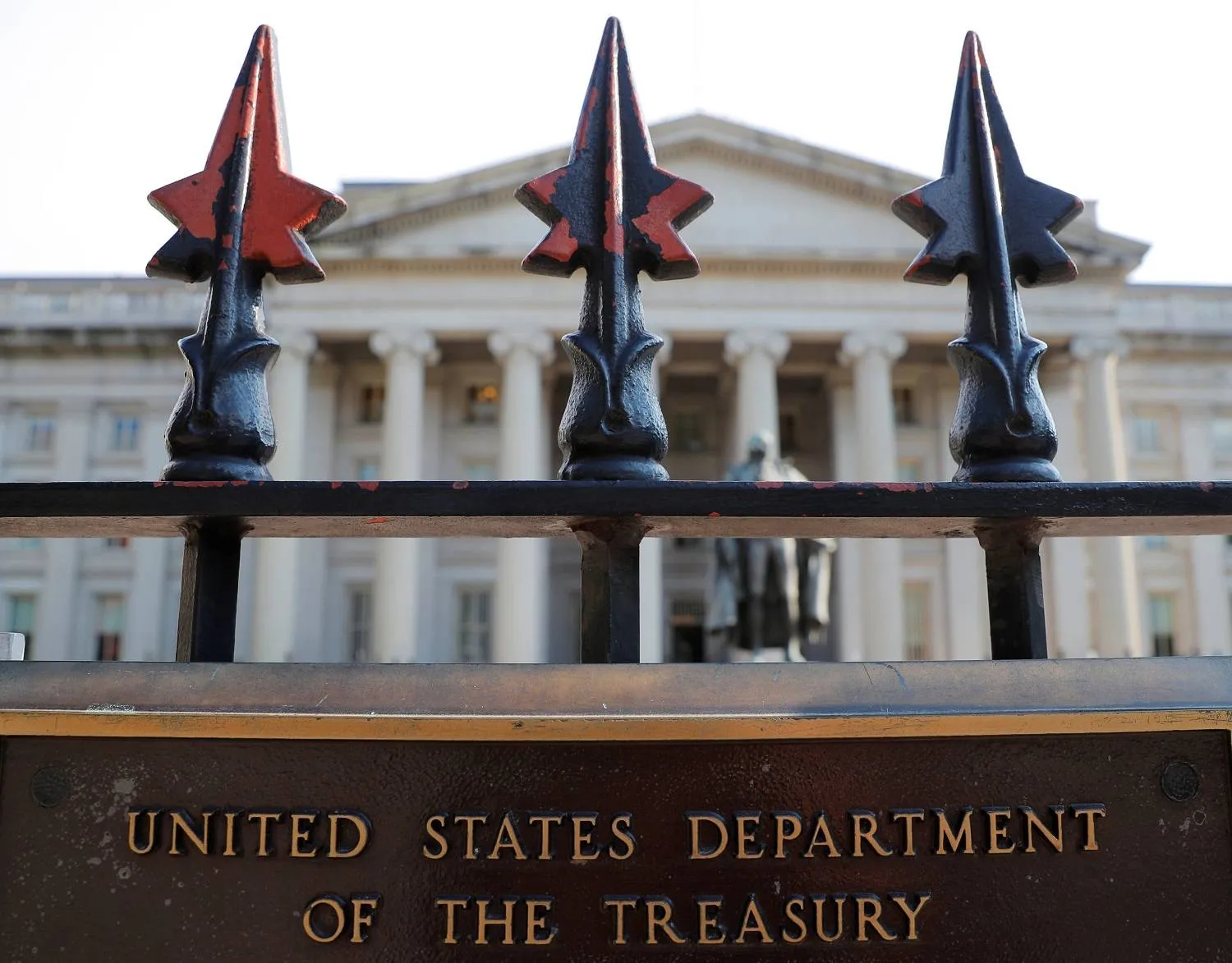
As 5% Treasury Yields Lose Shock Value, Investors Start Worrying about 6%

US Department of the Treasury (Reuters)
TT

As 5% Treasury Yields Lose Shock Value, Investors Start Worrying about 6%

US Department of the Treasury (Reuters)

For years, 5% on the benchmark US 10-year Treasury yield was viewed as the point at which global financial markets would start hitting turbulence. That threshold is beginning to look less like a ceiling and more like a waypoint.

This month's breach of 5% - something that has happened only briefly in recent decades - has forced investors to contemplate an unsettling question: What if 6% is the new number that should be keeping them awake at night? Reuters reported.

The latest move above 5% has not lasted long enough yet to properly test that theory. But it has always been a psychological marker rather than an automatic tripwire, according to BlueBay Asset Management's head of market strategy, Mike Bell.

"People think of it as if there's a magic number for Treasury yields at which it becomes a problem, (but) it's a relative number, not an absolute number," Bell explained.

What matters is how Treasury yields compare with other key investment metrics, particularly the earnings yield on stocks. Bell says that relationship ‌is now approaching ‌an inflection point, potentially setting the stage for an equity selloff.

History offers some guidance. MSCI's main world ‌stocks ⁠index halved in value ⁠the last time the 10-year Treasury yield broke 5%, which was just before the global financial crash. It suffered a similar slump less than a decade earlier when a near 6.8% spike helped pop the dotcom bubble.

JP Morgan's analysts say one of the reasons why the pain-point might now be above 5% again is a "key structural shift" in the global economy, with AI, healthcare and services playing a bigger role. Many of those firms are spending and expanding, regardless of the level of borrowing costs.

That means "the traditional interest-rate channel looks materially less binding" and the "breaking threshold" of stock markets may be "meaningfully higher, potentially in the 5.5%-6.0% range", JP Morgan said, referencing the views of some of the major investors at one of its most recent conferences.

PROFOUND REPRICING

In ⁠the $29-trillion Treasury market, which anchors pricing for virtually all financial assets, a shift from 5% to 6% ‌would represent a profound adjustment in the global cost of capital.

A 6% Treasury yield ‌would imply either significantly higher inflation expectations, growing concerns about US fiscal sustainability, a conviction that interest rates will remain elevated for years - or a mix of ‌all three.

Federal Reserve policymaker Austan Goolsbee said this week that he didn't know whether markets would react differently to a lengthier period of ‌5% yields than they had in the past.

Paul Jackson, Invesco global head of asset allocation research, said investors focus on Treasury yields for a simple reason: Treasuries represent the world's risk-free benchmark and at above 5%, investors can lock in the highest returns on US bonds since 2007.

Jackson's own calculations show world stocks start to drop when the 10-year yield has traded at an average of 4.72% for 12 months and then rises.

That tipping point remains some way off ‌for now - the 12-month average is currently around 4.34% - but Jackson said he was already dialling back on stocks and switching some money into government bonds to cash in on the juicy yields.

"If Treasury ⁠yields keep rising then there ⁠is a risk that the stock market is lower in 12 months' time," he said.

EMERGING QUESTIONS

Emerging markets, which have enjoyed something of a hot streak in recent years, are often among the first casualties when US yields surge.

Higher Treasury returns tend to strengthen the dollar and make dollar-denominated assets more attractive. That sucks capital away from EM economies and can tip hard-up countries into crisis if the cost of servicing their dollar-denominated debt spirals.

Data on investment flows shows last week saw the biggest exodus from EM bond funds in months, with billions also withdrawn from equity funds. Issuance of emerging-market sovereign debt has also been notably lighter than usual this month.

"It's not an optimal picture for EM," said Alison Shimada, Head of Total Emerging Markets Equity, Allspring Global Investments, although she stressed that for now nothing was going "horribly wrong" and therefore remained "constructive".

Perhaps the biggest risk is psychological.

Once investors start asking whether 6% is attainable, the debate shifts beyond a temporary spike in yields. It becomes a broader reckoning with the possibility that the era of abundant liquidity and ultra-cheap money has ended, forcing global asset prices to adapt to a permanently higher cost of capital.

Premier Miton CIO Neil Birrell said while stock markets were showing no sign of collapsing right now, that might be because investors weren't yet plugging in 5%-plus yields into their longer-term profit forecasting models.

"The markets look fine until everyone re-runs their valuation models," Birrell said. "Ultimately, the numbers are the numbers and they've got to come through."


Saudi Arabia Offers 100% Social Insurance Debt Waiver to Businesses That Have Exited Market

Officials from the General Organization for Social Insurance at an earlier meeting with businessmen and businesswomen at the Riyadh Chamber (SPA)
TT

Saudi Arabia Offers 100% Social Insurance Debt Waiver to Businesses That Have Exited Market

Officials from the General Organization for Social Insurance at an earlier meeting with businessmen and businesswomen at the Riyadh Chamber (SPA)

Saudi Arabia's General Organization for Social Insurance (GOSI) has made businesses that have ceased operations and exited the Saudi market eligible for a 100% waiver of outstanding social insurance debts, subject to approved conditions, Asharq Al-Awsat has learned.

The move aims to address accumulated financial obligations, help businesses settle their accounts and close outstanding cases, and support stability in the Kingdom's private sector while resolving financial difficulties faced by companies that have left the market.

The measure is part of a broader package of improvements GOSI is implementing to enhance services for employers and businesses, in response to feedback and suggestions gathered during direct meetings with officials and business owners, in cooperation with chambers of commerce.

Taking Economic Conditions into Account

The initiative has economic and regulatory implications beyond debt relief, seeking to address financial and administrative liabilities left behind by businesses that have exited the market and facilitate the formal closure of their records in accordance with regulations.

Its main significance lies in striking a balance between protecting the rights of the social insurance system and its contributors, on the one hand, and taking into account the economic circumstances of businesses that have ceased operations, on the other.

It also reinforces regulatory flexibility in the business environment, ensuring that accumulated obligations do not become a permanent obstacle to the settlement of financial and administrative affairs.

Enhancing Market Attractiveness

The initiative reflects a more flexible approach to dealing with business distress, focusing on resolving outstanding liabilities rather than allowing them to remain a continuing burden on business owners.

This approach is expected to strengthen confidence in regulatory procedures and enhance the attractiveness of Saudi Arabia's business environment.

The move is particularly significant given the changing nature of the business sector, with new companies entering the market each year while others cease operations because of competition, rising costs, or shifting market conditions.

Settling the social insurance accounts of businesses that have exited the market could ease the administrative and financial burden on their owners, help them reorganize their financial affairs and potentially pave the way for a return to commercial activity in the future, without old liabilities remaining an obstacle, subject to applicable regulations.

According to information obtained by Asharq Al-Awsat, GOSI has notified all companies and establishments of improvements introduced to its business services, including the debt waiver.

The measure is designed to enable businesses that have ceased operations to resolve their outstanding social insurance obligations and complete the regulatory procedures associated with closing their operations, easing the financial burden on owners whose businesses are no longer active.

Service Improvements

In a related development, GOSI's improvements include upgrades to services for registering businesses, terminating their activities and managing ownership records, alongside efforts to resolve recurring technical problems and improve the quality of digital services.

The changes are intended to improve the user experience and accelerate transaction processing.

GOSI has also expanded electronic payment options through its GOSI Business app, allowing employers to pay amounts exceeding 30,000 Saudi riyals ($8,000) in multiple installments.

The measure aims to make it easier for businesses to meet their financial obligations while providing greater payment flexibility.

The updates also include measures to increase transparency in transaction processing by clarifying the reasons for rejecting occupational injury claims and contributor-related transactions.

Notifications have also been introduced through the GOSI Business and Tawakkalna apps to inform users when applications are received, accepted, returned, or rejected.

Together, the improvements reflect GOSI's efforts to modernize its digital services, simplify procedures for employers and improve the management of social insurance obligations.

The measures are also intended to support the business environment and help resolve outstanding financial and administrative matters involving businesses.


From Aramco's Profits to State Budget Revenue: How Do Oil Proceeds Reach Government Coffers?

A general view shows Ras Tanura's oil production plant near Dammam in Saudi Arabia's Eastern Province (AFP)
TT

From Aramco's Profits to State Budget Revenue: How Do Oil Proceeds Reach Government Coffers?

A general view shows Ras Tanura's oil production plant near Dammam in Saudi Arabia's Eastern Province (AFP)

Saudi Aramco's financial results and Saudi Arabia's third-quarter budget performance report, released on the same day, revealed a divergence between the company's rising profits and declining government oil revenue recorded in the state budget.

While Aramco's net income rose 34.2% during the first nine months of 2026 to SAR 380.6 billion ($101.5 billion), government oil revenue fell 1.3% over the same period and declined approximately 23% in the third quarter alone.

Comparing the two indicators does not necessarily imply a direct relationship between the company's profits and the revenue flowing into government coffers. Corporate earnings are recognized under different accounting principles from those governing the calculation and collection of government revenue.

The financial relationship between Aramco and the government also involves multiple channels, including taxes, royalties, dividends and offsetting settlements, each with its own payment and collection schedule.

Aramco's Profits and Cash Flows

Aramco reported net income of SAR 380.6 billion ($101.5 billion) for the first nine months of 2026, compared with SAR 283.6 billion ($75.6 billion) in the corresponding period last year, an increase of 34.2%.

Adjusted net income reached SAR 368.9 billion ($98.4 billion), up from SAR 302.3 billion ($80.6 billion) a year earlier.

However, the increase in earnings was not accompanied by a comparable rise in cash generated by the company's operations, according to its financial report.

Cash flow from operating activities totaled SAR 355.8 billion ($94.9 billion), compared with SAR 357.6 billion ($95.4 billion) in the same period last year, remaining largely unchanged.

Aramco attributed this to changes in working capital, which refers to funds tied up in day-to-day operations, including outstanding sales receivables, inventories and amounts owed to or by the company.

These movements limited the extent to which higher earnings translated into operating cash flow.

Meanwhile, free cash flow increased to SAR 221.6 billion ($59.1 billion), compared with SAR 217.3 billion ($57.9 billion) a year earlier.

This metric measures the cash remaining after capital expenditures are deducted from operating cash flow. It benefited from a reduction in capital expenditures to SAR 134.2 billion ($35.8 billion), from SAR 140.3 billion ($37.4 billion) in the comparable period.

Oil Revenue in the State Budget

On the other side of the equation, Aramco's earnings growth was not mirrored by a corresponding increase in government oil revenue.

Ministry of Finance data showed that oil revenue fell 23% year on year in the third quarter to SAR 116.5 billion ($31.1 billion), compared with SAR 150.8 billion ($40.2 billion) in the same period last year.

Over the first nine months of 2026, oil revenue totaled SAR 446.3 billion ($119 billion), down from SAR 452.4 billion ($120.6 billion) in the corresponding period of 2025, representing a relatively modest decline of approximately 1.3%.

By contrast, non-oil revenue increased 8% during the nine-month period to SAR 412.5 billion ($110 billion), helping lift total budget revenue by 3% to SAR 858.9 billion ($229 billion).

In the third quarter alone, non-oil revenue rose 20% to SAR 142.6 billion ($38 billion).

The growth in non-oil revenue therefore helped cushion the impact of declining oil revenue on the government's overall income.

Third-quarter expenditure totaled SAR 343.4 billion ($91.6 billion), against revenue of SAR 259.1 billion ($69.1 billion), resulting in a quarterly budget deficit of approximately SAR 84.3 billion ($22.5 billion).

Why Don't the Figures Move in the Same Direction?

Part of the divergence between Aramco's financial results and government budget revenue stems from the different nature of the figures themselves.

The company's profits are recognized according to its accounting results, while budget figures reflect government revenue actually collected during the reporting period.

Moreover, the government's financial returns from Aramco's operations flow through several channels, including taxes, royalties and dividends, with differences in when these amounts become due and when they are paid.

Accounting profits do not necessarily translate into cash inflows during the same period. Liquidity is affected by the timing of receivables collection, inventory movements and operating payments.

This distinction is also evident in financial transactions between Aramco and the government, which are not limited to direct cash payments but include the settlement of certain mutual obligations through offsets.

For example, Aramco's cash income tax payments fell to SAR 2.8 billion (approximately $747 million) in the third quarter, compared with around SAR 51 billion ($13.6 billion) in the second quarter, as amounts due to the company from the government were settled by offsetting them against its tax obligations.

Under this mechanism, amounts owed to one party are deducted from what that party owes the other, rather than transferring the full amount in cash.

Such offsets affect both the volume of cash payments and the timing of financial transfers between Aramco and the government.

Consequently, government oil revenue does not necessarily move in the same direction as Aramco's financial results, since each is influenced by different factors and accounting mechanisms.

While the company's profits reflect its financial performance during a given period, government revenue recorded in the budget depends on the taxes, royalties and dividends due to the state, as well as the timing of their collection and settlement.

Aramco's profits may therefore increase during a period when government oil revenue is declining.

Overall, the results demonstrate Aramco's continued ability to generate strong profits and maintain substantial cash flows, supporting its capacity to sustain investment and distribute dividends to shareholders, foremost among them the Saudi government.

At the same time, growth in non-oil revenue underscores the importance of diversifying budget income sources to mitigate fluctuations in oil revenue, broaden the sources supporting public finances and advance the Kingdom's economic transformation.


Crypto Dips on Democrat Midterm Wins, Binance Hack Dents Optimism

Representation of cryptocurrencies are seen in this illustration taken September 10, 2025. (Reuters)
TT

Crypto Dips on Democrat Midterm Wins, Binance Hack Dents Optimism

Representation of cryptocurrencies are seen in this illustration taken September 10, 2025. (Reuters)

Cryptocurrencies briefly dipped on Wednesday as Democrats won majorities in both the Senate and House in the US midterm elections, a potential blow to an industry that has pushed for faster deregulation for digital assets.

The sector has spent more than $300 million backing crypto-friendly Democrats and Republicans in roughly equal measure during the current and previous election cycles, hoping to pass legislation US crypto companies say will ‌put them on ‌a solid legal footing and allow them to thrive.

Bitcoin ‌briefly ⁠touched a six-week ⁠low before recovering to trade roughly flat by 0715 GMT at $78,070. Ether traded at $2,292, up just 1%.

Bitcoin has fallen by around 41% since hitting record highs above $122,000 in October 2025, bringing the value of the broader crypto market to around $2.61 trillion, according to CoinMarketCap.

The market has lost some $300 billion in value in the last month alone, as deepening concern about future returns from AI and the ⁠strain of rising borrowing costs pushed investors into less risky ‌assets such as government bonds and ‌safe-haven currencies.

Sentiment has also been hurt by the $6 billion hack of the Binance platform last ‌week, the largest heist in history.

On Tuesday, Binance customers had withdrawn ‌a net $4.72 billion from the world's largest cryptocurrency exchange since it reopened following the hack at the weekend.

"The market may be re-evaluating the risk-reward profile of crypto assets. On one hand, the string of security incidents is forcing investors to re-examine the ‌industry's security infrastructure and custody risks," Tim Sun, senior researcher at HashKey, said.

"On the other hand, potential shifts in ⁠the US political landscape ⁠could stall the progress of structural crypto legislation and institutional framework development. All of these factors leave the crypto market facing strong headwinds," he said.

US President Donald Trump, who vowed to make the United States the "crypto capital of the world" during his 2024 presidential campaign, has made his own forays into digital assets, with the launch of his "Trump" meme coin, plus his family's World Liberty Financial crypto platform, among other ventures.

The sector has seen sweeping reforms in the almost two years since Trump returned to office, including lighter enforcement and the creation of a strategic bitcoin reserve.

Washington has also allowed for easier access to banking and exchange-traded products and passed a federal stablecoin law that could help these assets move into the mainstream payments and money transfer systems.