
Aramco President & CEO: Attacks on the Region’s Energy Infrastructure Threaten Global Economies

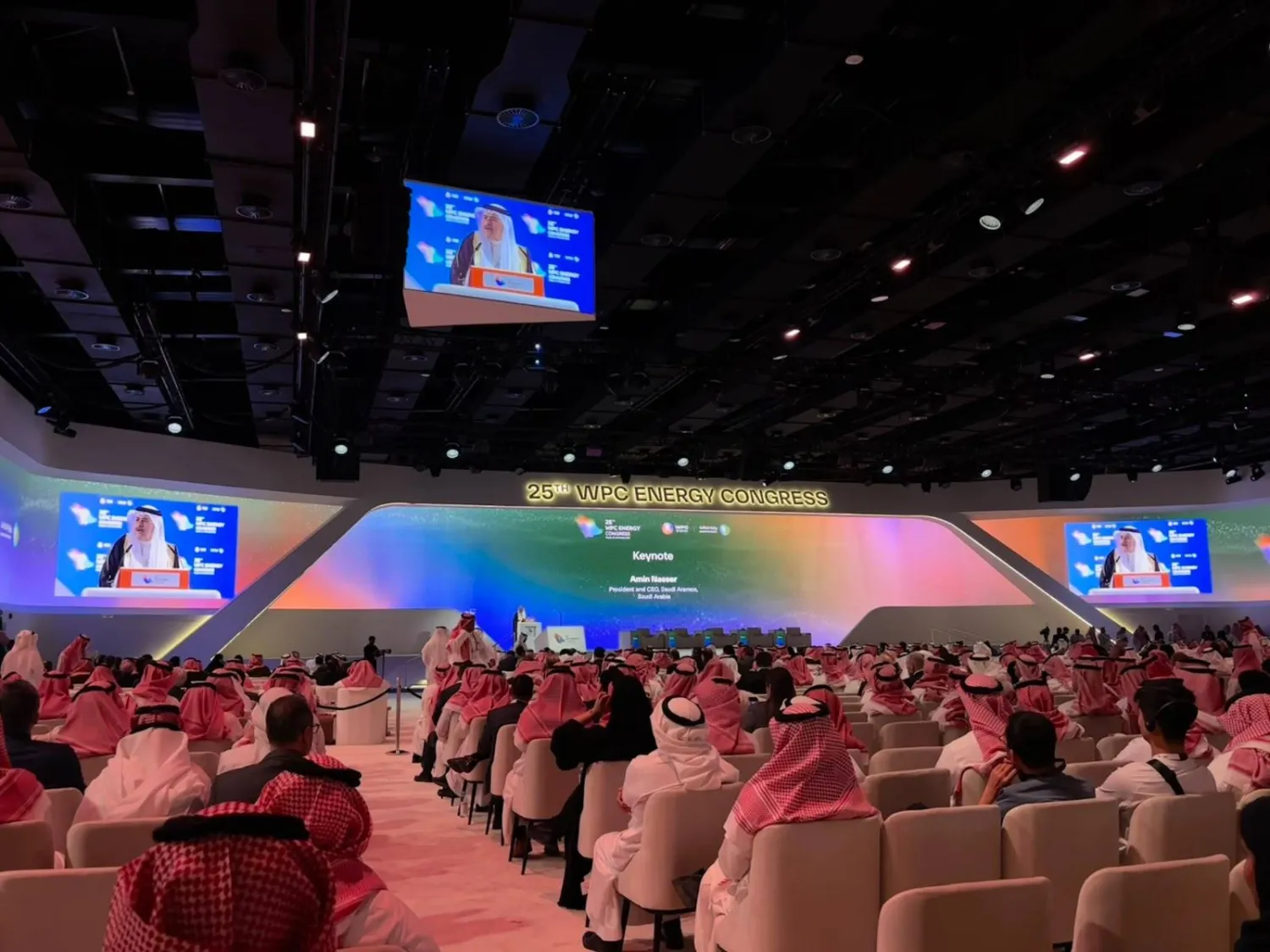
Amin Nasser speaks at the 25th WPC Energy Congress in Riyadh (Asharq Al-Awsat)
TT

Aramco President & CEO: Attacks on the Region’s Energy Infrastructure Threaten Global Economies

Amin Nasser speaks at the 25th WPC Energy Congress in Riyadh (Asharq Al-Awsat)

Amin H. Nasser, President & CEO of Aramco, has warned that the consequences of attacks on the region’s energy infrastructure extend beyond its own markets to economies and markets around the world. He stressed that protecting energy facilities and supply routes requires international cooperation, as recent disruptions pose challenges to global energy security.

Speaking at the 25th WPC Energy Congress in Riyadh, Nasser said disruptions in the Strait of Hormuz and attacks on energy infrastructure across the region had exposed the extent to which the links in the global supply chain are interconnected. He noted that continued disruptions were intensifying pressure on crude oil and refined product markets, particularly diesel.

He added that available commercial inventories now offer only a limited buffer against shocks, warning against relying on them as a permanent solution for energy security. He stressed that restoring the flow of supplies through the Strait of Hormuz and rebuilding market confidence remain essential to easing pressure across the energy supply chain.

Nasser explained that Saudi Arabia’s energy system had continued to operate with high reliability throughout the crisis, supported by strategic investments in infrastructure and operational capabilities, diversified export routes, integrated facilities, and digital protection systems.

Proactive Investments Strengthen Resilience

Nasser stressed that resilience in the energy sector cannot be achieved through a single pipeline, facility, or technology. Rather, it requires an integrated system encompassing infrastructure, spare production capacity, multiple export routes, and the financial and human resources needed to maintain operations and investment during crises.

He added that Aramco, in coordination with the Ministry of Energy, was exploring additional crude oil export options, alongside expanding storage capacity outside the Kingdom and deploying advanced technologies to inspect facilities, accelerate maintenance and repair work, and limit damage.

He emphasized that the costs of investments needed to build resilience are borne by the entities that undertake them, while the benefits extend to economies, consumers, businesses, and investors. Avoiding disruptions, he noted, has economic value that deserves greater recognition, helping sustain the investments essential to energy security.

iktva Supports Supply Continuity

Nasser noted that Aramco’s In-Kingdom Total Value Add program (iktva), launched more than a decade ago, had helped establish a domestic supply base and strengthen the company’s ability to respond to exceptional circumstances.

He said that more than 90% of the materials used to restore operations over the past eight months had been sourced locally, enabling restoration work to be completed in hours and days rather than weeks and months.

He added that localizing supply chains is an important factor in strengthening preparedness for crises, while also supporting the domestic economy, developing national industries, and creating jobs.

Nasser stressed that building resilience requires sustained investment over many years, rather than short-term decisions. He also highlighted the importance of protecting the capabilities already developed and preparing for the Kingdom’s future needs.

80% Increase in Gas Production Targeted by 2030

Regarding the company’s future plans, Nasser said expanding gas production was a key pillar of Aramco’s strategy, with the company targeting an approximately 80% increase in sales gas production by 2030 compared with 2021 levels.

He added that gas expansion complements the National Renewable Energy Program, which includes solar and wind projects aimed at diversifying electricity generation sources and reducing emissions.

He explained that combining gas with renewable energy supports a more diversified and resilient electricity generation mix, helping improve resource utilization and meet the needs of the domestic economy. This is being pursued alongside the development of carbon capture, utilization and storage (CCUS), artificial intelligence, and advanced digital solutions.

He noted that these efforts align with the objectives of Saudi Vision 2030, particularly economic diversification, the development of local capabilities, industrial growth, job creation, and the establishment of a more sustainable energy system.

The Middle East: A Pillar of Global Energy Security

Nasser stressed that the Middle East remains a key pillar of global energy security, given its substantial share of proven oil reserves and spare production capacity. He noted that more than 90% of the world’s spare production capacity is concentrated in the region, according to his remarks.

He added that diversifying supply sources does not necessarily mean being able to diversify the geographical locations from which energy originates. He warned that attacks on the region’s infrastructure have repercussions for markets and economies worldwide.

He emphasized that protecting the energy facilities and transportation routes on which the global economy depends requires joint international efforts. No single country, regardless of its capabilities, can protect every element of the global supply system on its own.

Multiple Pathways for the Energy Transition

Regarding the future of energy, Nasser said transition pathways would differ from one country to another according to their needs and economic circumstances, stressing that oil and gas would remain important components of the global energy mix.

He added that providing reliable and affordable energy is essential to supporting economic growth, creating jobs, and improving living standards, particularly in developing economies facing challenges in meeting growing energy demand.

He concluded by emphasizing the importance of building an integrated energy system combining oil, gas, and renewable energy, one that operates efficiently under normal conditions and can withstand pressure during crises. Such a system, he said, would strengthen energy security in Saudi Arabia and around the world while supporting future growth.

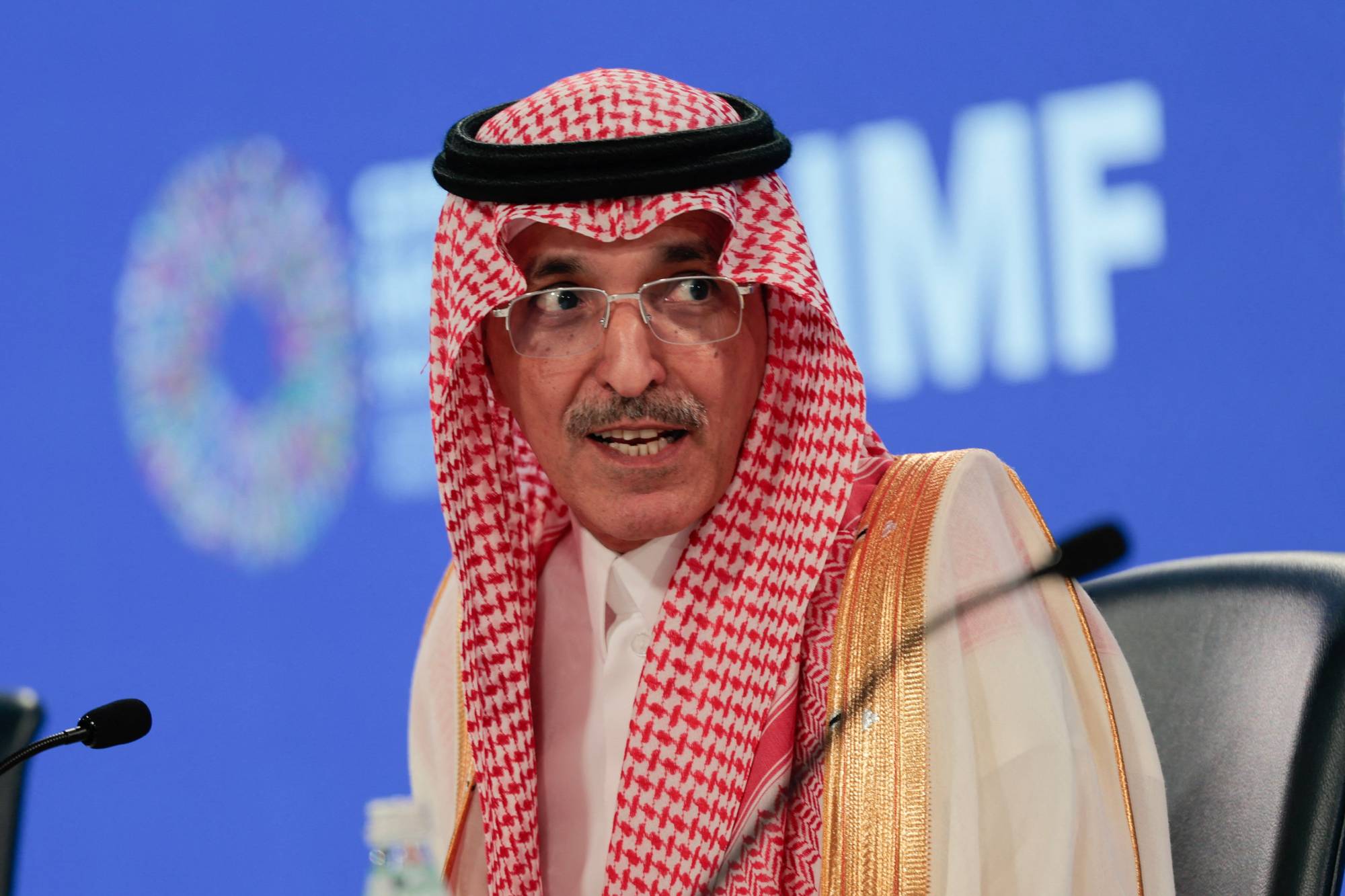
IMFC Extends Aljadaan's Term as Chair by One Year

Saudi Arabia's Finance Minister Mohammed Al-Jadaan speaks during a press briefing following a meeting of the IMFC (International Monetary and Financial Committee) at the 2026 IMF and World Bank Group Spring Meetings in Washington, DC, on April 17, 2026. (Photo by Kent Nishimura / AFP)
TT

IMFC Extends Aljadaan's Term as Chair by One Year

Saudi Arabia's Finance Minister Mohammed Al-Jadaan speaks during a press briefing following a meeting of the IMFC (International Monetary and Financial Committee) at the 2026 IMF and World Bank Group Spring Meetings in Washington, DC, on April 17, 2026. (Photo by Kent Nishimura / AFP)

The International Monetary and Financial Committee (IMFC) of the International Monetary Fund (IMF) announced a request for a one-year extension of Saudi Finance Minister Mohammed Aljadaan's term as Committee Chair after his current term ends on January 3, 2027.

The move aims to ensure continuity in the Committee's work and maintain momentum in advancing its key priorities, including important ongoing reforms.

In a statement issued Tuesday, the IMF said Committee members had asked Aljadaan to extend his term as Chair for an additional year and that he had agreed. Aljadaan was selected to chair the Committee for a three-year term beginning January 4, 2024.

Committee members expressed appreciation for Aljadaan's leadership, saying the extension would help ensure continuity and sustain momentum in addressing the Committee's key priorities, including its efforts on important ongoing reforms.

The IMFC is the primary policy advisory body of the IMF's Board of Governors and comprises finance ministers and central bank governors. It deliberates on major policy issues facing the Fund and the international monetary and financial system.

The Committee has 25 members, reflecting the composition of the IMF's Executive Board. Each member country, or group of member countries that elects an Executive Director to the Board, appoints a representative to the Committee.

The IMFC normally meets twice a year, once during the Spring Meetings and again in the fall, alongside the Annual Meetings of the IMF and World Bank Group.


Diversified Oil Export Routes Pave the Way for Strong Saudi Economic Recovery in 2027

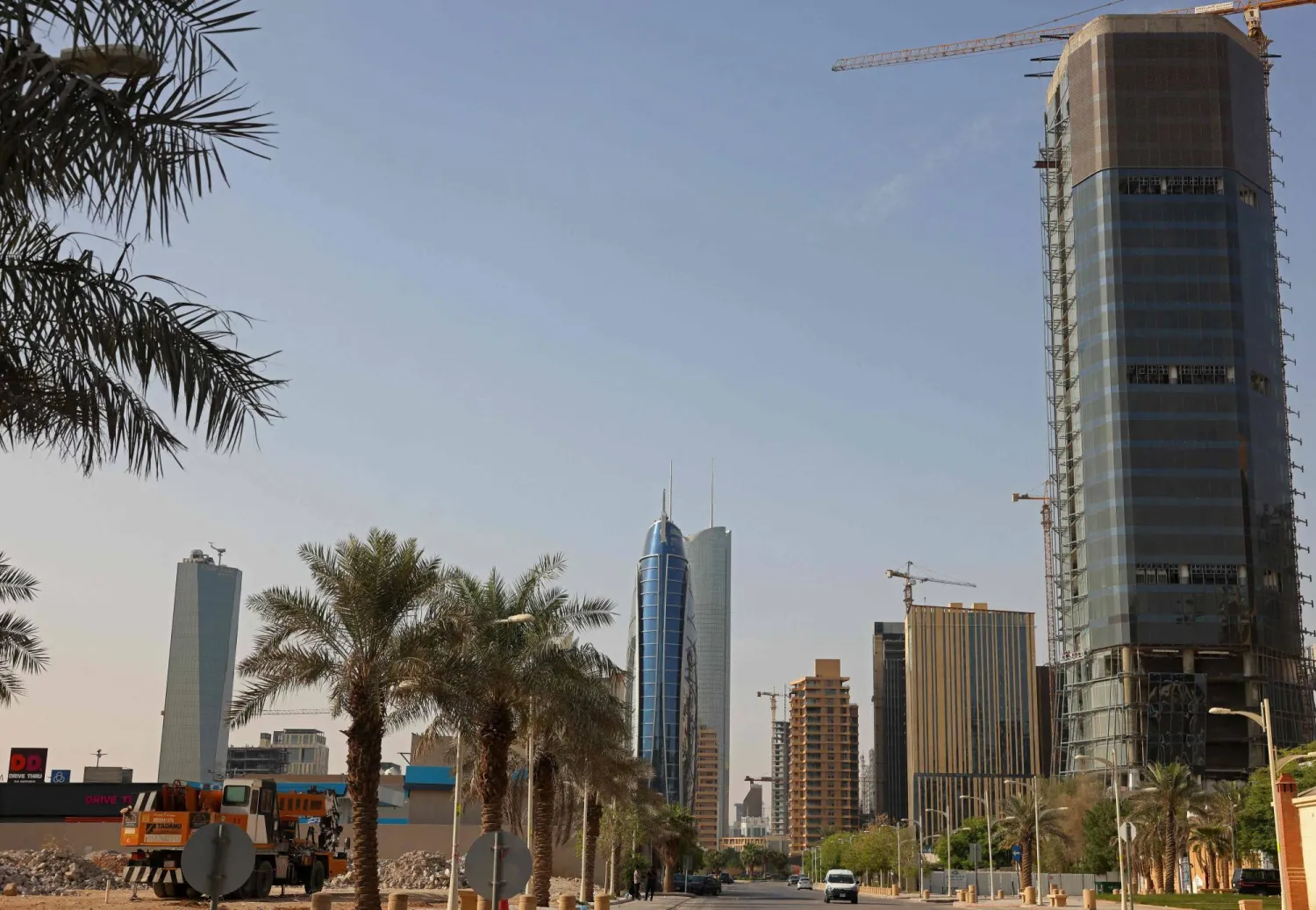
Cars drive past city skyscrapers in Riyadh on October 11, 2026. (Photo by Fayez Nureldine / AFP)
TT

Diversified Oil Export Routes Pave the Way for Strong Saudi Economic Recovery in 2027

Cars drive past city skyscrapers in Riyadh on October 11, 2026. (Photo by Fayez Nureldine / AFP)

As war reshapes energy flows across the region, the International Monetary Fund (IMF) is forecasting a strong recovery for Saudi Arabia's economy in 2027, with growth projected at 7.9 percent, driven by renewed momentum in production and exports as disruptions to shipping ease. Compared with Gulf economies more exposed to disruptions in transit through the Strait of Hormuz, this forecast rests on Saudi Arabia's diversified oil export routes, which help cushion the impact of the shock.

The IMF has also revised its outlook for the Saudi economy in 2026, projecting a smaller contraction than in its previous forecasts. The trajectory of the recovery will therefore depend on how long the disruptions persist and how quickly energy and trade flows return to normal.

The IMF's forecasts reflect both the scale of the shock facing regional economies and the recovery expected as its effects subside. In its World Economic Outlook report, titled Resilience Under Strain, Urgent Choices, the IMF projects that the economies of the Middle East and Central Asia will contract by 0.3 percent in 2026, followed by growth of 6.3 percent in 2027.

Compared with its April estimates, the IMF lowered its 2026 forecast by 2.2 percentage points while raising its 2027 projection by 1.7 percentage points. The revisions reflect an assumption that the Strait of Hormuz will remain closed longer than previously expected, intensifying pressure on regional economies this year but setting the stage for a stronger recovery once it reopens and production, exports and transportation resume.

Under this scenario, the IMF expects GDP to contract by 16.7 percent in Kuwait, 16 percent in Iraq, 15.6 percent in Qatar and 11.3 percent in Bahrain in 2026. In 2027, all four economies are projected to rebound sharply, with Iraq growing by 19 percent, Qatar by 18.8 percent, Kuwait by 17.1 percent and Bahrain by 13.9 percent, as production, exports and logistics return to normal operations.

Saudi Arabia's Economic Outlook

By contrast, the IMF expects the disruptions to have a relatively less severe impact on Saudi Arabia. It has revised its estimate for the Saudi economy's contraction in 2026 to 3.3 percent, compared with 5 percent in its July forecast and 6.4 percent in April. At the same time, it raised its forecast for Saudi economic growth in 2027 to 7.9 percent, up from 2.4 percent in its July update and 3.4 percent in April. The Ministry of Finance, meanwhile, expects stronger growth of 12.8 percent, according to its pre-budget statement. Although the estimates differ in magnitude, they reflect optimism about the recovery next year, amid hopes that production, exports and trade will regain momentum as shipping disruptions ease.

This outlook is consistent with World Bank projections. In its October report on the economic outlook for the Middle East, North Africa, Afghanistan and Pakistan, the bank anticipated a strong rebound in regional growth in 2027, forecasting expansion of 7.8 percent for the region's economies, excluding Iran, if the conflict subsides by the end of 2026. It attributed the recovery primarily to the resumption of hydrocarbon production and exports as trade routes reopen and energy flows gradually normalize. In Saudi Arabia, the bank noted that the East-West Pipeline had enabled exports to be rerouted to the Red Sea port of Yanbu, helping the Kingdom limit the impact of disrupted shipping through the Strait of Hormuz.

The IMF's projected contraction for the Saudi economy this year is smaller than the Ministry of Finance's estimate of a 3.6 percent decline in real GDP in 2026. The recovery outlook also aligns with the IMF's findings during its July Article IV consultations with Saudi Arabia, when it highlighted the economy's resilience to disruptions in oil and trade flows, supported by diversified energy and logistics infrastructure and the ability to reroute shipments.

Oil Export Routes

Against this backdrop, Saudi Arabia is benefiting from multiple oil export routes and working to strengthen its ability to deliver supplies to global markets through the Red Sea. Energy Minister and Minister of Industry and Mineral Resources Prince Abdulaziz bin Salman announced a target of increasing oil export capacity to approximately 10 million barrels per day within two to three years by upgrading the East-West Pipeline and expanding its associated infrastructure. He also pointed to the possibility of temporarily converting a gas pipeline to transport oil, adding approximately 1.2 million barrels per day of capacity within seven to eight weeks before returning it to its original use to meet summer demand.

These measures strengthen the Kingdom's ability to diversify its export outlets, while the IMF's 2027 forecasts assume that production, exports and trade will return to normal as shipping disruptions ease.

In this context, data from Kpler showed that Saudi crude oil exports rose to 6.67 million barrels per day in September, reaching their highest level in seven months and returning to prewar levels. This reflects renewed momentum in the Kingdom's oil flows, supported by increased exports through the Strait of Hormuz since September, alongside the benefits of diversified export outlets.

Alongside the anticipated recovery, credit rating agency Moody's had forecast that spending restraint and a reprioritization of government investments would support a fiscal recovery in 2027 and help the Kingdom preserve fiscal space to continue its economic diversification projects. The agency noted that prolonged trade disruptions and additional spending had limited the fiscal improvement it previously expected, while disruptions to strategic maritime shipping routes could persist until mid-2027, potentially affecting oil production.

As for economic indicators, the IMF expects inflation in Saudi Arabia to reach 1.9 percent in 2026 and rise to 2.2 percent in 2027. It also projects a current account deficit equivalent to 3.5 percent of GDP this year, narrowing to 1.3 percent next year.

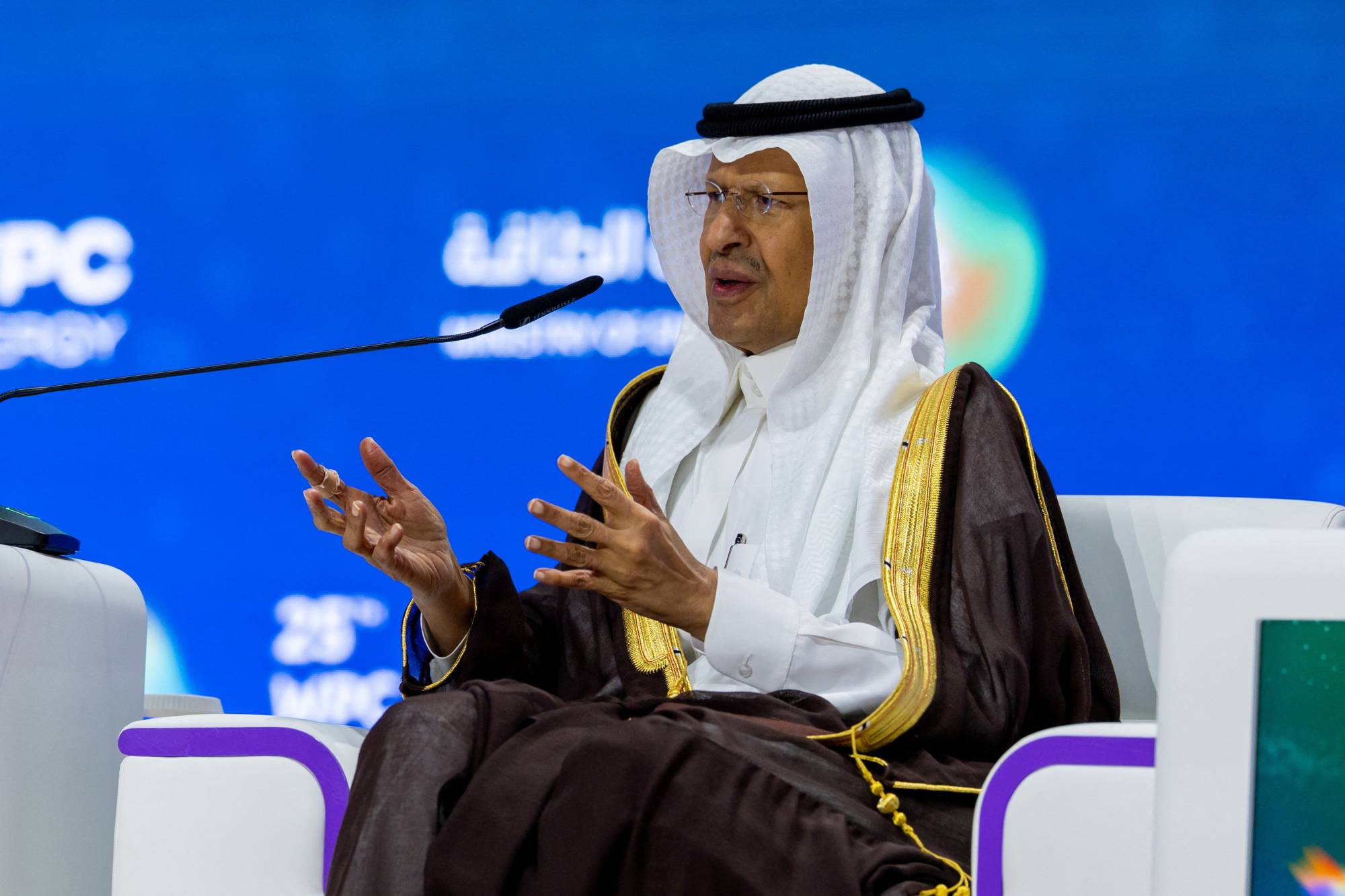
Saudi Minister of Energy Prince Abdulaziz bin Salman Al Saud speaks at the 25th WPC Energy Congress in Riyadh, Saudi Arabia, October 12, 2026. REUTERS

International Monetary and Financial Committee Meeting

These forecasts come as the repercussions of the war and its effects on growth, trade and energy flows dominate the agenda of the IMF and World Bank Group Annual Meetings, taking place in Bangkok from October 12 to 18.

Saudi Finance Minister Mohammed Al-Jadaan is leading the Kingdom's delegation to the meetings and chairing a meeting of the IMF's International Monetary and Financial Committee, which is discussing the global economic outlook, risks to growth, economic policy priorities and the Fund's role in helping member countries address current challenges. These discussions are particularly significant given the differing effects of the conflict on regional economies, from pressures caused by disruptions to production and trade to opportunities for recovery as energy flows and exports resume.

Saudi Arabia's Finance Minister Mohammed Al-Jadaan speaks during a press briefing following a meeting of the IMFC (International Monetary and Financial Committee) at the 2026 IMF and World Bank Group Spring Meetings in Washington, DC, on April 17, 2026. (Photo by Kent Nishimura / AFP)

Ultimately, the trajectory of Saudi Arabia's recovery in 2027 will remain tied to how quickly energy and trade flows are restored. Meanwhile, diversified export outlets and non-oil activities, together with the reprioritization of spending and investment, provide support for the economy's ability to overcome the repercussions of regional disruptions.


Saudi Aramco Targets 80% Growth in Gas Sales by 2030

3D-printed oil pump jacks and the Saudi Aramco logo appear in this illustration taken March 2, 2026. (Reuters)
TT

Saudi Aramco Targets 80% Growth in Gas Sales by 2030

3D-printed oil pump jacks and the Saudi Aramco logo appear in this illustration taken March 2, 2026. (Reuters)

Saudi Arabia is moving to expand its gas and liquefied gas production capabilities by developing facilities and infrastructure across the sector, amid growing demand for gas and its increasing role in the energy mix. Saudi Aramco aims to increase gas sales by 80 percent by 2030 compared with 2020 and 2021 levels.

Abdulkarim Al-Ghamdi, Executive Vice President of Gas at Saudi Aramco, disclosed the target during a panel discussion at the WPC Energy Congress in Riyadh on Tuesday. He also revealed plans to build and commission six to seven gas and liquefied gas facilities between 2025 and 2027.

Al-Ghamdi said Saudi Arabia's oil production assets and export capabilities are spread across different parts of the Kingdom, strengthening its ability to respond to disruptions and unforeseen scenarios. He added that the country has an extensive gas network, including the Master Gas System, which stretches thousands of kilometers from east to west.

He explained that more than 90 percent of the materials Aramco needed during disruptions linked to global conflicts were sourced locally. The company also relies on partnerships across several assets and facilities, including refineries and pipeline networks.

According to Al-Ghamdi, resilience in the energy sector is not limited to responding to crises after they occur. It also involves anticipating potential disruptions, protecting assets, diversifying their geographic locations and ensuring they can continue operating under exceptional circumstances.

He added that Aramco relies on integrated operating systems, interconnected supply chains and advanced data analytics solutions to help protect facilities and reduce the risk of operational disruptions.