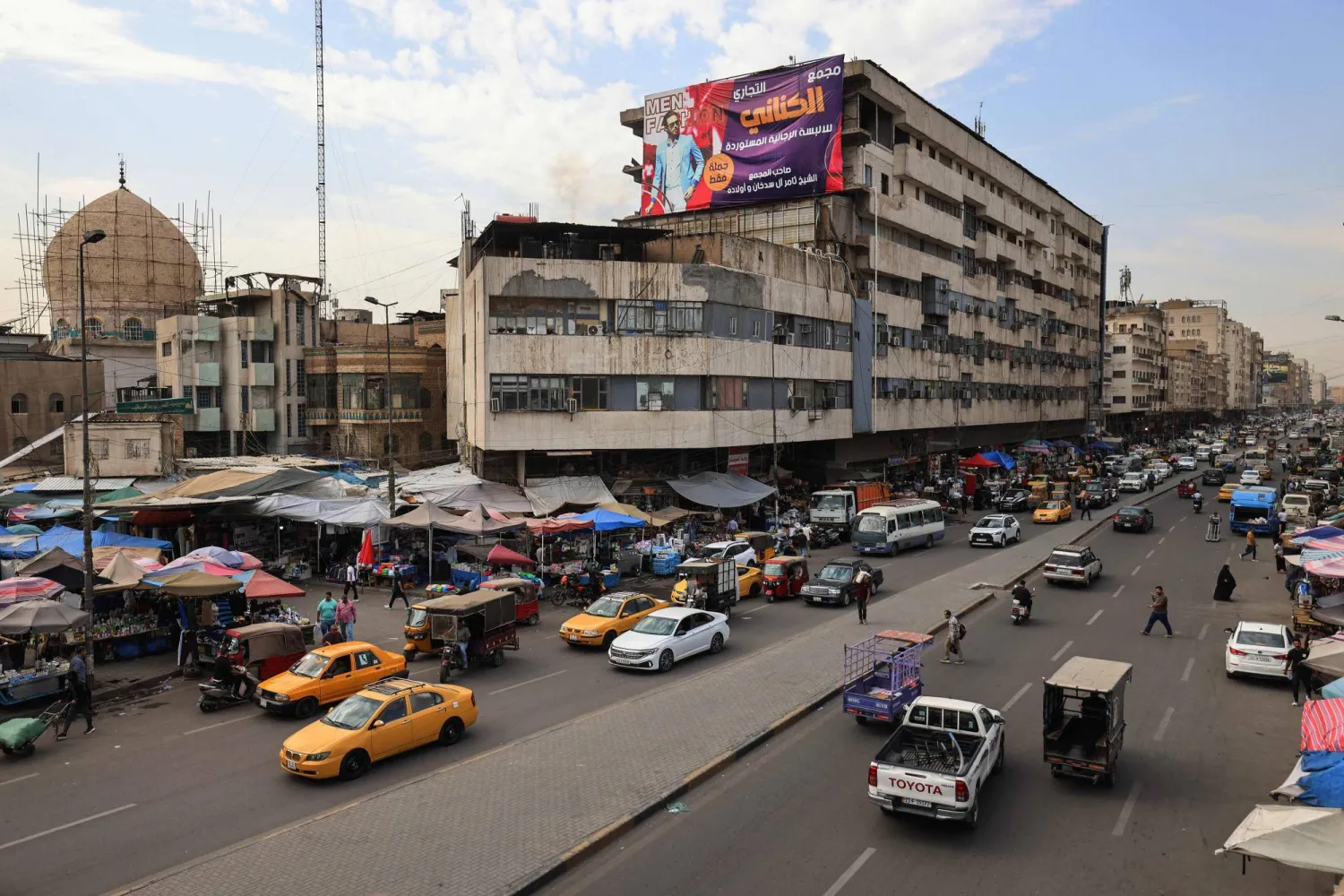
Commuters drive past Baghdad's Shorja market on October 13, 2026. (Photo by AHMAD AL-RUBAYE / AFP)
Iraq has lost around $60 billion during the Middle East war, Foreign Minister Fuad Hussein said on Thursday, with Iran blockading the Strait of Hormuz that is crucial to global energy flows, AFP reported.
Iraq was producing about four million barrels of oil per day before the conflict, exporting about 3.5 million bpd -- mostly shipped from the country's south via the strait.
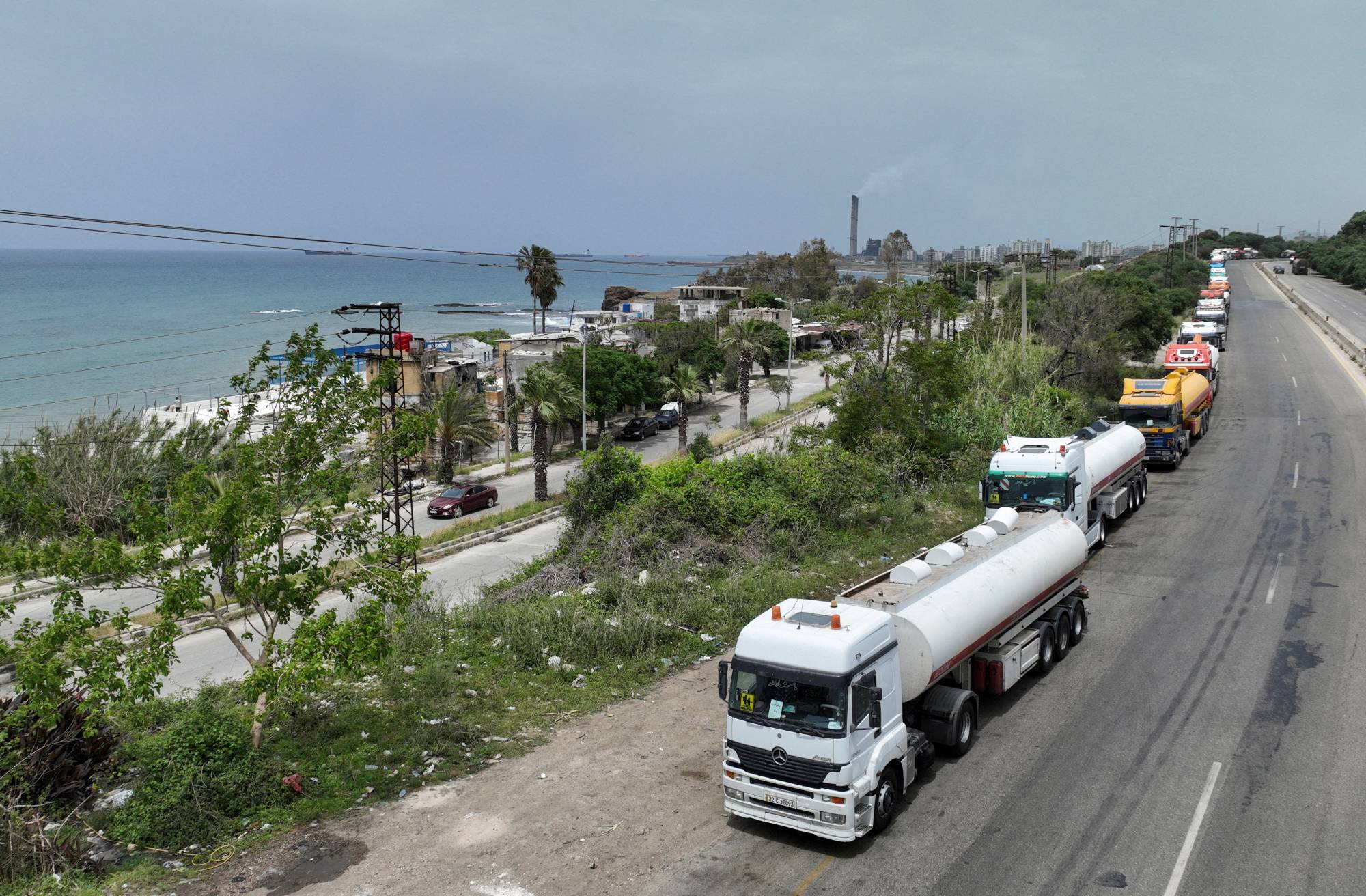
But Iran's stranglehold on the waterway forced Iraq, lacking storage capacity, to halt most production and fall back on limited exports via Syria and Türkiye, by truck and pipeline respectively.
FILE PHOTO: Oil trucks from Iraq on their way to the Baniyas oil terminal, Syria, May 14, 2026. REUTERS/Mahmoud Hassano/File Photo
"Iraq has suffered losses estimated at around 60 billion dollars during the recent war between the United States and the Islamic Republic of Iran," Hussein told his Italian counterpart in Rome, according to a statement from the Iraqi foreign ministry.
After a heavy drop in production, Iraqi oil exports, which provide about 90 percent of the country's revenues, recovered modestly last month, reaching 2.6 million barrels per day between September 1 and 21, according to the oil ministry.
But at the same time, Iraq's foreign currency reserves have shrunk by 20 billion dollars and consumer prices have risen sharply, plunging it into economic crisis.
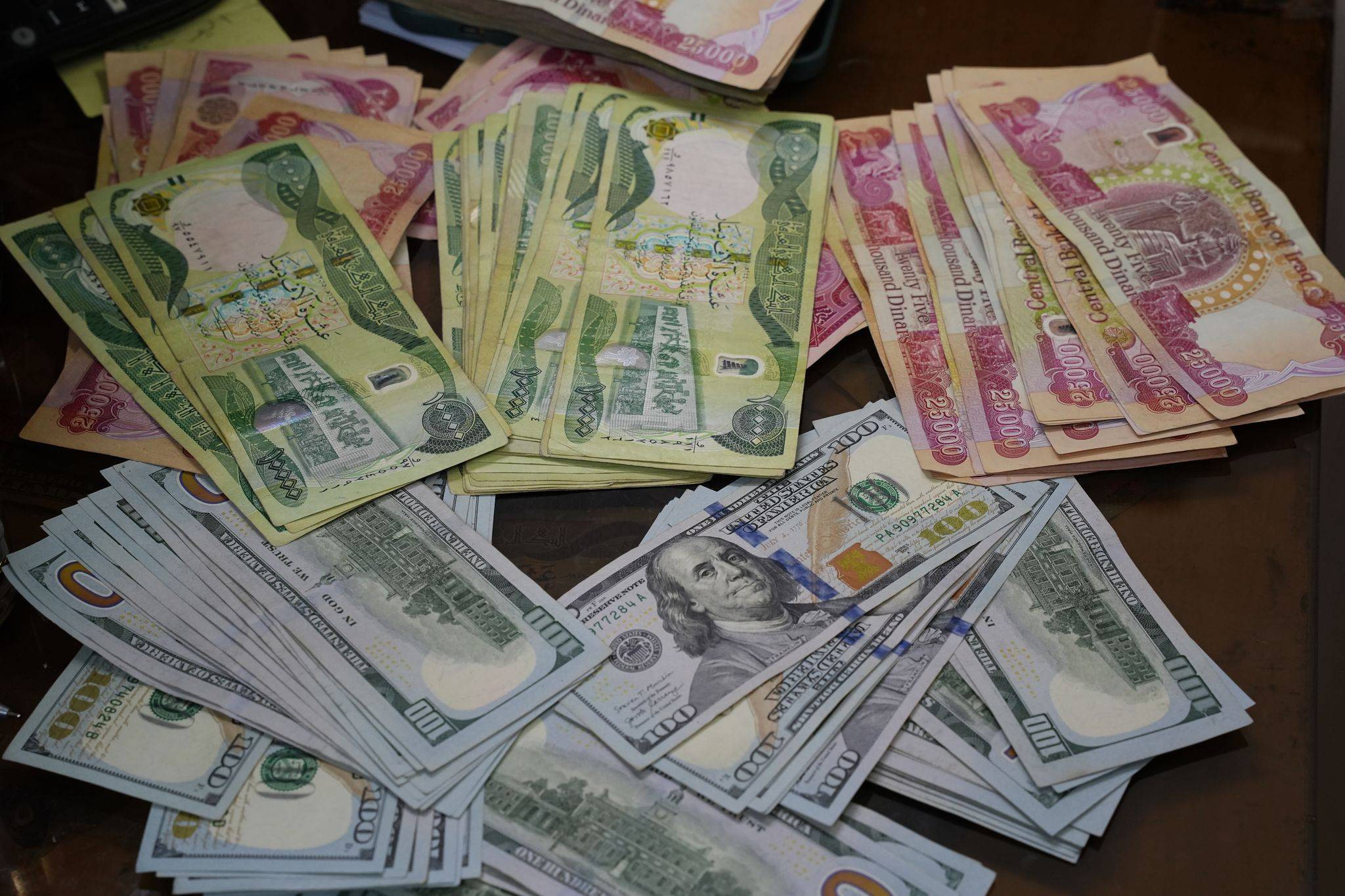
To try to contain the fallout, the Central Bank of Iraq last week devalued the dinar against the dollar for the first time in more than three years.
07 October 2026, Iraq, Duhok: Iraqi dinar and US dollar banknotes are displayed at a currency exchange shop in Duhok in Iraq's Kurdistan region. Photo: Ismael Adnan/dpa
Iraq relies heavily on foreign currency generated by oil sales to finance imports, stabilize the dinar, and pay the salaries of public sector employees and retirees.
According to the authorities, Iraq is seeking to diversify its economic resources and raise non-oil revenues from 10 percent to 45 percent by 2037.
Was an Iranian Ship Carrying Electronic Equipment for Haftar Targeted in Benghazi?https://english.aawsat.com/arab-world/5346217-was-iranian-ship-carrying-electronic-equipment-haftar-targeted-benghazi
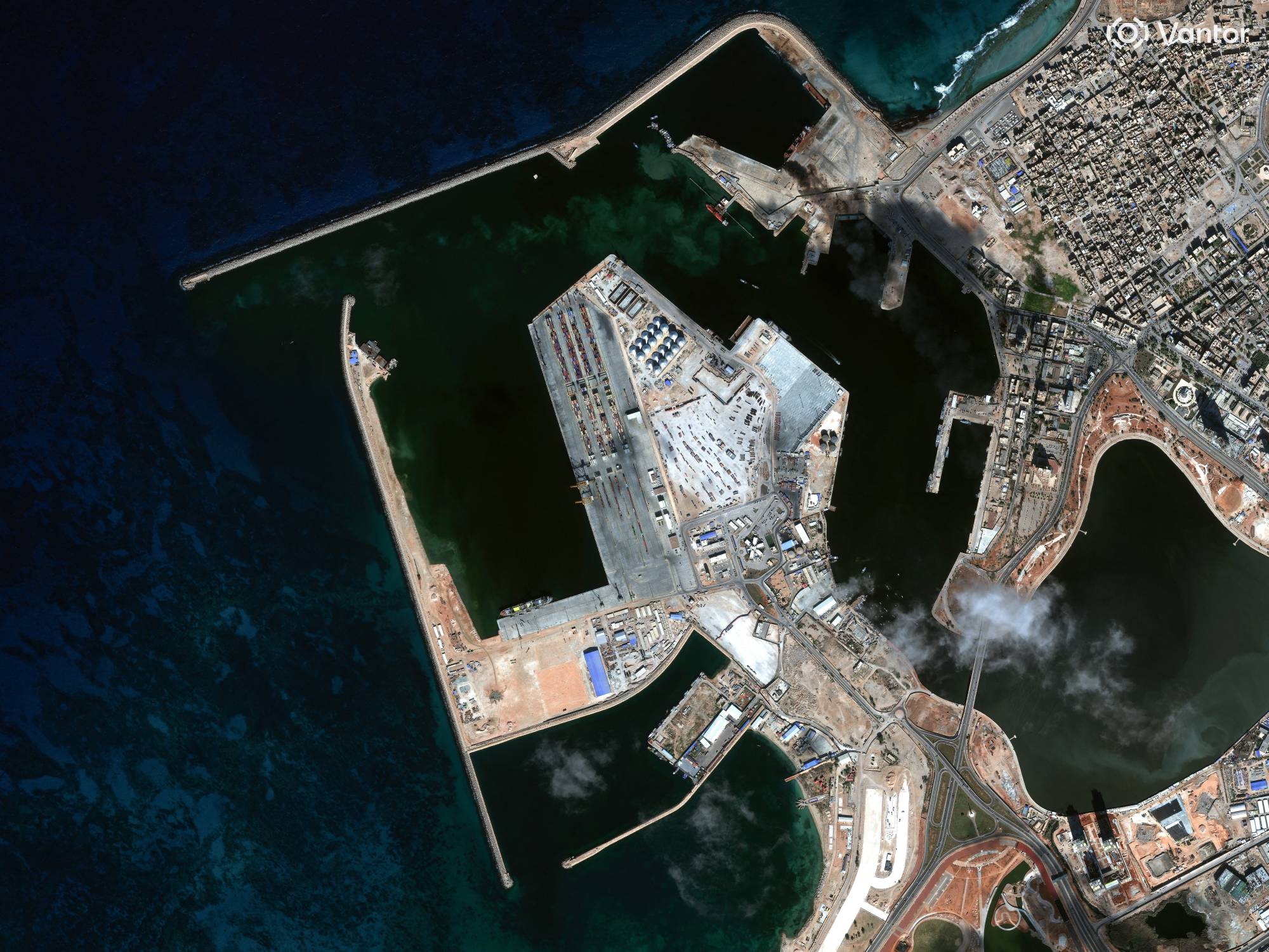
A satellite image shows a closer view of a capsized Russian corvette, Merkury, following reported Ukrainian drone attacks, in Benghazi, Libya November 23, 2026. Vantor/Handout via REUTERS
Was an Iranian Ship Carrying Electronic Equipment for Haftar Targeted in Benghazi?
A satellite image shows a closer view of a capsized Russian corvette, Merkury, following reported Ukrainian drone attacks, in Benghazi, Libya November 23, 2026. Vantor/Handout via REUTERS
Authorities in eastern Libya have avoided commenting on a media report claiming that an Iranian cargo vessel was attacked by a drone at Benghazi port earlier this week.
While two Libyan sources, one military and the other a former diplomat, denied that any such incident had occurred, the director of Russia’s JSM Center for Research and Studies confirmed the report.
An Italian newspaper alleged that the Iranian ship Alvan was struck by a drone attack that did not sink it. The vessel was reportedly carrying electronic equipment from China and India suspected of being intended for military use in operating drones belonging to the Libyan National Army (LNA) led by Field Marshal Khalifa Haftar.
The newspaper cited observers as suggesting that a Ukrainian unit may have carried out the attack on behalf of the United States as part of Washington’s efforts to pressure eastern Libyan authorities into halting the delivery of military equipment shipments from Iran.
The Iranian Shipping Line
A military source in eastern Libya told Asharq Al-Awsat that the country has suffered from the circulation of false and leaked reports in international media, particularly in recent months, denying that any attack had taken place against an Iranian vessel in Benghazi.
The source questioned why the United States had not publicly announced the incident if it had indeed ordered the strike.
However, the Italian newspaper said satellite images showed the vessel on the morning after the alleged attack conducting a slow maneuver from an outer anchorage area to a berth inside the port, suggesting it may have sustained damage preventing it from remaining in its previous position.
Former Libyan ambassador to Syria Mohammed Al-Merdas told Asharq Al-Awsat that the report was “entirely fabricated,” arguing that recent attacks in the area had been carried out using unmanned boats rather than drones.
Al-Merdas said that Iran’s commercial shipping line IRISL has operated through Libya since its establishment and that the presence of one of its vessels in Benghazi port would be entirely normal. He stressed, however, that there was no Iranian-Libyan cooperation concerning weapons or military matters.
Kyiv has not claimed responsibility for targeting the Iranian vessel, unlike attacks on two Russian ships that Ukrainian President Volodymyr Zelenskyy publicly acknowledged on November 23.
Zelenskyy announced that Ukraine had sunk the Russian cruiser Merkury off the Libyan coast, describing the action as a “model response to Russian aggression.”
Writing on X after the operation, Zelenskyy said Ukrainian forces used seven unmanned naval boats and succeeded in sinking the Merkury, one of Russia’s newest warships, commissioned in 2023.
A satellite view shows the port of Benghazi after an explosion aboard a Russian ship docked at the Benghazi naval base, in Benghazi, Libya, November 22, 2026. Vantor/Handout via REUTERS
The Vessel “Alvan”
Dr. Assef Molhem, director of the Russian JSM Center for Research and Studies, believes the Iranian vessel Alvan was targeted shortly after attacks on the Russian cruiser Merkury and the Russian cargo ship Angara. He said no injuries had been reported.
Molhem said the ship belongs to the Iranian state-owned shipping company IRISL, carries IMO number 9165798, is 167 meters long, and was built in 1998. He noted that it has long been listed under US sanctions.
He added that since late October the ship had remained anchored near Tenedos Island at the entrance to the Dardanelles Strait for nearly a month. American observers monitoring the Iranian fleet reportedly believed it was waiting for an opportunity to enter a Russian port and hesitating to cross the Black Sea because of Ukrainian military activity. Instead, it turned back and anchored off Benghazi.
Molhem also referred to a similar incident on July 25, when long-range Ukrainian drones struck the Caspian Sea, damaging the cargo ship Anna, which was carrying iron and anchored near the mouth of the Volga River. One sailor was killed in that attack.
The Libyan military source again rejected all reports of an attack on an Iranian vessel in Benghazi’s seaport, saying only that various local and regional actors were targeting the General Command through information campaigns.
A Reflection of Global Events
Libyan politicians and legal experts had previously told Asharq Al-Awsat that the bombing of a Russian vessel in Benghazi signaled a dangerous development and reflected wider global conflicts.
They warned that unless Libya succeeds in unifying its national institutions, it risks becoming another arena in a broader international confrontation.
According to Al-Merdas, there is no formal diplomatic relationship or declared alliance between Iran and Haftar’s Libyan National Army.
Haftar’s known regional and international partnerships primarily involve Egypt, the UAE, Russia, and the United States, whose interests often diverge from Iranian policies.
Libya remains divided between competing external alignments. Authorities in western Libya have sought closer relations with Ukraine, while eastern Libya maintains ties with Russia that include military and logistical cooperation.
Abdulhadi Al-Huwaij, foreign minister in the Libyan government appointed by the House of Representatives, announced plans to file an official complaint with the United Nations and the UN Security Council over attacks claimed by Ukraine.
Italian Prime Minister Giorgia Meloni described the Ukrainian attack on vessels in Benghazi port and Libya’s territorial waters as “unacceptable,” warning of its potential repercussions for regional security and stability.
WFP Warns of a Critical Situation in Sudanhttps://english.aawsat.com/arab-world/5346211-wfp-warns-critical-situation-sudan
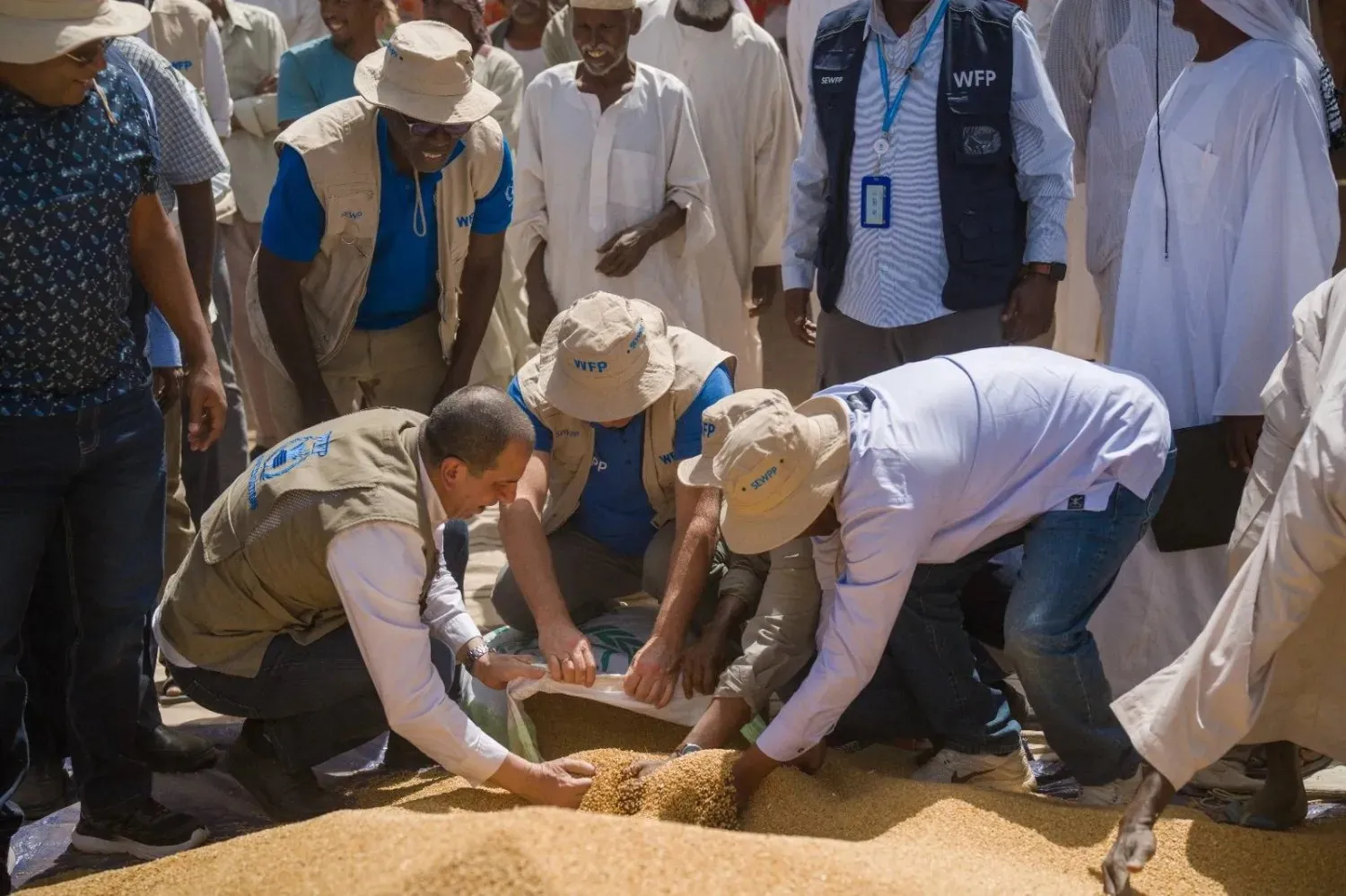
Alwardat participates in the distribution of food grains in one of Sudan's regions (Asharq Al-Awsat)
The World Food Programme (WFP) has warned of the deteriorating humanitarian situation in Sudan, saying while there is a severe shortage of food, the situation cannot yet be described as a famine.
"We cannot say there is a famine to the extent that people are dying of hunger in the streets. We are talking about a critical food security situation in conflict-affected areas of Darfur, Kordofan, and other parts of Sudan,” Abdallah Alwardat, the WFP's country director in Sudan, told Asharq Al-Awsat.
He warned that humanitarian conditions could become even more difficult because of declining international funding.
In October, the Sudanese government strongly rejected international claims that famine exists in the country, asserting that the food situation remains "reassuring."
The government's stance came in response to a joint statement issued by 32 countries and international partners, including the United States, Britain, and several European nations, warning of a troubling deterioration in food security and the possibility of famine in the coming months unless urgent measures are taken to facilitate aid delivery.
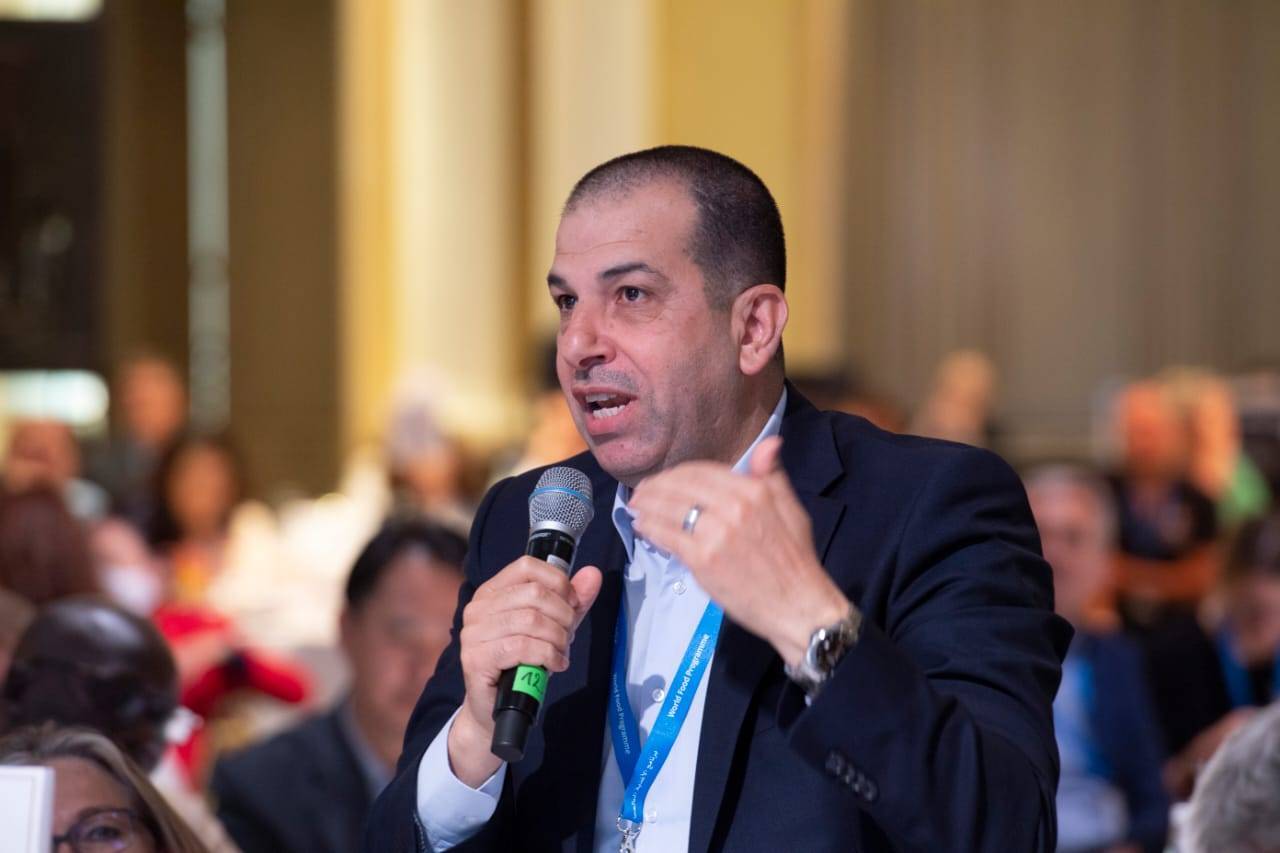
Abdallah Alwardat, the WFP's country director in Sudan (Asharq Al-Awsat)
Poor Rainfall
Alwardat also pointed to food shortages in agricultural areas that rely heavily on seasonal rainfall. Insufficient rain in recent months has adversely affected the farming season and reduced crop yields.
He said the WFP requires $520 million over the next six months to continue providing emergency humanitarian assistance to more than four million people in Sudan. Current funding is sufficient only through February. Without additional resources, the agency may be forced by March to reduce assistance for nearly 1.5 million people across the country.
Alwardat said senior WFP officials are maintaining regular contact with donors. He noted that the organization had previously been compelled to cut emergency aid for around 900,000 people because of funding shortages.
According to Alwardat, the WFP's priority is to assist more than five million people classified as facing acute food insecurity.
He added: "Because of limited financial resources, we cannot provide assistance to everyone in need in Sudan. We are focusing on those in the most urgent need."
Darfur Region
Regarding Darfur in western Sudan, Alwardat said the WFP has distributed humanitarian aid to approximately 2.3 million displaced people living in camps, particularly in the Tawila camp, which accounts for about half of the assistance provided. The agency is also providing monthly support to about 32,000 residents inside El Fasher, the region's largest city.
He added that the WFP had delivered emergency aid to more than 87,000 people in Damazin, the capital of Blue Nile State in southeastern Sudan, where displacement has increased because of fighting in various parts of the region.
Alwardat said security conditions in some areas continue to hinder humanitarian access and endanger aid workers. He revealed that WFP convoys have been subjected to 17 attacks this year.
The war in Sudan, which erupted in April 2023 between the Sudanese army and the Rapid Support Forces (RSF), has killed more than 200,000 people, according to estimates by aid workers, and displaced more than 12 million people, creating what the United Nations describes as the world's worst humanitarian crisis.
Houthi Siege Puts Vaccination of Over 350,000 Children at Risk in Yemen’s Taizhttps://english.aawsat.com/arab-world/5346118-houthi-siege-puts-vaccination-over-350000-children-risk-yemen%E2%80%99s-taiz
Houthi Siege Puts Vaccination of Over 350,000 Children at Risk in Yemen’s Taiz
Children displaced by the Houthis at a school for displaced people near Aden (AP)
More than 350,000 children in Yemen’s Taiz governorate risk missing out on lifesaving vaccines as security restrictions and the ongoing Houthi siege of the city prevent immunization teams from reaching their communities, fueling fears of measles and rubella outbreaks.
The threat comes amid a deepening humanitarian crisis triggered by the military escalation that began in August, forcing more than 364,000 people from their homes, including over 145,000 in Taiz alone, according to UN figures.
The UN and its partners have managed to deliver food and relief supplies to around 300,000 displaced people, accounting for 70% of those displaced since the escalation began. Some 30% remain beyond the reach of humanitarian aid.
UN health partners said around 350,000 children in Taiz had missed out on a national measles and rubella vaccination campaign as insecurity and access restrictions prevented vaccines from reaching them.
The threat extends beyond those targeted by the campaign. More than 30,000 children under the age of one risk missing routine vaccinations as disruptions prevent health services and medical supplies from reaching affected areas.
The World Health Organization (WHO) and the United Nations Children’s Fund (UNICEF) have the resources and vaccines needed to carry out immunization campaigns. Yet neither can currently reach the children in Taiz.
A vaccination campaign launched in early November in other government-controlled areas immunized more than 600,000 children, underscoring the widening gap in healthcare access as security restrictions hamper vaccine deliveries.
Mass Displacement, Limited Aid
More than 364,000 people have fled their homes since the latest military escalation began in August, as hostilities and insecurity persist across several governorates, according to the UN Office for the Coordination of Humanitarian Affairs (OCHA).
Taiz governorate hosts the largest displaced population, with more than 145,000 people, piling pressure on health services, shelters and food supplies in host communities.
Despite access constraints, more than 25 humanitarian partners have provided healthcare to over 100,000 displaced people since the escalation began through mobile medical teams, ambulances and support for health facilities.
Emergency food aid, hygiene supplies and essential relief items have reached around 300,000 displaced people. Yet the response continues to fall short of mounting needs as displacement persists and more areas are affected.
Road Closures, Civilian Casualties
The UN Human Rights Office has verified 323 civilian casualties since the beginning of August, including 76 deaths and 247 injuries. Children account for more than a third of all casualties and half of those killed.
Road restrictions continue to hamper civilian movement and the flow of commercial goods into Taiz city. Most roads leading to the governorate were open for only a few hours during the day last week and were subject to sudden closures, the UN report said.
The restrictions are delaying deliveries of food and essential goods, leaving families stranded for prolonged periods, often without adequate sanitation facilities.
In Marib governorate, health facilities received 19 trucks carrying emergency medical supplies from a humanitarian partner, bringing the total to 33 since the first shipment arrived on November 4.
The UN renewed its calls for the protection of civilians and safe, unhindered humanitarian access, urging the lifting of restrictions preventing Taiz residents from receiving basic healthcare and relief aid as hundreds of thousands of children risk going without essential vaccinations.
لم تشترك بعد
انشئ حساباً خاصاً بك لتحصل على أخبار مخصصة لك ولتتمتع بخاصية حفظ المقالات وتتلقى نشراتنا البريدية المتنوعة