Iraq Threatens Crackdown on Opponents of Disarmament Plan

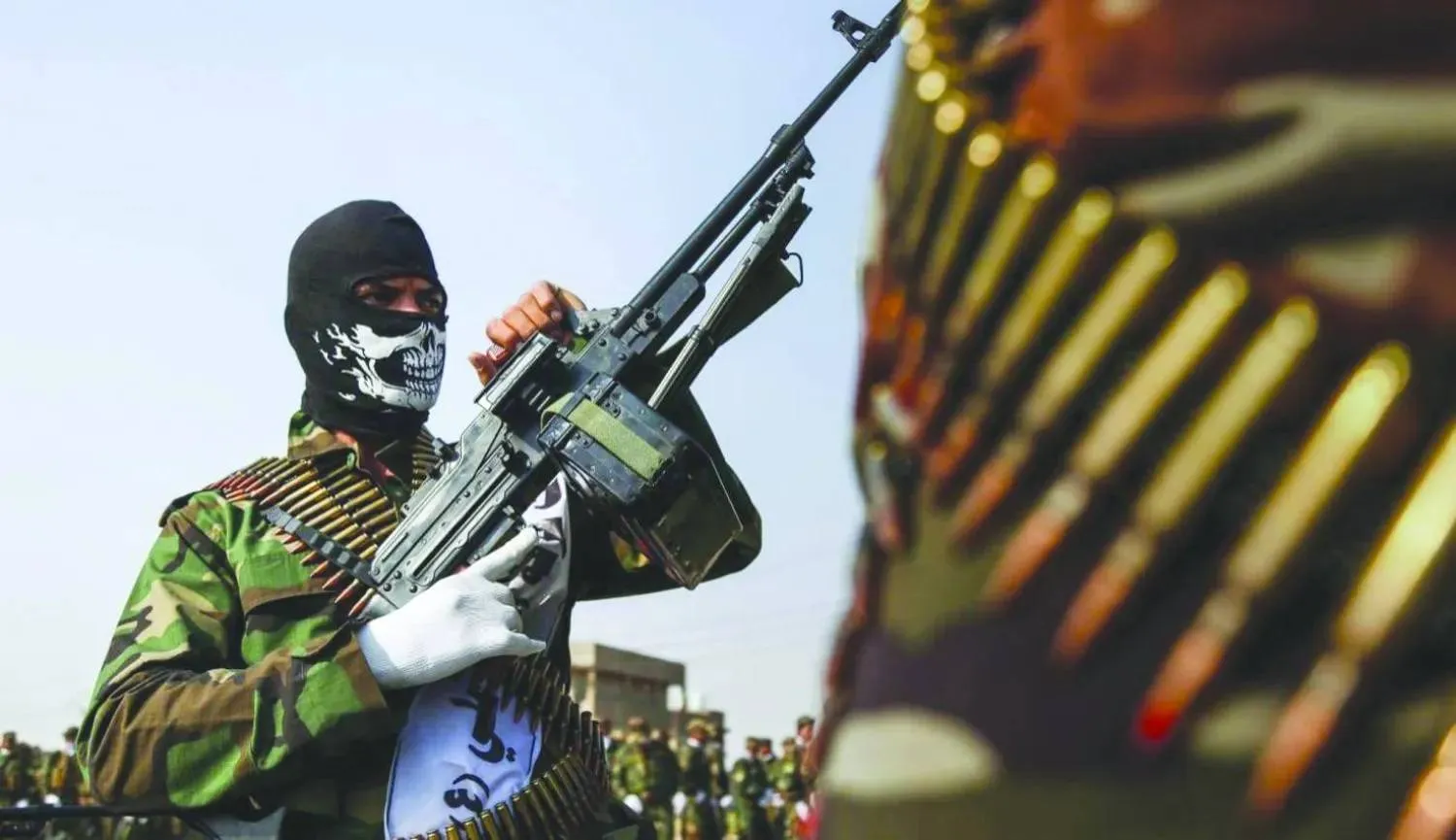
 Iraqi armed factions set conditions for bringing weapons under state control (X)
Iraqi armed factions set conditions for bringing weapons under state control (X)
TT

Iraq Threatens Crackdown on Opponents of Disarmament Plan

 Iraqi armed factions set conditions for bringing weapons under state control (X)
Iraqi armed factions set conditions for bringing weapons under state control (X)

Iraq's government and parliament have threatened legal action against opponents of a plan to bring all weapons under state control, even as Türkiye ruled out withdrawing its troops from Iraq until regional and border security conditions are met.

Baghdad says the disarmament plan will take effect after the withdrawal of international coalition forces.

The ruling Coordination Framework alliance reaffirmed its commitment to resolving the issue of weapons outside state control by June 30, 2027, authorizing the government to "take steps to ensure compliance," according to a statement issued Monday evening.

The renewed push comes just days after a new cabinet was formed, with several political groups that maintain armed factions securing ministerial posts.

Among them is Asaib Ahl al-Haq, which landed the deputy prime minister's post, potentially reinforcing reports that Washington had given such groups a "green light" to join the government in exchange for laying down their arms.

Sources close to the armed factions said most now acknowledge the need for disarmament after securing influential positions in government and parliament. Kataib Hezbollah, however, remains opposed.

Criminal charges threatened

The government has ordered state institutions to enforce the law and pursue criminal complaints against anyone who incites opposition through the media or seeks to obstruct decisions to place weapons exclusively under state control.

In a statement, the prime minister's media office said freedom of expression and media activity, while guaranteed by the constitution and law, must operate within legal boundaries and respect public order and citizens' rights.

Such freedoms, it warned, cannot be used to incite violence or internal conflict, support weapons outside state control or back outlawed groups.

The warning appeared directed at armed faction spokespeople and supporters who have repeatedly mocked or rejected government disarmament announcements on television, in public statements and through online posts.

Activists close to Kataib Hezbollah have openly opposed disarmament, as has Kazem al-Fartousi, spokesman for Kataib Sayyid al-Shuhada. Their objections have frequently been accompanied by sharp criticism of Prime Minister Ali al-Zaidi.

The government said it had instructed all institutions to pursue criminal complaints against anyone involved in media incitement or efforts to derail state decisions on weapons control.

It cited Iraq's constitution and Articles 2 and 4 of Anti-Terrorism Law No. 13 of 2005 as the legal basis for the measures.

The statement also pointed to a Supreme Judicial Council position that using, supporting or threatening to use weapons outside state authority falls under the anti-terrorism law.

Parliament backs crackdown

Parliament Speaker Haibat al-Halbousi threw his support behind the government's legal measures, saying they were necessary to preserve civil peace, enforce the law and bring all weapons under state control.

Halbousi stressed that constitutionally protected freedoms of expression and media activity must be balanced against legal and professional obligations.

Those freedoms, he said, must not become a cover for inciting violence, fueling internal conflict or supporting weapons beyond state authority.

He backed holding accountable anyone proven to have incited violence or threatened public security and national stability, while emphasizing that enforcement must respect constitutional rights, legal safeguards and the principle of equal treatment under the law.

Security agencies step up scrutiny

Iraq's security agencies have identified cases of incitement and calls to obstruct disarmament decisions, according to Saad Maan, head of the country's Security Media Cell.

Speaking to the official Iraqi News Agency, Maan said specialized units within the office of the commander-in-chief of the armed forces, the Iraqi National Intelligence Service, the National Security Service and the Interior Ministry were monitoring and analyzing such activity.

He stressed that no action would be taken without judicial authorization.

Maan said directives from the commander-in-chief called for pursuing those who incite violence or support weapons outside state control, describing the measures as essential to maintaining long-term security amid regional and global turmoil.

Freedom of expression and media activity remain constitutionally protected, he said, but those protections do not extend to stirring chaos, tensions or unrest.

Asked where authorities draw the line between free expression and punishable media incitement, Maan said criminal liability depends on the applicable law and whether the elements of an offense are established.

Any prosecution, he added, must remain under judicial authority.

Türkiye stands firm on troop presence

Meanwhile, Turkish Defense Minister Yasar Guler said Ankara would keep its forces in Iraq and Syria until it was satisfied that security along its borders with both countries was fully guaranteed.

Türkiye "maintains its military presence in Iraq and Syria," Agence France-Presse quoted Guler as saying.

"Once we are certain that the necessary conditions regarding regional and border security have been met, the status of our deployments and presence in the region will be reviewed," he added.

The statement highlights a key obstacle to Iraq's disarmament plan: Iraqi armed factions had made the withdrawal of Turkish troops one of their conditions for agreeing to the initiative during negotiations with the Coordination Framework.

On October 14, Sabah al-Numan, spokesman for the commander-in-chief of Iraq's armed forces, suggested the issue of Turkish troops in northern Iraq could be resolved within three months.

Turkish forces are stationed at the Zilkan base in the mountainous Bashiqa district, about 30 kilometers (19 miles) northeast of Mosul, and at numerous other positions near the shared border.

Local reports put the number of Turkish checkpoints inside Iraqi territory and along the border at around 130.

In September, Iraqi Prime Minister Ali al-Zaidi met Turkish President Recep Tayyip Erdogan on the sidelines of the United Nations General Assembly in New York.

The talks produced an agreement for a "gradual evacuation" of Turkish forces from the Zilkan base, scheduled to begin officially on October 1, with control to pass to Baghdad under an agreed timetable and mechanism.

But Ankara has long tied any withdrawal to Baghdad's progress in securing Sinjar district in northern Nineveh province.

Türkiye demands that Iraqi authorities establish control over the district and expel armed groups, particularly wings of the Kurdistan Workers' Party (PKK) that have not complied with the decision to dissolve the party and surrender weapons, announced by its leader Abdullah Ocalan in late February 2025.


UK Condemns Houthi Attacks on Airports and Civilians as Unacceptable

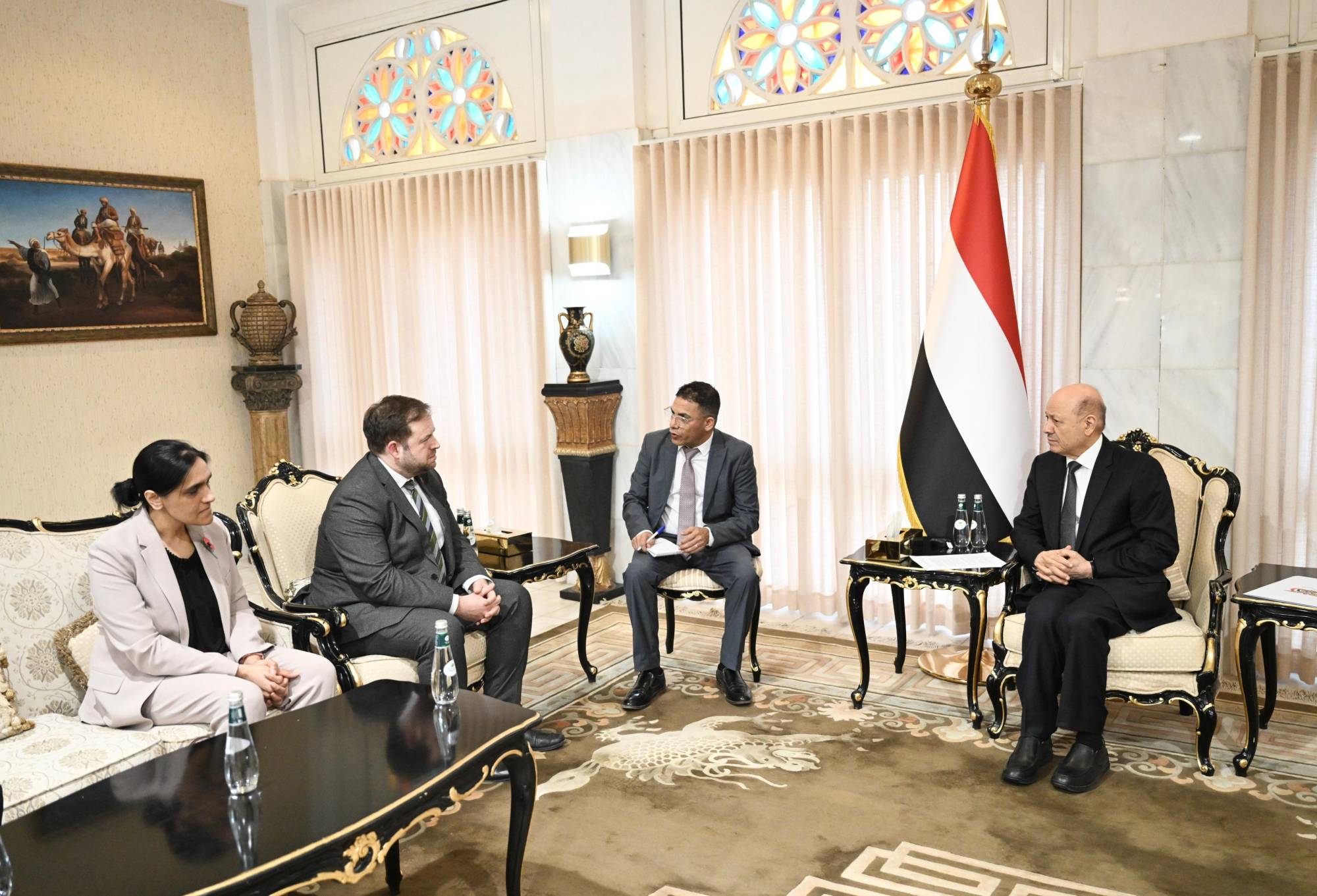
The British Minister of State stressed that Resolution 2216 remains the basis for resolving the conflict in Yemen (Doughty's X account)
TT

UK Condemns Houthi Attacks on Airports and Civilians as Unacceptable

The British Minister of State stressed that Resolution 2216 remains the basis for resolving the conflict in Yemen (Doughty's X account)

British Minister of State for the Middle East Stephen Doughty described the Houthis' escalating attacks in Yemen and against Saudi Arabia as appalling, stressing that launching missiles and drones at airports and places where civilians live and work was unacceptable.

In an interview with Asharq Al-Awsat, Doughty said the Houthis had chosen to escalate and reignite the conflict in Yemen, holding the group and those who arm and enable it responsible for the renewed violence.

The British minister said the United Kingdom, as the penholder on Yemen at the UN Security Council, continued to regard Resolution 2216 as a foundation for a political settlement, with London focused on ensuring the full implementation of existing resolutions.

Doughty also described the situation in Taiz as heartbreaking, urging the Houthis to reopen roads, allow humanitarian aid to pass, facilitate medical evacuations and end attacks on civilians.

He warned that Iranian support for the Houthis and other groups was making the conflict more dangerous, while threats to shipping through the Red Sea and the Bab Al-Mandab Strait had consequences extending well beyond Yemen, including for the United Kingdom.

Visit to Riyadh

Discussing his recent visit to Saudi Arabia, Doughty said he had traveled to Riyadh to personally reaffirm Britain's solidarity with its partners during difficult times, including Saudi Arabia and Yemen's legitimate government.

He said he held extensive talks with Saudi Vice Minister of Foreign Affairs Waleed Elkhereiji on a range of shared interests and met Saudi Ambassador Mohammed Al Jaber and other senior officials to discuss Houthi attacks on the Kingdom and developments on the ground in Yemen.

According to Doughty, the discussions addressed the Houthis' escalation in recent weeks, both within Yemen and across the border into Saudi Arabia, as well as British efforts to support the Kingdom's defense.

They also covered ways to deliver assistance to those most in need in Yemen, ensure humanitarian access, protect civilians, uphold international humanitarian law and mobilize international support for a political settlement.

Doughty said the talks also explored opportunities for long-term cooperation as Britain and Saudi Arabia approach the centenary of their diplomatic relations.

He noted that bilateral ties had expanded beyond defense and energy to encompass trade, investment and education, alongside cooperation on regional security and stability in the Middle East and efforts to combat terrorist organizations.

The minister also met senior Yemeni officials, including the chairman and vice chairman of the Presidential Leadership Council, the prime minister and the foreign minister, to discuss ways to support the Yemeni government and ensure security and prosperity for the Yemeni people.

Houthi Attacks on Saudi Arabia

Doughty condemned the Houthis' escalation as appalling, stressing that firing missiles and drones at airports and places where ordinary people lived and worked was unacceptable.

He said there could be no justification for such attacks and called on the Houthis to end their reckless actions.

The British minister stressed that there should be no doubt about who bore responsibility for the escalation: the Houthis and those supplying them with weapons and enabling their operations.

He said Britain stood alongside Saudi Arabia and had deployed air-to-air refueling aircraft, fighter jets and military advisers to support defensive operations.

Saudi Arabia's Role in Containing the Escalation

Doughty said Saudi Arabia was facing attacks on its own territory and that Britain's position was unequivocal: the Kingdom had the right to defend itself.

At the same time, he emphasized that the United Kingdom had consistently supported efforts to reach a political settlement in Yemen and remained one of the country's major humanitarian and development assistance providers.

He said Britain and Saudi Arabia shared the same objectives: a stable Yemen, a secure Gulf and safe maritime routes for the shipping on which the entire world depended.

Reflecting on discussions at the Manama Dialogue a few days earlier, Doughty said he had been struck by the determination of many governments and regional partners to find a way back to the political process and address wider instability and its humanitarian consequences.

Presidential Leadership Council Chairman Rashad Al-Alimi receives British Minister of State for the Middle East Stephen Doughty (SABA)

Military Developments in Yemen

Asked about developments on Yemen's military fronts, Doughty said the Houthis had chosen to escalate and renew the conflict, while the Yemeni government had the right to protect its people.

He reaffirmed Britain's firm support for Yemen's legitimate government.

The minister warned that continued fighting was costing lives, forcing large numbers of families from their homes and deepening the humanitarian crisis with every passing week.

He said the violence was also undermining regional stability and serving no one's interests.

Doughty stressed that the Houthis must halt their attacks inside Yemen and against Saudi Arabia and return to peaceful dialogue.

Support for the Yemeni Government

Doughty said Britain's partnership with the Yemeni government was longstanding and that London remained committed to working with it to promote regional stability and build a prosperous future for the Yemeni people.

In practical terms, he explained, this involved supporting state institutions so they could serve the population, helping maintain public services and contributing to economic stabilization.

He said the United Kingdom was providing £104 million ($137.9 million) in humanitarian assistance this year and had recently announced that £10 million of that amount would be allocated to the UN emergency fund in response to the renewed conflict.

Doughty added that Britain was using its position at the Security Council and in other international forums to keep Yemen high on the global agenda.

He said London would continue consulting its partners over the coming weeks on what further action could be taken.

The minister noted that Yemen had long been among the world's worst humanitarian crises and stressed the need to break the cycle of destruction through a solution that placed the well-being of the Yemeni people at its center.

Resolution 2216 Remains the Basis for a Settlement

Asked whether London believed new Security Council resolutions were needed in light of developments inside Yemen, Doughty said the United Kingdom held the pen on Yemen at the Council and took that responsibility extremely seriously.

He explained that the existing framework, including Resolution 2216, continued to provide the foundations for a settlement, and that those principles had become even more important amid the renewed fighting.

Britain's priority, he said, was to ensure the full implementation of existing resolutions and provide the UN Special Envoy for Yemen with the support needed to carry out his mission.

Doughty added that London was working closely with Security Council members, including its Gulf partners, to ensure that Yemen remained at the forefront of the international agenda.

Continued Iranian Support for the Houthis

Doughty identified Iran's support for the Houthis and other armed groups as a major factor making the conflict increasingly dangerous.

He said Britain had made clear that such support only deepened regional instability and that de-escalation offered the best path toward peace.

The minister explained that the United Kingdom was working to enforce the UN arms embargo and cooperating closely with partners to prevent weapons from reaching the Houthis.

He added that London continued to hold Iran accountable through sanctions and by raising its concerns in multilateral forums.

Threats to Maritime Navigation

Asked about the risks posed by Houthi control of the Bab Al-Mandab Strait, Doughty said the waterway was one of the world's vital routes for international trade and commercial shipping.

He warned that threats from the Houthis had consequences far beyond Yemen, including for Britain.

The minister emphasized that freedom of navigation was not merely an abstract principle and was just as important in Bab Al-Mandab as in the Strait of Hormuz and other major shipping routes worldwide.

He reaffirmed Britain's commitment to working with allies and partners to keep these waterways open and secure.

As a longstanding maritime nation and the host country of the International Maritime Organization, Britain was working internationally to uphold maritime law and protect vessels and their crews, he added.

A Message to the Yemeni People

Addressing the Yemeni people, Doughty assured them that they had not been forgotten.

He acknowledged the immense suffering Yemenis had endured and described the Houthis' decision to plunge the country back into conflict as tragic.

The minister reaffirmed that Britain had stood alongside the Yemeni government and people for many years and would continue to do so.

He said that commitment would be demonstrated through vital humanitarian assistance, support for public services and government institutions, and continued efforts to keep Yemen high on the international agenda.

Doughty stressed that peace must ultimately be achieved through a political settlement that would provide Yemenis with the security, dignity and opportunities they deserved.

Siege of Taiz Is Heartbreaking

Commenting on the Houthi siege of Taiz, Doughty described the situation in the city as heartbreaking.

He said families had spent years living with closed roads, shelling and sniper fire, even when attempting to reach hospitals, markets or schools.

He placed responsibility for their suffering squarely on the Houthis.

The minister called on the group to reopen roads, allow humanitarian assistance through, facilitate medical evacuations to places where patients could receive safe treatment, and stop attacks targeting civilians.

Doughty also noted that large numbers of families had been uprooted from their homes across Yemen, while humanitarian workers continued to face detention and attacks.

He referred to the death of a UN staff member in a disturbing incident the previous week.

The minister expressed deep distress that Yemeni UN personnel who had dedicated their lives to helping ordinary people remained in Houthi detention.

He conveyed his sympathy to their families and colleagues, noting that the Houthis had yet to acknowledge responsibility for the deaths.

Doughty stressed that the victims' families and the United Nations deserved to know the truth and called for the immediate release of everyone still being held.


Where Does Hamas Still Hold Territory in Gaza?

 A concrete block marking the Israeli military’s “Yellow Line” in Bureij, central Gaza (File photo: AFP). 
 A concrete block marking the Israeli military’s “Yellow Line” in Bureij, central Gaza (File photo: AFP). 
TT

Where Does Hamas Still Hold Territory in Gaza?

 A concrete block marking the Israeli military’s “Yellow Line” in Bureij, central Gaza (File photo: AFP). 
 A concrete block marking the Israeli military’s “Yellow Line” in Bureij, central Gaza (File photo: AFP). 

Nearly a week ago, Hussam al-Astal, who leads an Israeli-backed armed group operating in Khan Younis in southern Gaza, appeared in a video announcing the start of an operation he described as a “cleansing of displacement camps in the Mawasi area.”

His remarks came after an attack by another armed group linked to the Israeli military, which resulted in the abduction of dozens of residents from an area theoretically considered to be under Hamas control in Gaza.

Since the ceasefire agreement was announced in October 2025 under US President Donald Trump’s plan, an imaginary boundary known as the “Yellow Line” has separated Israeli-occupied areas east of the line, estimated at more than 60 percent of the Gaza Strip, from areas west of it held by Hamas and other Palestinian factions.

However, intensified operations by Israeli-backed armed groups, including abductions and forced displacement under covering fire from the Israeli military, have raised new questions about the extent of the territory where Hamas still exercises authority.

More than a year after the ceasefire agreement, which Israel has repeatedly violated, Israeli forces have also shifted their positions along the Yellow Line, expanding the area they occupy to more than 65 percent of the Gaza Strip’s approximately 360 square kilometers.

Last week, members of armed groups infiltrated a displacement camp near Abu Hamid roundabout, between central and eastern Khan Younis. Reinforcements subsequently arrived in four-wheel-drive vehicles, while Israeli drones flew overhead to provide support.

The operation resulted in the abduction of 35 Palestinians. Some were released after more than 10 hours of intensive interrogation by Israeli officers, while three remained in captivity.

A similar operation took place at an intersection near the Shujaiya neighborhood. Dozens of those detained were released, while one person remained in custody.

Israeli Occupation Extends Beyond the Yellow Line

According to a map of the areas occupied by Israel, Israeli forces now hold 67 percent of the Gaza Strip as they continue expanding the area covered by the Yellow Line.

In northern Gaza, the Israeli military occupies the entire town of Beit Hanoun, at the northernmost end of the territory, parts of Beit Lahia and a larger section of Jabalia refugee camp.

In Gaza City governorate, which includes the territory’s main urban center, Israeli forces hold all the city’s eastern neighborhoods, including Tuffah, Shujaiya and Zeitoun. Small areas of Zeitoun remain inhabited by displaced Palestinians living under difficult security and humanitarian conditions.

Central Gaza has recently witnessed extensive military activity, with Israeli forces expanding their positions by pushing the Yellow Line farther west, particularly around the Bureij and Maghazi refugee camps, al-Masdar and areas east of Deir al-Balah.

These operations have forced more Palestinians to flee their homes and shelters in recent days.

In southern Gaza, Israel occupies the entire city of Rafah, apart from a small section of Mawasi in the city’s northwestern area, along the southern boundary with Khan Younis.

Israeli forces also occupy large parts of southern Khan Younis, while Mawasi remains under Palestinian authority. The city’s eastern areas, meanwhile, remain entirely under Israeli occupation.

Where Is Hamas?

Four Hamas field sources and two sources from other Palestinian factions told Asharq Al-Awsat in separate accounts that Israeli forces hold most Palestinian areas east of Salah al-Din Road, the main highway connecting northern, central and southern Gaza.

Israeli forces also occupy large parts of the territory’s northern and southern regions.

The sources, who are based in different parts of Gaza, said residents west of Salah al-Din Road, as well as those in areas south of the northern region and north of the southern region, continue to observe a Hamas presence and authority.

However, the movement faces complicated circumstances that prevent it from fully maintaining security and order.

One source estimated that “Hamas’ grip has become fragile and effectively extends to no more than 17 to 20 percent of the Gaza Strip.”

Nevertheless, Hamas has been seeking to assert its presence by proposing humanitarian projects for residents and attempting to confront Israeli-backed armed groups militarily.

Its members have set ambushes for armed men infiltrating areas under its authority, but the Israeli military frequently intervenes to provide covering fire for the groups it supports.

In Gaza City governorate, which once served as the center of Hamas’s political, governmental and security activities, the movement’s position remains unstable because of Israeli attacks targeting the leadership of Hamas, its government and its armed wing, the Qassam Brigades.

Central Gaza currently represents the area where Hamas and its various institutions retain their strongest presence.

According to the sources, this is largely because the central region did not suffer the same level of damage as other parts of the territory during the war, and Israeli ground forces entered only limited sections of it.

In Khan Younis, at the southern end of the Gaza Strip, Hamas faces more complicated conditions. Nevertheless, its hold there can be described as moderate, particularly in the densely populated Mawasi area, which shelters large numbers of displaced Palestinians.

The movement relies on ambush tactics to confront the threat posed by armed groups and Israeli forces in southern and eastern Khan Younis, as well as in the eastern parts of the governorate’s central areas.

These include locations around Abu Hamid roundabout and the Khan Younis municipal headquarters.

Israeli Firepower Extends Beyond Its Positions

Two field sources told Asharq Al-Awsat that the differences between areas where Hamas maintains a strong security presence and those where its grip is fragile can be attributed to several factors.

Among them is Israel’s ability to dominate areas from a distance using elevated platforms and drones, as well as airstrikes targeting anyone approaching areas near Salah al-Din Road from the western side in certain locations.

Another factor is Israel’s use of armed groups as a means of extending its reach by pushing farther into areas close to the road.

This has occurred particularly in southern and eastern Khan Younis, northwestern Mawasi in Rafah, eastern Gaza City, and the areas around Jabalia and Beit Lahia in northern Gaza.

More recently, similar operations have also taken place in central Gaza.

The two sources explained that this complex security situation makes it difficult for government security forces or other personnel to reach areas close to the western side of Salah al-Din Road.

As a result, extensive additional areas have effectively fallen under indirect Israeli security control.

This allows armed groups, people collaborating with Israel and others to operate freely in those locations.

The sources said Hamas’ so-called “resistance security” apparatus has responded by periodically setting ambushes for members of these groups, seeking to kill or capture them and prevent them from carrying out their plans.

According to a third source, the Israeli military uses the armed groups to conduct sweeping operations in new areas beyond the Yellow Line, east of Salah al-Din Road.

Israeli forces then advance into those same areas, either several hours later on the same day or the following day, carrying out engineering operations, including bulldozing land and other activities.

The military subsequently extends the Yellow Line to expand the territory under its direct occupation.

The three sources said Israeli forces kill or wound anyone attempting to cross Salah al-Din Road, particularly in areas opposite Khan Younis in the south and Gaza City in the north.

They added that Israeli operations have recently intensified east of Deir al-Balah and al-Masdar in central Gaza.

Israeli forces have also increasingly targeted people approaching areas on the western side of the road, suggesting that the territory over which Israel exercises dominance through firepower now exceeds 70 percent of the Gaza Strip.

Open Defiance

A fourth Hamas source defended the movement’s loss of security authority during and after the war, describing it as “natural” given the changes that occurred in Gaza during Israeli ground incursions into its cities.

The source said government security agencies and those affiliated with Palestinian factions had repeatedly attempted to maintain order deep inside the western areas of the Gaza Strip.

However, each attempt was met with renewed attacks, most of them Israeli airstrikes targeting security positions in forward areas or even locations far from territory directly occupied by Israel.

The Hamas source acknowledged that the weakening of security had recently prompted some members of local families to engage in what he described as “open defiance” of attempts to arrest them in connection with criminal cases.

Some had opened fire on Hamas police officers, while in one incident individuals seized a weapon. Family elders subsequently intervened, and legal and tribal settlements were reached.

As an example, the source cited an incident in Deir al-Balah a few days earlier in which a member of a local clan killed two police officers during an attempt to arrest him.

The deterioration in security has been compounded by intensive Israeli attacks targeting Hamas’ security apparatus.

According to Gaza’s Interior Ministry, these systematic attacks have killed 76 police officers and security personnel since the ceasefire took effect in October 2025.


Hezbollah Members Questioned Over Suspected Reconnaissance Mission in Northern Lebanon

A Hezbollah member in Syria in 2017 (AFP)
TT

Hezbollah Members Questioned Over Suspected Reconnaissance Mission in Northern Lebanon

A Hezbollah member in Syria in 2017 (AFP)

Investigations are continuing into the arrest of five Hezbollah members in a remote mountainous area between the Bsharri and Batroun districts of northern Lebanon on Tuesday, amid questions about the purpose of their movements and whether they were conducting surveillance.

Judicial sources told Asharq Al-Awsat that investigators were still gathering information and examining why the men had been moving through isolated, uninhabited areas.

“Preliminary information suggests they were on a reconnaissance mission to survey the area,” the sources indicated.

They added that the five were not alone but were accompanied by others monitoring them from a distance. Following the arrests, those individuals reportedly retrieved mobile phones from a room where the detainees had left their belongings. The five had been arrested without their phones.

The suspects claimed they were visiting the area as tourists, an explanation that raised questions, particularly because one lives locally while the others come from South Lebanon and the Bekaa Valley.

Further suspicions arose over documents and maps allegedly found in their possession, some of which they reportedly attempted to tear up as an Internal Security Forces patrol approached.

Asharq Al-Awsat also learned that investigators were leaning toward bringing charges against the detainees in their individual capacities rather than as Hezbollah members, as occurred in a previous explosives-smuggling case.

According to the judicial sources, the suspected surveillance raises questions about whether the survey was linked to security or military preparations, specific targets, or plans to establish a security or military facility.

Salam: No Limits on Investigation

Prime Minister Nawaf Salam followed developments from Antalya, where he arrived to lead Lebanon’s delegation to a climate summit.

“The era of avoiding accountability and covering things up is over,” Salam stressed, adding that the investigation would face “no limits other than those imposed by the law.”

Gemayel: Hezbollah Has Lost Its Way to the South

Lebanese Kataeb Party leader MP Samy Gemayel stepped up his criticism of Hezbollah, linking the arrests to recent security and political developments.

“On the roads to Jerusalem, Damascus and Sanaa, Hezbollah lost its way to the South and ended up in Fanar and the mountains of Bsharri and Tannourine, after Dahr al-Baidar,” he wrote on X.

He argued that dragging Lebanon into wars, defying state decisions, bringing in a truckload of explosives and deploying security groups in the heart of Mount Lebanon were threats to national security and civil peace.

“If all this does not warrant referring Hezbollah’s leadership to the Judicial Council, then the council should be abolished!” he added.

Lebanese Forces MPs Strida Tawk Geagea and Melhem Tawk warned of possible organized security preparations in the area.

They argued that the available information could not be dismissed as an ordinary security incident.

According to published reports they cited, the seized documents contained names of groups, assignments of personnel and references to weapons, including sniper rifles.

The lawmakers questioned why the detainees were in the area, what documents they had attempted to destroy, who had assigned them their mission and what they intended to accomplish.

They warned that the incident raised the possibility of “reconnaissance movements or organized security preparations targeting peaceful Lebanese areas or specific individuals.”

The two urged the interior and defense ministers and judicial authorities to expand the investigation, establish individual and organizational responsibility, and prosecute anyone implicated by the evidence.

The Free Patriotic Movement, meanwhile, called on security and judicial authorities to complete their investigations and disclose the circumstances of the case to the public as quickly as proper legal procedures allow.

It emphasized that security in Batroun, Bsharri and all other Lebanese regions falls exclusively under the responsibility of the state and its institutions.

The party rejected any security activity outside state authority, insisting that proven violations must be punished without political protection for those responsible.

At the same time, it warned against exploiting the incident to stoke sectarian or regional tensions or deepen divisions among Lebanese citizens.