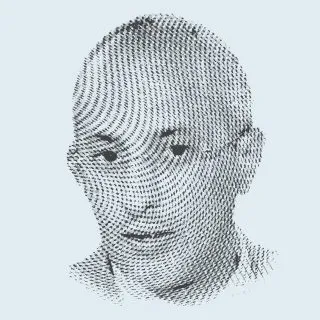
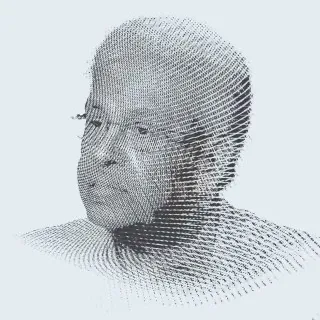
Perhaps the UN envoy to Libya, Hanna Tetteh, offered part of the truth in her briefing to the Security Council, especially since it centered on those obstructing a solution in Libya- without naming them, as is her habit, even though they are in her records by name and photograph, and without disclosing their entities or brandishing sanctions against them. She has proved her failure to resolve the Libyan crisis time after time, and eleven envoys preceded Tetteh in this failure. Her briefing is therefore empty of content, without use, taste, or color. She has long dealt in generalities without mentioning the details, "where the devil lies."
Despite the American threat to impose sanctions on those obstructing a solution in Libya, American policy toward Libya has proved the opposite, showing no seriousness about implementation, notwithstanding the statement by Ambassador Jennifer Locetta, alternate representative for special political affairs at the US mission to the United Nations, that individuals and entities obstructing the transition may be subject to Security Council sanctions. Britain, for its part, is proposing a scheme resembling "oil for food" in Libya.
The threat of sanctions will remain far from realistic implementation, particularly since the Libyan crisis is still being used as a card for pressure, negotiation, and sometimes political "blackmail" in international and regional questions. The Libyan crisis has therefore remained in ebb and flow according to the movement of conflict in the world. The Libyan file is not far from the crisis in Ukraine, nor even from the crisis of the Strait of Hormuz, both files tied to the outside intervener, Russian and American, and the Libyan file is used as a playing card between gain and loss.
Often the Security Council behaves as though it were one of the obstructers of a solution in Libya. It has met and listened dozens of times to the international envoys to Libya, and Hanna Tetteh will not be the last in this series. Yet it has not even voted on the latest agreement, known as "4+4," which legitimizes power-sharing among the actors on the ground and enjoys near-unanimous Libyan support, with the exception of the rejecting party, the current of political Islam.
Libya, the land of perfumes, flowers, and henna, became a victim of the "Arab Spring" and then of NATO's strikes, through which the entire state collapsed as an entity in 2011, not merely the regime. Today it suffers from those obstructing a consensual solution, at home and abroad. The obstructers' purposes are varied; they are not of one heart, but their hearts and ambitions are many. Even the elected official institutions, such as parliament, have today become part of the problem, indeed of the very core of obstruction, to say nothing of the other parallel unelected institutions such as the High Council of State and the Presidential Council, the hybrid product of the Geneva agreement, whose mandate has also expired. All the political institutions have turned into something like private parties, each contesting legitimacy with the other.
None of the political institutions wants a solution, and all their legitimate mandates have expired. A solution would end their existence; they feed and live on the continuation of the dispute.
After division ruled the High Council of State, with two rival presidencies contesting before the courts, parliament now faces the same fate of fragmentation and division, like all of Libya's political institutions, which remain in permanent dispute, trading roles of intransigence and refusal. What matters to them is that there be no agreement among them, because that is the secret of all of them remaining in power, and of the political scene continuing unchanged for more than twelve consecutive years without elections.
Libya today is hostage to the obstructers despite the UN's "threats" to impose sanctions on them. Those threats have remained a voice without an echo, with no effect. The obstructers have gone on blocking and circumventing all the previous agreements, the latest of them the Geneva agreement, which the government and the Presidential Council have overstayed by five years of rule without legitimate basis or even electoral cover. Nothing in the agreement has been achieved, neither elections nor national reconciliation, which were the foundation of the function of the Geneva government, named the Government of National Unity. Neither was unity achieved, nor was it a national government.
The regrettable thing about Libya's crisis is that those who hold the keys to the solution are the ones obstructing it, whether inside or outside the country. There is a "local, regional, and international veto" on obstructing a solution in Libya. What is wanted is for Libya to remain marking time in political division, with neither victor nor vanquished along the Sirte-Jufra line, where Libya was divided by the "geography of the ceasefire" between the two sides.
Libya's wealth- its oil, gas, gold, and even the water reserves deep beneath the desert- all count among the reasons for prolonging the crisis and obstructing a solution. Everyone wants Libya divided and fragmented, to make it easier to plunder. When Libya was a single, strong state, they could not plunder a single barrel of oil. Today entire wells are plundered, billions vanish from the Libyan treasury, and the gold reserves have all been looted- and every case has been filed by the police against persons unknown.
Those obstructing a solution in Libya are not only Libyans. They go beyond the Libyan chess pieces used to stir up the internal crisis, to states that cannot be threatened with sanctions or even with criticism. When the disputes among those fighting over the Libyan cake end, there will be a workable solution, and coexistence will prevail in Libya.