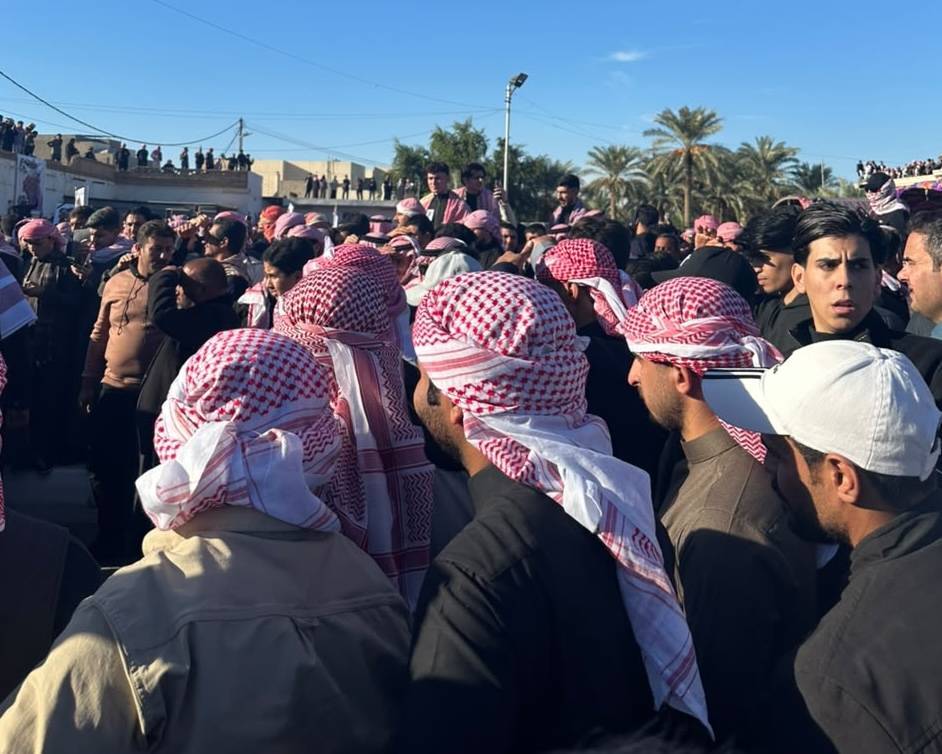
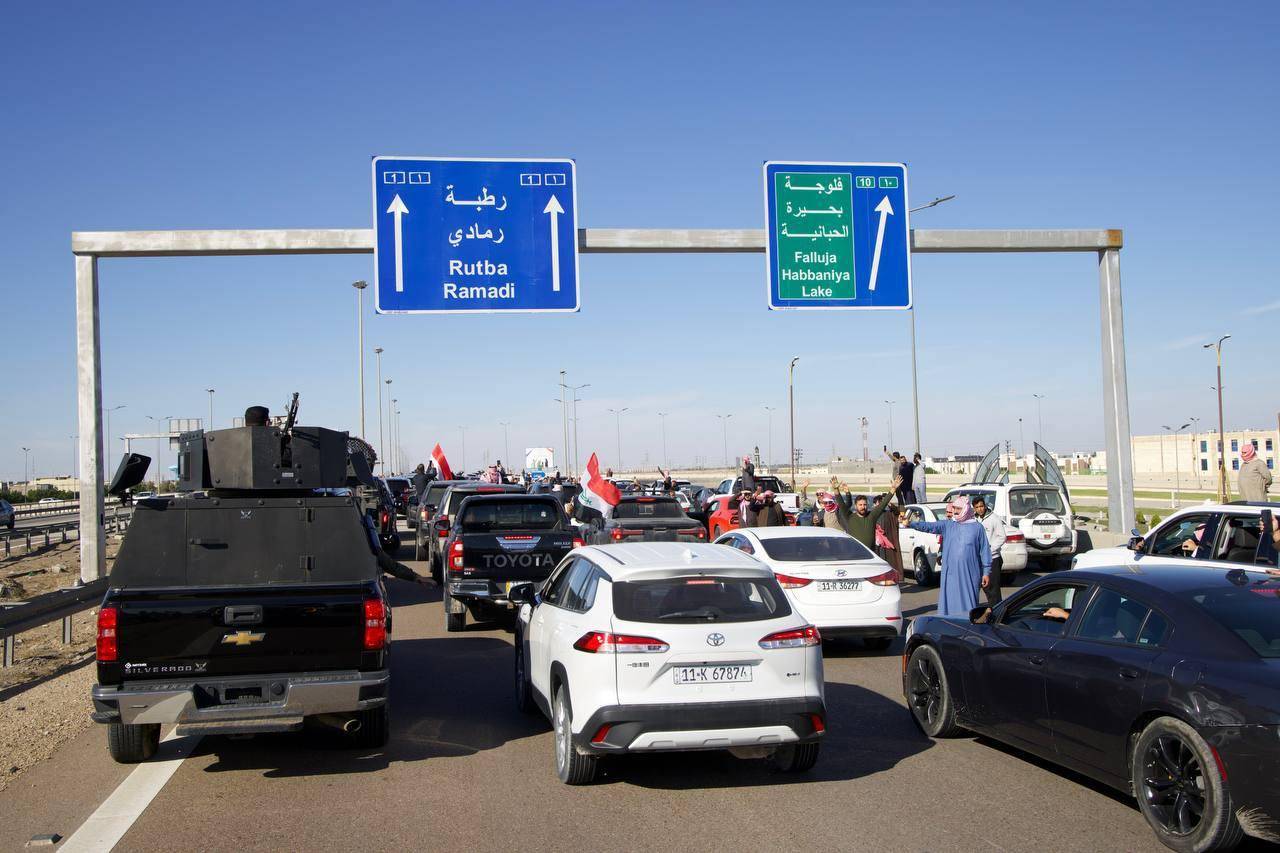
Thousands of Iraqis on Saturday escorted the body of former MP Ahmed al-Alwani from Baghdad Airport to Ramadi in Anbar Governorate, where tribespeople and residents from across the province awaited his arrival amid scenes of grief and anger.
Meanwhile, the circumstances surrounding his killing in Beirut remain under investigation, even as Lebanese authorities have made progress in identifying two suspects.
A private jet carrying al-Alwani's body from the Lebanese capital landed at Baghdad Airport in the morning, with large crowds of mourners gathering at the airport.
Local media reported that Iraqi politician Khamis al-Khanjar, head of the Sovereignty Alliance, covered the cost of transporting the body aboard the private aircraft.
The funeral procession traveled toward Ramadi, located 110 kilometers from Baghdad, under heavy security and accompanied by military vehicles.
The Security Media Cell had urged the public to await the investigation's findings and refrain from reading broader motives into the case before it concludes, noting the ongoing coordination between the Iraqi Embassy in Beirut, Lebanese judicial and security authorities, and the Iraqi National Intelligence Service.
Al-Alwani's killing has sparked uproar across Iraq, particularly in his home province of Anbar. Discussion of the case has been accompanied by political debates and sectarian commentary on social media, amid demands to identify those responsible for his death.
Kamel al-Dulaimi, former head of the Iraqi Presidential Diwan, told Asharq Al-Awsat that the circumstances and motives behind the crime still require clear and transparent disclosure to the public, underscoring the Iraqi state's responsibility to uncover the truth.
He added that the case requires security and judicial cooperation among Iraq, Lebanon, and Syria to track down the perpetrators and those behind them, particularly if the investigation calls for cross-border coordination.
He warned that the sectarian rhetoric surrounding the incident reflects a persistent tendency to view national issues through a narrow lens, emphasizing that the matter concerns the sanctity of Iraqi blood and must not be reduced to the affiliation of an individual or a governorate.
Legal researcher Saif al-Saadi, who hails from Anbar, said al-Alwani was not merely a former lawmaker, but a prominent tribal, social, and political figure in the province, adding that the funeral reflects the depth of grief and anger across Anbar's cities.
Al-Alwani, who rose to prominence during the late 2013 Anbar protests, was arrested in December of that year and sentenced to death in 2014 after being convicted of killing two soldiers during clashes accompanying his arrest.
He was released in April 2025 after spending more than 11 years in prison, following the withdrawal of a complaint by one of the victims' families and his inclusion under the General Amnesty Law.