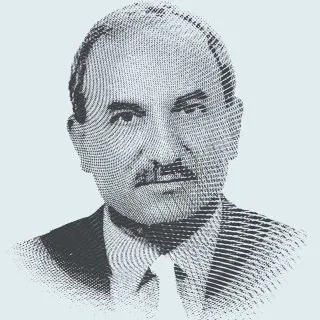
Syrian President Ahmad al Sharaa renewed his rejection of intervention in Lebanon in response to multiple calls and demands for armed involvement against Lebanon’s Hezbollah.
Al Sharaa stated that what is being said and circulated about intervention is unfounded. He added that Syria seeks to play a positive role focused on ending the war (in Lebanon), calming tensions, and strengthening Lebanese state institutions.
His remarks put to rest weeks of speculation fueled by political signals and media narratives, including repeated suggestions from US President Donald Trump that Al Sharaa might deploy forces against Hezbollah to reshape Lebanon’s internal balance of power. These claims, amplified by analysis and rumor alike, often ventured into worst case scenarios, predicting negative consequences for both Syria and Lebanon.
The firm stance against intervention in Lebanon is linked to a profound shift in Syria’s regional and international policies - one of the early outcomes following the fall of the Assad regime and the establishment of a new government in late 2024.
In this context, a different policy approach has been adopted in regional and international relations, based on peace, cooperation, and the creation of new shared understandings for managing relations and resolving both existing and potential disputes.
A key component of this approach is refraining from regional interventions, especially military ones, which have brought endless problems to Syria and its people. These policy directions have also been accompanied by a focus on addressing the internal situation, which the Assad regime had reduced to total devastation, particularly during the years of the Syrian conflict (2011–2024).
Recovery now requires the full energy and attention of Syrians and their government, as well as broad regional and international support in all fields. It also necessitates avoiding entanglement in conflicts that could negatively impact efforts to address core domestic challenges and delay Syria’s recovery and reconstruction.
Within this framework of new Syrian policy, the new leadership has presented a different image of the changes in Syrian Russian relations, despite Russia’s role in protecting the Assad regime and the crimes it committed against the Syrian people.
Similarly, there appears to be a relative improvement in Damascus’ ties with the governments of Iraq and Lebanon, both of which had allowed militias - from Iraq’s Popular Mobilization Forces to Lebanon’s Hezbollah - to cross into Syria and assist the Assad regime in its war against Syrians.
The overall picture of changes in the foundations of Syrian policy confirms that rejecting intervention in Lebanon was a natural outcome. It also suggests that the emergence of a new pattern in Syrian Lebanese relations, based on resolving disputes and creating new opportunities for cooperation needed by both countries, is equally natural.
Most likely, ending the war in Lebanon could serve as an opportunity to launch broad and multifaceted Syrian Lebanese cooperation projects, including addressing outstanding issues such as Syrian refugees in Lebanon. This could extend further to agreements and understandings on water resources, oil transport pipelines, and land transportation of goods and passengers.
However, the path toward the hoped for positive development in Syrian Lebanese ties will not be easy, due to the heavy legacy of the past, particularly under the long rule of the Assad regime and its deep military involvement in Lebanon for over three decades.
This legacy has left disastrous effects on both countries and their peoples, requiring time and effort to overcome.
Nevertheless, necessity may prove to be the strongest catalyst to quickly move beyond these effects, especially in light of structural changes in governance in both countries and their political orientations on one hand, and the recent efforts to address shared issues on the other.