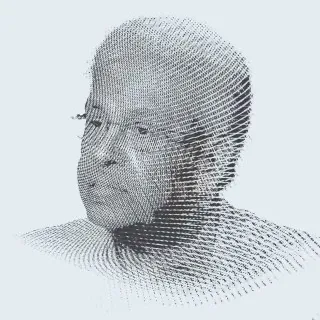
Yesterday, the US Congress honored the late Egyptian President, Anwar Sadat, by awarding him the Congressional Gold Medal, a distinction he well deserves, even if it comes 45 years late.
The irony is that while Americans celebrate him, some Arabs continue to attack him and tarnish his legacy. Even more surprising is that some of these unjust campaigns are led by Egyptians themselves. Sadat belonged to the class of true statesmen whose impact becomes clearer after their death, sometimes only decades later. Such leaders possess a political and historical instinct that enables them to anticipate the future.
What distinguished President Sadat?
Sadat was a man of war and the architect of Egypt's only military victory over Israel, a victory that restored a measure of confidence and dignity to both Egyptians and Arabs.
Historians may debate whether it was a complete or partial victory, but in my view that is beside the point. Sadat achieved what he wanted from the war: the recovery of occupied Egyptian territory through negotiations and an end to a debilitating state of attrition.
He restored Egyptian sovereignty and steered his country away from destructive wars. Did his critics want Egypt to be drawn into repeated conflicts that would devastate its society, destroy its economy, undermine its unity, and weaken the Egyptian state?
Sadat was subjected to vicious vilification, yet he spared Egypt from war for 45 years. He deserves part of the credit for that. He altered the confrontational course charted by President Gamal Abdel Nasser, who himself reconsidered some of his choices after the 1967 defeat and acknowledged his mistakes.
Sadat also removed Egypt from the notion of transnational leadership that had captivated the minds of many Arab republican leaders. What became of those leaders who were hostile to him? Saddam, Gaddafi, and Assad. What did their grand ambitions do to their countries, which were ultimately devastated, and to their families, which were scattered and forced into exile? By contrast, Sadat's son stood proudly to receive the honor awarded to his father, who rests in his grave with dignity and recognition.
Sadat established a different concept of leadership: a true leader is one who protects his country and people from unnecessary wars and foreign interference, not one who drags them into them.
He also possessed remarkable political foresight. He shifted Egypt's alliances from the Soviet camp to the American camp. Years after his death, the Soviet Union collapsed, the Eastern Bloc disintegrated, and the United States emerged as the world's dominant military and economic power. Sadat was also among the first to recognize what he saw as the dangers posed by the Iranian regime and its expansionist ideology, and today, we understand what he meant.
Of course, Sadat had flaws and made mistakes. Perhaps the most significant was opening the door to political Islamist groups in order to counter Nasserist and leftist currents. It was a miscalculation that ultimately cost him his life.
Sadat endured relentless criticism from various quarters, ranging from leftists to Islamist extremists. Yet more than 45 years later, they have failed to dismantle his legacy. As President Abdel Fattah el-Sisi once remarked: “He defeated his opponents while absent.”