


Tesla CEO Elon Musk Kicks off Surprise Trip to Beijing, Sources Say

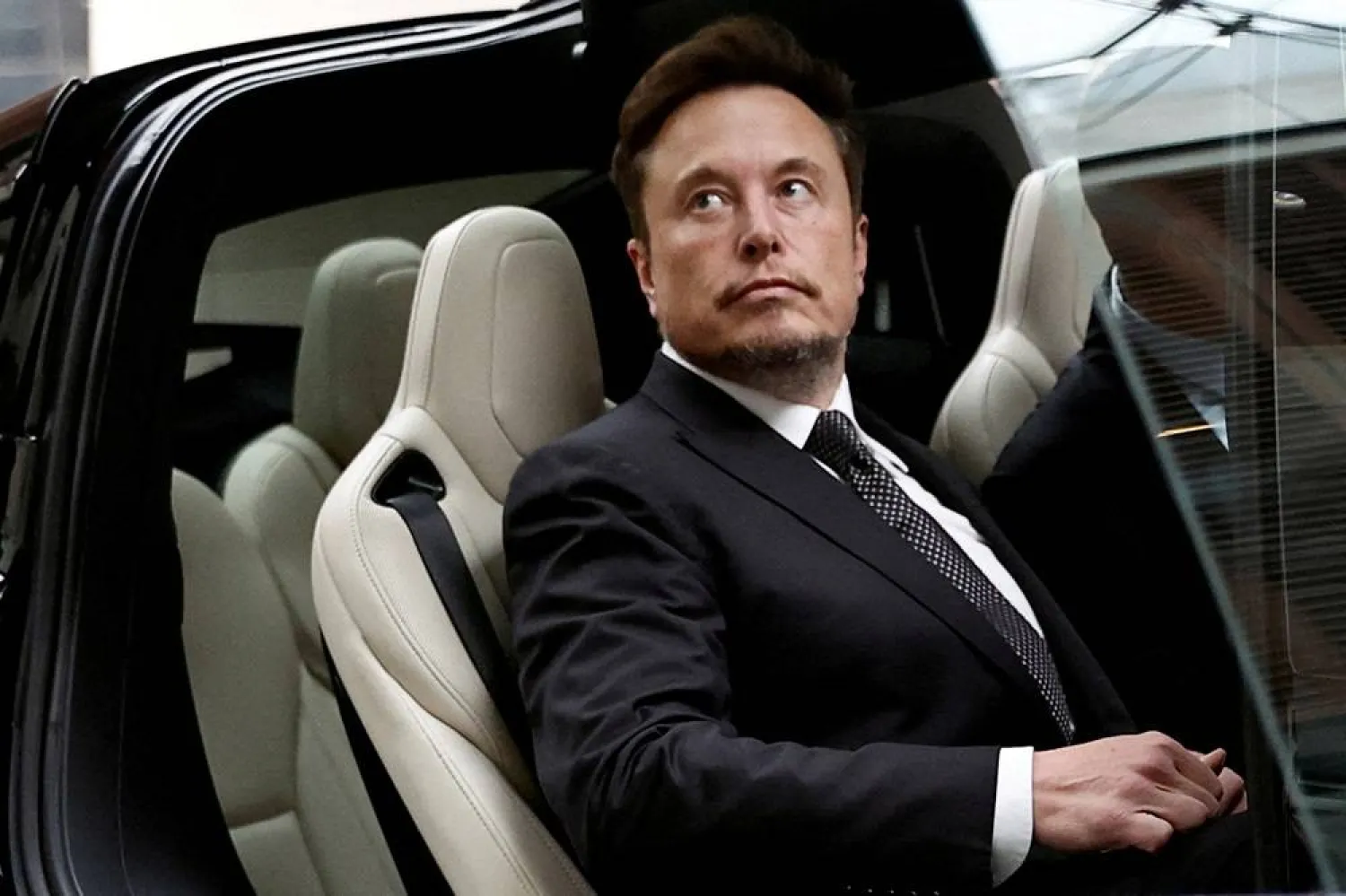
Tesla Chief Executive Officer Elon Musk gets in a Tesla car as he leaves a hotel in Beijing, China May 31, 2023. (Reuters)
TT

Tesla CEO Elon Musk Kicks off Surprise Trip to Beijing, Sources Say

Tesla Chief Executive Officer Elon Musk gets in a Tesla car as he leaves a hotel in Beijing, China May 31, 2023. (Reuters)

A private jet linked to Tesla CEO Elon Musk landed in Beijing on Sunday, a flight tracking app showed, as two people with knowledge of the matter said the billionaire was kicking off a surprise visit to the automaker's second-biggest market.

Musk is seeking to meet senior Chinese officials in Beijing to discuss the rollout of Full-Self Driving (FSD) software in China and to obtain approval to transfer data collected in the country abroad to train algorithms for its autonomous driving technologies, one of the people said.

Tesla has since 2021 stored all data collected by its Chinese fleet in Shanghai as required by Chinese regulators and has not transferred any back to the United States.

The US electric vehicle maker rolled out FSD, the most autonomous version of its Autopilot software, four years ago but has yet to make it available in China despite customers urging it to do so.

Musk said this month Tesla may make FSD available to customers in China "very soon", in response to a query on social media platform X.

Rival Chinese automakers such as Xpeng have been seeking to gain an advantage over Tesla by rolling out similar software.

Musk's visit to China was not flagged publicly and the people spoke on condition of anonymity because they were not authorized to speak with media. Tesla did not respond immediately to a request for comment.

The trip came just over a week after he scrapped a planned visit to India to meet with Prime Minister Narendra Modi, citing "very heavy Tesla obligations."

The company said this month it would lay off 10% of its global workforce as it grapples with falling sales and an intensifying price war for EVs led by Chinese brands.

LANDED IN BEIJING

A Gulfstream private jet with tail number N272BG, which is registered to Falcon Landing, a company connected to SpaceX and Tesla, landed at Beijing Capital Airport on Sunday at 0603 GMT, according to Chinese flight tracking app Flight Manager.

The other jet registered under Falcon Landing is N628TS, which is Musk's main jet that he used to travel to China on his last trip nearly a year ago, when he met with Chinese government officials in Beijing and visited Tesla's Shanghai factory.

Tesla has sold more than 1.7 million cars in China since it entered the market a decade ago and the Shanghai factory is its largest globally.

Musk's visit coincides with the Beijing autoshow, which opened last week and ends on May 4. Tesla does not have a booth at China's largest autoshow and last attended in 2021.

GM CEO Mary Barra made an unannounced visit to the show in the world's biggest auto market on Friday, according to two people with knowledge of her schedule. GM did not immediately respond to a request for comment.

Also on Friday, Grace Tao, Tesla's vice president in charge of external relations in China, published a commentary on the social media account of state media outlet People's Daily, arguing that autonomous driving technologies would be the new growth engine for EV industry.

Tao said in the article that Tesla was leading autonomous driving research and development with its "end-to-end neural network" technology and data collected from millions of cars on the road.

China's complicated traffic conditions with more pedestrians and cyclists than in many other markets provide more scenarios that are key for training autonomous driving algorithms at a faster pace, according to industry experts.

Musk said last week Tesla would introduce new, cheaper models using its current EV platforms and production lines and would offer a new "robotaxi" with self-driving technology. He said in a post on X this month that he would unveil the robotaxi on Aug. 8.

Tesla shares are down almost a third since the start of the year as concerns have grown about the EV maker's growth trajectory. Last week, Tesla reported its first decline in quarterly revenue since 2020 when the COVID-19 pandemic slowed production and deliveries.



Nvidia Making AI Module for Outer Space

Nvidia CEO Jensen Huang says artificial intelligence powered by the company's graphics processing units is quickly infusing nearly everything from Disney character robots to data centers that may one day be orbiting the planet. JOSH EDELSON / AFP
TT

Nvidia Making AI Module for Outer Space

Nvidia CEO Jensen Huang says artificial intelligence powered by the company's graphics processing units is quickly infusing nearly everything from Disney character robots to data centers that may one day be orbiting the planet. JOSH EDELSON / AFP

Nvidia chief Jensen Huang on Monday said the leading artificial intelligence chip maker is heading for space with a goal of powering orbiting data centers.

An Nvidia graphics processing unit (GPU) was launched into space late last year by startup Starcloud in what was touted as an off-planet debut for the technology, but now Nvidia is creating a module intended as a building block for data centers there.

"We're working with our partners on a new computer called Vera Rubin Space One," Huang said as he kicked off the GPU-maker's annual developers conference in Silicon Valley.

"It's going to go out to space and start data centers."

Partners in the project include Starcloud, which is planning a November satellite launch that will mark the "cosmic debut" of the new Nvidia module.

A Starcloud-1 satellite, about the size of a small refrigerator, is expected to be packed with 100 times more computing power than any previous space-based operation.

"In 10 years, nearly all new data centers will be being built in outer space," predicted Starcloud co-founder and chief Philip Johnston.

The startup explained that it plans to power Google AI with the Nvidia GPUs to show that large language models can run in outer space.

Nvidia described the Vera Rubin module as being optimized for AI, enabling real-time sensing, decision making, and autonomous functioning.

"Space computing, the final frontier, has arrived," Huang said.

"With our partners, we're extending Nvidia beyond our planet - boldly taking intelligence where it's never gone before."

Tech firms are floating the idea of building data centers in space and tapping into the sun's energy to meet out-of-this-world power demands in a fierce artificial intelligence race.

More than a dozen startups, aerospace leaders, and major tech firms are involved in the development, testing, or planning of space-based data centers.

The big draw of space for data centers is power supply, with the option of synchronizing satellites to the sun's orbit to ensure constant light beaming onto solar panels.

Building in space also avoids the challenges of acquiring land and meeting local regulations or community resistance to projects.

Critical technical aspects of such operations need to be resolved, however, particularly damage to the orbiting data centers from high levels of radiation and extreme temperatures, and the danger of them being hit by space junk.


Samsung Shares Rise After Nvidia’s Huang Flags Tie-up on New AI Chips

10 September 2025, Bavaria, Munich: The Samsung logo can be seen at the Samsung stand during the International Motor Show (IAA Mobility). (dpa)
TT

Samsung Shares Rise After Nvidia’s Huang Flags Tie-up on New AI Chips

10 September 2025, Bavaria, Munich: The Samsung logo can be seen at the Samsung stand during the International Motor Show (IAA Mobility). (dpa)

Shares of Samsung Electronics rose as much as 5% on Tuesday after Nvidia CEO Jensen Huang said the South Korean company was producing Nvidia's new artificial intelligence chips.

The news fueled expectations that Samsung's foundry division, which makes logic chips for customers including Tesla, Apple and Samsung's phone division, may be able to turn around ‌as early ‌as next year after posting ‌billions ⁠of dollars in annual ⁠losses in recent years, analysts said.

At Nvidia's GTC developer conference in California on Monday, Huang unveiled Nvidia's new AI inference processor based on technology from chip startup Groq.

"I want to thank Samsung who manufactures the Groq LP30 ⁠chip for us and they're cranking as ‌hard as they ‌can," he said, adding the chips were in production, ‌and would be shipped in the second half ‌of this year.

Samsung also showcased the Nvidia chips made using its 4-nanometer manufacturing process at the GTC.

Samsung shares were up 4.3% at 196,800 won ‌as of 0252 GMT, after earlier reaching 198,000 won. The broader market was ⁠up 2.7%.

Sohn ⁠In-joon, an analyst at Heungkuk Securities, expected Samsung's foundry business would be able to reach breakeven later next year. But he said weak demand from mobile phones stemming from surging memory chip prices could weigh on foundry earnings.

Advanced Micro Devices' CEO Lisa Su will meet Samsung Electronics Chairman Jay Y. Lee in South Korea on Wednesday, media reports said, with eyes on whether the two would discuss cooperation in memory chips and logic semiconductors.


Nebius Signs AI Capacity Deal with Meta for at Least $12 Billion

FILE PHOTO: The logo of Nebius during the Viva Technology conference dedicated to innovation and startups at Porte de Versailles exhibition center in Paris, France, June 12, 2025. REUTERS/Benoit Tessier/File Photo
TT

Nebius Signs AI Capacity Deal with Meta for at Least $12 Billion

FILE PHOTO: The logo of Nebius during the Viva Technology conference dedicated to innovation and startups at Porte de Versailles exhibition center in Paris, France, June 12, 2025. REUTERS/Benoit Tessier/File Photo

Amsterdam-based Nebius Group said on Monday it has signed a new five-year deal with Meta Platforms to provide the social media giant with $12 billion of dedicated AI computing capacity ⁠across multiple locations by ⁠2027.

Under the deal, Meta will also buy an additional $15 billion worth of capacity planned by Nebius over ⁠the coming five years if it is not sold to other customers, giving the contract a total value of up to $27 billion, Nebius said.

Nebius is a so-called "neocloud" company that sells hardware and cloud capacity ⁠as ⁠services to other tech firms. It uses Nvidia processors to provide AI cloud infrastructure.

It signed an initial $3 billion deal with Meta in November.