


Australia Ban Offers Test on Social Media Harm

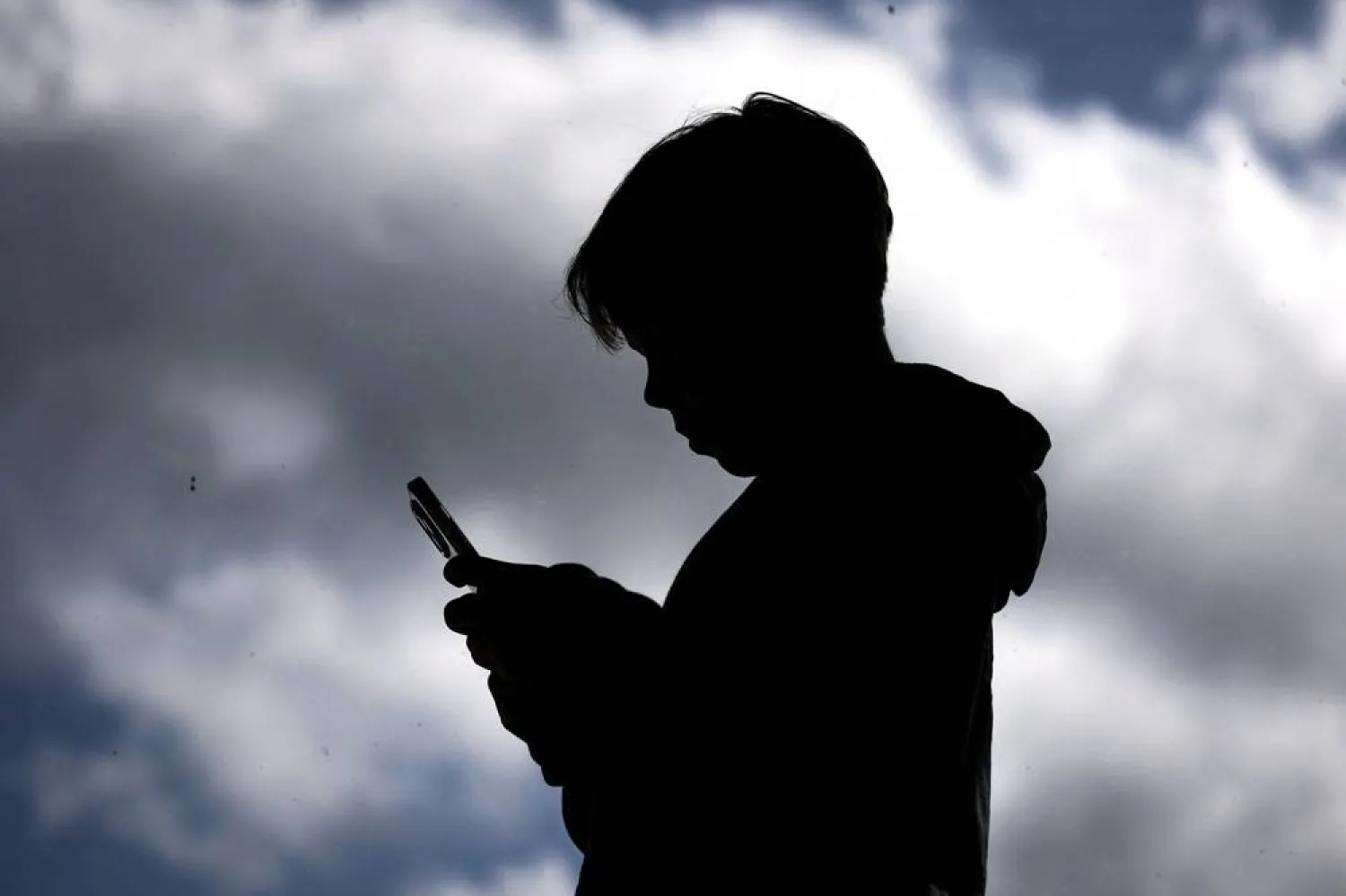
This photo taken on October 24, 2025 shows a 14-year-old boy posing at his home near Gosford as he looks at social media on his mobile phone. (AFP)
TT

Australia Ban Offers Test on Social Media Harm

This photo taken on October 24, 2025 shows a 14-year-old boy posing at his home near Gosford as he looks at social media on his mobile phone. (AFP)

Australia's under-16 social media ban will make the nation a real-life laboratory on how best to tackle the technology's impact on young people, experts say.

Those in favor of the world-first December 10 ban point to a growing mass of studies that suggest too much time online takes a toll on teen wellbeing.

But opponents argue there is not enough hard proof to warrant the new legislation, which could do more harm than good.

Adolescent brains are still developing into the early 20s, said psychologist Amy Orben, who leads a digital mental health program at the University of Cambridge.

A "huge amount" of observational research, often based on surveys, has tracked a correlation between teen tech use and worse mental health, she told AFP.

But it is hard to draw firm conclusions, because phones are so ingrained into daily life, and young people may turn to social media because they are already suffering.

"With technology, because it's changing so fast, the evidence base will always be uncertain," Orben said.

"What could change the dial are experimental studies or evaluations of natural experiments. So evaluating the Australia ban is hugely important because it actually gives us a window on what might be happening."

To try and shed light on the cause-and-effect relationship, Australian researchers are recruiting 13- to 16-year-olds for a "Connected Minds Study" to assess how the ban affects their wellbeing.

A World Health Organization survey last year found that 11 percent of adolescents struggled to control their use of social media.

Other research has shown a link between excessive social media use and poor sleep, body image, school performance and emotional distress, such as a 2019 study of US schoolchildren in JAMA Psychiatry that found those who spent over three hours a day on social media could be at heightened risk for mental health problems.

So some experts argue the right time to act is now.

"I actually don't think this is a science issue. This is a values issue," said Christian Heim, an Australian psychiatrist and clinical director of mental health.

"We're talking about things like cyberbullying, the risk of suicide, accessing sites on anorexia nervosa and self-harm," he told AFP.

Evidence of a risk is growing, Heim said -- pointing to a 2018 study by neuroscientist Christian Montag that linked addiction to the Chinese messaging app WeChat to shrinking grey matter volume in part of the brain.

"We can't wait for stronger evidence," Heim said.

Scott Griffiths of the Melbourne School of Psychological Sciences said a "smoking gun research study" was unlikely to emerge soon to prove the harms of social media.

But the ban was worth trying, he said.

"I'm hopeful that the major social media companies seeing this full-throated legislative action come into play will finally be motivated to more meaningfully protect the health and wellbeing of young people."

More than three-quarters of Australian adults agreed with the new legislation before it passed, a poll indicated.

However, an open letter signed by more than 140 academics, campaigners and other experts cautioned that a ban would be "too blunt an instrument".

"People were saying: 'Well, kids are getting more anxious. There must be a reason -- let's ban social media'," argued one signatory, Axel Bruns, a digital media professor at Queensland University of Technology.

Children may simply have more reasons to be anxious, under pressure from pandemic-interrupted schooling and troubled by wars in Gaza and Ukraine, he told AFP.

And a ban might push some teens to more extreme, fringe sites, while preventing other marginalized young people from finding community.

Noelle Martin, an activist focused on image-based online abuse and deepfakes, feared the Australian ban would do little to help, given the country's history on enforcement of existing laws.

"I don't believe it will stop, prevent or do much to meaningfully combat this issue," Martin said.

In any case, the political decision has been taken in Australia.

"Social media is doing social harm to our children," Prime Minister Anthony Albanese said this year.

"There is no doubt that Australian kids are being negatively impacted by online platforms, so I'm calling time on it."



Meta Reportedly Delays Release of Phoenix Mixed-reality Glasses to 2027

FILE PHOTO: The logo of Meta is seen at Porte de Versailles exhibition center in Paris, France, June 11, 2025. REUTERS/Gonzalo Fuentes/File Photo
TT

Meta Reportedly Delays Release of Phoenix Mixed-reality Glasses to 2027

FILE PHOTO: The logo of Meta is seen at Porte de Versailles exhibition center in Paris, France, June 11, 2025. REUTERS/Gonzalo Fuentes/File Photo

Meta is delaying the release of its Phoenix mixed-reality glasses until 2027, aiming to get the details right, Business Insider reported on Friday, citing an internal memo.

The delay from an initially planned release in the second half of 2026 is because the company wants a fully polished device, the report said.

Meta did not immediately respond to a Reuters request for comment on the report.

Meta executives Gabriel Aul and Ryan Cairns said moving the release date back is "going to give us a lot more breathing room to get the details right," the report added.

The goggles, previously code-named Puffin, weigh around 100 grams (3.5 ounces) and have lower-resolution displays and weaker computing performance than high-end headsets like Apple’s Vision Pro, the Information reported in July.

Mixed reality merges augmented and virtual reality and allows real-world and digital objects to interact.

Meta is expected to make budget cuts of up to 30% for its metaverse initiative, Bloomberg News reported on Thursday.

The metaverse group sits within Reality Labs, which produces the company's Quest mixed-reality headsets, smart glasses made with EssilorLuxottica's Ray-Ban and upcoming augmented-reality glasses.


Apple, Google Send New Round of Cyber Threat Notifications to Users Around World

The Apple logo is seen in this illustration taken September 24, 2025. (Reuters)
TT

Apple, Google Send New Round of Cyber Threat Notifications to Users Around World

The Apple logo is seen in this illustration taken September 24, 2025. (Reuters)

Apple and Google have sent a new round of cyber threat notifications to users around the world, the companies said this week, announcing their latest effort to insulate customers against surveillance threats.

Apple and the Alphabet-owned Google are two of several tech companies that regularly issue warnings to users when they determine they may have been targeted by state-backed hackers.

Apple said the warnings were issued on Dec. 2 but gave few further details about the alleged hacking activity and did not address questions about the number of users targeted or say who was thought to be conducting the surveillance.

Apple said that "to date we have notified users in over 150 countries in total."

Apple's statement follows Google's Dec. 3 announcement that it was warning all known users targeted using Intellexa spyware, which it said spanned "several hundred accounts across various countries, including Pakistan, Kazakhstan, Angola, Egypt, Uzbekistan, Saudi Arabia, and Tajikistan."

Google said in its announcement that Intellexa, a cyber intelligence company that is sanctioned by the US government, was "evading restrictions and thriving."

Executives tied to Intellexa did not immediately return messages.

Previous waves of warnings have triggered headlines and prompted investigations by government bodies, including the European Union, whose senior officials have previously been targeted using spyware.

Threat notifications impose costs on cyber spies by alerting victims, said John Scott-Railton, a researcher with the Canadian digital watchdog group Citizen Lab.

He said they were "also often the first step in a string of investigations and discoveries that can lead to real accountability around spyware abuses."


AI Bubble to Be Short-lived, Rebound Stronger, NTT DATA Chief Says

FILE PHOTO: Figurines with computers and smartphones are seen in front of the words "Artificial Intelligence AI" in this illustration taken, February 19, 2024. REUTERS/Dado Ruvic/Illustration/File Photo
TT

AI Bubble to Be Short-lived, Rebound Stronger, NTT DATA Chief Says

FILE PHOTO: Figurines with computers and smartphones are seen in front of the words "Artificial Intelligence AI" in this illustration taken, February 19, 2024. REUTERS/Dado Ruvic/Illustration/File Photo

A potential artificial intelligence bubble will deflate faster than past tech cycles but give way to an even stronger rebound as corporate adoption catches up with infrastructure spending, the head of Japanese IT company NTT DATA Inc. said.

Despite worries around supply chains, the direction of travel is clear, CEO Abhijit Dubey said in an interview with the Reuters Global Markets Forum.

"There is absolutely no doubt that in the medium- to long-term, AI is a massive secular trend," he said.

"Over the next 12 months, I think we're going to have a bit of a normalization ... It'll be a short-lived bubble, and (AI) will come out of it stronger."

With demand for compute still running ahead of supply, "supply chains are almost spoken for" over the next two to three years, he said. Pricing power is already tilting toward chipmakers and hyperscalers, mirroring their stretched valuations in public markets, he added.

AI has triggered the biggest technological shake-up since the advent of the internet, fueling trillions of dollars of investment and eye-watering equity gains. But it has caused shortages of memory chips, drawn regulatory scrutiny, and created growing unease over the future of work.

Dubey, who is also the firm's chief AI officer, said his company has begun rethinking recruitment strategies as AI reshapes labor markets.

"There will clearly be an impact ... Over a five- to 25-year horizon, there will likely be dislocation," he said. However, he added that NTT DATA continues to hire across locations.

Speakers at the Reuters NEXT conference in New York discussed how AI may upend work and job growth.

AI startup Writer Inc.'s CEO May Habib said customers are focused on slowing headcount growth.

"You close a customer, you get on the phone with the CEO to kick off the project, and it's like, 'Great, how soon can I whack 30% of my team?'," she said.

Still, a PwC survey of the global workforce released in November suggests the reality of generative AI usage has yet to match boardroom expectations.

Daily use of GenAI remains "significantly lower" than widely touted by executives, PwC said, even as workers with AI skills commanded an average wage premium of 56% — more than double last year's figure.

PwC also flagged a widening skills gap, with about half of non-managers reporting access to training resources, compared with roughly three-quarters of senior executives.