


Trump Urges 2028 Astronaut Moon Landing in Sweeping Space Policy Order

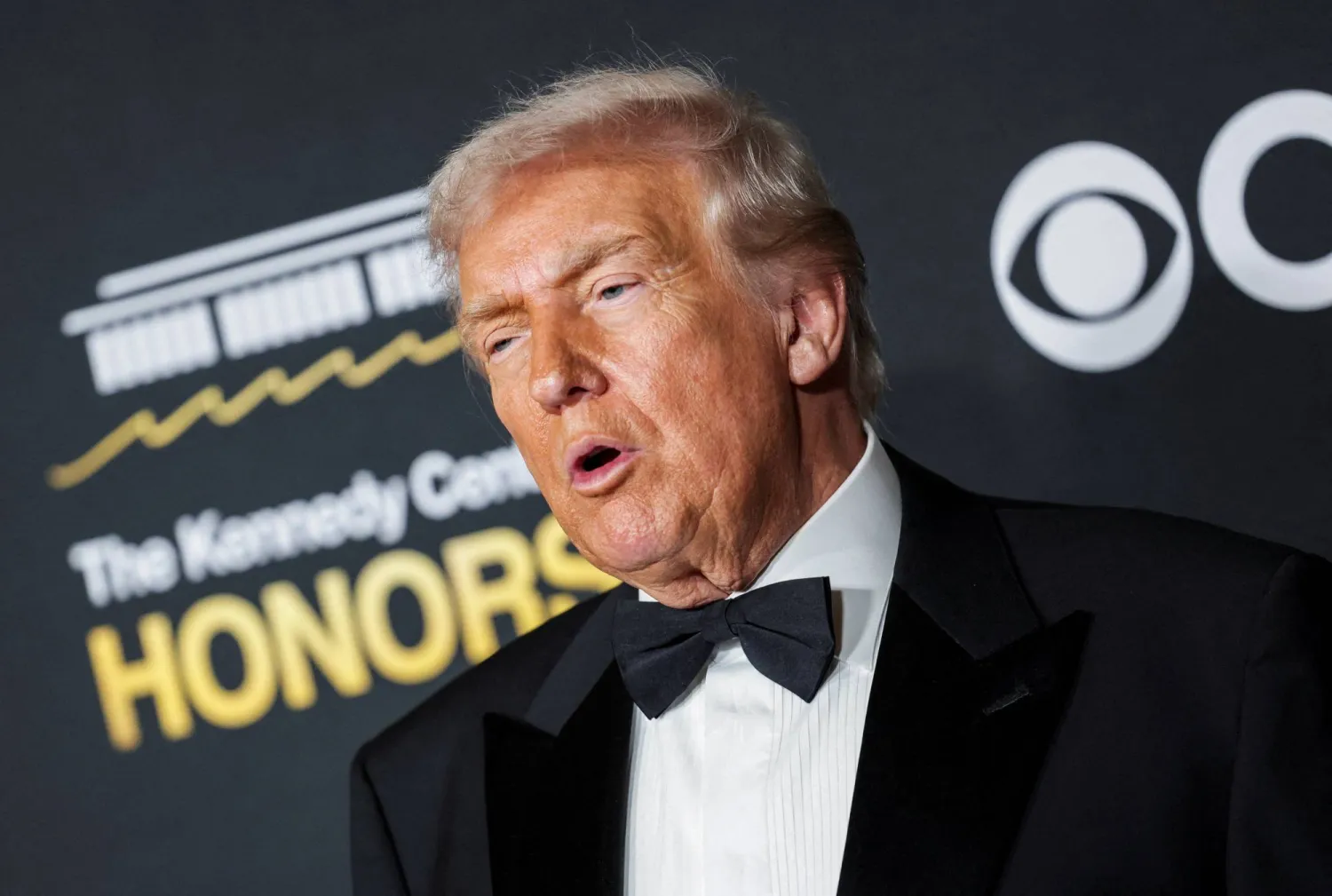
FILE PHOTO: US President Donald Trump poses on the red carpet for the 2025 Kennedy Center Honors at the John F. Kennedy Center for the Performing Arts in Washington, D.C., US, December 7, 2025. REUTERS/Jeenah Moon/File Photo
TT

Trump Urges 2028 Astronaut Moon Landing in Sweeping Space Policy Order

FILE PHOTO: US President Donald Trump poses on the red carpet for the 2025 Kennedy Center Honors at the John F. Kennedy Center for the Performing Arts in Washington, D.C., US, December 7, 2025. REUTERS/Jeenah Moon/File Photo

President Donald Trump enshrined the US goal to put humans back on the moon by 2028 and defend space from weapon threats in a sweeping executive order issued on Thursday, the first major space policy move of his administration's second term.

The order, issued hours after billionaire private astronaut and former SpaceX customer Jared Isaacman was sworn in as NASA's 15th administrator, also reorganized national space policy coordination under Trump's chief science adviser, Michael Kratsios, Reuters reported.

Titled "ENSURING AMERICAN SPACE SUPERIORITY," the order calls on the Pentagon and US intelligence agencies to create a space security strategy, urges efficiency among private contractors and seeks demonstrations of missile-defense technologies under Trump's Golden Dome program.

It appeared to ‌cancel the White ‌House's top space policy-coordinating body, the National Space Council, a ‌panel ⁠of cabinet members that ‌the president revived during his first term and has considered axing this year.

But an adminitration official said it would not be cancelled and suggested it would live on under the White House's Office of Technology Policy with a different structure in which the president, rather than the vice president, would be chairman.

The goal to land humans on the moon by the end of Trump's second term in 2028 bears resemblance to the president's 2019 directive in his first term to make a lunar return by 2024, putting the ⁠moon at the center of US space exploration policy with a timeline many in the industry regarded as unrealistic. Development and testing ‌delays with NASA’s Space Launch System and SpaceX’s Starship gradually pushed ‍that landing target date back.

NASA's goal had been ‍2028 under former president Barack Obama.

A 2028 astronaut moon landing would be ‍the first of many planned under NASA's Artemis effort to build a long-term presence on the lunar surface. The US is in competition with China, which is targeting 2030 for its first crewed moon landing. The order on Thursday called for "establishment of initial elements of a permanent lunar outpost by 2030," reinforcing NASA's existing goal to develop long-term bases with nuclear power sources.

At the start of his second term, Trump had repeatedly talked about sending missions to Mars as Elon Musk, a major donor ⁠who has made sending humans to the Red Planet a priority for his company SpaceX, served a stint as a close adviser and powerful government efficiency czar. But lawmakers in Congress this year have slowly put the moon back in focus, pressuring then-NASA nominee Isaacman to stick with the agency's moon program on which billions of dollars have been spent.

The White House, in a government efficiency push led by Musk, slashed NASA's workforce by 20% and has sought to cut the agency's 2026 budget by roughly 25% from its usual $25 billion, imperiling dozens of space-science programs that scientists and some officials regard as priorities.

Isaacman, who plans to give his first agency-wide address to NASA employees on Friday, has said he believes the space agency should try to target both the moon and Mars simultaneously while prioritizing a lunar return in ‌order to beat China.

The 2028 moon-landing target depends heavily on the development progress of SpaceX's giant Starship lander, which has been criticized by NASA's former acting administrator for moving too slowly.



Four Out of Every 10 Cancer Cases Are Preventable, Says WHO

Visitors walk past a sculpture of a pink ribbon installed to promote the "Pink Ribbon" breast cancer awareness campaign in this illustration, October 5, 2011. (Reuters)
TT

Four Out of Every 10 Cancer Cases Are Preventable, Says WHO

Visitors walk past a sculpture of a pink ribbon installed to promote the "Pink Ribbon" breast cancer awareness campaign in this illustration, October 5, 2011. (Reuters)

Nearly four out of every 10 cancer cases could be prevented if people avoided a range of risk factors including smoking, drinking, air pollution and certain infections, the World Health Organization said Tuesday.

New research published on the eve of World Cancer Day estimated that 38 percent of all new cancer cases globally in 2022 -- 7.1 million -- were linked to preventable causes.

The large team of researchers, which included the WHO's International Agency for Research on Cancer, looked at 30 factors that increase the risk of getting cancer.

Tobacco was the leading offender, responsible for 15 percent of all new cancer cases, followed by cancer-causing infections with 10 percent and drinking alcohol with three percent, according to the study published in the journal Nature Medicine.

Other risk factors included being overweight, a lack of exercise, UV radiation and being exposed to threats such as asbestos while working.

"This is the first global analysis to show how much cancer risk comes from causes we can prevent," senior study author Andre Ilbawi, the WHO's team lead for cancer control, said in a statement.

Almost half of all the preventable cases were lung, stomach or cervical cancer.

Lung cancer was linked to smoking and air pollution, while stomach cancer was largely linked to a bacteria called Helicobacter pylori.

Cervical cancer cases were overwhelmingly caused by human papillomavirus (HPV), which vaccines are effective against.

Men were far more likely to get preventable cancer, with 45 percent of new cases compared to 30 percent for women.

And nearly a quarter of all preventable cancer cases among men were from smoking, compared to 11 percent for women.

To address the problem, the researchers called for countries to adopt strong tobacco control measures and alcohol regulation, and to vaccinate against common infections such as HPV, improve air quality and ensure safer workplaces, healthy diets and exercise.

"If we want to reduce the cancer burden we also need to reduce the noncommunicable disease (NCD) burden -- it is indisputable that tobacco, alcohol, ultra-processed food and air quality are major drivers of multiple kinds of cancer," said Katie Dain, CEO of the NCD Alliance.


Spain to Ban Social Media Access for Children Under 16

FILE PHOTO: Instagram, TikTok, Snapchat, Kick, YouTube, Facebook, Twitch, Reddit, Threads and X applications are displayed on a mobile phone ahead of new law banning social media for users under 16 in Australia, in this picture illustration taken on December 9, 2025. REUTERS/Hollie Adams/Illustration/File Photo
TT

Spain to Ban Social Media Access for Children Under 16

FILE PHOTO: Instagram, TikTok, Snapchat, Kick, YouTube, Facebook, Twitch, Reddit, Threads and X applications are displayed on a mobile phone ahead of new law banning social media for users under 16 in Australia, in this picture illustration taken on December 9, 2025. REUTERS/Hollie Adams/Illustration/File Photo

Spain will ban access to social media for minors under 16 and platforms will be required to implement ‌age verification ‌systems, Prime ‌Minister ⁠Pedro Sanchez said ‌on Tuesday at the World Government Summit in Dubai.

"Our children are exposed to a space they were never meant to navigate ⁠alone... We will no longer ‌accept that," Sanchez said. "We ‍will protect ‍them from the digital ‍Wild West."

He added that his government would also introduce a new bill next week to hold social media executives accountable for illegal and ⁠hateful content.

Australia in December became the first country to ban social media for children under 16.

It's a move being closely watched by other countries considering similar age-based measures, such as Britain and France.


Saudi Media Ministry and SDAIA Launch Key Initiatives at Saudi Media Forum

Officials are seen at the fifth Saudi Media Forum in Riyadh on Monday. (SPA)
TT

Saudi Media Ministry and SDAIA Launch Key Initiatives at Saudi Media Forum

Officials are seen at the fifth Saudi Media Forum in Riyadh on Monday. (SPA)

The Saudi Ministry of Media, in partnership with the Saudi Data and AI Authority (SDAIA), launched on Monday two key initiatives at the fifth Saudi Media Forum in Riyadh.

The Media Innovation Bootcamp (Saudi MIB) and the AI principles in media document were announced by Minister of Media Salman Al-Dossary and SDAIA President Abdullah Alghamdi.

The initiatives aim to enhance the national media ecosystem and integrate artificial intelligence technologies into content creation.

The bootcamp trains a new generation of journalists and content creators in smart journalism tools, emphasizing automated data collection and deepfake detection for accurate reporting.

The AI track enables participants to collaborate with software engineers to create digital characters that mimic human behavior, facilitating 24/7 multilingual broadcasts with real-time audience interaction.

The AI principles in media document provides guidelines for responsible AI use in the media lifecycle. Developed with SDAIA, the Saudi Broadcasting Authority, and the General Authority for Media Regulation, it aims to ensure content integrity, address challenges posed by misleading content and deepfake technologies, and boost efficiency by leveraging AI to accelerate content production and deliver personalized user experiences.

The initiatives represent a partnership between the Ministry of Media and SDAIA to empower national talent and promote responsible technology use, aligned with Saudi Vision 2030.