


Hooked on the Claw: How Crane Games Conquered Japan’s Arcades

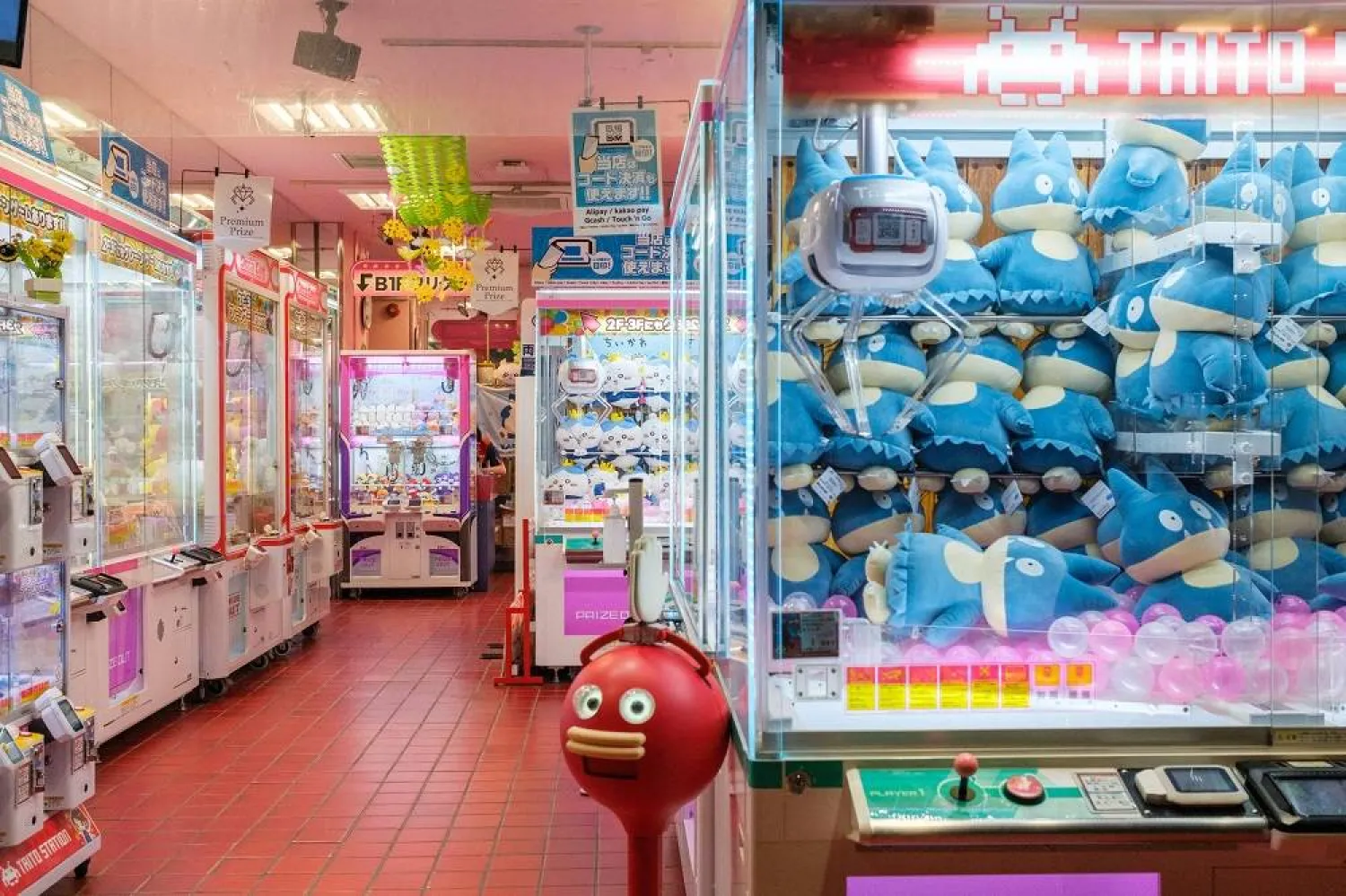
This picture taken on June 6, 2024 shows a claw crane game shop in Akihabara district of Tokyo. (AFP)
TT

Hooked on the Claw: How Crane Games Conquered Japan’s Arcades

This picture taken on June 6, 2024 shows a claw crane game shop in Akihabara district of Tokyo. (AFP)

As school and work wrap up, crowds fill Tokyo's many bustling arcade halls -- not to battle it out in fighting games, but to snag plush toys from claw machines.

In one of these gaming hubs in the Japanese capital's Ikebukuro district, aisles of crane games stretch as far as the eye can see.

The crown jewels of the arcade industry, they occupy the building's first two floors, relegating video games to the basement and upper levels.

"Crane games are keeping the sector afloat," said Morihiro Shigihara, an industry expert and former arcade manager.

"Arcade operators, machine manufacturers, and even prize suppliers depend on this business," he told AFP.

Some 80 percent of the 22,000 arcades Japan had in 1989 have shut down, but revenues have held up thanks to claw machines, according to the Japan Amusement Industry Association.

Their share of revenue has climbed since 1993 from 20 percent to more than 60 percent, the association said.

Suzuna Nogi, a 20-year-old student, visits these arcades at least twice a week in search of "big plushies" on which she can spend up to 3,000 yen ($19) at 100 yen per try.

"What I like best is the sense of accomplishment," she said, even though there is no guarantee of success.

Nogi added that she enjoys "the thrill of not knowing whether you'll manage to grab something or not".

The sensitivity of the claw arms is adjusted by operators "based on the cost of the prizes and revenue targets", Shigihara said.

"You can also make the game easier to compete with a nearby arcade."

- From cigarettes to candy -

This year, the industry is officially celebrating the 60th anniversary of these construction crane-inspired machines in Japan.

But they have actually been around since before World War II, said Benoit Bottos, who wrote his doctoral dissertation on the subject at Japan's Chuo University.

Older models, installed in cafes or bowling alleys, sometimes offered lighters and cigarettes, but those prizes quickly gave way to children's candy.

In the late 1980s, the machines began to gain traction, notably with game company Sega's 1985 invention of the "UFO Catcher", which switched up the older version that forced players to lean in and look down.

"The old ones were a bit dark. So we opted for a brighter, showcase-like style where you can see the prizes right in front of you," said Takashi Sasaya, a Sega executive.

But the real stroke of genius "was putting plush toys in the claw games", said Bottos.

Manufacturing giants like Sega or Bandai, involved in both video games and toys, then began negotiating licenses for anime and manga characters, with Sega notably securing Disney rights.

"That largely explains the success of these machines," said Bottos, who describes them as "somewhere between a vending machine, a game of chance and a game of skill".

- 'Transformation' -

The success of claw games also feeds on Japan's booming fan culture of "oshikatsu", with many people devoting more and more time and money to supporting their favorite idol.

Part of asserting their fan identity involves collecting character merchandise.

"I love Pokemon, so I often come looking for plush toys and merch from the franchise," said professional Pokemon card player Akira Kurasaki, showing off nails decorated with his most beloved characters.

Arcade operators have taken this enthusiasm to heart, tailoring their prize selections to the demographics of their neighborhood and organizing events around certain characters.

"New prizes are introduced almost every day," said Sasaya, the Sega executive.

The hegemony of claw machines has also gone hand in hand with a gradual transformation of urban hangouts.

Arcades -- seen in the 1970s and 1980s as dark, male-dominated places linked to crime -- "tried to attract a new audience" of women and families, Bottos said.

"The crane game is emblematic of that transformation."


7 Drinks That Boost Your Brain Health Naturally

Green tea contains compounds beneficial for the brain (Reuters)
TT

7 Drinks That Boost Your Brain Health Naturally

Green tea contains compounds beneficial for the brain (Reuters)

Caring for brain health is not limited to mental exercises and good sleep; it also extends to the foods and beverages we consume on a daily basis.

Certain natural drinks contain nutrients and antioxidants that play an important role in supporting brain function, enhancing memory and concentration, and protecting against cognitive decline associated with aging.

Below are some of the most notable drinks that may help support brain health in a natural and simple way, according to the scientific website Verywell Health:

Green Tea

Green tea contains compounds with antioxidant and anti-inflammatory properties and has been studied for potential benefits related to metabolic health, aging, and immune support. Green tea has been widely studied for its effects on brain health. Regular consumption appears to be more beneficial than occasional use.

Green tea contains catechins, antioxidants that may reduce oxidative stress in the brain. It also provides L-theanine, an amino acid linked to improved attention and calm focus, especially when combined with small amounts of caffeine.

Coffee

Coffee is a major dietary source of antioxidants, and its effects on brain health have been widely studied.
In the short term, the caffeine in coffee works by inhibiting adenosine, a neurotransmitter that contributes to promoting drowsiness. This effect may temporarily improve alertness, reaction speed, and concentration.

Observational studies suggest that moderate coffee consumption, in the long term, may be associated with a reduced risk of age-related cognitive decline.

Blueberry Smoothies

Blueberries are rich in flavonoids, especially anthocyanins, which are plant compounds linked to brain health. Research indicates that regular consumption of blueberries may support memory, learning, and overall cognitive functions by helping to protect brain cells from oxidative stress and inflammation. Blending blueberries into smoothies or drinks helps retain many of their beneficial compounds while making them easy to consume regularly.

Beet Juice

Beetroot contains a combination of dietary nitrate, betalains, and polyphenols that may support brain health. Research suggests these compounds help improve blood flow, support antioxidant defenses, and influence processes involved in cognitive decline. Dietary nitrate from beetroot increases nitric oxide, which helps improve blood flow to the brain. Research suggests nitrate-rich foods may support brain blood flow and be linked to slower cognitive decline, while other beetroot compounds may help reduce oxidative stress and inflammation. Most studies are small, and more research is needed to confirm long-term benefits.

Turmeric Golden Milk

Turmeric contains curcumin, a plant compound with antioxidant and anti-inflammatory effects. Research suggests that curcumin may help protect brain cells by reducing inflammation and oxidative stress, which are associated with cognitive decline. Curcumin also affects pathways involved in memory and learning. However, it is poorly absorbed on its own, limiting the amount that reaches the brain.

Pomegranate Juice

Pomegranate juice is rich in polyphenols, plant compounds with powerful antioxidant effects. Research indicates that these compounds may help protect brain cells by reducing oxidative stress and inflammation, which are associated with cognitive decline and Alzheimer’s disease. Preliminary studies conducted on animals suggest that pomegranate compounds may also support healthy blood flow to the brain by increasing nitric oxide production. These effects combined may support brain function over time.

Omega-3-Fortified Drinks

Omega-3 fatty acids, especially docosahexaenoic acid (DHA) and eicosapentaenoic acid (EPA), are essential for normal brain function, as they help support communication between brain cells. Drinks fortified with DHA and EPA may help people increase their intake of these important fats.


Qassim Falcons Festival Concludes with Record Attendance

Photo by SPA
Photo by SPA
TT

Qassim Falcons Festival Concludes with Record Attendance

Photo by SPA
Photo by SPA

The Qassim Falcons Festival concluded yesterday in Al-Asyah Governorate, with 675 falconers from various Arab countries and over 20,000 visitors and 15 local families attending, contributing to the festival’s economic and social activities, SPA reported.

This edition of the festival featured numerous competitions and programs that attracted falconry enthusiasts and reinforced its status as one of the region’s premier heritage events.


Ethiopia Must Suspend Biggest Gold Mine over Toxic Chemicals

Mine workers stand underground at Gold Fields' South Deep mine, south-west of Johannesburg, South Africa October 12, 2022. REUTERS/Siphiwe Sibeko/File Photo
TT

Ethiopia Must Suspend Biggest Gold Mine over Toxic Chemicals

Mine workers stand underground at Gold Fields' South Deep mine, south-west of Johannesburg, South Africa October 12, 2022. REUTERS/Siphiwe Sibeko/File Photo

Work at Ethiopia's largest gold mine must be suspended to protect nearby children from the toxic chemicals it has released into the soil, Human Rights Watch (HRW) said Thursday.

Operations at the Lega Dembi mine, around 500 kilometres (310 miles) south of the capital Addis Ababa, were halted by authorities in 2018 following protests from locals over pollution.

The government promised to reopen the mine only after environmental concerns had been addressed, but did so in 2021 "without public announcement" and "quashed publication of a government health study", said HRW in a statement.

The rights group said several studies had revealed high concentrations of toxic chemicals including cadmium, mercury, lead and arsenic.

Residents had "for years complained about serious health impacts, including children born with long-term health conditions, miscarriages, and stillbirths".

The campaign group urged the UN Committee on the Rights of the Child, due to meet soon, to press Ethiopia to suspend mining operations and "ensure victims of abuse are provided effective remedy, including compensation, medical care, and access to justice".

The Ethiopian government did not respond to a request for comment from AFP.

Ethiopia, the continent's second most populous country with some 130 million inhabitants, is regularly criticised by NGOs for human rights abuses.

But mining is crucial to a country in which more than 40 percent live below the poverty line, with gold exports generating $2.1 billion in the first nine months of 2024, according to the latest figures from the mining ministry.
