


World Happiness Report Highlights Social Media's Negative Impact

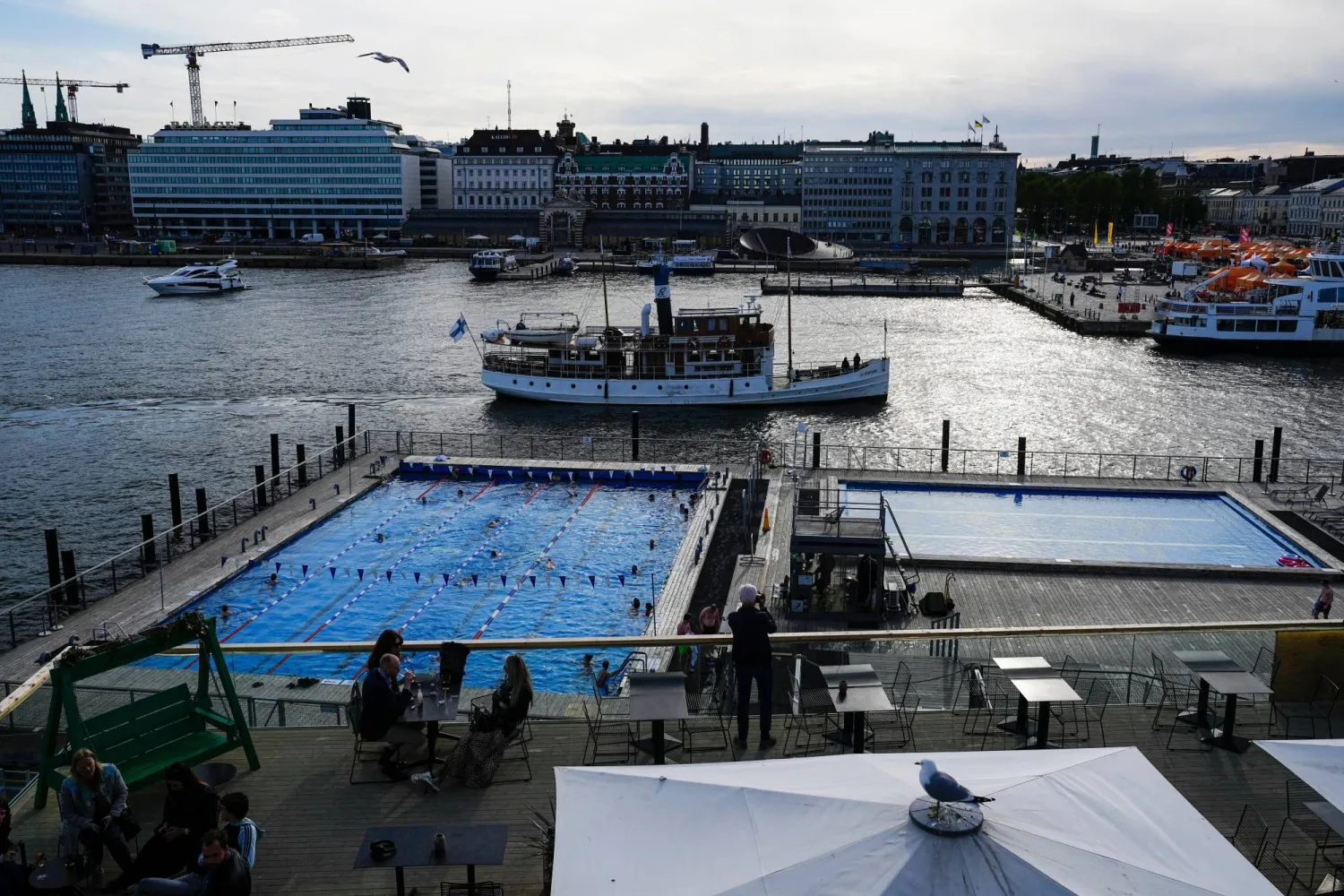
FILE - Outdoor swimming pools are seen in a harbor of Helsinki, May 29, 2023. (AP Photo/Pavel Golovkin, File)
TT

World Happiness Report Highlights Social Media's Negative Impact

FILE - Outdoor swimming pools are seen in a harbor of Helsinki, May 29, 2023. (AP Photo/Pavel Golovkin, File)

Heavy social media use contributes to a stark decline in well-being among young people, with the effects particularly worrying in teenage girls in English-speaking countries and Western Europe, according to the World Happiness Report 2026 published Thursday.

The annual report, published by the Wellbeing Research Centre at the University of Oxford, also found that Finland is the happiest land in the world for the ninth year in a row, with other Nordic countries such as Iceland, Denmark, Sweden and Norway ranking among the top 10 countries.

It highlighted how life evaluations among under 25-year-olds in the United States, Canada, Australia and New Zealand have dropped significantly over the past decade, and suggested that long hours spent scrolling through social media is a key factor in that trend.

A new entry to the top five on the list is Costa Rica, which climbed to fourth place this year after rising through the ranks from 23rd place in 2023.

The report attributes that to well-being boosts from family bonds and other social connections.

“We think it’s because of the quality of their social lives and the stability that they currently enjoy,” said Jan-Emmanuel De Neve, an Oxford economics professor who directs the Wellbeing Research Centre and co-edits the World Happiness Report.

“Latin America more generally has strong family ties, strong social ties, a great level of social capital, as a sociologist would call it, more so than in other places,” he added.

The report said Finland and the other Northern European countries’ steady ranking on top is related to a combination of wealth, its equal distribution, having a welfare state that protects people from the risks of recessions, and a healthy life expectancy.

As in previous years, nations in or near zones of major conflict remain at the foot of the rankings. Afghanistan is ranked as the unhappiest country again, followed by Sierra Leone and Malawi in Africa.

Country rankings were based on answers given by around 100,000 people in 140 countries and territories who were asked to rate their own lives. The study was done in partnership with the analytics firm Gallup and the UN Sustainable Development Solutions Network.

In most countries, approximately 1,000 people are contacted by telephone or face-to-face each year.

Respondents were asked to evaluate their lives on a scale from 0 to 10. Among under-25s in English-speaking and Western European countries, that score dropped by almost one point over the past decade.

The report said the negative correlation between well-being and extensive social media use is particularly concerning among teenage girls. For example, it said that 15-year-old girls who use social media for five hours or more reported a drop in life satisfaction, compared to others who use it less.

Young people who use social media for less than one hour per day report the highest levels of well-being, researchers said, higher than those who do not use social media at all. But adolescents are spending an estimated average of 2.5 hours a day on social media.

“It is clear that we should look as much as possible to put the ‘social’ back into social media,” The Associated Press quoted De Neve as saying.

Algorithmic feeds and influencers seen as culprits Researchers noted that in some parts of the world, such as the Middle East and South America, the links between social media use and well-being are more positive — and youth well-being has not fallen despite heavy social media use.

The report said this is due to many factors that differ between continents, but concluded that heavy social media use in some countries is an important contributing factor to the decline in youth well-being.

It said the most problematic platforms are those with algorithmic feeds, feature influencers and where the main material is visual, because they encourage social comparisons. Those who use platforms that mainly facilitate communication do better.

The 2026 rankings mark the second year in a row that none of the English-speaking countries appear in the top 10. The United States is at 23rd place, Canada is at 25th and Britain at 29th.

The report, with its focus on social media, comes at a time when more and more countries have banned or are considering bans of social media for minors.



Venice’s Growing Flamingo Population Finds Refuge in Recovering Wetlands

FILE PHOTO: A general view of the Grand Canal, in Venice, Italy, June 23, 2025. REUTERS/Yara Nardi/File Photo
TT

Venice’s Growing Flamingo Population Finds Refuge in Recovering Wetlands

FILE PHOTO: A general view of the Grand Canal, in Venice, Italy, June 23, 2025. REUTERS/Yara Nardi/File Photo

Perhaps nothing better illustrates the flamingo’s status as a newcomer to the Venetian Lagoon than the fact that the local dialect has no word for them.

But the pale pink birds — called “fenicotteri” in Italian — are now flocking to Venice in record numbers, as ecological efforts to restore damaged wetlands could help expand their habitat and possibly induce them to nest in the lagoon, The Associated Press reported.

Flamingos — which most famously nest in Spain and France — started showing up in the vast Venetian Lagoon in the early 2000s, mostly in fishing valleys and mudflats in the lagoon’s furthest reaches, with only rare sightings in the canaled historic center of Venice that is most frequented by global tourists.

Venice Lagoon becomes an unlikely flamingo haven Environmentalists say their arrival in Venice as the European flamingo’s range expands is a sign of the lagoon’s health and suitability as a feeding ground.

Last year, the number of wintering flamingos in Venice peaked at a record of nearly 24,000. That is 8,000 more than the previous year, numbers “that position the Venetian Lagoon as one of the most important wintering spots in its entire habitat range,” said ornithologist Alessandro Sartori.

Sartori surveys the lagoon weekly by boat for signs of nesting, which would indicate a self-sustaining Venetian colony. So far there are no fresh signs after two nesting attempts, in 2008 and 2013, in northern lagoon fishing valleys suffered serious setbacks, including violent hail that killed dozens of birds.

More than 90% of the birds counted in last year’s census were in the northern lagoon, which contains a large area of natural salt marsh. The flamingos are also attracted by the traditional fishing valleys, semi-natural embanked wetlands that provide abundant food but can also bring them into conflict with human activity.

Venice seeks to recover its lost marsh A project to reconstruct salt marshes in the more isolated southern lagoon — past the historic center and the industrial port — raises prospects that flamingo numbers will increase there as well by offering a new habitat in an area of the lagoon where wetland erosion has been especially severe. It could also draw the birds away from competing human uses in the north.

The Venetian Lagoon, covering an expanse of 550 square kilometers (more than 200 square miles), was originally nearly half salt marsh. Today the area of salt marsh — or “barene” in the Venetian dialect — is just about 7%, about half of it reconstructed, said Jane da Mosto, the executive director of We Are Here Venice, the local partner in the EU’s 23.6 million euro ($27.5 million), 5-year WaterLANDS project to restore wetlands across Europe.

The damage is especially stark in the central and southern lagoon, due to the combination of natural erosion and the dredging of shipping channels to access the Marghera industrial port in the 1960s.

“And since then, there’s been much more widespread erosion and loss of sediments from the lagoon to the point that Venice is now on a trajectory to becoming a marine bay,” said da Mosto. The wetlands reconstruction project “is specifically to show that it’s possible to address this trend and change the course of history.”

Rebuilding the salt marshes increases the lagoon’s ability to capture carbon dioxide, a greenhouse gas and driver of climate change, and mitigates the effects of rising sea levels. But da Mosto said much larger areas would need to be restored to produce meaningful climate benefits. The goal of the EU project is to make salt marsh reconstruction scalable.

Flamingos can also benefit as biodiversity increases.

Da Mosto’s team is researching ways to increase biodiversity on the reconstructed marshes, including planting species that can help reduce erosion and make the wetlands more resilient.

The mudflat where they are working contains signs of flamingo activity, chiefly stray pink feathers. On a recent day, a flock of some 30 were perched in the distance — scattering when a pair of squawking oystercatchers alerted them to visitors.

Already, Sartori believes that the reconstruction has begun to draw more flamingos to the area. Over the last three years, he has seen their numbers in the southern lagoon grow from just a handful to as many as 300 to 400 in certain periods.

“The hope is that they can find — as they have found in other parts of the Mediterranean — right here on these barene, places where they can nest,” Sartori said.

Venice’s pink newcomers could draw a different kind of visitor The flamingos' presence in the lagoon underlines the importance of the Venetian ecosystem and offers a new way for visitors to interpret the canaled city and outer islands through their ecological — and not just historical and artistic — significance.

Still, visitors to Venice who hope to casually spy flamingos will probably be disappointed, and AP reporters recently had to travel by boat for an hour to spot any. The flamingos inhabit shallow, difficult-to-access reaches of the lagoon where navigating safely requires close attention to tides and channels.

Even at a distance, the birds are easily disturbed and quick to take flight.

Sartori predicts flamingo spotting — already a possibility from the shores of the small lagoon islands of Murano and Burano but rare in the historic center — could become more common as their numbers continue to grow.

“Obviously this should always be done with respect for the animals, keeping a safe distance and not interfering with their daily lives,” he said.


Meteor Explodes over US with Blast Equivalent to 300 Tons of TNT

This image taken from video shows a suspected meteor falling through the sky in the greater Pittsburgh, Pa., area on Tuesday, March 17, 2026. (Jared Rackley via AP)
TT

Meteor Explodes over US with Blast Equivalent to 300 Tons of TNT

This image taken from video shows a suspected meteor falling through the sky in the greater Pittsburgh, Pa., area on Tuesday, March 17, 2026. (Jared Rackley via AP)

A meteor crashing toward Earth exploded over the northeastern United States on Saturday, NASA said, setting off booms that echoed over the region with a blast equivalent to 300 tons of TNT.

The fireball broke up over northeastern Massachusetts and southeastern New Hampshire at 2:06 pm (1806 GMT), the US space agency's deputy news chief Jennifer Dooren told AFP in a statement.

"This fireball was not associated with any currently active meteor shower, but it was a natural object and not a re-entry of space debris or a satellite," she said.

"The energy released at breakup is estimated to be equivalent to about 300 tons of TNT, which accounts for the loud booms."

The meteor was traveling at 75,000 mph (more than 120,000 kph) at an altitude of 40 miles when it broke apart, Dooren said.

Area residents were alarmed by the unexpected loud booms, with social media users reporting they were so powerful that houses were shaking.

In 2013 a fireball streaked above Chelyabinsk, Russia. The house-sized space rock blew apart 14 miles above the ground, releasing a blast equivalent to 440,000 tons of TNT, NASA said.

The explosion blew out windows over 200 square miles (518 square kilometers), injuring more than 1,600 people, mostly due to broken glass.


Australian Researchers Teach Brain Cells to Play 'Doom'

In this photo taken on May 5, 2026, senior scientific specialist Kwaku Dad Abu Bonsrah pipettes nutrients onto neurons on Micro Electrode Array (MEA) chips at Cortical Labs' Physical Containment Level 2 (PC2) laboratory in Melbourne. (Photo by William WEST / AFP)
TT

Australian Researchers Teach Brain Cells to Play 'Doom'

In this photo taken on May 5, 2026, senior scientific specialist Kwaku Dad Abu Bonsrah pipettes nutrients onto neurons on Micro Electrode Array (MEA) chips at Cortical Labs' Physical Containment Level 2 (PC2) laboratory in Melbourne. (Photo by William WEST / AFP)

Australian researchers have trained lab-grown brain cells on a silicon computer chip to play the nineties shooter game "Doom" and say they are just scratching the surface of what the neurons could be capable of doing.

It's the science-fiction work of biotech boffins at Cortical Labs, who researched and developed the technology that harnesses the workings of the brain's networking system.

Each so-called "biological computer" contains around 200,000 living human brain cells, grown from stem cells that were harvested from blood donations.

Having mastered the simple computer game "Pong", where a paddle is moved up and down to send a ball across a screen, the brain cells have moved on to bigger things.

Initially, the neurons were at the "level of a beginner who's never played a video game before," Alon Loeffler, Cortical Labs' senior application scientist, told AFP.

"Doom" involves a chaotic 3D game-world where the user is required to explore its surroundings and dispatch enemies -- no easy task for a clump of cells.

"They were walking into walls a lot, shooting the walls, turning around, doing funny things like that," Loeffler said.

"And then eventually they started targeting the enemies more regularly and correctly."

It's not the cleanest execution, however. One demon takes several attempts to slaughter, with shots fired in multiple directions before the target is hit.

But the mind-bending research proves the neurons can adapt to stimuli in real time and complete goal-directed learning, Cortical Labs say.

The researchers converted the digital environment in "Doom" into patterns of electrical signals the neurons on the chip could understand.

When an enemy appears, specific electrodes stimulate the neurons on the special chip called a CL1, causing them to react.

Different patterns of neuron activity produce specific responses, such as firing the gun or moving left or right.

Researchers monitor the electrical activity of the neurons from a computer screen connected to the CL1, represented by thousands of tiny dots.

From this data, the team adjusts their input to influence and train the neuron's activity.
The CL1 isn't limited to computer games -- the chip can be coded to perform a range of applications, from drug screening to AI-like machine learning.

"We are just scratching the surface of what these neural cultures can achieve when integrated in systems like our CL1," said chief scientific and operations officer Brett Kagan.

"Our neural cultures have been explored for a variety of tasks," he said -- everything from "robotics, real-time learning tasks that are similar to AI, as well as healthcare, medicine, disease modelling, drug screening and even personalised medicine".

Kagan describes the CL1 chip as "a more sustainable and more powerful form of intelligence".

The human brain runs on an estimated 20 watts of power, a level of efficiency that silicon computing and artificial intelligence have not yet been able to replicate.

While it's "not aimed to replace what AI is doing" it's intended to "give us abilities that we've never had before", Kagan said.

The cells have a six-month lifespan and aren't yet capable of producing consistent, programmable results.

But analysts say the project's value could lie in its more sustainable power consumption compared to regular chips.

"We need better ways to manage that power envelope and get higher levels of efficiency," William Keating, CEO of semiconductor research company Ingenuity, said.

"This isn't wacky science or some bunch of scammers. This is real science and it's making real progress."