


NATO Chief Convenes Talks in a Bid to Persuade Türkiye to Let Sweden Join the Military Alliance

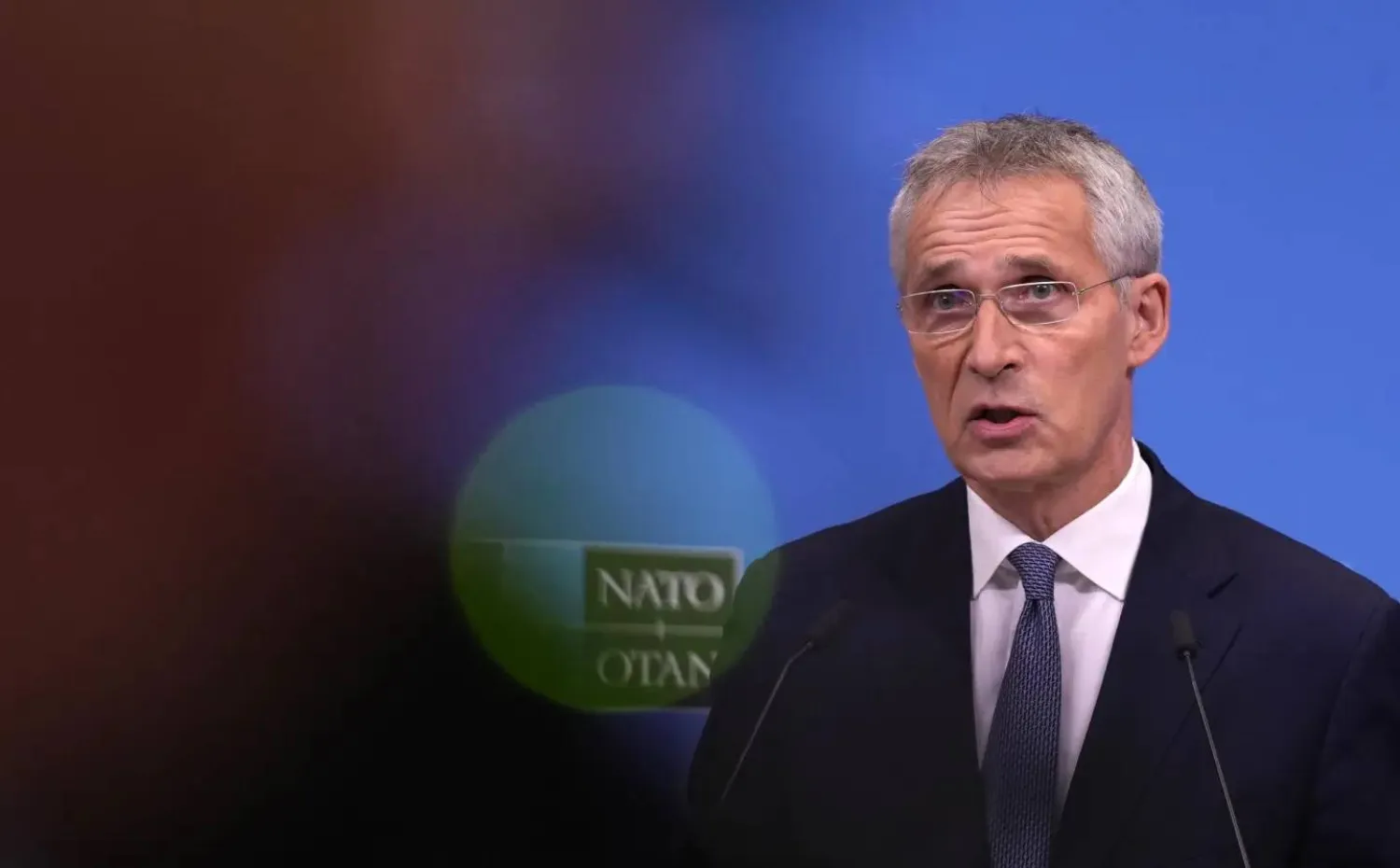
NATO Secretary General Jens Stoltenberg speaks during a media conference at NATO headquarters in Brussels, Wednesday, Oct. 20, 2021. (AP Photo/Virginia Mayo, File)
TT

NATO Chief Convenes Talks in a Bid to Persuade Türkiye to Let Sweden Join the Military Alliance

NATO Secretary General Jens Stoltenberg speaks during a media conference at NATO headquarters in Brussels, Wednesday, Oct. 20, 2021. (AP Photo/Virginia Mayo, File)

NATO Secretary-General Jens Stoltenberg said Wednesday he has called a meeting of senior officials from Türkiye, Sweden and Finland for July 6 to try to overcome Turkish objections to Sweden joining the military alliance.

The meeting is a last-ditch effort by Stoltenberg to deal with one of the final obstacles to Sweden's membership before a major summit the following week. Sweden's membership would be a highly symbolic moment and another indication of how Russia’s war in Ukraine is driving countries to join the Western alliance, The Associated Press said.

However, Hungary also has not yet ratified Sweden’s bid, and Hungarian lawmakers said a long-delayed parliamentary vote on ratifying Sweden’s NATO membership would not would not happen until the autumn legislative session. NATO requires the unanimous approval of all members to expand, so that almost certainly means the country will not get the green light in time for the July 11-12 summit in the Lithuanian capital, Vilnius.

“The time is now to welcome Sweden as a full member of NATO,” Stoltenberg told reporters. Foreign ministers, intelligence chiefs and security advisers from Türkiye, Sweden and Finland will be taking part in the talks in Brussels.

Sweden applied to join NATO last year after Russia invaded Ukraine amid widespread concern in Europe that President Vladimir Putin might broaden the war. It applied alongside Finland and they had hoped to join together, but Turkish objections to Sweden's membership meant that Finland eventually joined on its own in April.

Stockholm has changed its anti-terror laws and lifted an arms embargo on Türkiye to satisfy Ankara's demands. But Turkish President Recep Tayyip Erdogan said in a statement posted on his social media account that he spoke with German Chancellor Olaf Scholz earlier Wednesday by phone and again raised his concerns over Sweden’s NATO membership.

“President Erdogan stated that while taking steps in the right direction, especially the change in Sweden’s anti-terror legislation, supporters of the PKK/PYD/YPG in Sweden continue to freely organize demonstrations praising terrorism, recruiting people and providing financial resources to terrorist organizations, and that this situation is unacceptable for Türkiye.”

The Kurdistan Workers’ Party, or PKK, has waged a 38-year insurgency against Türkiye that has left tens of thousands dead. It is designated a terrorist organization by the U.S and the European Union.

Türkiye’s government accuses Sweden of being too lenient toward groups that Ankara says pose a security threat, including Kurdish groups and people associated with a 2016 coup attempt.

Sweden has a Kurdish diaspora of around 100,000 people.

Demonstrations by pro-Kurdish and anti-NATO groups in Sweden have frustrated Stockholm's efforts to show it is taking Türkiye’s security concerns seriously. Other protests by individual anti-Islam activists have complicated things further.

On Wednesday a man who identified himself in Swedish media as a refugee from Iraq burned a Quran outside a mosque in central Stockholm. Police authorized the protest, citing freedom of speech, after a previous decision to ban a similar protest was overturned by a Swedish court.

Turkish officials condemned the Quran-burning on the first day of the Eid al-Adha holiday.

"Defending hate crimes under the guise of freedom of expression is a violation of the rights of those who are the victims of these crimes and a real blow to freedom of expression," Vice President Cevdet Yilmaz said in a social media post.

Turkish Foreign Minister Hakan Fidan said it was "unacceptable to allow these anti-Islamic actions under the pretext of freedom of expression. To turn a blind eye to such atrocious acts is to be complicit.”

Hungary has never clearly stated publicly what its concerns are about Sweden's possible membership.

In a Facebook post, Agnes Vadai, a lawmaker with Hungary’s opposition Democratic Coalition party, wrote that Prime Minister Viktor Orban and his governing Fidesz party would not schedule a vote on Sweden’s accession during its final spring session next week.

The postponement is the latest in a long succession of delays that have gone on for a year, with high-ranking Hungarian officials saying they support Sweden’s membership while also making vague demands from Stockholm as a condition for approval.

NATO officials expect that Hungary will approve Sweden's membership once Türkiye lifts its objections.

French President Emmanuel Macron called on Türkiye and Hungary to quickly approve the accession.

“It’s now time ... to allow Sweden to attend the Vilnius summit as an ally,” Macron said in a joint declaration with Stoltenberg ahead of a working meeting Wednesday in Paris. “Now, more than ever, is the time to make decisions that will ensure the unity and stability of the continent.”



Afghan Returnees, Residents Fear Violence at Key Pakistan Crossing

Afghan Taliban soldiers aim rifles at the Pakistani side of the Torkham border crossing with Afghanistan, February 27, 2026. © Wahidullah Kakar, AP
TT

Afghan Returnees, Residents Fear Violence at Key Pakistan Crossing

Afghan Taliban soldiers aim rifles at the Pakistani side of the Torkham border crossing with Afghanistan, February 27, 2026. © Wahidullah Kakar, AP

Afghans who recently returned from Pakistan and residents near a key crossing expressed their fears of deadly border clashes on Friday, as smoke billowed from the mountains.

AFP journalists heard shellfire and gunfire in Torkham, with Afghan soldiers heading towards the frontier after overnight bombardment by Pakistan, in a major escalation following months of tit-for-tat clashes.

Fighting overnight hit a camp for Afghans who had just crossed from Pakistan, killing one and wounding several others, according to a provincial health official.

Gander Khan, a 65-year-old returnee, described how "children, women and old people were running".

"I saw blood. It wounded two or three children and two or three women," he told AFP, standing in front of rows of tents.

The Torkham crossing has remained open for Afghans returning en masse from Pakistan, despite the land border being otherwise largely shut since fighting between the neighbours in October.

The Omari camp accommodates returnees near the crossing and was hit by a mortar shell overnight, Nangarhar provincial official Qureshi Badlun said.

Zarghon, a 44-year-old returnee who only gave one name, said two or three children went missing in the panic.

"Some have left their papers, and just escaped. They didn't even take their money, they didn't take their aid which they received. Because of fear, everyone left," he told AFP.

In the provincial capital Jalalabad, an AFP photographer saw several women who were wounded in Omari camp receiving treatment.

Naqibullah Rahimi, Nangarhar's public health spokesman, said nine women and five men had been hospitalized.

"A woman, among others wounded, passed away after she was brought to the hospital," he told AFP.

Back near the border, returnees sat in the open air after fleeing the violence.

A ground offensive was launched by Afghan forces late Thursday, in what the Taliban authorities said was retaliation for deadly Pakistani airstrikes days earlier.

The outbreak of cross-border fighting was followed by Pakistan launching airstrikes on the Afghan capital, Kabul, and the key city of Kandahar, which were heard by AFP journalists.

On a Torkham roadside, resident Waqas Shinwari indicated shells being fired in the distance.

"There should be peace and reconciliation on both sides, because people are in great suffering," he told AFP.

The United Nations refugee agency, UNHCR, said it had "temporarily paused operations" at Omari camp as it assesses the situation.

"Reports of a mortar impact last night... underscore the urgent need for safety, restraint, and international protection for vulnerable populations," the agency said in a statement.

Although returnees have been able to cross the frontier in recent months, the broader closure has hit Torkham residents hard.

Muhammad Kareem said he and every neighbour "earns a living because of this border".

"If there is peace on this border, we can have a life. But if there is no peace on the border, then we will leave," he told AFP.


China Urges Citizens to Evacuate from Iran 'as Soon as Possible'

Chinese flag over the People's Bank of China headquarters in Beijing (Reuters)
TT

China Urges Citizens to Evacuate from Iran 'as Soon as Possible'

Chinese flag over the People's Bank of China headquarters in Beijing (Reuters)

China told its citizens on Friday to evacuate from Iran "as soon as possible", and those in Israel to strengthen preparedness, citing a significant rise in security risks in the Middle East.

"Chinese nationals currently in Iran are advised to strengthen safety precautions and evacuate as soon as possible," the foreign ministry said in a social media statement, Reuters reported.

The United States on the same day authorized the departure of non-emergency embassy staff from Israel, as it threatened strikes on Iran and pressed its biggest military build-up in the Middle East in decades.

The US military is building up its forces in the region, with the world's largest aircraft carrier, the USS Gerald R. Ford, due to arrive off the coast of key US-ally Israel.

This came a day after Oman-mediated talks between Iran and the US -- which have been seen as a last-ditch bid to avert war -- though initial optimism was tempered by Tehran warning Washington must drop "excessive demands" to reach a deal.

Beijing's foreign ministry told its citizens on Friday to avoid travelling to Iran for the time being "in light of the current security situation".

The foreign ministry added that its Chinese embassies and consulates in Iran and neighboring countries will provide "necessary assistance" to Chinese citizens seeking to relocate via commercial flights or overland routes.

China's embassy in Israel, meanwhile, warned its citizens to remain highly vigilant, strengthen emergency preparedness, and avoid going out unless necessary, state broadcaster CCTV said.

They should "familiarize themselves in advance with nearby bomb shelters and evacuation routes to ensure personal and property safety", CCTV added.


New Gallup Poll Shows How Americans’ Sympathies Have Shifted in Palestinian-Israeli Conflict 

Palestinian men carry the body of a person killed in an Israeli military strike, as they maneuver past the debris of building destroyed by the Israeli military, during their funeral in Khan Younis, in the southern Gaza Strip on February 27, 2026. (AFP)
TT

New Gallup Poll Shows How Americans’ Sympathies Have Shifted in Palestinian-Israeli Conflict 

Palestinian men carry the body of a person killed in an Israeli military strike, as they maneuver past the debris of building destroyed by the Israeli military, during their funeral in Khan Younis, in the southern Gaza Strip on February 27, 2026. (AFP)

American sympathies in the Middle East have shifted dramatically toward the Palestinians, according to new Gallup polling, after decades of overwhelming support for the Israelis.

That shift accelerated during the war in Gaza. Three years ago, 54% of Americans sympathized more with the Israelis, compared to 31% for the Palestinians.

Now, their support is about evenly balanced, with 41% saying their sympathies lie more with the Palestinians, and only 36% saying the same about the Israelis.

The numbers reflect how support for Israel has become deeply contentious in the US, with profound implications for American politics and foreign policy. The changing sentiment has been largely driven by Democrats, who are now much more likely to sympathize with Palestinians. US assistance to Israel has been a major dividing line in the party’s primaries this year.

Gallup’s data indicates that the shift was already happening before Hamas attacked Israel on Oct. 7, 2023, then increased during Israel’s subsequent military operations in Gaza. The polling has a margin of error of plus or minus 4 percentage points, meaning sentiment toward Israelis and Palestinians are roughly even.

“It’s the first time they have reached parity, which is really quite striking,” said Benedict Vigers, a senior global news writer at Gallup. “In not many years, that very significant gap in public opinion has now completely closed.”

Democrats and independents

About two-thirds of Democrats now say their concerns lie more with the Palestinians, while only about 2 in 10 sympathize more with the Israelis. As recently as 2016, the picture looked very different: About half of Democrats sympathized more with the Israelis and only about one-quarter sympathized with the Palestinians.

The shift began even before the Israel-Hamas war turned the issue into a flash point within the Democratic Party. Palestinian fighters killed around 1,200 people, mostly civilians, in the initial attack and took another 251 hostage, but the Israeli response has been widely seen as disproportionate, with Gaza health officials reporting more than 72,000 Palestinians killed, nearly half of them women and children, and wide swaths of the territory reduced to rubble.

Many progressive politicians and activists now describe Israel’s actions in the war as genocide — a charge Israel vehemently denies.

Democrats have expressed greater sympathy for the Palestinians than the Israelis since 2023 — in a Gallup poll that was conducted before the Oct. 7 attacks — but Gallup’s surveys show their support in the conflict has been tilting toward the Palestinians and away from the Israelis since around 2017.

Some of that early decline in sympathy appeared to be tied to disapproval of the right-leaning Israeli leader, Prime Minister Benjamin Netanyahu, whose favorability in the US fell nearly 15 percentage points between 2017 and 2024, according to separate Gallup polling.

Netanyahu clashed with former President Barack Obama in the last year of his administration, then forged a warmer relationship with President Donald Trump, who delivered several victories to Netanyahu in his first term, including recognizing Jerusalem as the capital of Israel and Israel’s sovereignty over the Golan Heights. Trump also persuaded three Arab countries to establish commercial and diplomatic ties with Israel. The closeness between Trump and Netanyahu has continued into Trump’s second term.

The conflict between the Israelis and Palestinians was a point of tension for Democrats during President Joe Biden’s administration, as well as during the 2024 presidential election.

An AP-NORC poll conducted toward the end of 2023, just a few months into the war in Gaza, found that Democrats were sharply divided on whether the US was too supportive of Israel, and another AP-NORC poll from 2024 found that Democratic voters were more likely to say the Israeli government held “a lot” of responsibility for the war’s escalation.

Democrats’ sympathy for the Palestinians intensified as the war progressed, Gallup’s polling shows, and independents’ views also shifted. This year, independents expressed more sympathy for the Palestinians than the Israelis for the first time in Gallup’s trend. About 4 in 10 independents are more sympathetic toward the Palestinians. That’s compared to about 3 in 10 for the Israelis, a new low.

Most Republicans continue to side with Israel — about 7 in 10 say they are more sympathetic to the Israelis — but that is a slight downtick from about 8 in 10 before the start of the war. Some figures in the Republicans’ isolationist “America First” wing are also increasingly questioning traditional US support for Israel.

Generational gaps

Younger adults — those 18 to 34 in this poll — are also increasingly sympathetic toward the Palestinians, according to the Gallup survey.

Younger Americans’ sympathies have been shifting toward the Palestinians since around 2020, and reached a new high this year. About half of 18- to 34-year-olds say they have more sympathy for the Palestinians, compared to about a quarter who say that about the Israelis.

Student protests against the Israel-Hamas war appeared on college campuses around the country during the war, asking colleges to cut investments supporting Israel.

But the shift is only “partly a generational story,” according to Vigers.

The new poll also found for the first time that middle-aged Americans, those 35 to 54, expressed more sympathy for the Palestinians than the Israelis — a reversal from last year. And while Americans over 55 are more sympathetic toward Israel, that gap is narrowing, too.

“With adults over 55, they are more sympathetic to Israelis, but it’s as low as it’s been since 2005,” Vigers said.

Palestinian state

About 6 in 10 US adults, 57%, favor the establishment of an independent Palestinian state in the West Bank and the Gaza Strip, according to the new polling. That’s not significantly different from recent years, as at least half of US adults have supported an independent Palestinian state since 2020.

Vigers notes that “party polarization is at or near its record high” on this question, even though it hasn’t been sharply increasing year over year.

In the last few years, there’s been an uptick among Democrats and independents in support for the two-state solution. Now, about three-quarters of Democrats and roughly 6 in 10 independents say they support an independent Palestinian state. Only about one-third of Republicans say the same.

The opinions of the people who would be directly affected by a two-state solution are quite different. Only about 3 in 10 Israelis living in Israel and Palestinians living in the West Bank and east Jerusalem said they supported a two-state solution in which an independent Palestinian state existed alongside Israel, according to the Gallup World Poll conducted in 2025.

“On the ground, in the region, far fewer Israelis and Palestinians tell us that they are in favor of the two-state solution than Americans when asked a very similar question,” Vigers said. “There is that interesting sort of disconnect between the region itself and Americans’ views toward it.”