


NATO Chief Convenes Talks in a Bid to Persuade Türkiye to Let Sweden Join the Military Alliance

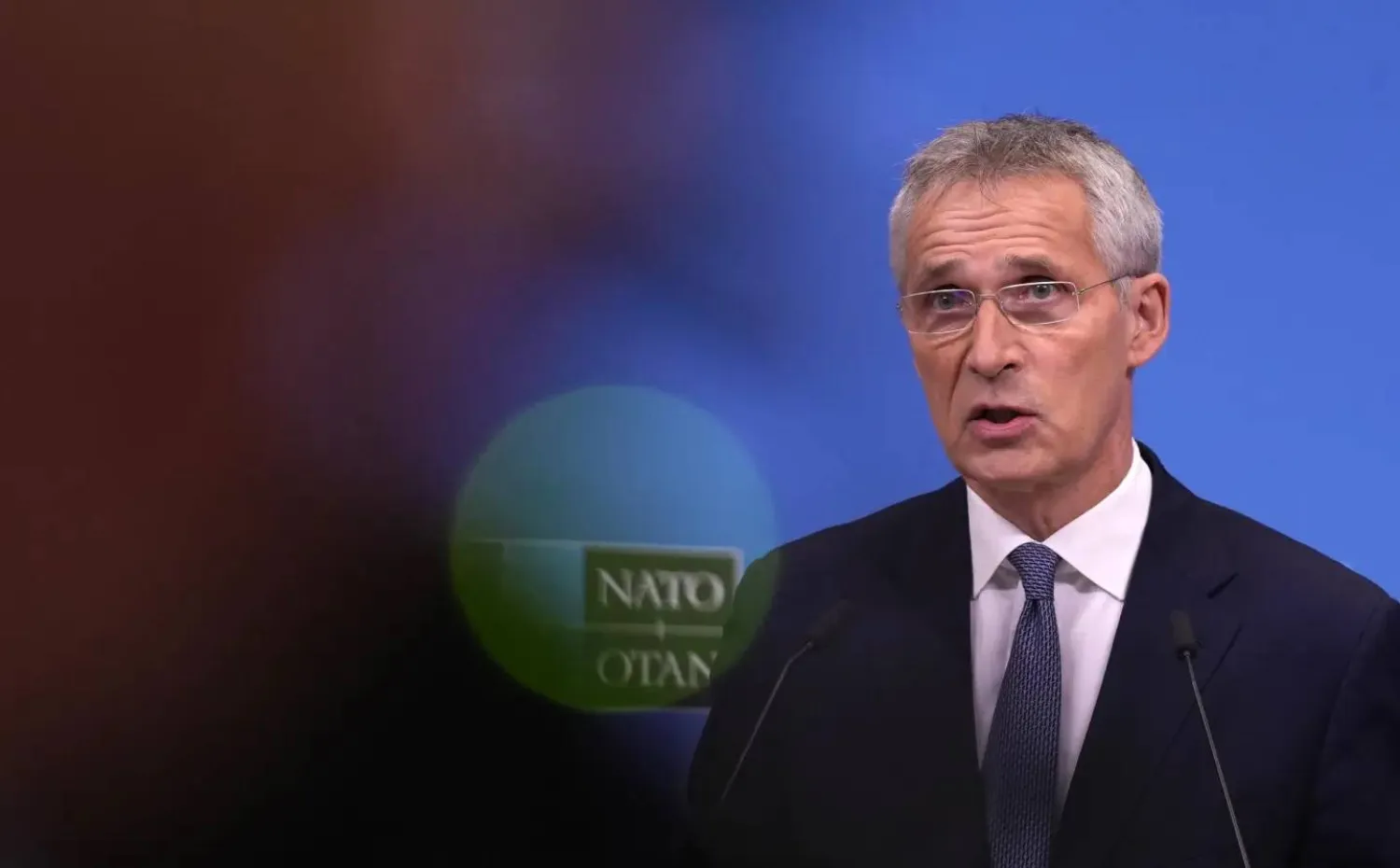
NATO Secretary General Jens Stoltenberg speaks during a media conference at NATO headquarters in Brussels, Wednesday, Oct. 20, 2021. (AP Photo/Virginia Mayo, File)
TT

NATO Chief Convenes Talks in a Bid to Persuade Türkiye to Let Sweden Join the Military Alliance

NATO Secretary General Jens Stoltenberg speaks during a media conference at NATO headquarters in Brussels, Wednesday, Oct. 20, 2021. (AP Photo/Virginia Mayo, File)

NATO Secretary-General Jens Stoltenberg said Wednesday he has called a meeting of senior officials from Türkiye, Sweden and Finland for July 6 to try to overcome Turkish objections to Sweden joining the military alliance.

The meeting is a last-ditch effort by Stoltenberg to deal with one of the final obstacles to Sweden's membership before a major summit the following week. Sweden's membership would be a highly symbolic moment and another indication of how Russia’s war in Ukraine is driving countries to join the Western alliance, The Associated Press said.

However, Hungary also has not yet ratified Sweden’s bid, and Hungarian lawmakers said a long-delayed parliamentary vote on ratifying Sweden’s NATO membership would not would not happen until the autumn legislative session. NATO requires the unanimous approval of all members to expand, so that almost certainly means the country will not get the green light in time for the July 11-12 summit in the Lithuanian capital, Vilnius.

“The time is now to welcome Sweden as a full member of NATO,” Stoltenberg told reporters. Foreign ministers, intelligence chiefs and security advisers from Türkiye, Sweden and Finland will be taking part in the talks in Brussels.

Sweden applied to join NATO last year after Russia invaded Ukraine amid widespread concern in Europe that President Vladimir Putin might broaden the war. It applied alongside Finland and they had hoped to join together, but Turkish objections to Sweden's membership meant that Finland eventually joined on its own in April.

Stockholm has changed its anti-terror laws and lifted an arms embargo on Türkiye to satisfy Ankara's demands. But Turkish President Recep Tayyip Erdogan said in a statement posted on his social media account that he spoke with German Chancellor Olaf Scholz earlier Wednesday by phone and again raised his concerns over Sweden’s NATO membership.

“President Erdogan stated that while taking steps in the right direction, especially the change in Sweden’s anti-terror legislation, supporters of the PKK/PYD/YPG in Sweden continue to freely organize demonstrations praising terrorism, recruiting people and providing financial resources to terrorist organizations, and that this situation is unacceptable for Türkiye.”

The Kurdistan Workers’ Party, or PKK, has waged a 38-year insurgency against Türkiye that has left tens of thousands dead. It is designated a terrorist organization by the U.S and the European Union.

Türkiye’s government accuses Sweden of being too lenient toward groups that Ankara says pose a security threat, including Kurdish groups and people associated with a 2016 coup attempt.

Sweden has a Kurdish diaspora of around 100,000 people.

Demonstrations by pro-Kurdish and anti-NATO groups in Sweden have frustrated Stockholm's efforts to show it is taking Türkiye’s security concerns seriously. Other protests by individual anti-Islam activists have complicated things further.

On Wednesday a man who identified himself in Swedish media as a refugee from Iraq burned a Quran outside a mosque in central Stockholm. Police authorized the protest, citing freedom of speech, after a previous decision to ban a similar protest was overturned by a Swedish court.

Turkish officials condemned the Quran-burning on the first day of the Eid al-Adha holiday.

"Defending hate crimes under the guise of freedom of expression is a violation of the rights of those who are the victims of these crimes and a real blow to freedom of expression," Vice President Cevdet Yilmaz said in a social media post.

Turkish Foreign Minister Hakan Fidan said it was "unacceptable to allow these anti-Islamic actions under the pretext of freedom of expression. To turn a blind eye to such atrocious acts is to be complicit.”

Hungary has never clearly stated publicly what its concerns are about Sweden's possible membership.

In a Facebook post, Agnes Vadai, a lawmaker with Hungary’s opposition Democratic Coalition party, wrote that Prime Minister Viktor Orban and his governing Fidesz party would not schedule a vote on Sweden’s accession during its final spring session next week.

The postponement is the latest in a long succession of delays that have gone on for a year, with high-ranking Hungarian officials saying they support Sweden’s membership while also making vague demands from Stockholm as a condition for approval.

NATO officials expect that Hungary will approve Sweden's membership once Türkiye lifts its objections.

French President Emmanuel Macron called on Türkiye and Hungary to quickly approve the accession.

“It’s now time ... to allow Sweden to attend the Vilnius summit as an ally,” Macron said in a joint declaration with Stoltenberg ahead of a working meeting Wednesday in Paris. “Now, more than ever, is the time to make decisions that will ensure the unity and stability of the continent.”



At Least 25 Killed at Pakistan's Pro-Iran Weekend Protests

Security personnel fire tear gas as Shiite Muslims shout slogans during a protest outside the US consulate in Karachi after the death of Iran's supreme leader Ali Khamenei amid US-Israel strikes. Asif HASSAN / AFP
TT

At Least 25 Killed at Pakistan's Pro-Iran Weekend Protests

Security personnel fire tear gas as Shiite Muslims shout slogans during a protest outside the US consulate in Karachi after the death of Iran's supreme leader Ali Khamenei amid US-Israel strikes. Asif HASSAN / AFP

The death toll from Pakistan's violent weekend protests over the killing of Iran's supreme leader has reached at least 25, according to an AFP tally on Monday.

Demonstrations erupted in several major cities in Pakistan, including the southern megacity of Karachi where some protesters attempted to storm American diplomatic buildings.

An AFP journalist witnessed hundreds of pro-Iranian protesters trying to enter the United States consulate, prompting clashes with police.

At least 10 deaths were reported and over 70 were injured, the office of the Karachi police surgeon said, while a hospital toll seen by AFP listed nine people as having died from gunshot wounds.

In Pakistan's northern Gilgit-Baltistan region, at least 13 people were killed in clashes between protesters and police, officials said.

Seven people were killed in Gilgit, a rescue official said, while six others died in Skardu, a doctor told AFP on Monday.

Authorities have imposed a late-night curfew, which will remain in place until Wednesday in Gilgit and Skardu, where the army has been deployed on the streets.

Two more people were killed as thousands of people gathered in the streets of the capital, Islamabad, many holding photos of the late Iranian leader Ali Khamenei.

AFP journalists saw police firing tear gas to disperse crowds near the diplomatic enclave housing the US embassy on Sunday afternoon.

- 'Grief and sorrow' -

Israel and the United States launched their military operations on Iran early Saturday, quickly killing the long-ruling supreme leader and prompting outrage in neighboring Pakistan.

Pakistan's Prime Minister Shehbaz Sharif, who has close ties with both the United States and Iran, said on Sunday evening that the killing of Khamenei was a "violation" of international law.

"It is an age old convention that the Heads of State/Government should not be targeted," Sharif wrote on X.

The "people of Pakistan join the people of Iran in their hour of grief and sorrow and extend the most sincere condolences on the martyrdom" of Khamenei, he added.

At Sunday's Karachi protest, people chanted slogans against the United States, Israel and their allies.

"We don't need anything in Pakistan that is linked with the US," a protester, Sabir Hussain, told AFP.

Earlier a crowd of young people climbed over the main gate and gained access to the driveway of the consular building, smashing some windows.

Police fired tear gas at the protesters, who dispersed, the AFP journalist saw.

The embassies of the United States and Britain both urged citizens in Pakistan to be cautious in the country.


German Broadcaster Faces Scandal for Screening AI-Generated Images

Image from the ZDF report
TT

German Broadcaster Faces Scandal for Screening AI-Generated Images

Image from the ZDF report

A German broadcaster faced a significant scandal after AI-generated images were screened during a news report, raising concerns about the use of artificial intelligence in journalism and the potential for misleading or inaccurate visuals to be presented as real.

About a week ago, German public broadcaster ZDF caused a stir with a news report in its “heute journal” news program about the operations of the United States Immigration and Customs Enforcement (ICE) because the editorial team had used some AI-generated images.

Aired on the February 15 edition of the flagship nightly news program, the report contained two misleading clips.

The first clip showed a video sequence in which alleged ICE police officers spearte a mother from her children. The scene could be seen to feature the watermark of Sora, OpenAI's platform that generates short video clips based on prompts.

The second scene showed a US police officer escorting a minor. But the scene is from 2022, when a teenager had threatened a school shooting in Florida.

Presenter Dunja Hayali had introduced the segment saying the Trump administration's immigration raids had created “a climate of fear that doesn't even stop at children.”

Apology

Two days passed before ZDF admitted the mistake, removed the material from the web, and announced the implementation of⁠ ⁠rigorous verification procedures to⁠ ⁠rebuild viewer trust in⁠ ⁠public media.

“The AI-generated material should not have been used without journalistic justification and without contextualization in accordance with ZDF's internal rules for the use of AI-generated material,” the broadcaster explained.

In addition, the broadcaster dismissed its New York correspondent Nicola Albrecht with immediate effect last Friday.

Later, the editor-in-chief of ZDF, Bettina Schausten, said, “The damage caused by the disregard of journalistic rules is great. At its core, it is about the credibility of our reporting.”

She added, “We are currently developing a catalog of measures to ensure with all rigor that the high journalistic standards to which we are committed are adhered to at all times and without restriction.”

Criticism of⁠ ⁠the station came from outraged viewers and also from political circles.

Minister for Media of⁠ ⁠North Rhine-Westphalia Nathanael Liminski, who sits on⁠ ⁠ZDF's supervisory board, said the credibility of⁠ ⁠public media is⁠ ⁠their most valuable asset and that this incident requires thorough explanation by⁠ ⁠the supervisory structures.

Christiane Schenderlein, Minister of State for Sport and Volunteering, also warned that “public broadcasting must operate to the highest quality standards.”


China's Leaders Gather for Key Strategy Session as Challenges Grow

Beijing this week will host China's carefully orchestrated annual strategy meetings known as "Two Sessions". Pedro PARDO / AFP
TT

China's Leaders Gather for Key Strategy Session as Challenges Grow

Beijing this week will host China's carefully orchestrated annual strategy meetings known as "Two Sessions". Pedro PARDO / AFP

China's leaders are set to unveil strategies to confront challenges that include sluggish consumption, a shrinking population and shifting geopolitical landscapes when they gather in Beijing this week for the annual Two Sessions political meeting.

Thousands of delegates from across China will convene for a carefully orchestrated affair in Beijing's Great Hall of the People, largely to rubber-stamp decisions by the ruling Communist Party under leader Xi Jinping.

The nation's 15th Five-Year Plan -- a blueprint for the world's second-largest economy through to 2030 -- will also be released.

With most of the decisions already made, the Two Sessions are mainly a talking shop with little room for spontaneity or off-the-cuff comments.

However, they do provide a rare glimpse into the party's priorities on matters ranging from the economy to defense and foreign policy.

This year's gathering begins on Wednesday with the start of the Chinese People's Political Consultative Conference, a political advisory body.

It is generally overshadowed by the next day's opening of the National People's Congress, China's parliament, at which Premier Li Qiang will outline key growth targets.

China's economy expanded by five percent in 2025, in line with Beijing's target but one of the slowest rates in decades.

Analysts expect this year's target to be set even lower -- between 4.5 and five percent -- with 14 provinces reducing their GDP targets in recent weeks compared to 2025.

China's leaders say the country's economic model must shift towards consumption-based growth, rather than traditional drivers, including production and exports.

But factors such as the flagging property market, deflation and youth unemployment have left consumers tightening their purse strings.

Over-production spurred by state support and low demand, as well as international trade tensions, have also loomed over industrial output.

- 'Double down' -

Beijing's five-year plan for 2026-2030 will aim to address such issues, with officials vowing it will "create new demand through new supply and provide strong innovative measures".

Analysts, however, are skeptical.

"The thrust of it is to double down on the direction of travel Xi had already set," Steve Tsang, director of the SOAS China Institute, told AFP.

Expected measures are "unlikely to address the fundamental problem behind weak private consumption", he said.

The plan is expected to concentrate on high-tech manufacturing, green transition and supply chain resilience.

"This signals a shift away from debt-fueled expansion toward innovation-led growth", as well a response to trade tensions and global uncertainty, said Sarah Tan of Moody's Analytics.

However, strengthening social safety nets and boosting incomes, as well as addressing the long-running property crisis, would lead to "a more durable revival", she said.

- Priorities and credibility -

China is also facing serious demographic challenges: its population has shrunk for three years in a row.

Top leaders have pledged more childcare relief, including subsidies of around $500 per year for every child under the age of three -- but the measures so far have done little to boost births.

The Two Sessions is tightly controlled, but delegates in the past have used the opportunity to try to push pet policies, particularly social measures.

But when the "overarching objective politically is security... there's no desire to be innovative", former US defense official Drew Thompson said.

"So they're kind of stuck."

China's defense budget will also be announced, with the military reeling from a deep and long-running anti-corruption campaign.

The announcement in January that top general Zhang Youxia was under investigation sent shockwaves through defense observers, who saw it as a consolidation of power in Xi's hands.

However, the saga is not expected to feature heavily at the Two Sessions, according to SOAS' Tsang.

Ultimately, delegates are trying to turn the tide of low public confidence, analysts noted.

"There are some serious societal challenges that the party has to adapt to and the tools they're using are pretty traditional ones," Thompson said.

Tan from Moody's Analytics added that "credibility will rest on whether structural reforms, meaningful support for households and sustained fiscal backing follow the rhetoric".