


Netanyahu Leaves Hospital as Israel Faces a Key Vote — And a Crisis — Over Divisive Legal Changes 

An aerial view shows right-wing demonstrators backing the Israeli government and its reform plans rallying in Tel Aviv, the epicenter of 29 straight weeks of anti-government protests, on July 23, 2023. (AFP)
TT

Netanyahu Leaves Hospital as Israel Faces a Key Vote — And a Crisis — Over Divisive Legal Changes 

An aerial view shows right-wing demonstrators backing the Israeli government and its reform plans rallying in Tel Aviv, the epicenter of 29 straight weeks of anti-government protests, on July 23, 2023. (AFP)

Israeli Prime Minister Benjamin Netanyahu was released from the hospital Monday after an emergency heart procedure, facing an unprecedented national crisis ahead of parliament’s vote on the first major piece of legislation to remake the country’s justice system.

Demonstrators, many of whom feel the very foundations of their country are being eroded by the government's plan, stepped up their opposition, blocking a road leading up to parliament. Businesses shuttered their doors in protest of the vote.

Driven by a governing coalition made up of ultranationalist and ultra-religious parties, the judicial overhaul has divided Israel, testing the delicate social ties that bind the country, rattling the cohesion of its powerful military and repeatedly drawing concern from even its closest ally, the United States.

Efforts to find a last-ditch compromise were underway, with Israel's President Isaac Herzog shuttling between the sides, including a meeting at the hospital where Netanyahu was treated, to find an agreement over the way forward. But it was unclear whether those would result in a compromise ahead of the vote, expected Monday afternoon.

Early Monday, protesters banging on drums and blowing horns blocked a road leading to the Knesset, and police used water cannons to push them back. The protest movement said one of its leaders was arrested.

“The state of Israel stands before destruction and ruin that is being brought upon it by a gang of extremists and kooks. We must go up to Jerusalem today!” one branch of the protest movement called out to demonstrators on social media.

Israeli media reported that a consortium of businesses announced late Sunday that some of their members wouldn't open on Monday in protest at the government's plans, leading to big mall chains and some gas stations sealing their doors.

The dramatic events were being watched closely in Washington, from where the Biden administration has frequently spoken out against Netanyahu's government and its overhaul plan. In a statement to the news site Axios late Sunday, Biden warned against pushing ahead with the legal changes that were sparking so much division.

“Given the range of threats and challenges confronting Israel right now, it doesn’t make sense for Israeli leaders to rush this — the focus should be on pulling people together and finding consensus,” he told the site.

Netanyahu’s sudden hospitalization for the implant of a pacemaker added another dizzying twist to an already dramatic series of events that have bitterly divided his country and are certain to shape Israel's future.

Netanyahu's doctors said Sunday the procedure had gone smoothly. In a short video statement from the hospital late Sunday, Netanyahu, 73, said he felt fine and thanked his doctors for his treatment and the public for wishing him well.

Wearing a white dress shirt and dark blazer, Netanyahu said he was pursuing a compromise with his opponents while also preparing for a vote on Monday that would enshrine a key piece of the legislation into law.

“I want you to know that tomorrow morning I’m joining my colleagues at the Knesset,” he said.

The overhaul calls for sweeping changes aimed at curbing the powers of the judiciary, from limiting the Supreme Court’s ability to challenge parliamentary decisions to changing the way judges are selected.

Netanyahu and his far-right allies, a collection of ultranationalist and ultra-Orthodox parties, say the changes are needed to curb the powers of unelected judges. Their opponents, coming largely from Israel's professional middle class, say the plan will destroy the country’s fragile system of checks and balances and push Israel toward authoritarian rule.

The plan has triggered seven months of mass protests, drawn harsh criticism from business and medical leaders, and a fast-rising number of military reservists in key units have said they will stop reporting for duty if the plan passes, raising concern that Israel’s security could be threatened.

President Herzog, who returned Sunday from a trip to the White House, immediately rushed to Netanyahu's hospital room.

“This is a time of emergency,” Herzog said. “We have to reach an agreement.”

Herzog held meetings later Sunday with Israel's opposition leader, Yair Lapid, and Benny Gantz, head of National Unity, another opposition party.

As they spoke, tens of thousands of people gathered for mass rallies for and against the plan. Netanyahu's supporters thronged central Tel Aviv — normally the setting for anti-government protests — while his opponents marched on Israel's Knesset, or parliament.

Many of the protesters in Jerusalem had camped out in a nearby park, after completing a four-day march into the city from Tel Aviv on Saturday.

Further ratcheting up the pressure on the Israeli leader, thousands of military reservists have been declaring their refusal to serve under a government taking steps that they see as setting the country on a path to dictatorship. Those moves have prompted fears that the military’s preparedness could be compromised.

“These are dangerous cracks,” military chief Lt. Gen. Herzi Halevi wrote in a letter to soldiers Sunday meant to address the tensions. “If we will not be a strong and cohesive military, if the best do not serve in the IDF, we will no longer be able to exist as a country in the region.”

Despite the attempts to project business as usual, Netanyahu's schedule was disrupted by his hospitalization. His weekly Cabinet meeting scheduled for Sunday morning was postponed. Two upcoming overseas trips, to Cyprus and Türkiye, were being rescheduled, his office said.

In Monday's vote, legislators are to decide on an overhaul measure that would prevent judges from striking down government decisions on the basis that they are “unreasonable.”

Proponents say the current “reasonability” standard gives judges excessive powers over decision-making by elected officials. Critics say removing it would allow the government to pass arbitrary decisions, make improper appointments or firings and open the door to corruption.

Protesters, who come from a wide swath of Israeli society, see the overhaul as a power grab fueled by personal and political grievances of Netanyahu — who is on trial for corruption charges — and his partners who want to deepen Israel’s control of the occupied West Bank and perpetuate controversial draft exemptions for ultra-Orthodox men.

Netanyahu was rushed to the hospital in the middle of the night a week after being hospitalized for what doctors said was dehydration.

The sudden hospitalization for the pacemaker procedure indicated that Netanyahu's health issues were more serious than what he initially said.

Netanyahu and his far-right allies announced the overhaul plan in January, days after taking office.

Netanyahu paused the overhaul in March after intense pressure by protesters and labor strikes that halted outgoing flights and shut down parts of the economy. After talks to find a compromise failed last month, he said his government was pressing on with the overhaul.


Iran-US-Israel Conflict Enters Phase of Prolonged Attrition

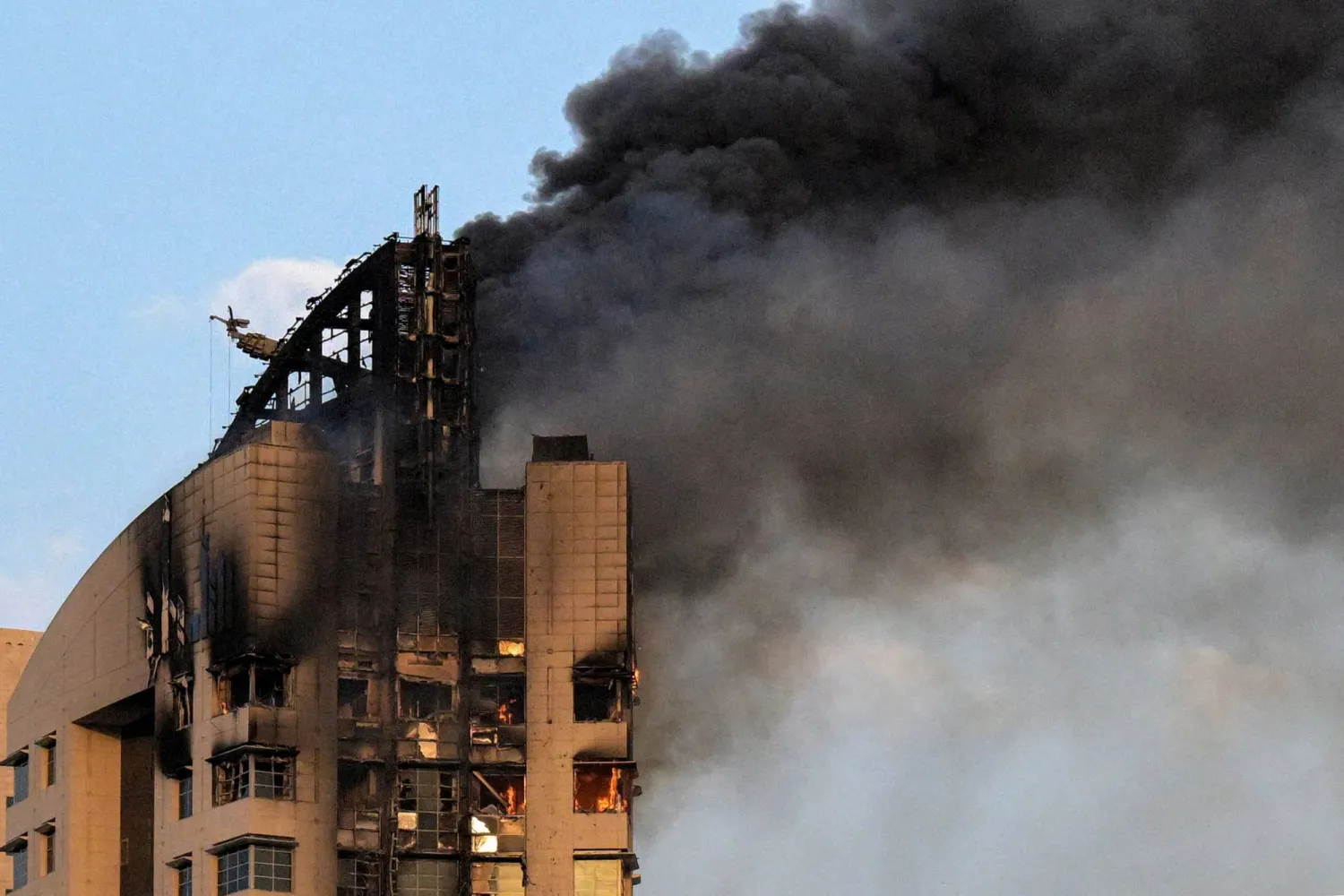
Smoke rises from a building in Kuwait following Iranian attacks (AFP). 
TT

Iran-US-Israel Conflict Enters Phase of Prolonged Attrition

Smoke rises from a building in Kuwait following Iranian attacks (AFP). 

The confrontation between Iran on one side and the United States and Israel on the other has entered a phase of mutual attrition, shifting from temporary military escalation to a sustained pattern of operations, deterrence and endurance.

According to a report released Wednesday by the Gulf Research Center, based in Jeddah, the United States is building a long-term campaign aimed at degrading Iran’s missile capabilities and restoring confidence in maritime shipping routes.

Iran, meanwhile, is relying on its geography, security infrastructure and the strategic leverage of the Strait of Hormuz to prevent its adversaries from turning operational superiority into lasting strategic stability.

Rear Admiral Abdullah Al-Zaidi, senior adviser for security and defense studies at the center and author of the report, said the crisis has entered a stage of extended confrontation.

In this phase, the US effort has shifted from merely containing the Iranian threat to reducing Tehran’s capacity to regenerate and sustain its military capabilities by targeting missiles, drones and the military-industrial infrastructure that supports them.

A War of Attrition

The report said one of the most notable developments is the expansion of the US campaign from exhausting Iranian operational capabilities to striking the broader military-industrial base.

The chairman of the US Joint Chiefs of Staff has indicated that the campaign now focuses on destroying Iran’s missile and drone capabilities and degrading its naval forces in order to safeguard freedom of navigation through the Strait of Hormuz.

The report also noted that after national energy authorities in Qatar, Kuwait and Bahrain declared force majeure, the conflict could no longer be viewed as purely military. Its repercussions have now extended into the global energy sector.

Strait of Hormuz Pressure

Developments in the Strait of Hormuz, the report argued, show that Iran remains capable of generating significant strategic impact without formally closing the waterway. By reducing shipping traffic, raising operational risks and undermining confidence in maritime routes, Tehran can disrupt the flow of commerce without declaring a blockade.

The report added that from a Gulf perspective, the crisis is no longer simply an external escalation affecting global markets, but rather a direct challenge to national and energy securities and freedom of navigation.

Military Campaign Expands

Militarily, the report stated that the US campaign has shifted from reducing the tempo of Iranian attacks to systematically targeting the sources of Iranian military power. This includes destroying missile stockpiles and launch platforms, weakening Iran’s naval capabilities and expanding strikes to facilities involved in drone production.

Iran’s Strategic Depth

According to the report, Iran’s geography provides Tehran with natural strategic depth and a layered defensive capability. The country relies on rugged terrain, underground fortifications, tunnel networks and buried facilities to protect critical military assets.

Israeli estimates cited in the report suggest that more than 60 percent of Iran’s ballistic missile launchers have been disabled, with operational launch platforms declining from roughly 400 to about 150.

Nevertheless, current indicators suggest Tehran is pursuing a strategy of prolonged attrition based on absorbing strikes while extending the duration of the confrontation.

Disruption Without Closure

More than 20 million barrels of oil per day pass through the Strait of Hormuz, along with roughly one-fifth of global liquefied natural gas trade. Yet the report stressed that disrupting shipping does not require a full closure of the waterway.

Recent developments have shown that traffic can be significantly impeded without a formal blockade, it says.

The report also warned of rising risks in the strait, including the possibility that naval mines could be deployed as a direct tool of pressure.

Restoring Shipping Confidence

The contest over Hormuz is no longer solely military but also economic. The report said the central challenge now lies in persuading shipping companies and insurers to resume normal operations in the corridor.

Key Risks

Among the main risks identified are the possibility that the Strait of Hormuz crisis could evolve from a price shock into a supply crisis.

Other risks include potential direct confrontations during naval escort operations, the normalization of shipping disruption without a declared blockade, and the introduction of naval mines into the strategic equation.

The report also highlighted the continued external supply of Iranian missile capabilities, along with expanding international intelligence activity and growing cyber threats.

Outlook

The Gulf Research Center report concluded that the most likely short-term scenario is the continued disruption of traffic in the Strait of Hormuz without a full closure, a strategy that raises operational costs while avoiding the political consequences of an openly declared blockade.

It also expected Iran’s missile-based attrition strategy to continue without a rapid collapse, given the country’s geographic advantages and defensive infrastructure, which could prolong the confrontation.


Pezeshkian Puts Conditions to End the War as Trump Insists Iran is ‘at the End of the Line’

This satellite image taken and released on March 11, 2026 courtesy of Vantor shows a view of damaged buildings after airstrikes at Hakimabad garrison, some 30 kms (20 miles) south of Tehran, Iran. MANDATORY CREDIT "AFP PHOTO / Satellite image 2026 Vantor
TT

Pezeshkian Puts Conditions to End the War as Trump Insists Iran is ‘at the End of the Line’

This satellite image taken and released on March 11, 2026 courtesy of Vantor shows a view of damaged buildings after airstrikes at Hakimabad garrison, some 30 kms (20 miles) south of Tehran, Iran. MANDATORY CREDIT "AFP PHOTO / Satellite image 2026 Vantor

American and Israeli strikes on Thursday pounded Iran with no sign of an end to the war in sight as unrelenting Iranian attacks on shipping traffic and energy infrastructure pushed oil above $100 a barrel.

Iranian Supreme Leader Mojtaba Khamenei hasn't yet made a statement or been seen since being chosen to succeed his father Ali Khamenei, who was killed in the opening day of the conflict.

But Iranian President Masoud Pezeshkian has suggested that Tehran sought the world to recognize Iran’s “legitimate rights, payment of reparations” and international guarantees against future attacks to see an end of the war.

His comment came as US President Donald Trump reiterated his insistence that US-Israeli strikes had already practically defeated Iran.

"They are pretty much at the end of the line," he told reporters, after delivering a speech to supporters in which he declared: "We've won... we won -- in the first hour it was over."

Trump suggested that Iran’s halting of attacks was not imminent, however, promising to “finish the job” even though he claimed Iran is “virtually destroyed.”

“We don’t want to leave early do we? We’ve got to finish the job," he said at an event Wednesday in Kentucky.

In addition to attacking energy infrastructure around the region, Iran has a stranglehold on the Strait of Hormuz, the waterway leading from the Arabian Gulf toward the Indian Ocean through which a fifth of the world's oil is transported.

With traffic in the strait effectively stopped, the price of Brent crude oil, the international standard, rose another 9% to more than $100 a barrel, up some 38% over what it cost when the war started.


CENTCOM Warns Civilians to Avoid Iranian Ports Used for Military Purposes

A photo shows an Iranian vessel before a strike near the Strait of Hormuz (Photo by US Central Command/AFP) 
TT

CENTCOM Warns Civilians to Avoid Iranian Ports Used for Military Purposes

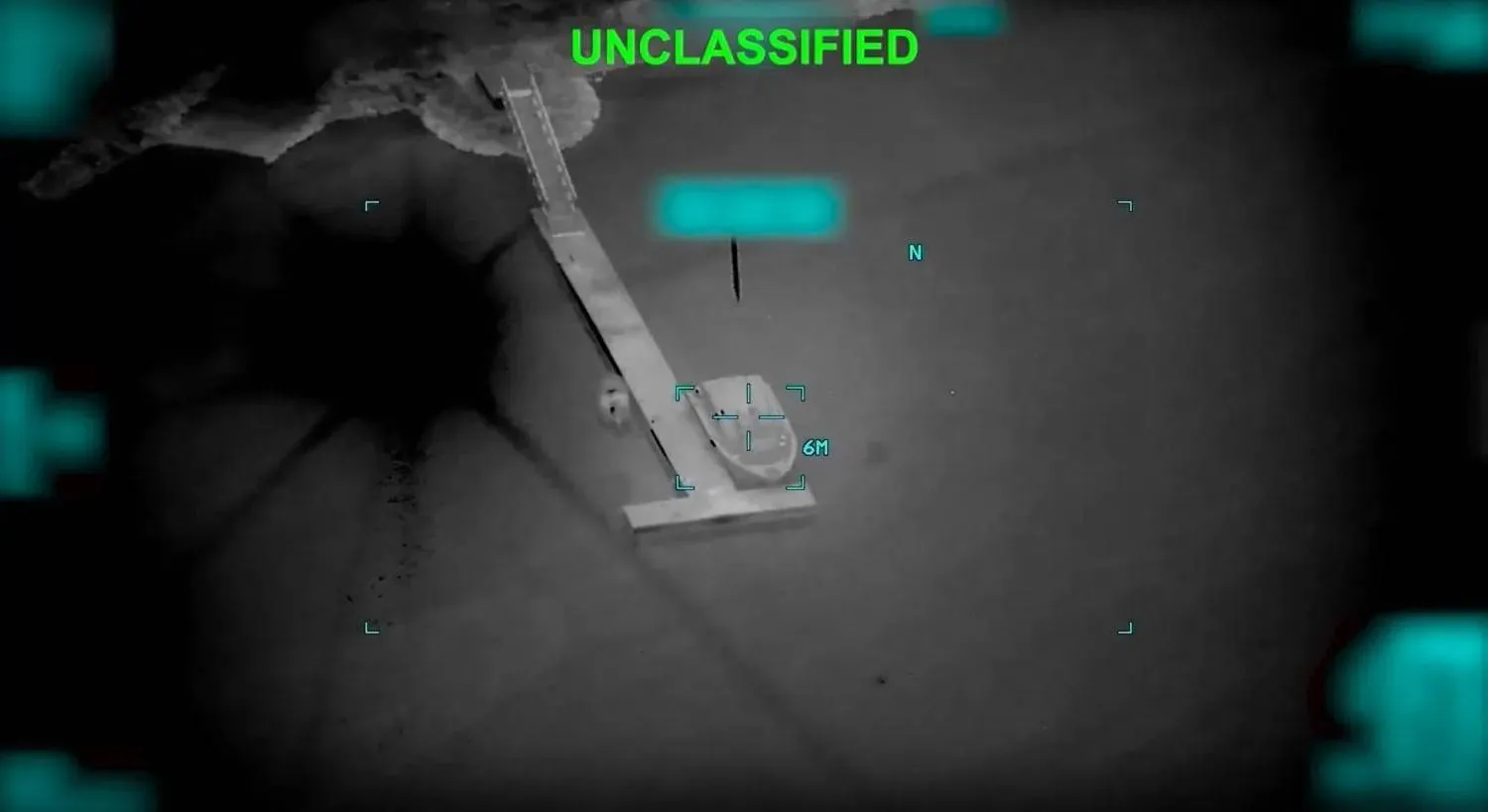
A photo shows an Iranian vessel before a strike near the Strait of Hormuz (Photo by US Central Command/AFP) 

The US Central Command (CENTCOM) on Wednesday warned civilians to avoid using ports along the Strait of Hormuz where Iranian forces conduct military operations that threaten international shipping.

“This dangerous action risks the lives of innocent people,” it said in a statement issued from its headquarters in Tampa, Florida. “Civilian ports used for military purposes lose protected status and become legitimate military targets under international law.”

CENTCOM also urged civilians in Iran to immediately avoid all port facilities where Iranian naval forces are operating. Iranian dockworkers, administrative personnel, and commercial vessel crews should avoid Iranian naval vessels and military equipment.

It said Iranian naval forces have positioned military vessels and equipment within civilian ports serving commercial maritime traffic.

Although the US military also cannot guarantee civilian safety in or near facilities used by the Iranian regime for military purposes, CENTCOM said US forces will continue taking every feasible precaution to minimize harm to civilians.

On Wednesday, spokesperson of Iran’s armed forces, Abolfazl Shekarchi, warned that his forces would target ports across the region if Iranian maritime infrastructure is attacked, urging neighboring states to expel US forces.

Quoted by state TV, Shekarchi said, “If our ports and docks are threatened, all ports and docks in the region will be our legitimate targets.”

He officially denied accusations that naval vessels from the Iranian Revolutionary Guard Corps (IRGC) were hiding in commercial or economic ports.