


Niger’s Junta Asks for Help from Russian Group Wagner as It Faces Military Intervention Threat

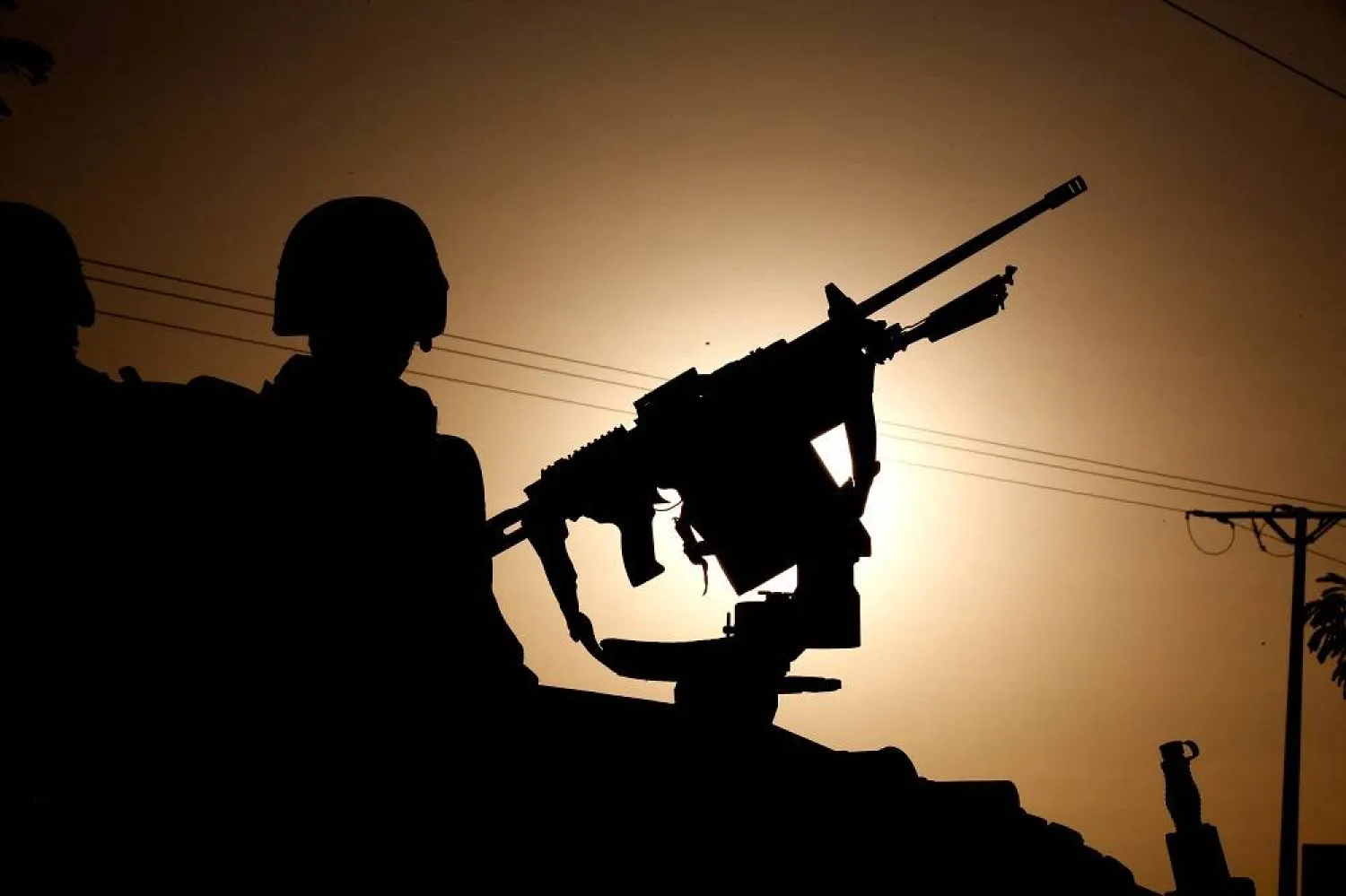
Silhouettes of members of the regional ECOWAS force are seen at the Denton Bridge check point in Banjul, Gambia January 22, 2017. (Reuters)
TT

Niger’s Junta Asks for Help from Russian Group Wagner as It Faces Military Intervention Threat

Silhouettes of members of the regional ECOWAS force are seen at the Denton Bridge check point in Banjul, Gambia January 22, 2017. (Reuters)

Niger’s new military junta has asked for help from the Russian mercenary group Wagner as the deadline nears for it to release the country’s ousted president or face possible military intervention by the West African regional bloc, according to an analyst.

The request came during a visit by a coup leader, Gen. Salifou Mody, to neighboring Mali, where he made contact with someone from Wagner, Wassim Nasr, a journalist and senior research fellow at the Soufan Center, told The Associated Press. He said three Malian sources and a French diplomat confirmed the meeting first reported by France 24.

“They need (Wagner) because they will become their guarantee to hold onto power,” he said, adding that the group is considering the request. A Western military official, speaking on condition of anonymity because they were not authorized to comment, told the AP they have also heard reports that the junta asked for help from Wagner in Mali.

Niger’s junta faces a Sunday deadline set by the regional bloc, known as ECOWAS, to release and reinstate the democratically elected President Mohamed Bazoum, who has described himself as a hostage.

Defense chiefs from ECOWAS member states finalized an intervention plan on Friday and urged militaries to prepare resources after a mediation team sent to Niger on Thursday wasn’t allowed to enter the capital or meet with junta leader Gen. Abdourahmane Tchiani.

On Saturday, Nigeria's Senate advised the nation’s president, the current ECOWAS chair, to further explore options other than the use of force to restore democracy in Niger, noting the “existing cordial relationship between Nigeriens and Nigerians.”

The legislators had deliberated on the president's request informing them of ECOWAS’ decisions and Nigeria’s involvement, as required by law.

Final decisions by ECOWAS, however, are taken by a consensus among its member countries.

After his visit to Mali, run by a sympathetic junta, Mody warned against a military intervention, vowing that Niger would do what it takes not to become “a new Libya,” Niger’s state television reported Friday.

Niger has been seen as the West’s last reliable counterterrorism partner in a region where coups have been common in recent years. Juntas have rejected former colonizer France and turned toward Russia. Wagner operates in a handful of African countries, including Mali, where human rights groups have accused its forces of deadly abuses.

It isn't possible to say Russia is directly involved in Niger's coup, but “clearly, there's an opportunistic attitude on the part of Russia, which tries to support destabilization efforts wherever it finds them,” French foreign affairs ministry spokeswoman Anne-Claire Legendre told broadcaster BFM on Friday. For days after Niger's junta seized power, residents waved Russian flags in the streets.

The spokeswoman described Wagner as a “recipe for chaos.”

Some residents rejected the junta's approach.

“It’s all a sham,” said Amad Hassane Boubacar, who teaches at the University of Niamey. “They oppose foreign interference to restore constitutional order and legality. But on the contrary, they are ready to make a pact with Wagner and Russia to undermine the constitutional order ... They are prepared for the country to go up in flames so that they can illegally maintain their position."

On Saturday, France’s foreign affairs minister, Catherine Colonna, said the regional threat of force was credible and warned the putschists to take it seriously. “Coups are no longer appropriate ... It’s time to put an end to it,” she said.

The ministry said France supported the ECOWAS efforts “with firmness and determination” and called for Bazoum and all members of his government to be freed.

But Algeria, which borders Niger to the north, told another visiting ECOWAS delegation that it opposed a military intervention, though it too wants a return to constitutional order.

Niger’s military leaders have been following the playbook of Mali and neighboring Burkina Faso, also run by a junta, but they're moving faster to consolidate power, Nasr said: “(Tchiani) chose his path, so he’s going full on it without wasting time because there’s international mobilization.”

One question is how the international community will react if Wagner comes in, he said. When Wagner came into Mali at the end of 2021, the French military was ousted soon afterward after years of partnership. Wagner was later designated a terrorist organization by the United States, and international partners might have a stronger reaction now, Nasr said.

And much more is at stake in Niger, where the US and other partners have poured hundreds of millions of dollars of military assistance to combat the region’s growing extremist threat. France has 1,500 soldiers in Niger, though coup leaders say they have severed security agreements with Paris. The US has 1,100 military personnel in the country.

It’s unclear what a regional intervention would look like, when it would begin or whether it would receive support from Western forces. Niger’s junta has called on the population to watch for spies, and self-organized defense groups have mobilized at night to monitor cars and patrol the capital.

“If the junta were to dig in its heels and rally the populace around the flag — possibly even arming civilian militias — the intervention could morph into a multifaceted counterinsurgency that ECOWAS would not be prepared to handle,” said a report by the Hudson Institute, a conservative US think tank.

While some in Niger are bracing for a fight, others are trying to cope with travel and economic sanctions imposed by ECOWAS. Land and air borders with ECOWAS countries have been closed, while commercial and financial transactions have been suspended.

Residents said the price of goods is rising and there’s limited access to cash.

“We are deeply concerned about the consequences of these sanctions, especially their impacts on the supply of essential food products, pharmaceuticals, medical equipment, petroleum products and electricity,” said Sita Adamou, president of Niger’s Association to Defend Human Rights.



Israel Says it Is Facing an ‘Existential Threat’ as Iran Builds up its Military Capacities  

Israeli defenses intercept Iranian missiles over Tel Aviv on June 22. (AFP)
TT

Israel Says it Is Facing an ‘Existential Threat’ as Iran Builds up its Military Capacities  

Israeli defenses intercept Iranian missiles over Tel Aviv on June 22. (AFP)

Iran is making “hysteric” efforts to produce up to 3,000 ballistic missiles per month, Israel's Maariv newspaper reported on Sunday.

“Although such missiles are considered old-fashioned, imprecise, and can be shot down before they reach their targets, the time they reach their targets is enough to cause serious damage,” the newspaper said quoting Israeli security sources.

In an article published in Maariv, writer Anna Persky said Iran is reviving its nuclear program and is resuming the production of ballistic missiles, but not yet its uranium enrichment.

Quoting Israeli security sources, she wrote: “There has been an ongoing movement in recent weeks around the nuclear reactors that were destroyed in the recent Israeli-US attacks on Iran.”

The sources stressed that the Israeli army’s new military doctrine is based on preemptive strikes to prevent threats before they materialize, but at the same time, they did not rule out a preemptive attack from Tehran.

Persky wrote that Iran is restoring facilities related to the production of ballistic missiles and nuclear facilities damaged by strikes during the 12-day war in June.

For Israel, Iran's nuclear program still remains a serious concern.

“Israeli Prime Minister Benjamin Netanyahu plans to present the Iranian threat during his scheduled meeting with US President Donald Trump” on December 29. “He will try to figure out if Trump is willing to participate in a new war against Iran,” she said.

Persky wrote that Netanyahu will present to the US President with a number of alternatives, including an independent Israeli attack with limited US assistance, a joint strike or a full-scale US operation.

“At the meeting, the main issue will not be what Israel wants to do, but what the United States is willing to offer,” she noted.

In Israel, the “inevitability of a war with Iran” was the headline of all Israeli newspapers over the weekend.

“Iran ramps up missile tests and military drills, renews threats toward Israel,” wrote Yedioth Ahronoth in its headline on Sunday.

It said amid recent reports that Tehran is producing ballistic missiles at a rapid pace and in large quantities, Iran has returned to threatening Israel and showcasing its military capabilities, much as it did before the June war.

But Maariv said the war initiative will rather come from Israel, which perceives Iran’s nuclear program as an existential threat.

Israel is worried about missing the current opportunity. “Today, Iran is still in the midst of reconstruction, but tomorrow it will be more protected, more distributed, and its offensive capability will be more expensive and more dangerous,” Persky wrote.


Moscow Car Blast Kills Russian General 

An investigator works at the scene where Lieutenant General Fanil Sarvarov, head of the Russian General Staff's army operational training directorate, was reportedly killed in a car bomb in Moscow, Russia, December 22, 2025. (Russia's Investigative Committee/Handout via Reuters)
TT

Moscow Car Blast Kills Russian General 

An investigator works at the scene where Lieutenant General Fanil Sarvarov, head of the Russian General Staff's army operational training directorate, was reportedly killed in a car bomb in Moscow, Russia, December 22, 2025. (Russia's Investigative Committee/Handout via Reuters)

A senior Russian general was killed in southern Moscow on Monday after an explosive device placed under his car went off, investigators said in a statement.

Russia's Investigative Committee, which examines major crimes, said it had opened a probe into the "murder" of Lieutenant General Fanil Sarvarov, head of the training department within the General Staff.

The possibility that the attack was "linked" to "Ukrainian special forces" was among the lines of inquiry, it said.

Since Moscow sent troops into Ukraine in February 2022, Kyiv has been blamed for several attacks targeting Russian military officials and pro-Kremlin personalities in Russia and in Russian-controlled Ukrainian regions.

General Yaroslav Moskalik, a deputy of the General Staff, was killed in a car blast near Moscow in April.

In December 2024, Igor Kirillov, the head of the Russian radiological, chemical and biological defense forces, was killed when a booby-trapped electric scooter exploded in Moscow, an attack claimed by Ukraine's SBU security service.

A Russian military blogger, Maxim Fomin, was killed when a statuette exploded in a Saint Petersburg cafe in April 2023.

And in August 2022, a car bomb killed Daria Dugina, the daughter of ultranationalist ideologue Alexander Dugin.


Iran Does Not Rule Out New Israeli Attacks against it

Russian Foreign Minister Sergei Lavrov, right, and Iranian Foreign Minister Abbas Araghchi shake hands after a joint news conference at Zinaida Morozova's Mansion in Moscow, Wednesday, Dec. 17, 2025. (Ramil Sitdikov/Pool Photo via AP)
TT

Iran Does Not Rule Out New Israeli Attacks against it

Russian Foreign Minister Sergei Lavrov, right, and Iranian Foreign Minister Abbas Araghchi shake hands after a joint news conference at Zinaida Morozova's Mansion in Moscow, Wednesday, Dec. 17, 2025. (Ramil Sitdikov/Pool Photo via AP)

Iran's Foreign Minister Abbas Araghchi on Sunday said Tehran “does not rule out” the possibility of a new Israeli or US attack on its nuclear facilities, but remains “fully prepared, even more than before.”

“This doesn't mean that we welcome another war, but it is exactly to prevent a war. And the best way to prevent war is to be prepared for that. And we are fully prepared,” Araghchi said in an interview with Russia Today (RT).

The minister said Iran has rebuilt everything that was damaged by Israeli and US strikes during the 12-day war in June.

“If they want to repeat the same failed experience, they will not achieve a better result,” he stressed.

Araghchi made the remarks during a visit last week to Moscow, where he held political and diplomatic talks with Russian officials, including his counterpart, Sergei Lavrov.

Araghchi said he is no longer in contact with US Special Envoy for the Middle East Steve Witkoff, revealing that their communication channel has been inactive for months.

Iran and the envoy had held five rounds of talks between April and June. A sixth round, scheduled for June 15, was canceled after Israel launched its strikes on Iran.

Araghchi said that following the war, he maintained contacts with Witkoff. He said that while the US insisted on resuming negotiations, it had adopted what he described as a “very wrong” approach.

Commenting on the US strikes on Iran's nuclear facilities in Natanz and Fordow in June, the FM acknowledged: “Our facilities have been damaged, seriously damaged.”

However, he added: “There is also another fact, that our technology is still there, and technology cannot be bombed. And our determination is also there. We have a very legitimate right to peaceful use of nuclear technology, including enrichment.”

Araghchi reiterated that Iran is ready to provide full assurance that its nuclear program is peaceful as it did in 2015 when Tehran agreed to build confidence over the peaceful nature of its program in exchange of the lifting of sanctions.

He noted that military operations have failed to achieve their goals, while diplomacy was a successful experience.

Asked if he expects Israel will maintain its approach in 2026, the FM replied: “They will continue their aggressive behavior in 2026 due to the full impunity which is given to them by the US and Europeans.”

NBC News reported last week that Israeli officials have grown increasingly concerned that Iran is expanding production of its ballistic missile program, which was damaged by Israeli strikes in June, and are preparing to brief President Donald Trump about options for attacking it again, according to a person with direct knowledge of the plans and four former US officials briefed on the plans.

On Iran’s relations with the International Atomic Energy Agency (IAEA), Araghchi said: “We remain a committed member of the Non-Proliferation Treaty (NPT) and are ready to cooperate with the Agency.”

“We have a simple question for the Agency: Please tell us, how should a nuclear facility that has been attacked be inspected? And there is no answer to this question, because there is no precedent to this,” he added.