At Summit, Biden Aims to Show He Can Focus on Pacific amid Crises in Ukraine, Mideast and Washington

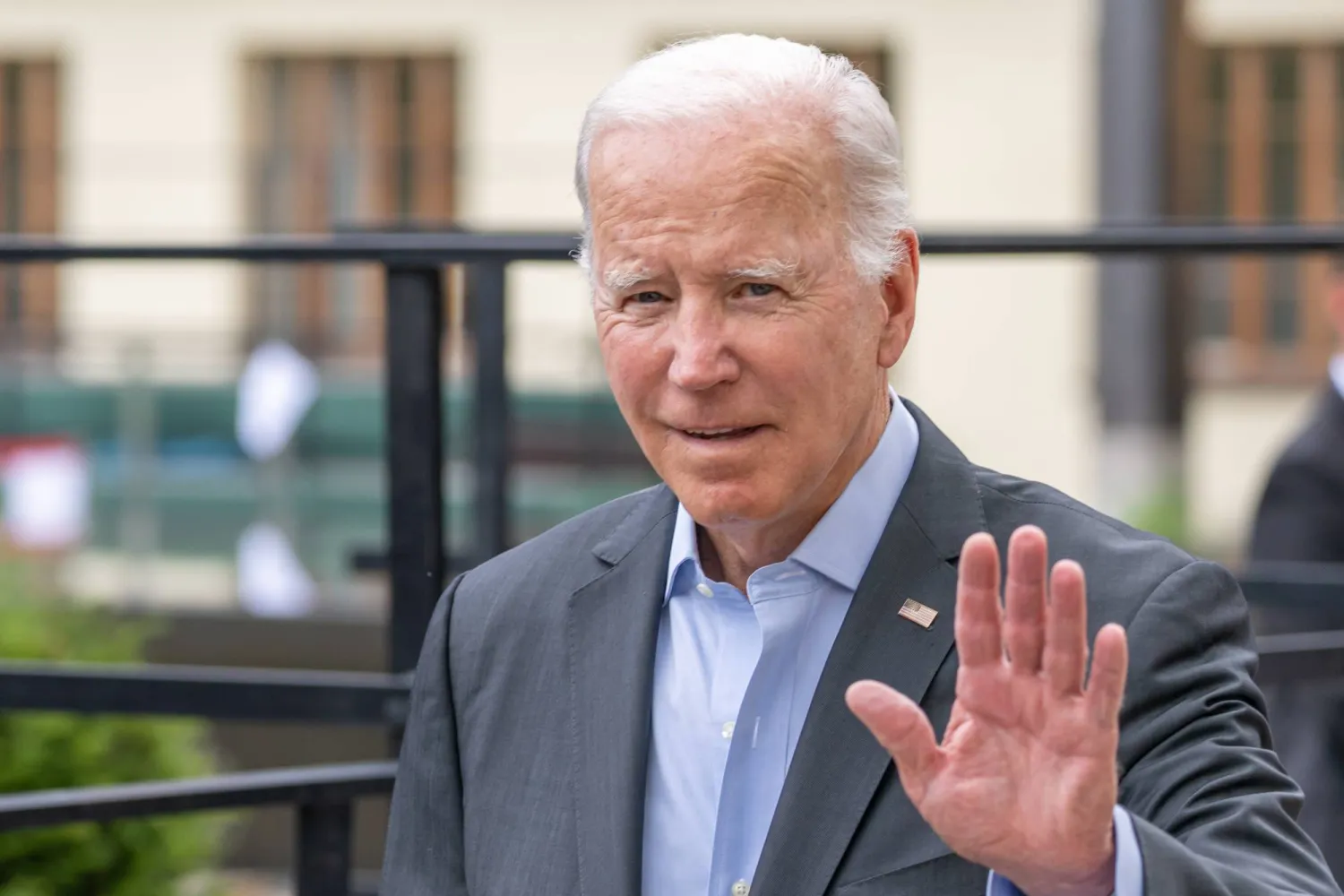
FILED - 27 June 2022, Bavaria, Elmau: US President Joe Biden walks back after a break from the meeting with outreach states on the sidelines of the 48th G7 Summit. Photo: Peter Kneffel/dpa
TT

At Summit, Biden Aims to Show He Can Focus on Pacific amid Crises in Ukraine, Mideast and Washington

FILED - 27 June 2022, Bavaria, Elmau: US President Joe Biden walks back after a break from the meeting with outreach states on the sidelines of the 48th G7 Summit. Photo: Peter Kneffel/dpa

President Joe Biden is looking to use this week's summit of Asia-Pacific leaders to show world leaders the United States has the gumption, attention span and money to focus on the region even as it grapples with a multitude of foreign and domestic policy crises.
Biden's highly anticipated meeting with Chinese President Xi Jinping on Wednesday is the main event of his four-day visit to San Francisco, where leaders from the 21 economies that make up the Asia-Pacific Economic Cooperation forum are gathering for their annual summit. The talks with Xi are of enormous importance as the leaders of the world's two biggest economies try to find a measure of stability after what's been a difficult year for US-China relations.
But the White House also wants to demonstrate to APEC's leaders that Biden can remain focused on the Pacific while also trying to keep the Israel-Hamas war from exploding into a broader regional conflict and to persuade Republican lawmakers to continue to spend billions more on the costly Ukrainian effort to repel Russia's nearly 21-month old invasion, The Associated Press said.
“President Biden this coming week will be doing a lot more than just meeting with President Xi,” White House national security adviser Jake Sullivan told reporters in Washington on Monday. He added that Biden would put forward his economic vision for the region, make the case that the US is “the very eminent driver” for sustainable economic growth in the Asia-Pacific, and hold the region out as critical to US economic growth.
White House officials say they are cognizant that fellow APEC nations want to see better dialogue between the US and China because it reduces the risk of regional conflict. At the same time, they also know that others in the region are concerned that the Pacific is too often seen through a prism in which the dominant power centers in Washington and Beijing make decisions for the region without engagement from less powerful nations.
To that end, the White House is expected to unveil new initiatives to advance clean economy investments and develop anti-corruption and taxation policies through its Indo-Pacific Economic Forum, an economic strategy announced last year aimed at countering Beijing's commercial strength in the region.
The strategy, known by the acronym IPEF, was designed to foster trade and demonstrate American commitment to the region, after then-President Donald Trump announced in 2017 that the US was withdrawing from the Trans-Pacific Partnership, or TPP, an Obama-era trade deal with 12 countries.
“The US is really aiming to use APEC as a way to demonstrate its lasting economic commitment to the region overall,” said Neils Graham, associate director for the Atlantic Council GeoEconomics Center.
Much of the APEC's membership is “tepid, at best” on IPEF, said Joshua Kurlantzick, a senior fellow for Southeast Asia at the Council on Foreign Relations. While TPP fell apart under Trump, the region has seen major trade deals sealed in recent years involving China, Japan, South Korea and other major regional economies. APEC members have some interest in aspects of IPEF, such as efforts aimed at bolstering supply chain resilience and the clean energy economy, but want to see Biden create further access to US markets.
Biden during his presidency has declined to pursue new comprehensive free-trade agreements with other countries. Administration officials quietly argue that while such pacts promote global commerce they are viewed suspiciously by Americans and some in Congress as a vehicle for sending factory jobs overseas.
Biden on Monday welcomed Indonesian President Joko Widodo, a fellow APEC leader, to the White House for talks before both travel to San Francisco. The Oval Office visit came at a somewhat awkward moment as Widodo, the leader of the world's most populous Muslim country, has been fiercely critical of Israel's operations in the Gaza Strip.
Biden, meanwhile, has been unapologetic in standing staunchly by Israel and backing its right to defend itself following the Oct. 7 attacks by Hamas militants that left 1,200 dead. Israel's retaliatory operations in Gaza have killed more than 11,000, sparking outrage from a slew of world leaders. The Indonesian president, in a speech at Georgetown University on Monday, lamented that “human life seems meaningless" as Israel prosecutes its operations.
Their differences on the Israel-Hamas war notwithstanding, Biden made clear during his sit-down with Widodo that he's looking to improve ties with the Southeast Asian power on combating the climate crisis and other issues.
The White House effort to herd APEC members to sign on to a summit-concluding joint declaration, a fixture at most international summits, could be complicated by diverging views among members on the Israel-Hamas and Ukraine wars.
“We’re certainly working for having a strong consensus statement in APEC, for the leaders to be able to release at the end of the week,” said Ambassador Matt Murray, the senior US official for APEC.
Among close allies expected to be in San Francisco are Japanese Prime Minister Fumio Kishida, South Korean President Yoon Suk Yeol and Philippine President Ferdinand Marcos, Jr.
Historically frosty relations between South Korea and Japan have rapidly thawed over the last year as they share concerns about China’s assertiveness in the Pacific and North Korea’s persistent nuclear threats.
Biden is expected to remind Xi about the US commitment to the Philippines, following a recent episode in which Chinese ships blocked and collided with two Philippine vessels off a contested shoal in the South China Sea, according to a senior administration official who spoke on the condition of anonymity to preview some of Biden's agenda.
The Philippines and other neighbors of China are resisting Beijing’s sweeping territorial claims over virtually the entire sea.
The potential for a government shutdown is also looming over the summit, with the current stopgap spending measure set to expire Friday. House Speaker Mike Johnson unveiled a proposal Saturday that would extend funding for some agencies and programs until Jan. 19. The stopgap measure excludes the roughly $106 billion funding requested by Biden for Israel, Ukraine and the US border with Mexico.
Sullivan warned that a government shutdown would be a “devastating blow” to the US standing around the globe.
“It would send a signal to the world that the United States cannot pull together on a bipartisan basis to sustain government funding, and to show a united face to the world at a moment when you see this turbulence around the world,” Sullivan said.



Türkiye: Ocalan Announces ‘Integration Phase’

Members of the Kurdish community take part in a protest calling for the release of convicted Kurdistan Worker's Party (PKK) leader Abdullah Ocalan in Diyarbakir on February 15, 2026. (Photo by Ilyas AKENGIN / AFP)
TT

Türkiye: Ocalan Announces ‘Integration Phase’

Members of the Kurdish community take part in a protest calling for the release of convicted Kurdistan Worker's Party (PKK) leader Abdullah Ocalan in Diyarbakir on February 15, 2026. (Photo by Ilyas AKENGIN / AFP)

The jailed leader of the Kurdistan Workers Party, Abdullah Ocalan, has said that the Ankara-PKK peace process has entered its “second phase,” as the Turkish parliament sets the stage to vote on a draft report proposing legal reforms tied to peace efforts.

A delegation from the pro-Kurdish Peoples' Equality and Democracy Party (DEM Party), including lawmakers Pervin Buldan, Mithat Sancar, and Ocalan’s lawyer Ozgur Faik, met with the jailed PKK leader on Monday on the secluded Imrali island.

Sancar said that the second phase will be focused on democratic integration into
Türkiye’s political system.

According to the lawmaker, the PKK leader considered the first phase the “negative dimension” concerned with ending the decades-old conflict between the armed group and Ankara.

“Now we are facing the positive phase,” Ocalan said, “the integration phase is the positive phase; it is the phase of construction.”

For the second phase to be implemented, Ocalan called on Turkish authorities to provide conditions that would allow him to put his “theoretical and practical capacity” to work.

The 60-page draft report on peace with the PKK was completed by a five-member writing team, which is chaired by Parliament Speaker Numan Kurtulmuş, and is scheduled for a vote on Wednesday.

The report is organized into seven sections.

In July last year, Ocalan said the group's armed struggle against Türkiye has ended and called for a full shift to democratic politics.


Iranians Chant Slogans Against Supreme Leader at Memorials for Slain Protesters

An Iranian man holds the Iranian national flag during a memorial ceremony for those killed in anti-government protests earlier last month, at the Mosalla mosque in Tehran, Iran, 17 February 2026. (EPA)
TT

Iranians Chant Slogans Against Supreme Leader at Memorials for Slain Protesters

An Iranian man holds the Iranian national flag during a memorial ceremony for those killed in anti-government protests earlier last month, at the Mosalla mosque in Tehran, Iran, 17 February 2026. (EPA)

Iranians shouted slogans against Supreme Leader Ali Khamenei on Tuesday as they gathered to commemorate protesters killed in a crackdown on nationwide demonstrations that rights groups said left thousands dead, according to videos verified by AFP.

The country's clerical authorities also staged a commemoration in the capital Tehran to mark the 40th day since the deaths at the peak of the protests on January 8 and 9.

Officials acknowledge more than 3,000 people died during the unrest, but attribute the violence to "terrorist acts", while rights groups say many more thousands of people were killed, shot dead by security forces in a violent crackdown.

The protests, sparked by anger over the rising cost of living before exploding in size and anti-government fervor, subsided after the crackdown, but in recent days Iranians have chanted slogans from the relative safety of homes and rooftops at night.

On Tuesday, videos verified by AFP showed crowds gathering at memorials for some of those killed again shouting slogans against the theocratic government in place since the 1979 revolution.

In videos geolocated by AFP shared on social media, a crowd in Abadan in western Iran holds up flowers and commemorative photos of a young man as they shout "death to Khamenei" and "long live the shah", in support of the ousted monarchy.

Another video from the same city shows people running in panic from the sounds of shots, though it wasn't immediately clear if they were from live fire.

In the northeastern city of Mashhad a crowd in the street chanted, "One person killed, thousands have his back", another verified video showed.

Gatherings also took place in other parts of the country, according to videos shared by rights groups.

- Official commemorations -

At the government-organized memorial in Tehran crowds carried Iranian flags and portraits of those killed as nationalist songs played and chants of "Death to America" and "Death to Israel" echoed through the Khomeini Grand Mosalla mosque.

Iranian President Masoud Pezeshkian attended a similar event at the Imam Reza shrine in Mashhad.

Authorities have accused sworn enemies the United States and Israel of fueling "foreign-instigated riots", saying they hijacked peaceful protests with killings and vandalism.

Senior officials, including First Vice President Mohammad Reza Aref and Revolutionary Guards commander Esmail Qaani, attended the ceremony.

"Those who supported rioters and terrorists are criminals and will face the consequences," Qaani said, according to Tasnim news agency.

International organizations have said evidence shows Iranian security forces targeted protesters with live fire under the cover of an internet blackout.

The US-based Human Rights Activists News Agency (HRANA) has recorded more than 7,000 killings in the crackdown, the vast majority protesters, though rights groups warn the toll is likely far higher.

More than 53,500 people have been arrested in the ongoing crackdown, HRANA added, with rights groups warning protesters could face execution.

Tuesday's gatherings coincided with a second round of nuclear negotiations between Iran and the United States in Geneva, amid heightened tensions after Washington deployed an aircraft carrier group to the Middle East following Iran's crackdown on the protests.


Independent UN Body Condemns ‘Vicious Attacks’ on UN Expert on Palestinian Rights

United Nations (UN) Special Rapporteur on the occupied Palestinian territories Francesca Albanese looks on at the end of a press conference on the human rights situation in Gaza in Geneva on September 15, 2025. (AFP)
TT

Independent UN Body Condemns ‘Vicious Attacks’ on UN Expert on Palestinian Rights

United Nations (UN) Special Rapporteur on the occupied Palestinian territories Francesca Albanese looks on at the end of a press conference on the human rights situation in Gaza in Geneva on September 15, 2025. (AFP)

An ‌independent United Nations body on Tuesday condemned what it described as vicious attacks based on disinformation by several European ministers against the organization's special rapporteur for Palestine, Francesca Albanese.

In the past week several European countries, including Germany, France and Italy, called for Albanese’s resignation over her alleged criticism of Israel. Albanese, an Italian lawyer, denies making the remarks.

On Friday, the Czech Republic's Foreign Minister Petr Macinka quoted Albanese on X as having called Israel a "common enemy of humanity", and he ‌also called for ‌her resignation.

A transcript of Albanese's remarks ‌made ⁠in Doha on ⁠February 7 seen by Reuters did not characterize Israel in this way, although she has consistently criticized the country in the past over the Gaza conflict.

The UN Coordination Committee - a body of six independent experts which coordinates and facilitates the work of Special Rapporteurs - accused European ministers of relying on "manufactured ⁠facts".

"Instead of demanding Ms. Albanese's resignation ‌for performing her mandate...these government representatives ‌should join forces to hold accountable, including before the International Criminal Court, ‌leaders and officials accused of committing war crimes and ‌crimes against humanity in Gaza," the Committee said.

It said the pressure exerted on Albanese was part of an increasing trend of politically motivated and malicious attacks against independent human rights experts, UN officials ‌and judges of international courts.

US President Donald Trump's administration imposed sanctions on Albanese after she wrote ⁠letters ⁠to US companies accusing them of contributing to gross human rights violations by Israel in Gaza and the West Bank.

UN experts are commissioned by the Geneva-based Human Rights Council to monitor and document specific human rights crises but are independent of the organization itself.

There is no precedent for removing a special rapporteur during their term, although diplomats said that states on the 47-member council could in theory propose a motion to do so.

However, they said strong support for Palestinian rights within the body means that such a motion was unlikely to pass.