Türkiye’s Erdogan to Discuss with Russia's Putin 'New Mechanism' for Grain Exportshttps://english.aawsat.com/world/4836536-t%C3%BCrkiye%E2%80%99s-erdogan-discuss-russias-putin-new-mechanism-grain-exports
Türkiye’s Erdogan to Discuss with Russia's Putin 'New Mechanism' for Grain Exports
A Ukrainian flag is covered with grains in this picture illustration taken May 9, 2022. (Reuters)
Turkish President Recep Tayyip Erdogan will discuss a new mechanism to allow Ukrainian grain exports through the Black Sea with his Russian counterpart Vladimir Putin during his upcoming visit to Ankara this month, Foreign Minister Hakan Fidan said on Sunday.
Fidan added that the issue is always on Türkiye’s agenda, and will certainly be on the table during Putin’s visit. He stressed that depriving some countries in the south and in Africa of wheat remains a humanitarian issue.
Turkish media had reported that Putin will be in Ankara on Feb. 12. The Kremlin said it is preparing for the visit, but did not disclose a date.
The Black Sea Grain Initiative was signed between Russia and Ukraine in Istanbul in July 2022. The accord was brokered by the United Nations and Türkiye to provide safe passage to exports from Ukrainian ports. However, Moscow pulled out of the deal in July 2023.
Fidan told the A Haber television that Putin’s “visit will provide us with the opportunity to discuss numerous issues.”
He revealed that energy, the war on Gaza, Black Sea trade routes and Syria will be on the agenda.
Fidan said there are efforts to find “new methods” to transport Ukrainian grain to world markets.
“The previous grain deal worked within a certain mechanism; now, there is a possibility of going with a different mechanism and there are efforts to concretize this possibility,” the minister revealed.
Russia withdrew from the deal after efforts to ease pathways for its own food and fertilizer exports ran afoul of western sanctions.
While Russian exports of food and fertilizer are not subject to Western sanctions imposed after Russia's invasion of Ukraine, Moscow has said restrictions on payments, logistics and insurance have amounted to a barrier to shipments.
Report: Trump Considers Targeted Strike Against Iran, Followed by Larger Attack https://english.aawsat.com/world/5243796-report-trump-considers-targeted-strike-against-iran-followed-larger-attack%C2%A0
Jared Kushner, US President Donald Trump, US Secretary of State Marco Rubio, and Special Envoy to the Middle East Steve Witkoff attend the inaugural meeting of the Board of Peace at the Donald J. Trump Institute of Peace on February 19, 2026 in Washington, DC. (Getty Images/AFP)
Report: Trump Considers Targeted Strike Against Iran, Followed by Larger Attack
Jared Kushner, US President Donald Trump, US Secretary of State Marco Rubio, and Special Envoy to the Middle East Steve Witkoff attend the inaugural meeting of the Board of Peace at the Donald J. Trump Institute of Peace on February 19, 2026 in Washington, DC. (Getty Images/AFP)
US President Donald Trump has told advisers that if diplomacy or any initial targeted US attack does not lead Iran to give in to his demands that it give up its nuclear program, he will consider a much bigger attack in coming months intended to drive that country’s leaders from power, people briefed on internal administration deliberations told the New York Times.
Negotiators from the United States and Iran are scheduled to meet in Geneva on Thursday for what appears to be last-ditch negotiations to avoid a military conflict. But Trump has been weighing options for US action if the negotiations fail.
Though no final decisions have been made, advisers said, Trump has been leaning toward conducting an initial strike in coming days intended to demonstrate to Iran’s leaders that they must be willing to agree to give up the ability to make a nuclear weapon.
Targets under consideration range from the headquarters of Iran’s Revolutionary Guard Corps to the country’s nuclear sites to the ballistic missile program.
Should those steps fail to convince Tehran to meet his demands, Trump told advisers, he would leave open the possibility of a military assault later this year intended to help topple Ali Khamenei, the supreme leader.
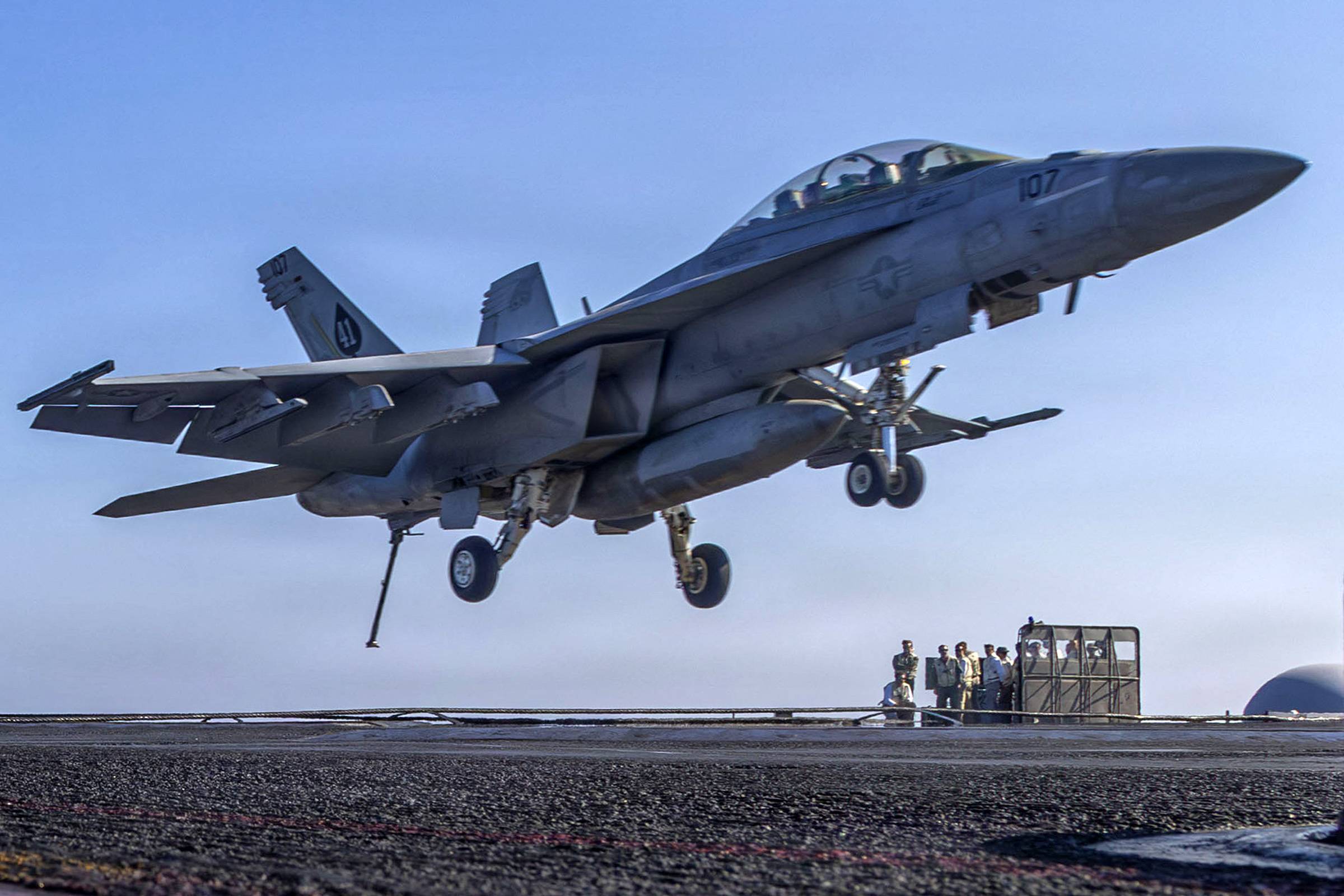
In this handout photograph released by the US Navy, an F/A-18F Super Hornet, attached to Strike Fighter Squadron (VFA) 41, prepares to make an arrested landing on the flight deck of Nimitz-class aircraft carrier USS Abraham Lincoln (CVN 72) in the Arabian Sea on February 15, 2026. (AFP photo / US Navy)
Doubts
There are doubts even inside the administration about whether that goal can be accomplished with airstrikes alone. And behind the scenes, a new proposal is being considered by both sides that could create an off-ramp to military conflict: a very limited nuclear enrichment program that Iran could carry out solely for purposes of medical research and treatments.
It is unclear whether either side would agree. But the last-minute proposal comes as two aircraft carrier groups and dozens of fighter jets, bombers and refueling aircraft are now massing within striking distance of Iran.
Trump discussed plans for strikes on Iran in the White House Situation Room on Wednesday. The meeting included Vice President JD Vance; Secretary of State Marco Rubio; Gen. Dan Caine, the chairman of the Joint Chiefs of Staff; the CIA director, John Ratcliffe; and Susie Wiles, the White House chief of staff.
During the meeting, Trump pressed Caine and Ratcliffe to weigh in on the broader strategy in Iran, but neither official generally advocates a certain policy position. Caine discussed what the military could do from an operational standpoint, and Ratcliffe preferred to discuss the current situation on the ground and possible outcomes of proposed operations.
During the discussions of the operation last month to seize President Nicolas Maduro of Venezuela, Caine told Trump there was a high likelihood of success. But Caine has not been able to deliver the same reassurances to Trump during the Iran discussions, in large measure because it is a far more difficult target.
Vance, who has long called for more restraint in overseas military action, did not oppose a strike, but he intensely questioned Caine and Ratcliffe in the meeting. He pressed them to share their opinions of the options and wanted more of a discussion of the risks and complexity of carrying out a strike against Iran.
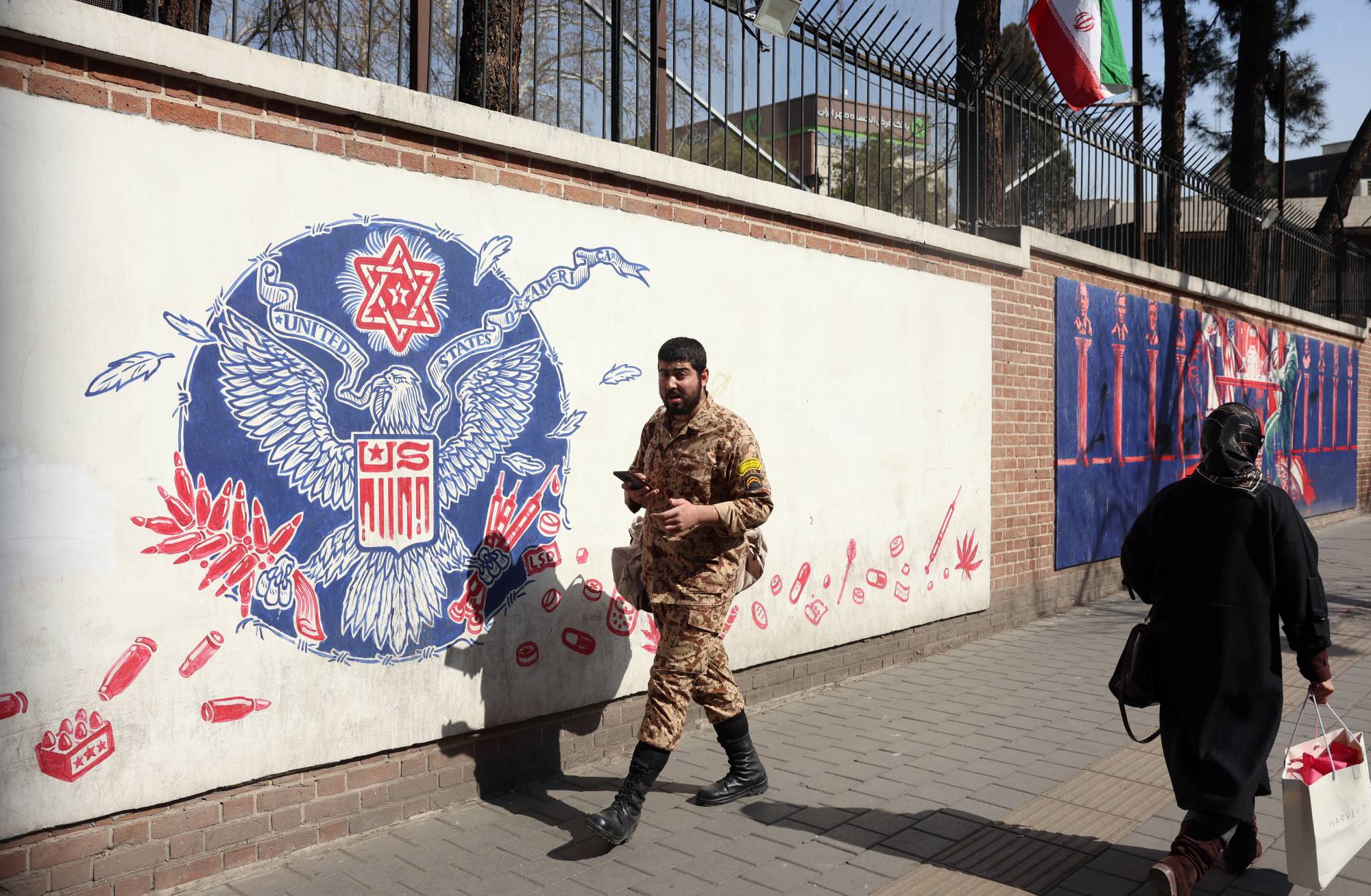
An Iranian soldier walks next to an anti-US mural in Tehran, Iran, 23 February 2026. (EPA)
Options against Iran
Earlier, the United States had been considering options that included putting teams of special operations forces on the ground that could carry out raids to destroy Iranian nuclear or missile facilities. That included manufacturing and enrichment operations buried far below the surface, outside the range of American conventional munitions.
But any such raid would be highly dangerous, requiring special operations forces to be on the ground far longer than they were for the raid to capture Maduro. Multiple US officials said that for now, the plans for a commando raid had been shelved.
Army, Navy and Air Force officials have also raised concerns about the impact that a protracted war with Iran, or just remaining poised for such a conflict, could have on the readiness of Navy ships, scarce Patriot antimissile defenses, and overstretched transport and surveillance planes.
The White House declined to comment on Trump’s decision making.
“The media may continue to speculate on the President’s thinking all they want, but only President Trump knows what he may or may not do,” Anna Kelly, a White House spokeswoman, said in a statement.
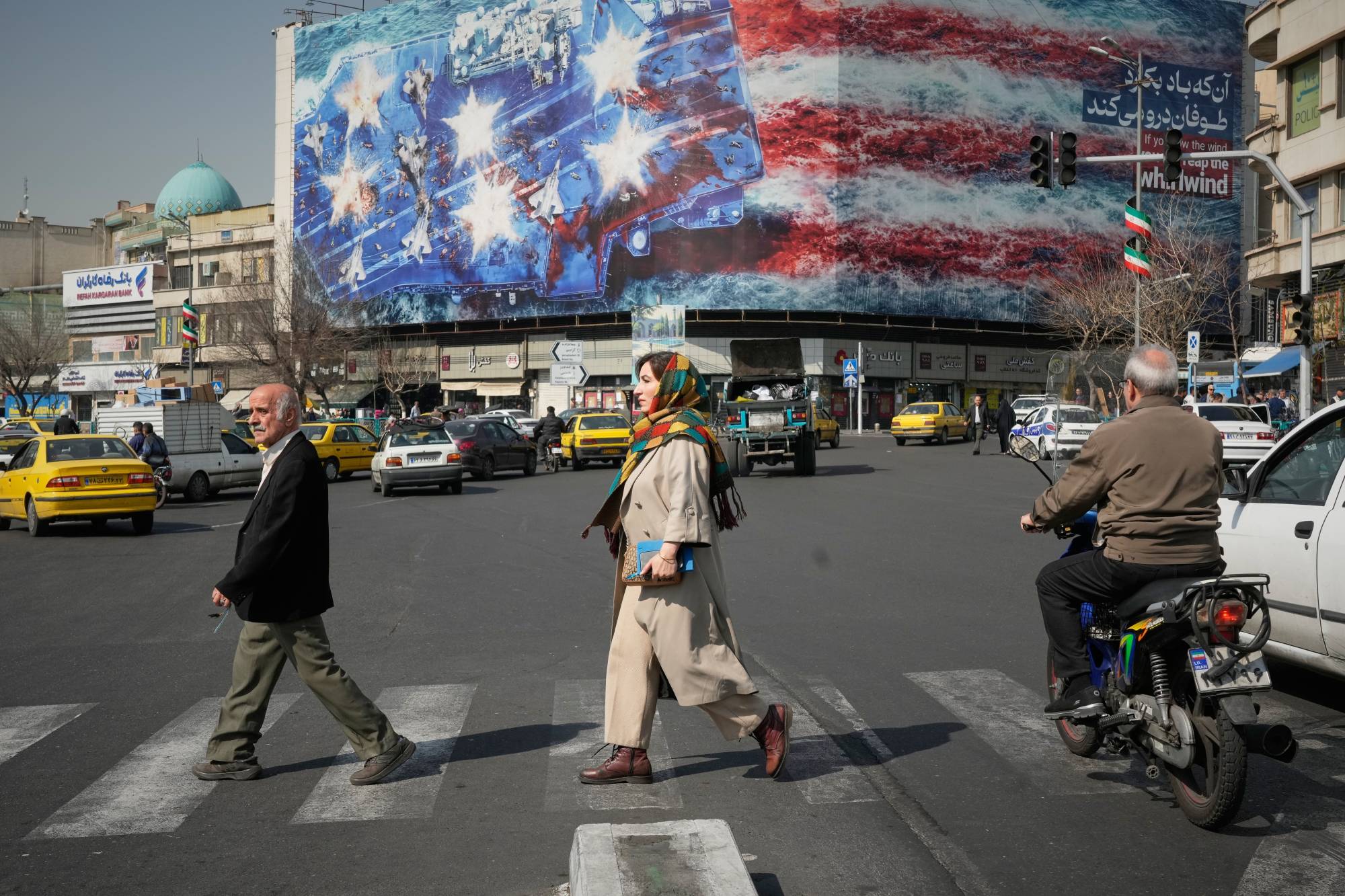
Pedestrians walk past a billboard depicting a US aircraft carrier with damaged fighter jets on its deck and a sign in Farsi and English reading, "If you sow the wind, you'll reap the whirlwind," at Enqelab-e-Eslami Square in Tehran, Iran, Sunday, Feb. 22, 2026. (AP)
‘Zero enrichment’
Even before the Iranians submit what appears likely to be their last proposal — officials said they expected it to be transmitted to the Trump administration on Monday or Tuesday — the two sides appeared to be hardening their positions. Steve Witkoff, the president’s special envoy, said on Fox News that Trump’s “clear direction” to him and Jared Kushner, his co-negotiator and the president’s son-in-law, was that the only acceptable outcome for an agreement was that Iran would move to “zero enrichment” of nuclear material.
But Iran’s foreign minister, Abbas Araghchi, insisted anew in an interview on CBS’s “Face the Nation” on Sunday that the country was not ready to give up what he said was its “right” to make nuclear fuel under the Nuclear Nonproliferation Treaty.
With that statement, the decision about whether the United States was about to attack targets in Iran — with the apparent goal of further weakening the government of Khamenei — seemed to come down to whether both sides could agree to a face-saving compromise about nuclear production that Washington and Tehran could each describe as a total victory.
One such proposal is being debated by both the Trump administration and the Iranian leadership. According to several officials, it emanated from Rafael Grossi, the director general of the International Atomic Energy Agency, a United Nations organization that inspects Iran’s nuclear facilities.
Under the proposal, Iran would be permitted to produce very small amounts of nuclear fuel for medical purposes. Iran has been producing medical isotopes for years at the Tehran Research Reactor, a nearly 60-year-old facility outside the country’s capital that was, in one of the strange twists of modern nuclear history, first supplied to the pro-American shah of Iran by the United States under the “Atoms for Peace” program.
If adapted, Iran could claim that it was still enriching uranium. Trump could make the case that Iran is shuttering all the facilities that would enable it to build a weapon — most of which were left open, operating at low levels, under the 2015 agreement between Iran and the Obama administration. Trump exited that agreement in 2018, leading the Iranians to eventually bar inspectors and produce near-bomb-grade uranium and setting the stage for the current crisis.
But it is far from clear whether the Iranians are willing to shrink what is now a vast, industrial-production nuclear program, on which they have spent billions of dollars, to a tiny effort of such limited scope.
And it is also unclear whether Trump would allow nuclear production limited to cancer treatment studies and other medical purposes, given his public “zero enrichment” declarations.
In this handout photograph released by the US Navy, an F/A-18F Super Hornet, attached to Strike Fighter Squadron (VFA) 41, prepares to make an arrested landing on the flight deck of Nimitz-class aircraft carrier USS Abraham Lincoln (CVN 72) in the Arabian Sea on February 15, 2026. (AFP photo / US Navy)
‘Military buildup cannot help’
Araghchi made no direct mention of the proposal when he spoke from Tehran. But he said, “I believe that still there is a good chance to have a diplomatic solution,” adding, “So there is no need for any military buildup, and military buildup cannot help it and cannot pressurize us.”
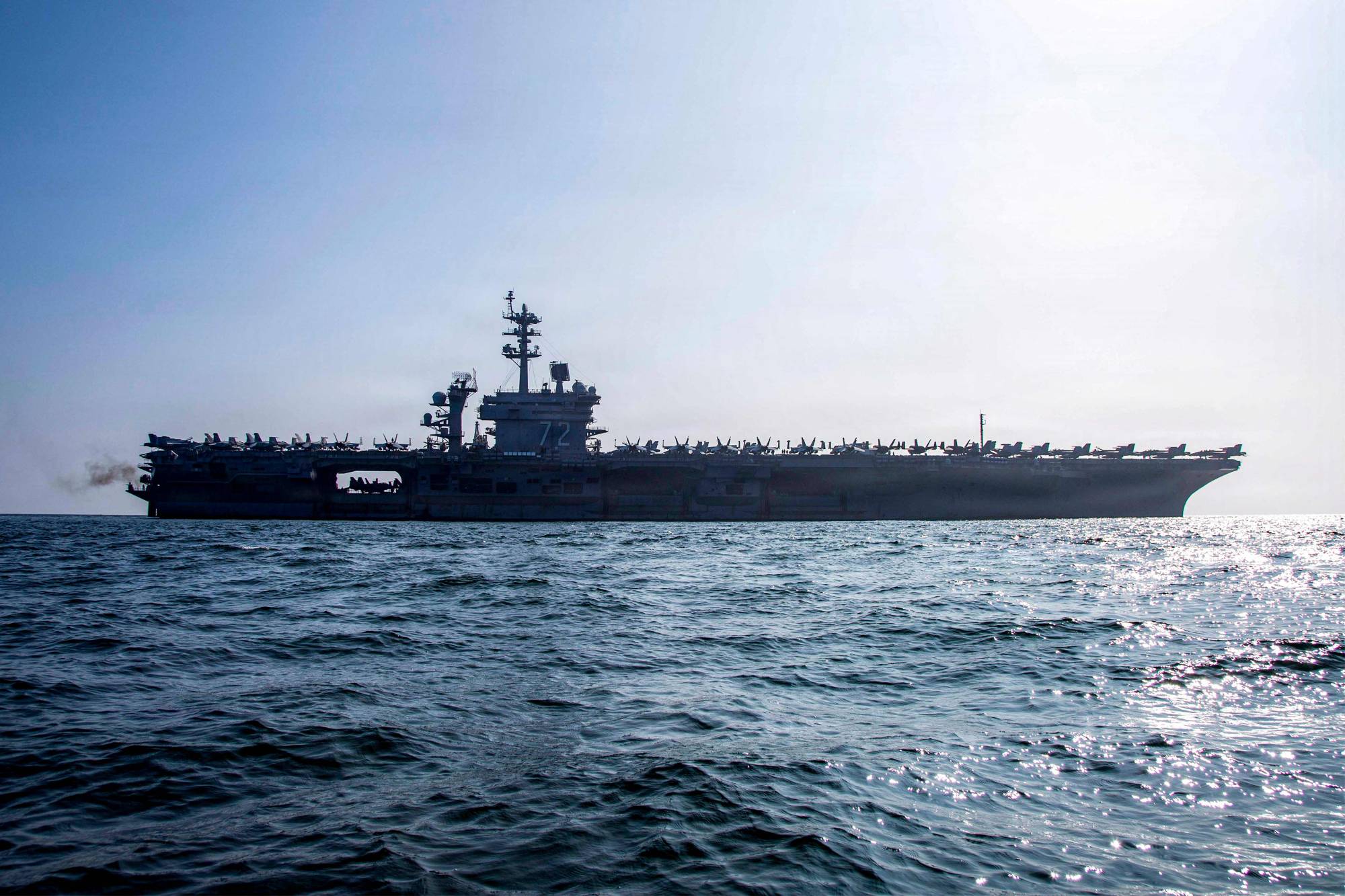
In fact, pressure is the key to these negotiations. What Trump calls the “vast armada” that the United States has built up in the seas around Iran is the largest military force it has concentrated in the region since it prepared for the invasion of Iraq, nearly 23 years ago.
Two aircraft carrier groups, scores of fighter jets, bombers and refueling planes, and antimissile batteries have poured into the region, a demonstration of gunboat diplomacy even larger than the one that preceded the forced extraction of Maduro from Venezuela in early January.
The second carrier, the Gerald R. Ford, was steaming south of Italy in the Mediterranean Sea on Sunday, and will soon be off the coast of Israel, military officials said.
Further complicating any final decision on military strikes, Arab leaders have been calling counterparts in Washington to complain about comments from Mike Huckabee, the US ambassador to Israel. In an interview with Tucker Carlson, the conservative commentator, that aired on Friday, Huckabee said Israel had a right to much of the Middle East, outraging Arab countries.
Administration officials have been unclear what their objectives are as they confront Iran, a country of more than 90 million people. While Trump often talks about preventing Iran from ever being able to produce a weapon, Rubio and other aides have described a range of other rationales for military action: protecting the protesters whom Iranian forces killed by the thousands last month, wiping out the arsenal of missiles that Iran can use to strike Israel, and ending Tehran’s support for Hamas and Hezbollah.
But American military action could also result in a nationalistic response, even among Iranians eager to see the end of Khamenei’s brutal hold on power.
European officials attending the Munich Security Conference last weekend said they doubted that the military pressure would force the Iranian leadership to give up a program that has become a symbol of resistance to the United States.
South Korea Tells Nationals to Leave Iranhttps://english.aawsat.com/world/5243789-south-korea-tells-nationals-leave-iran
Iranians walk past a huge billboard carrying a poem interpretation in Persian 'Human will defeat the evils' at Valiasr Square in Tehran, Iran, 21 February 2026. EPA/ABEDIN TAHERKENAREH
Iranians walk past a huge billboard carrying a poem interpretation in Persian 'Human will defeat the evils' at Valiasr Square in Tehran, Iran, 21 February 2026. EPA/ABEDIN TAHERKENAREH
South Korea on Monday advised its nationals in Iran to leave when flights are available as tensions are growing over a possible US military strike on the country.
"We advise (Korean nationals) to leave Iran when available flights are in operation," the South Korean Embassy said in a safety notice published on its website.
It warned that if the situation rapidly worsens, private flights heading to and departing from Iran could be suspended.
South Korea has maintained the Level 3 travel advisory for Iran, which strongly advises South Koreans there to leave the country.
"We advise Korean nationals staying in Iran to swiftly leave it when there is no urgent business and those who are planning a trip (to the country) to cancel or postpone it," the notice read.
US President Donald Trump said last week he is considering limited military strikes on Iran, exerting pressure on Tehran to reach a new nuclear deal.
Iran has indicated it is prepared to make concessions on its nuclear program in talks with the US in return for the lifting of sanctions and recognition of its right to enrich uranium, as it seeks to avert a US attack.
Packed Bus Plunges Off Nepal Highway, Killing and Injuring Scoreshttps://english.aawsat.com/world/5243777-packed-bus-plunges-nepal-highway-killing-and-injuring-scores
Nepalese police officers prepare to depart for duty in various regions ahead of the upcoming election in Kathmandu, Nepal, Monday, Feb. 23, 2026. (AP Photo/Niranjan Shrestha)
Packed Bus Plunges Off Nepal Highway, Killing and Injuring Scores
Nepalese police officers prepare to depart for duty in various regions ahead of the upcoming election in Kathmandu, Nepal, Monday, Feb. 23, 2026. (AP Photo/Niranjan Shrestha)
A packed bus on its way to Nepal's capital drove off a mountain highway in Nepal early Monday, killing 19 people including a British national and leaving another 25 wounded.
There were dozens of people on board the bus, which was heading from the resort city of Pokhara to Kathmandu when it drove off the Prithvi highway after midnight, police said. The bus rolled down a mountain slope and landed on the banks of Trishuli river near Benighat, about 80 kilometers (50 miles) west of the capital, Kathmandu, the Associated Press reported.
Among those who died was a 24-year-old British national, according to a statement from the Dhading district police office. Only nine bodies have been identified.
The injured included a Chinese national, who is being treated at the National Trauma Center in Kathmandu, and a 27-year-old woman from New Zealand who received minor injuries and was being treated at a local hospital.
China’s official Xinhua News Agency, citing the Chinese Embassy in Nepal, reported earlier that one other Chinese national was missing.
Rescuers reached the accident site soon after the accident, and the injured were pulled out of the wreckage and driven to hospitals for treatment, according to government administrator Mohan Prasad Neupane.
Police are investigating the cause of the accident.
لم تشترك بعد
انشئ حساباً خاصاً بك لتحصل على أخبار مخصصة لك ولتتمتع بخاصية حفظ المقالات وتتلقى نشراتنا البريدية المتنوعة