


US Warns Iran from Stonewalling IAEA

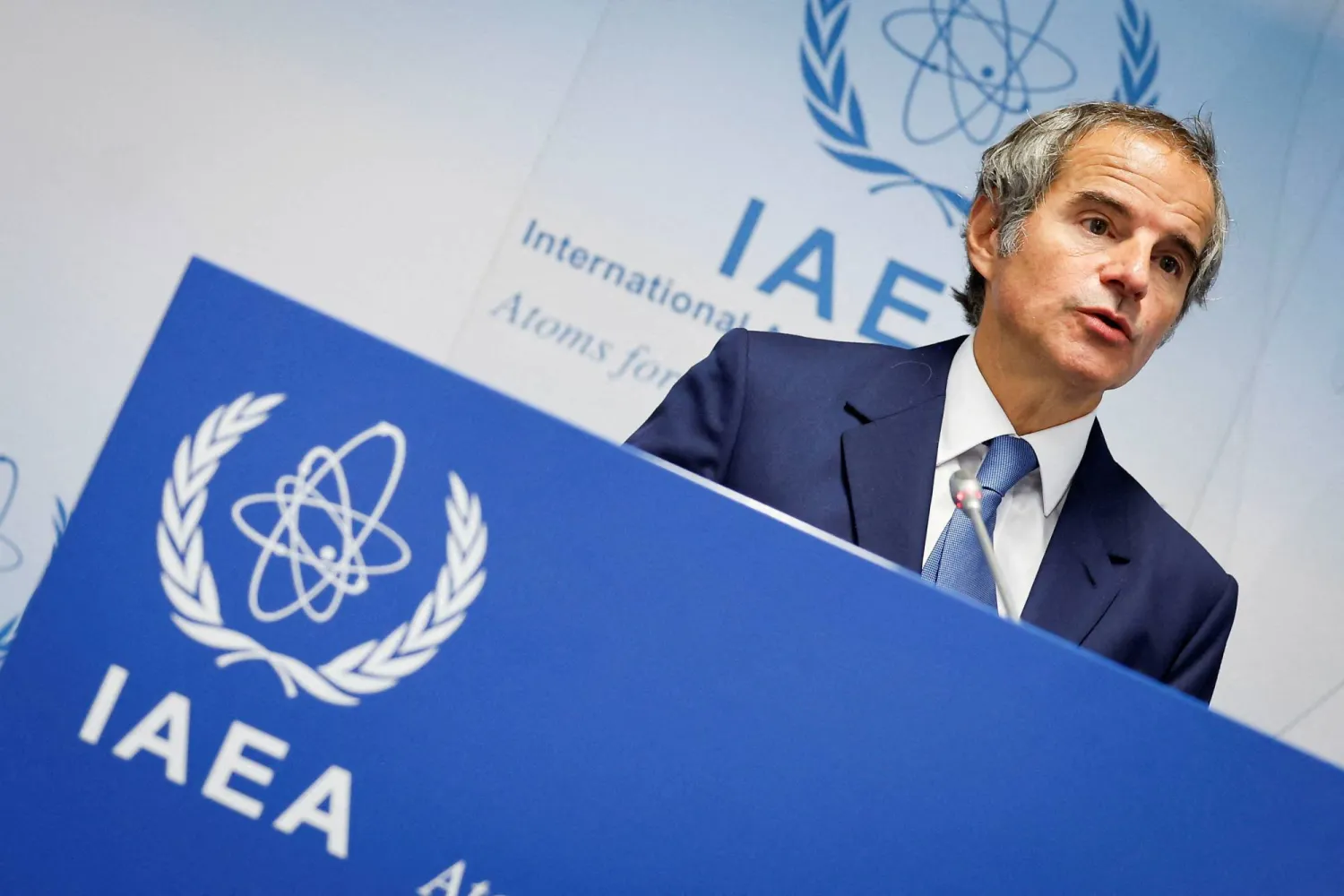
FILE PHOTO: Director General of the International Atomic Energy Agency (IAEA) Rafael Grossi holds a press conference on the opening day of a quarterly meeting of the IAEA Board of Governors in Vienna, Austria, March 4, 2024. REUTERS/Lisa Leutner/File Photo
TT

US Warns Iran from Stonewalling IAEA

FILE PHOTO: Director General of the International Atomic Energy Agency (IAEA) Rafael Grossi holds a press conference on the opening day of a quarterly meeting of the IAEA Board of Governors in Vienna, Austria, March 4, 2024. REUTERS/Lisa Leutner/File Photo

The United States on Thursday threatened future action against Iran at the UN nuclear watchdog if Tehran keeps “stonewalling” the watchdog by denying it the cooperation and answers it seeks on issues including long-unexplained uranium traces.

At a quarterly meeting of the International Atomic Energy Agency's 35-nation Board of Governors, Washington again told Iran to cooperate with IAEA inspectors who for years have been seeking explanations from Tehran on the origin of uranium particles at undeclared sites.

The United States has stopped short, for now, of seeking a resolution against Iran, however.

Diplomats have cited the US presidential election in November as a reason Washington has been reluctant to do that. Tehran bristles at such resolutions and often responds by stepping up its activities.

“We believe we have come to the point that we and the broader international community must consider anew how to respond to Iran's continued stonewalling," the United States said in a statement to the Board meeting. “We cannot allow Iran's current pattern of behavior to continue.”

It is now more than a year since the last Board resolution against Iran, which ordered it to cooperate urgently with the investigation into the particles. Tehran dismissed the resolution as “political” and “anti-Iranian” even though only China and Russia opposed it.

The United States and its three top European allies - Britain, France and Germany - again opted against seeking a resolution against Iran at this week's meeting but the United States said that if Iran did not provide the necessary cooperation soon, it would act.

“It is our strongly held view that Iran's continuing lack of credible cooperation provides grounds for pursuing further Board of Governors action, including the possibility of additional resolutions and consideration of whether Iran is once again in noncompliance with its safeguards obligations,” it said.

In 2018 then-President Donald Trump pulled the United States out of a 2015 deal under which major powers lifted sanctions against Iran in exchange for restrictions on its nuclear activities. After sanctions were re-imposed, Tehran expanded those activities far beyond the deal's limits.

Since April 2021, Iran has enriched uranium to up to 60% purity, close to the roughly 90% of weapons grade and far above the deal's cap of 3.67%.

While Iran says its aims are entirely peaceful and it has the right to enrich to high levels for civil purposes, Western powers say there is no credible civil explanation for enriching to that level and the IAEA says no country has done so without producing a nuclear bomb.

The United States said Iran should provide the IAEA with cooperation including access “for the purposes of collecting environmental samples ... and it must begin to do so now.”

If it did not, it would ask IAEA chief Rafael Grossi to provide a "comprehensive report" on Iran's nuclear activities more wide-ranging than his regular quarterly ones, it said.

“Then, based on the content of that report, we will take appropriate action in support of the IAEA and the global nuclear nonproliferation regime,” it added.

European Doubts

Meanwhile, France, Germany and the UK (E3) gave a joint statement to the IAEA Board of Governors on Iran’s implementation of its nuclear commitments under the JCPoA. They asked the Director General to keep the Board of Governors informed on the status of Iran’s nuclear program well ahead of the next meeting in June 2024.

“Regrettably, the IAEA’s report again confirms that Iran continues on its escalatory path, in increasing violation of its JCPoA commitments,” the E3 said.

The three countries affirmed that Iran continues to refuse to reverse the de-designation of Agency inspectors and is failing to implement the Joint Statement of 4 March 2023.

“These actions cast reasonable doubt on Iran’s willingness to fully live up to its obligation and commitment to cooperate with the IAEA,” the E3 statement noted.

The latest report issued by Grossi said Iran’s total stock of nuclear material stands at 27 times the limit agreed in the 2015 JCPOA nuclear deal.

Also, the UN's nuclear watchdog said in a confidential report to member states last week that Iran's stock of uranium enriched to up to 60% had fallen slightly in the past quarter as it had diluted, or “downblended,” more of its most highly enriched material than it had produced.

On Wednesday, the US called on Iran to dilute all of the uranium it has enriched to up to 60% purity, close to the weapons-grade level of roughly 90%.

As for the E3 countries, they said the recent slight reduction of the stockpile of uranium enriched up to 60 % should not lead to false hope and wrong conclusions.

“We note that Iran has taken no substantial action in response to the DG’s request to re-designate experienced Agency inspectors,” they said, reiterating their call on Iran to halt its nuclear escalation.


World Weighs Fate of Middle East Ceasefire After US Seizes Iranian Cargo Ship

 Ships and tankers in the Strait of Hormuz off the coast of Musandam, Oman, April 18, 2026. (Reuters)
Ships and tankers in the Strait of Hormuz off the coast of Musandam, Oman, April 18, 2026. (Reuters)
TT

World Weighs Fate of Middle East Ceasefire After US Seizes Iranian Cargo Ship

 Ships and tankers in the Strait of Hormuz off the coast of Musandam, Oman, April 18, 2026. (Reuters)
Ships and tankers in the Strait of Hormuz off the coast of Musandam, Oman, April 18, 2026. (Reuters)

Concerns grew on Monday that the ceasefire between the United States and Iran might not hold after the US said it had seized an Iranian cargo ship that tried to run its blockade and Iran vowed to retaliate.

Efforts to build a more lasting peace in the region likewise appeared to be on shaky ground, as Iran said it would not participate in a second round of negotiations that the US had hoped to kick off before the ceasefire expires on Tuesday.

The US has maintained a blockade of Iranian ports, while Iran has lifted and then reimposed its own blockade on marine traffic passing through the Strait of Hormuz, which typically handles roughly one-fifth of the world's oil supply.

The US military said Sunday it fired on an Iranian-flagged cargo ship as the vessel sailed toward Iran's Bandar Abbas port. "We have full custody ‌of their ship, ‌and are seeing what's on board!" President Trump wrote on social media.

Iran's military said ‌the ⁠ship had been ⁠traveling from China. "We warn that the armed forces of Iran will soon respond and retaliate against this armed piracy by the US military," a military spokesperson said, according to state media.

Oil prices jumped and stock markets wobbled, as traders pondered the prospect that traffic in and out of the Gulf would remain at a bare minimum.

IRAN REJECTS PEACE TALKS

Iranian state media reported that Tehran had rejected new peace talks, citing the ongoing blockade, threatening rhetoric, and Washington's shifting positions and "excessive demands."

"One cannot restrict Iran's oil exports while expecting free security for others," Iran's First Vice President Mohammadreza Aref wrote on social ⁠media. "The choice is clear: either a free oil market for all, or the risk ‌of significant costs for everyone."

Trump earlier warned Iran that the US would ‌destroy every bridge and power plant in Iran if Tehran rejected his terms, continuing a recent pattern of such threats.

Iran has said ‌that if the United States were to attack its civilian infrastructure it would hit power stations and desalination plants ‌of Gulf Arab neighbors.

PREPARING FOR TALKS THAT MIGHT NOT HAPPEN

Trump said his envoys would arrive in Islamabad on Monday evening, one day before a two-week ceasefire ends.

A White House official told Reuters the US delegation would be headed by Vice President JD Vance, who led the war's first peace talks a week ago, and also include Trump's envoy Steve Witkoff and son-in-law Jared Kushner. But ‌Trump told ABC News and MS Now that Vance would not go.

Pakistan, which has served as the main mediator, appeared to be preparing for the talks.

Two giant ⁠US C-17 cargo planes landed ⁠at an air base on Sunday afternoon, carrying security equipment and vehicles in preparation for the US delegation's arrival, two Pakistani security sources said.

Municipal authorities in the Pakistani capital of Islamabad halted public transport and heavy-goods traffic through the city. Barbed wire was rolled out near the Serena Hotel, where last week's talks were held. The hotel told all guests to leave.

Now in its eighth week, the war has created the most severe shock to global energy supplies in history, sending oil prices surging because of the de facto closure of the strait.

Thousands of people have been killed by US-Israeli strikes on Iran and in an Israeli invasion of Lebanon conducted in parallel since the war began on February 28.

Iran responded to the attacks with missiles and drones against Israeli and nearby Arab countries that host US bases.

Iran's parliament speaker, Mohammad Baqer Qalibaf, who has led Iran's side in the talks, had earlier said the two sides had made progress but were still far apart on nuclear issues and the Strait.

European allies, repeatedly criticized by Trump for not aiding his war effort, worry that Washington's negotiating team is pushing for a swift, superficial deal that would require months or years of technically complex follow-on talks.


Argentina’s Milei Says US-Israel War Against Iran ‘Right Thing to Do’

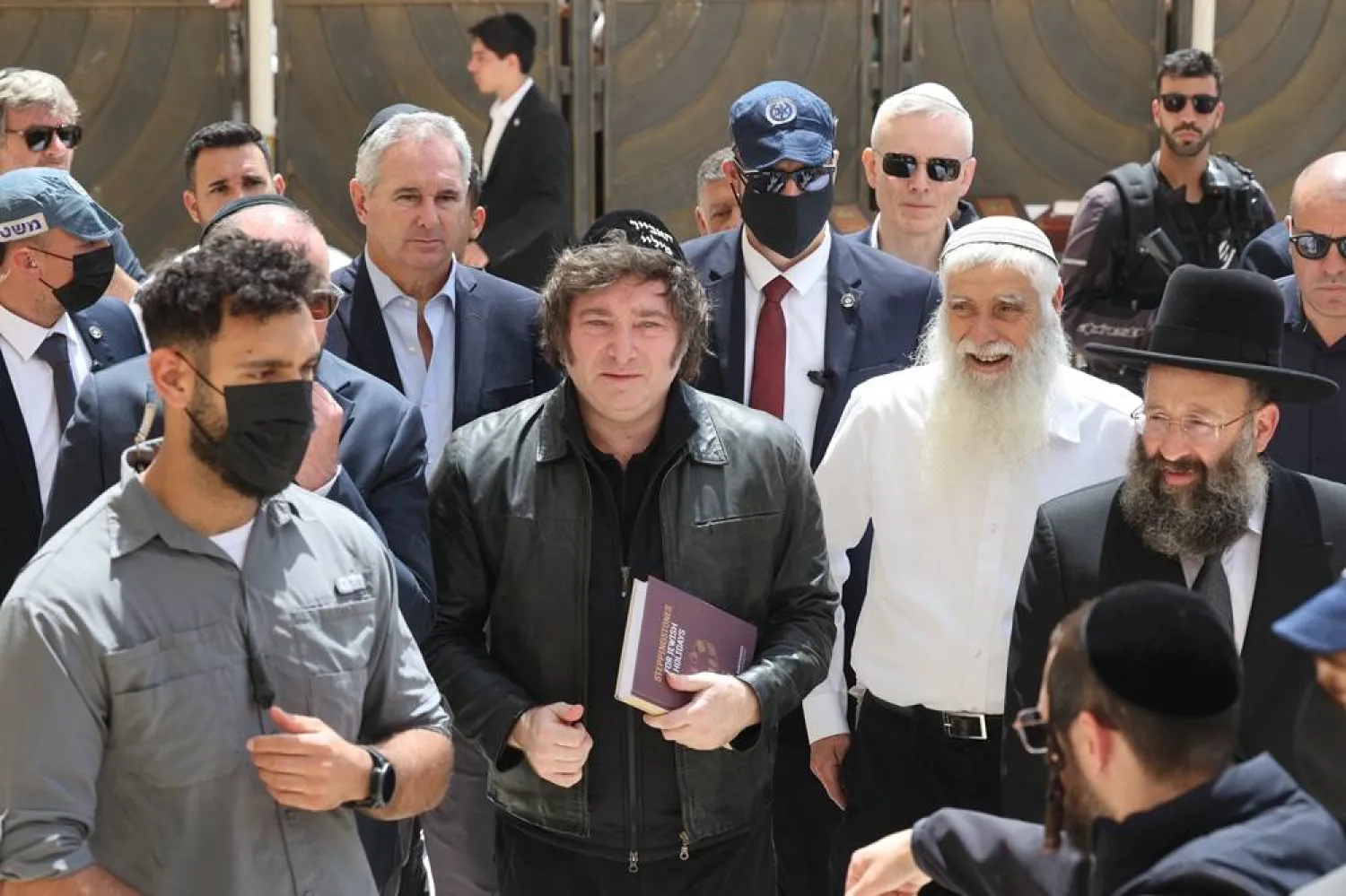
Argentinian President Javier Milei (C) visits the Western Wall in Jerusalem’s Old City, 19 April 2026. (EPA)
TT

Argentina’s Milei Says US-Israel War Against Iran ‘Right Thing to Do’

Argentinian President Javier Milei (C) visits the Western Wall in Jerusalem’s Old City, 19 April 2026. (EPA)

Argentine President Javier Milei declared Sunday that the joint US-Israel war against Iran was the "right thing to do", as he signed on to the so-called Isaac Accords aimed at deepening bilateral ties between Israel and Latin American countries.

Making his third visit to Israel as president, Milei reaffirmed Argentina's support for the campaign against Iran, citing his government's earlier decision to designate Iran's Revolutionary Guards a "terrorist organization".

"We expressed our firm support for the United States and Israel in their war against terrorism and against the Iranian regime, not only because it is the right thing to do, but because our countries are brothers in suffering," Milei said in a joint statement with Israeli Prime Minister Benjamin Netanyahu.

"Argentina was the victim of cowardly terrorist attacks on the AMIA and on the Embassy of Israel, both instigated by Iran," he added.

Argentina has accused Iran of not cooperating with a probe into a 1994 bombing in Buenos Aires that killed 85 people and injured more than 300 at a Jewish community center.

Prior to that, in 1992, an explosion at the Israeli embassy killed 29 and wounded 200.

Argentine courts have blamed both attacks on Iran, which has always denied involvement and refused to hand over suspects.

"To this day, we still demand justice," said the libertarian leader, an outspoken supporter of both Netanyahu and US President Donald Trump.

"We reiterate our willingness to move the Argentine embassy to Jerusalem as soon as conditions allow. We consider it necessary, but above all, just," he added.

The US-backed Isaac Accords are an initiative designed to boost Israel's ties with Latin America, mirroring the Abraham Accords under which some Arab countries normalized relations with Israel during Trump's first term.

Israel and Argentina also inked a deal to launch direct flights between Buenos Aires and Tel Aviv from November -- a move Milei said would cement "an unbreakable bond" between the two countries.

Netanyahu hailed Milei for showing "moral clarity" in standing with Israel.

"President Milei... has shown that by standing up with the Jewish people, standing up against anti-Semitic vilifications, standing up in our hour of need, standing up when we fight the battle of civilization against barbarism," Netanyahu said.

Argentina is home to the largest Jewish community in Latin America, numbering nearly 300,000 people living mostly in Buenos Aires.

Earlier on Sunday, Milei visited the Western Wall in Jerusalem's Old City, considered the holiest site where Jews are allowed to pray.

He had also visited the site in February 2024 and June 2025.


Carney Says Canada’s US Ties Have Become a Weakness

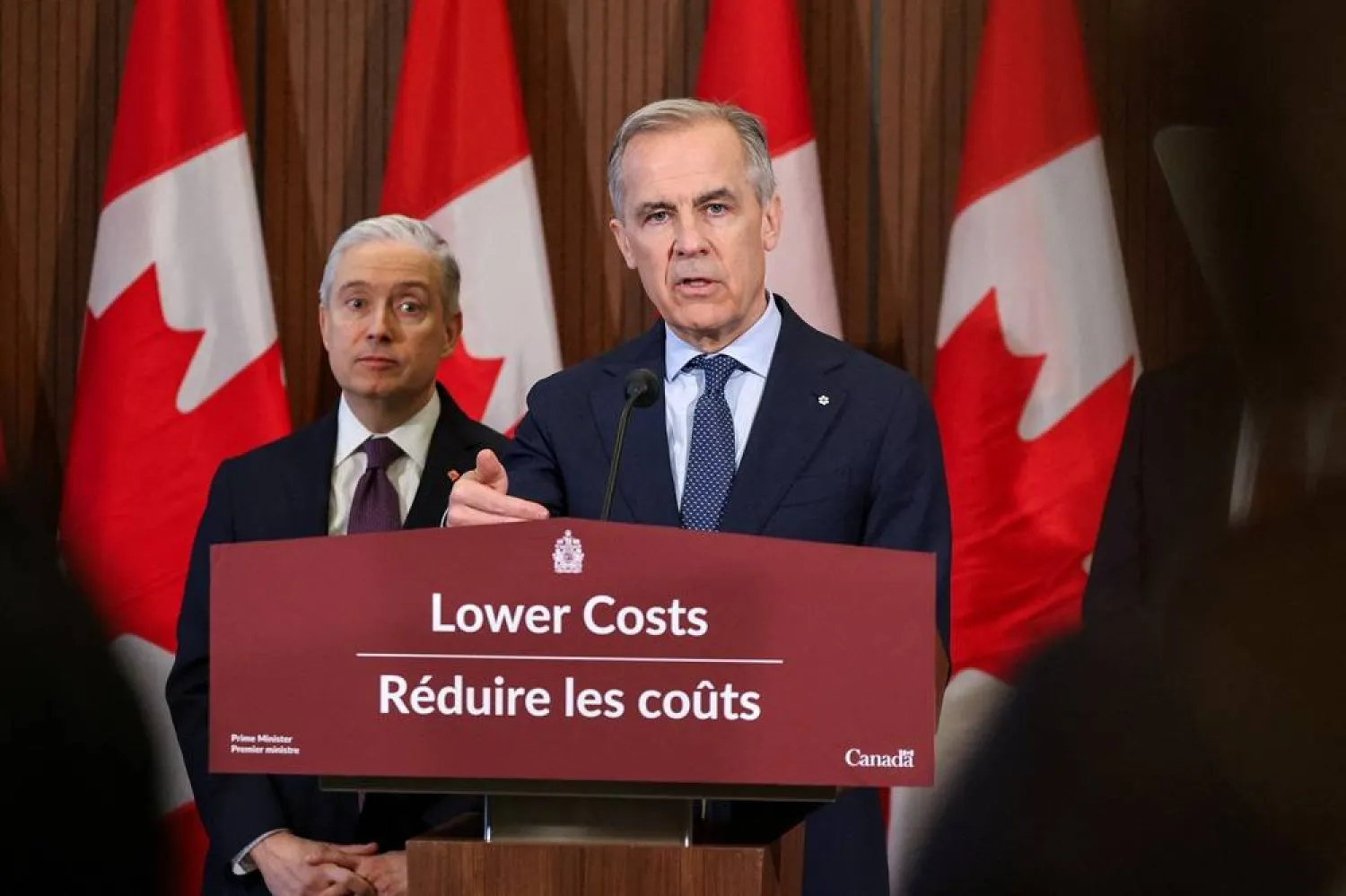
Canada's Prime Minister Mark Carney speaks at a press conference with Minister of Finance and National Revenue Francois-Philippe Champagne, and Minister of Energy and Natural Resources Tim Hodgson (not pictured) on Parliament Hill the day after his governing Liberal Party secured a majority by winning all three seats in special elections, in Ottawa, Ontario, Canada, April 14, 2026. (Reuters)
TT

Carney Says Canada’s US Ties Have Become a Weakness

Canada's Prime Minister Mark Carney speaks at a press conference with Minister of Finance and National Revenue Francois-Philippe Champagne, and Minister of Energy and Natural Resources Tim Hodgson (not pictured) on Parliament Hill the day after his governing Liberal Party secured a majority by winning all three seats in special elections, in Ottawa, Ontario, Canada, April 14, 2026. (Reuters)

Canada's close ‌ties to the United States were once a strength but have become a weakness, Prime Minister Mark Carney said on Sunday, in a video message to his country in which he also praised the heroism of military leaders who fought against US invasion more than two centuries ago.

Holding up a small toy soldier depiction of General Isaac Brock, the British military leader who died defending what is now Canada from a US invasion in the War of 1812, Carney said Canada ‌can't control ‌the disruption coming from its US neighbors, and ‌can't ⁠bet its future ⁠on the hope that it will suddenly stop.

"The situation today feels unique, but we've faced down threats like this before," Carney said, referencing Brock and several other Canadian historical figures, including Chief Tecumseh who united Indigenous Nations across the Great Lakes to resist US expansion in 1812.

Carney, who secured a ⁠parliamentary majority for his Liberal government last week, ‌has said his electoral win will ‌help him deal more effectively in the trade war started ‌by US President Donald Trump.

US Commerce Secretary Howard Lutnick slammed ‌Canada as a difficult trading partner last week.

Canada, which sends almost 70% of its exports to the United States, is this year due to review the trilateral US-Mexico-Canada free trade treaty. US officials ‌have suggested they want major changes to the pact.

As well as imposing tariffs on Canadian ⁠exports ⁠such as steel, aluminum and autos, Trump has repeatedly mused about annexing Canada and turning it into the 51st US state.

Carney's office did not immediately respond to questions about why he had released the video now and why he had praised figures who resisted US expansionism.

Carney said he plans to give regular addresses to Canadians in the weeks and months ahead to update them on what his government is doing to grow Canada's economy and defend its sovereignty.

"It's our country, it's our future, we are taking back control," he said.