


Ukraine’s Zelenskyy Gets More Air Defense Missiles from Spain to Fight Deadly Russian Glide Bombs

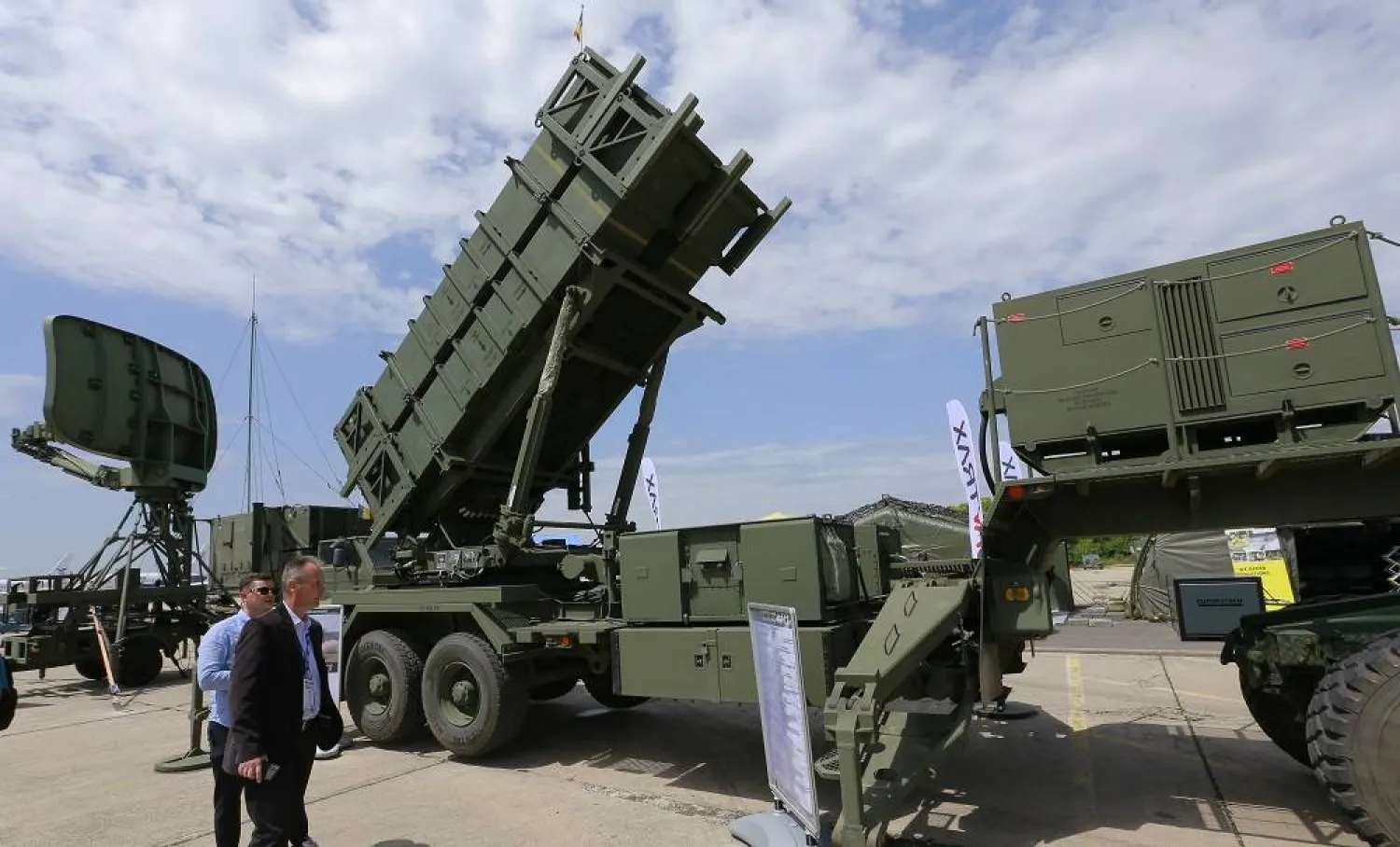
Visitors check US-made Patriot surface-to-air missile system during the first day of the Black Sea Defense & Aerospace Exhibition 2024 (BSDA'24) in Bucharest, Romania, 22 May 2024. (EPA)
TT

Ukraine’s Zelenskyy Gets More Air Defense Missiles from Spain to Fight Deadly Russian Glide Bombs

Visitors check US-made Patriot surface-to-air missile system during the first day of the Black Sea Defense & Aerospace Exhibition 2024 (BSDA'24) in Bucharest, Romania, 22 May 2024. (EPA)

Ukrainian President Volodymyr Zelenskyy on Monday secured from Spain a pledge of additional air defense missiles to help fight the about 3,000 bombs that he says Russia launches every month at Ukraine in the third year of the war.

However, Ukraine still urgently needs another seven US-made Patriot air defense systems to stop Russia hitting the power grid and civilian areas, as well as military targets, with devastating glide bombs that wreak wide destruction, Zelenskyy said.

“If we had these modern Patriot systems, (Russian) airplanes wouldn’t be able to fly close enough to drop the (glide) bombs on the civilian population and the military,” Zelenskyy told a news conference in the Spanish capital.

Glide bombs are heavy Soviet-era bombs fitted with precision guidance systems and launched from aircraft flying out of range of air defenses. The bombs weigh more than a ton and blast targets to smithereens, leaving a huge crater.

Two Patriot systems are needed to protect the northeastern Kharkiv region, where the Kremlin’s forces launched a cross-border offensive on May 10 that left Ukrainian troops reeling, Zelenskyy said. The death toll from a glide bomb attack on a Kharkiv shopping mall Saturday rose to 18, regional Gov Oleh Syniehubov said Monday, with five people still missing.

The Kharkiv push has further strained Ukraine’s already depleted army, which in recent months has been fighting Russia’s intense drive deeper into the partially occupied eastern Donetsk region. Zelenskyy said on Sunday that the Kremlin’s army is mustering at another point in Russia, farther north but close to the approximately 1,000-kilometer (600-mile) front line, aiming to stretch Ukraine's depleted army thinner and crack its resistance in the area.

Zelenskyy and Spanish Prime Minister Pedro Sánchez signed a bilateral security agreement that allocates 1 billion euros ($1.1 billion) of military aid to Ukraine in 2024, and 5 billion euros ($5.4 billion) by 2027. More Leopard tanks and artillery ammunition also feature in the package.

“After more than two years (of war), Russia’s aggression continues, and that’s why it is more necessary than ever to redouble our support,” Sánchez told the joint news conference.

The Patriot is a surface-to-air guided missile system that was first deployed in the 1980s and can target aircraft, cruise missiles and shorter-range ballistic missiles. It is expensive but is effective and sought after by armies around the world.

European countries have hesitated to send Patriot systems to Ukraine, fearing they may need them.

Spain’s King Felipe VI earlier welcomed Zelenskyy at the capital’s Barajas airport. Zelenskyy was due in neighboring Portugal on Tuesday.

He had been due to visit Spain earlier this month but postponed all his foreign trips after Russia launched its offensive in the Kharkiv region.

Ukraine has repeatedly tried to strike behind Russian lines, often with drones, though Russia’s response to the new technology used in unmanned vehicles has improved in recent months.

A Ukrainian long-range drone set a new distance record by attacking overnight an early-warning radar in the Russian city of Orsk, some 1,800 kilometers (1,120 miles) from the Ukrainian border, Ukrainian officials claimed.

The operation was conducted by Ukraine’s military intelligence, GUR, an intelligence official told The Associated Press on condition of anonymity because the person was not authorized to comment publicly. Ukraine’s previous long-range attack record was at 1,500 kilometers (930 miles) when a drone struck an oil refinery in Russia’s Bashkortostan on May 9.

It was not immediately possible to verify either claim.

Meanwhile, a Western intelligence assessment suggested that Russia’s Kharkiv offensive has subsided.

“The northern Kharkiv front has likely stabilized with Russian territorial control fragmented and not joined up,” the UK Defense Ministry said Sunday. “Russia’s gains in this axis will be limited in the coming week, as Russia’s initial momentum has been contained by Ukrainian resistance.”

That is in line with Zelenskyy’s claim last Friday that Ukrainian forces have secured “combat control” of areas where Russian troops entered the Kharkiv region.

The onslaught unfolding as the weather improves has brought Ukraine’s biggest military test since Russia’s full-scale invasion in February 2022. Slow deliveries of support by its Western partners, especially a lengthy delay in US military aid, have left Ukraine at the mercy of Russia’s bigger army and air force.



Senior Iranian Official: New Talks with US Planned in Early March, Interim Deal Possible

Pedestrians walk past a billboard depicting a US aircraft carrier with damaged fighter jets on its deck and a sign in Farsi and English reading, "If you sow the wind, you'll reap the whirlwind," in Tehran, Iran, Sunday, Feb. 22, 2026. (AP Photo/Vahid Salemi)
TT

Senior Iranian Official: New Talks with US Planned in Early March, Interim Deal Possible

Pedestrians walk past a billboard depicting a US aircraft carrier with damaged fighter jets on its deck and a sign in Farsi and English reading, "If you sow the wind, you'll reap the whirlwind," in Tehran, Iran, Sunday, Feb. 22, 2026. (AP Photo/Vahid Salemi)

Iran and the United States have differing views over the scope and mechanism to lift sanctions on Tehran in exchange for curbs on its nuclear program, a senior Iranian official told Reuters on Sunday, adding that new talks were planned in early March.

The official said Tehran could seriously ⁠consider a combination of ⁠exporting part of its highly enriched uranium (HEU) stockpile, diluting the purity of its HEU and a regional consortium for enriching uranium, but in return Iran's ⁠right to "peaceful nuclear enrichment" must be recognized.

"The negotiations continue and the possibility of reaching an interim agreement exists," the official said.

Iran's Foreign Minister Abbas Araqchi said on Friday that he expected to have a draft counterproposal ready within days following nuclear talks with the ⁠United ⁠States this week, while US President Donald Trump said he was considering limited military strikes.

The senior official said Tehran will not hand over control of its oil and mineral resources but US companies can always participate as contractors in Iran’s oil and gas fields.


Witkoff Says Trump Questioning why Iran Has Not 'Capitulated'

US Special Envoy Steve Witkoff listens as President Donald Trump (not pictured) speaks at the inaugural Board of Peace meeting at the US Institute of Peace in Washington, D.C., US, February 19, 2026. REUTERS/Kevin Lamarque
TT

Witkoff Says Trump Questioning why Iran Has Not 'Capitulated'

US Special Envoy Steve Witkoff listens as President Donald Trump (not pictured) speaks at the inaugural Board of Peace meeting at the US Institute of Peace in Washington, D.C., US, February 19, 2026. REUTERS/Kevin Lamarque

US envoy Steve Witkoff said on Saturday that President Donald Trump is questioning why Iran has not "capitulated" in the face of Washington's military build-up aimed at pressuring them into a nuclear deal.

The United States and Iran this week resumed Oman-mediated talks in Geneva aimed at averting the possibility of military action, after Washington dispatched two aircraft carriers, jets and weaponry to the region to back its warnings.

In a Fox News interview with Trump's daughter-in-law Lara, Witkoff said the president was "curious" about Iran's position after he had warned them of severe consequences in the event they failed to strike a deal.

"I don't want to use the word 'frustrated,' because he understands he has plenty of alternatives, but he's curious as to why they haven't... I don't want to use the word 'capitulated,' but why they haven't capitulated," AFP quoted him as saying.

"Why, under this pressure, with the amount of seapower and naval power over there, why haven't they come to us and said, 'We profess we don't want a weapon, so here's what we're prepared to do'? And yet it's sort of hard to get them to that place."

The US envoy also confirmed in the interview that he had met with Reza Pahlavi, who has not returned to Iran since before the 1979 Iranian Revolution that ousted the monarchy.

"I met him at the direction of the president," he said, without providing further details.

US-based Pahlavi last week told a crowd in Munich that he was ready to lead the country to a "secular democratic future" after Trump said regime change would be best for the country.

Witkoff's comments come after Iranian Foreign Minister Abbas Araghchi said a draft proposal for an agreement with Washington would be ready in a matter of days.

Trump said on Thursday that Iran had at most 15 days to make a deal on concerns starting with its nuclear program.

As talks between the two nations continued in Geneva, Iran's supreme leader Ali Khamenei on Tuesday said that Trump would not succeed in destroying the country.


Will Trump Accept a ‘Token’ Nuclear Enrichment in Iran?

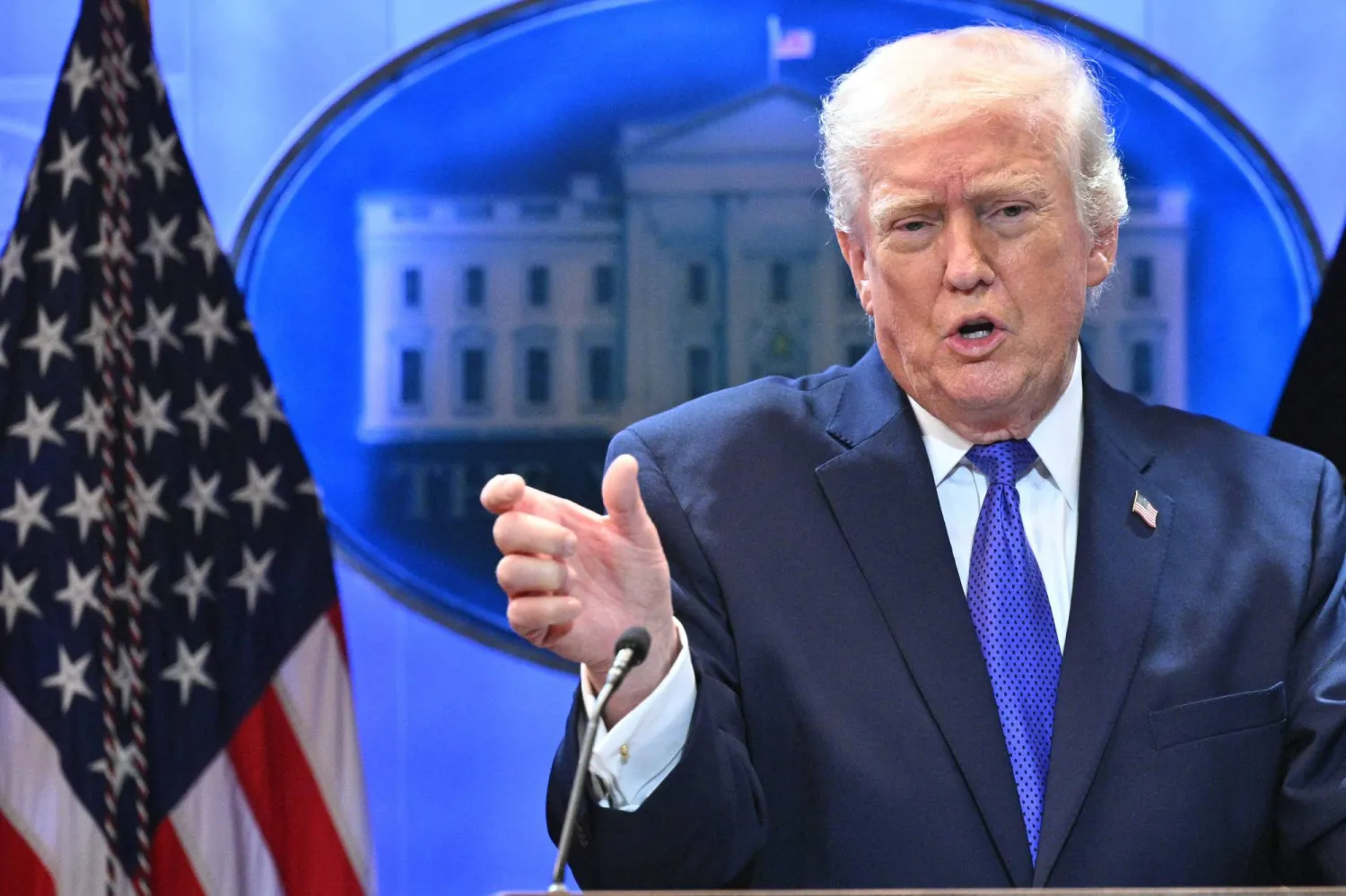
(FILES) US President Donald Trump speaks during a press conference in the Brady Press Briefing Room of the White House in Washington, DC, on February 20, 2026. (Photo by Mandel NGAN / AFP)
TT

Will Trump Accept a ‘Token’ Nuclear Enrichment in Iran?

(FILES) US President Donald Trump speaks during a press conference in the Brady Press Briefing Room of the White House in Washington, DC, on February 20, 2026. (Photo by Mandel NGAN / AFP)

The Trump administration is prepared to consider a proposal that allows Iran “token” nuclear enrichment if it leaves no possible path to a bomb, a senior US official told Axios on Saturday.

This suggests there could be an opening, if only a small one, between the red lines set by the US and Iran for a deal to constrain Iran's nuclear capabilities and prevent war, according to Axios.

The report published this week said that after the Geneva talks, US President Donald Trump's envoys Steve Witkoff and Jared Kushner asked Iranian Foreign Minister Abbas Araghchi to produce a detailed proposal addressing all the US concerns regarding Iran's nuclear program.

A senior US official said Witkoff and Kushner told Araghchi that Trump's position was “zero enrichment” on Iranian soil.

But the official said that if the proposal includes “small, token enrichment,” and if the Iranians offer detailed proof that it poses no threat, the US will study it.
Another senior Trump adviser said: “Trump is keeping his options open. He could decide on an attack at any moment.”

Pezeshkian: We Will Not Bow Our Heads

Meanwhile, Iranian ⁠President Masoud Pezeshkian said on Saturday that his country would not bow its ⁠head to pressure from world powers.

“World powers are lining up to force us to bow our heads... but we will not bow our heads despite all the problems that they are creating for us,” Pezeshkian said in a speech carried live by ⁠state TV.

But a senior US official told Axios that “Trump will be ready to accept a deal that would be substantive and that he can sell politically at home. If the Iranians want to prevent an attack they should give us an offer we can't refuse. The Iranians keep missing the window. If they play games there won't be a lot of patience.”

At the same time, Trump has been presented with military options that involve directly targeting the supreme leader.

The Trump adviser said the Pentagon had presented the US President with numerous options.

“They have something for every scenario. One scenario takes out the ayatollah and his son and the mullahs,” the adviser said, referring to Supreme Leader Ali Khamenei and his son Mojtaba, who is seen as a potential successor. “What the president chooses no one knows. I don't think he knows.”

A second source confirmed a plan to kill Khamenei and his son was floated to Trump several weeks ago.

Another senior Trump adviser said: “Trump is keeping his options open. He could decide on an attack at any moment.”

Zero Enrichment

In return, a senior US official said Witkoff and Kushner told Araghchi that Trump's position was “zero enrichment” on Iranian soil. But the official said that if the proposal includes “small, token enrichment,” and if the Iranians offer detailed proof that it poses no threat, the US will study it.

A source familiar with the talks told Axios that regional mediators told Iran and the US in recent days that any deal must enable both sides to claim victory and, if possible, also be something that Gulf countries can accept.

With the region bracing for war, the US official insisted that Washington would wait for Iran's proposal before deciding how to proceed, and whether there will be another round of talks.

CBS News quoted US officials as saying on Wednesday that Iran had floated the idea of pausing uranium enrichment for a specified period of time, possibly one to three years or five years, while some said this period covered the remainder of Trump's years in the White House.

For his part, Araghchi said on Friday that “Washington has not asked Tehran to permanently suspend uranium enrichment,” adding Tehran had not offered the US a temporary suspension of its uranium enrichment.

Iran's foreign minister said he expected to have a draft counterproposal ready within days following nuclear talks with the United States this ⁠week, while Trump said he was considering limited military strikes.

Two US officials told Reuters that US military planning on Iran had reached an advanced stage, with options including targeting individuals as part of an attack and even pursuing leadership change in Tehran, if ordered by Trump.

Araghchi said after indirect discussions in Geneva this week with Witkoff and Kushner that the sides had reached an understanding on main “guiding principles,” but that did not mean a deal was ⁠imminent.

The foreign minister, in an interview on MS NOW, said he had a draft counterproposal that could be ready in the next two or three days for top Iranian officials to review, with more US-Iran talks possible in a week or so.