Trump Victory Poses Challenges for the Fed's Independence

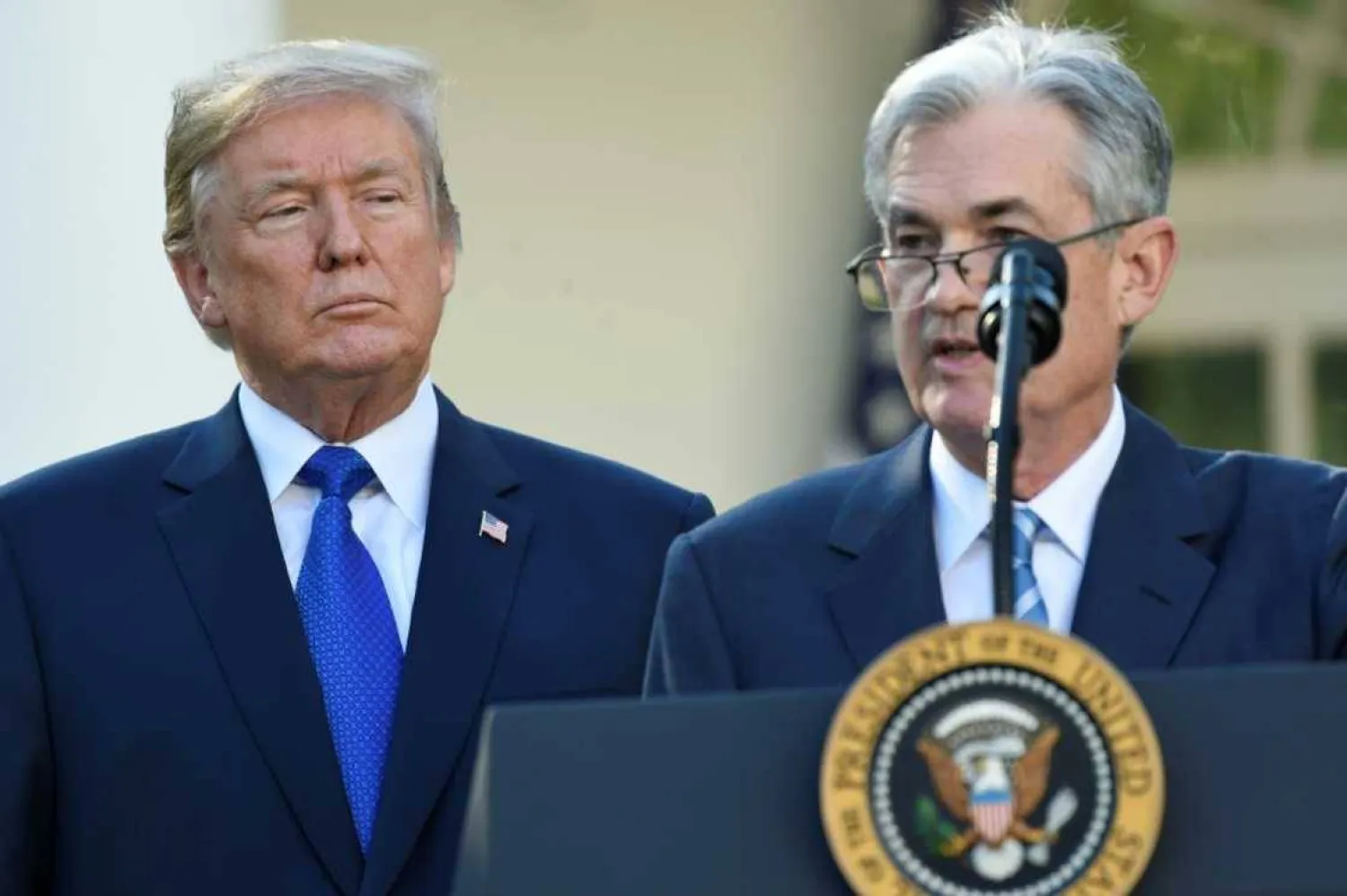
Donald Trump first nominated Jerome Powell to run the Fed. Photo: SAUL LOEB / AFP
TT

Trump Victory Poses Challenges for the Fed's Independence

Donald Trump first nominated Jerome Powell to run the Fed. Photo: SAUL LOEB / AFP

Donald Trump's return to the White House could put the independence of the US Federal Reserve under strain, potentially weakening its ability to fight against inflation and unemployment free from political interference.
The Fed has a dual mandate from Congress to act independently to tackle both inflation and unemployment -- primarily by raising and lowering interest rates.
Anything that undermines the Fed's independence could spook traders in the financial markets, who might come to question if it could effectively tackle inflation.
"The prevailing view for the past 30 years, with the exception of the first Trump administration, has been that it's best to give the Fed the widest possible latitude to conduct monetary policy," David Wilcox, a senior fellow at the Peterson Institute for International Economics (PIIE), told AFP.
"Monetary policy is complicated enough even without having to take that additional consideration," added Wilcox, a former senior advisor to three Fed chairs who is also Bloomberg's director of US economic research.
Trump's 'better instincts'?
The Federal Reserve System includes a decentralized network of 12 regional reserve banks and a seven-member Board of Governors in Washington.
Fed governors are nominated by the US president to serve staggered 14-year terms, and must be confirmed by the Senate.
The Fed chair and vice chairs are appointed from among these seven governors and, once appointed, cannot be removed without cause.
The Fed Board of Governors also plays a role in approving nominations to run the 12 regional reserve banks.
However, those nominations are made by the regional reserve banks' own directors, adding a layer of protection against too much meddling from the center.
Where a future President Trump can -- and very likely will -- have a significant influence over the Fed is in his choice of nominations.
Jerome Powell is scheduled to step down as Fed Chair in May 2026, and Trump is not expected to re-nominate him.
The president-elect is a fierce critic of Powell -- whom he first nominated to run the US central bank -- accusing him without evidence of supporting the Democrats, and once even questioning if he was a bigger enemy than Chinese President Xi Jinping.
The president-elect has also said he has "better instincts" on the economy than many Fed governors, and argued that the US president should have "at least" a say setting interest rates.
But once Powell steps down as Fed Chair, he will remain a governor until 2028, should he choose to stay on, complicating Trump's nomination process.
To replace him with someone not currently on the board, Trump must either pressure an existing governor to quit, or replace Fed governor Adriana Kugler when her term expires in January 2026, and then nominate her replacement to the top job.
'Outsized influence'
Given the "outsized influence" wielded by the US central bank chair, the next Trump-appointed Fed chief "could change the dynamic and the independence of monetary policy," Nationwide chief economist Kathy Bostjancic told AFP.
"If someone is nominated and appointed and are seen to have political leanings, and it allows them to influence their monetary policy decisions, then that would become quite messy for the Federal Reserve," she said.
But even with Trump's Republican Party back in control of the Senate, the next Fed Chair is still likely to receive plenty of scrutiny, Steve Englander, Standard Chartered's head of North America macro strategy, told AFP.
"It's not like you can pick a name out of a hat and drop him into the Senate, he gets confirmed the next day, and he's voted in the day after," he said.
Senators "take their role very seriously," he added.
A final backstop also exists in the bond markets, which take into account expectations of where the Fed's interest rates will be in the future, and which impact borrowing rates on everything from mortgages to car loans.
"You can't appoint someone 180 degrees out of the mainstream...because the bond market will reject that immediately," Englander said.
"The bond market is a guardrail," he added. "There's a limit."



Turkish FM to Attend Trump’s Board of Peace Meeting in Washington, Italy as ‘Observer’ 

28 November 2025, Berlin: Turkish Foreign Minister Hakan Fidan during a joint press conference with German Foreign Minister Wadephul. (dpa)
TT

Turkish FM to Attend Trump’s Board of Peace Meeting in Washington, Italy as ‘Observer’ 

28 November 2025, Berlin: Turkish Foreign Minister Hakan Fidan during a joint press conference with German Foreign Minister Wadephul. (dpa)

‌Turkish Foreign Minister Hakan Fidan will travel to Washington in lieu of President Recep Tayyip Erdogan for the inaugural meeting of US President Donald Trump's "Board of Peace" on Thursday, the foreign ministry said on Wednesday.

A Turkish diplomatic source told Reuters ‌that Fidan, during the ‌talks, would call ‌for ⁠determined steps to ⁠resolve the Palestinian issue and emphasize that Israel must end actions to hinder the flow of aid into Gaza and stop its ceasefire violations.

Fidan ⁠will also reiterate Türkiye's ‌readiness ‌to contribute to Gaza's reconstruction and its ‌desire to help protect Palestinians ‌and ensure their security, the source said.

He will also call for urgent action against Israel's "illegal ‌settlement activities and settler violence in the West Bank", ⁠the ⁠source added.

According to a readout from Erdogan's office, the president separately told reporters on Wednesday that he hoped the Board of Peace would help achieve "the lasting stability, ceasefire, and eventually peace that Gaza has longed for", and would focus on bringing about a two-state solution.

The board, of which Trump is the chairman, was initially designed to oversee the Gaza truce and the territory's reconstruction after the war between Hamas and Israel.

Meanwhile, Italy will be present at the meeting as an "observer", Italian Foreign Minister Antonio Tajani said Wednesday.

"I will go to Washington to represent Italy as an observer to this first meeting of the Board of Peace, to be present when talks occur and decisions are made for the reconstruction of Gaza and the future of Palestine," Tajani said according to ANSA news agency.

Italy cannot be present as anything more than an observer as the country's constitutional rules do not allow it to join an organization led by a single foreign leader.

But Tajani said it was key for Rome to be "at the forefront, listening to what is being done".

Since Trump launched the Board of Peace at the World Economic Forum in Davos in January, at least 19 countries have signed its founding charter.


Energy Secretary: US to Stop Iran's Nuclear Ambitions 'One Way or the Other'

US Secretary of Energy Chris Wright speaks during a press conference after a meeting with Venezuela's acting president Delcy Rodriguez at the Miraflores Presidential Palace in Caracas on February 11, 2026. (Photo by Juan BARRETO / AFP)
TT

Energy Secretary: US to Stop Iran's Nuclear Ambitions 'One Way or the Other'

US Secretary of Energy Chris Wright speaks during a press conference after a meeting with Venezuela's acting president Delcy Rodriguez at the Miraflores Presidential Palace in Caracas on February 11, 2026. (Photo by Juan BARRETO / AFP)

The United States will deter Iran from acquiring nuclear weapons "one way or the other", US Energy Secretary Chris Wright warned on Wednesday.

"They've been very clear about what they would do with nuclear weapons. It's entirely unacceptable," Wright told reporters in Paris on the sidelines of meetings of the International Energy Agency.

"So one way or the other, we are going to end, deter Iran's march towards a nuclear weapon," Wright said.

US and Iranian officials held talks in Geneva on Tuesday aimed at averting the possibility of US military intervention to curb Tehran's nuclear program.

Iran said following the talks that they had agreed on "guiding principles" for a deal to avoid conflict.

US Vice President JD Vance, however, said Tehran had not yet acknowledged all of Washington's red lines.


Iran, Russia to Conduct Joint Drills in the Sea of Oman 

This handout photo released by Iran's Revolutionary Guards Corps (IRGC)'s official website Sepanews on February 17, 2026, shows boats maneuvering around a tanker vessel during a military exercise by members of the IRGC and navy in the Strait of Hormuz. (Sepahnews / AFP)
TT

Iran, Russia to Conduct Joint Drills in the Sea of Oman 

This handout photo released by Iran's Revolutionary Guards Corps (IRGC)'s official website Sepanews on February 17, 2026, shows boats maneuvering around a tanker vessel during a military exercise by members of the IRGC and navy in the Strait of Hormuz. (Sepahnews / AFP)

Iran and Russia will conduct naval maneuvers in the Sea of Oman on Thursday, following the latest round of talks between Tehran and Washington in Geneva, Iranian media reported.

On Monday, the Revolutionary Guards, the ideological arm of Iran's military, also launched exercises in the strategic Strait of Hormuz, a challenge to US naval forces deployed in the region.

"The joint naval exercise of Iran and Russia will take place tomorrow (Thursday) in the Sea of Oman and in the northern Indian Ocean," the ISNA agency reported, citing drill spokesman, Rear Admiral Hassan Maghsoudloo.

"The aim is to strengthen maritime security and to deepen relations between the navies of the two countries," he said, without specifying the duration of the drill.

The war games come as Iran struck an upbeat tone following the second round of Oman-mediated negotiations in Geneva on Tuesday.

Previous talks between the two foes collapsed following the unprecedented Israeli strike on Iran in June 2025, which sparked a 12-day war that the United States briefly joined.

US President Donald Trump has deployed a significant naval force in the region, which he has described as an "armada."

Iranian officials have repeatedly threatened to block the Strait of Hormuz, particularly during periods of tension with the United States, but it has never been closed.

A key passageway for global shipments of oil and liquefied natural gas, the Strait of Hormuz has been the scene of several incidents in the past and has returned to the spotlight as pressure has ratcheted amid the US-Iran talks.

Iran announced on Tuesday that it would partially close it for a few hours for "security" reasons during its own drills in the strait.