Triumphant Trump Returns to White House, Launching New Era of Upheaval

A man holds a banner with an image of US President-elect Donald Trump as supporters gather outside Capital One Arena, ahead of a rally for Trump the day before he is scheduled to be inaugurated for a second term, in Washington, US, January 19, 2025. REUTERS/Shannon Stapleton
TT

Triumphant Trump Returns to White House, Launching New Era of Upheaval

A man holds a banner with an image of US President-elect Donald Trump as supporters gather outside Capital One Arena, ahead of a rally for Trump the day before he is scheduled to be inaugurated for a second term, in Washington, US, January 19, 2025. REUTERS/Shannon Stapleton

Donald Trump will be sworn in as US president on Monday, ushering in another turbulent four-year term with promises to push the limits of executive power, deport millions of immigrants, secure retribution against his political enemies and transform the role of the US on the world stage.
Trump's inauguration completes a triumphant comeback for a political disruptor who survived two impeachment trials, a felony conviction, two assassination attempts and an indictment for attempting to overturn his 2020 election loss, said Reuters.
The ceremony will take place at noon (1700 GMT) inside the Rotunda of the US Capitol, four years after a mob of Trump supporters breached the symbol of American democracy in an unsuccessful effort to forestall the Republican Trump's 2020 defeat to Democrat Joe Biden. The swearing-in was moved indoors for the first time in 40 years due to the extreme cold.
Trump, the first US president since the 19th century to win a second term after losing the White House, has said he will pardon "on Day One" many of the more than 1,500 people charged in connection with the Jan. 6, 2021, attack.
That promise is among a flurry of executive actions concerning immigration, energy and tariffs that Trump intends to sign as soon as Monday after taking the oath of office. At a campaign-style rally on Sunday in Washington, Trump vowed to impose harsh immigration restrictions on his first day.
As he did in 2017, Trump enters office as a chaotic and disruptive force, vowing to remake the federal government and expressing deep skepticism about the US-led alliances that have shaped post-World War Two global politics.
The former president returns to Washington emboldened after winning the national popular vote over Vice President Kamala Harris by more than 2 million votes thanks to a groundswell of voter frustration over persistent inflation, though he still fell just short of a 50% majority. In 2016, Trump won the Electoral College - and the presidency - despite receiving nearly 3 million fewer votes than Hillary Clinton.
Jeremi Suri, a presidential historian at the University of Texas at Austin, compared the present era to the late 19th century, when Grover Cleveland became the only other president to win non-consecutive terms. Like now, he said, that was a time of upheaval, as industrial advances transformed the economy, wealth inequality exploded and the proportion of immigrant Americans reached a historical peak.
"What we're really talking about is a fundamentally different economy, a fundamentally different country in terms of its racial and gender and social makeup, and we are as a country struggling to figure out what that means," he said. "It's an existential moment."
Trump will enjoy Republican majorities in both chambers of Congress that have been almost entirely purged of any intra-party dissenters. His advisers have outlined plans to replace nonpartisan bureaucrats with hand-picked loyalists.
Even before taking office, Trump established a rival power center in the weeks after his election victory, meeting world leaders and causing consternation by musing aloud about seizing the Panama Canal, taking control of NATO ally Denmark's territory of Greenland and imposing tariffs on the biggest US trading partners.
His influence has already been felt in the Israel-Hamas announcement last week of a ceasefire deal. Trump, whose envoy joined the negotiations in Qatar, had warned of "hell to pay" if Hamas did not release its hostages before the inauguration.
Trump claimed during the campaign he would end the Russia-Ukraine war on his first day, but his advisers have acknowledged any peace deal will take months.
Unlike in 2017, when he filled many top jobs with institutionalists, Trump has prioritized fealty over experience in nominating a bevy of controversial cabinet picks, some of whom are outspoken critics of the agencies they have been tapped to lead.
He also has the backing of the world's richest man, Elon Musk, who spent more than $250 million to help get Trump elected. Other billionaire tech leaders who have sought to curry favor with the incoming administration, such as Amazon's Jeff Bezos, Meta's Mark Zuckerberg, Alphabet's Sundar Pichai and Apple's Tim Cook, will join Musk in attending Monday's ceremony, according to Reuters and other media.
Trump said on Sunday he will travel to California on Friday to visit fire-ravaged Los Angeles County.
'AMERICAN CARNAGE'
The inauguration will proceed amid heavy security after a campaign highlighted by an increase in political violence that included two assassination attempts against Trump, including one in which a bullet grazed his ear.
Federal authorities are also on alert after the New Year's Day attack in New Orleans, when investigators say a US Army veteran inspired by the ISIS group drove a pickup truck into a crowd of revelers, killing 14. Last week, the FBI warned of potential copycat attacks.
Eight years ago, Trump delivered a bleak inaugural address vowing to end the "American carnage" of what he said were crime-ridden cities and soft borders, a departure from the tone of optimism most newly elected presidents have adopted.
Foreign governments will be scrutinizing the tenor of Trump's speech on Monday after he waged a campaign laced with inflammatory rhetoric.
The traditional parade down Pennsylvania Avenue past the White House will now take place indoors at the Capital One Arena, where Trump held his victory rally on Sunday. Trump will also attend three inaugural balls in the evening.
Amid the pageantry of the day, Trump will begin signing the first of what could be dozens of executive orders.
Some actions will begin tightening immigration rules by seeking to classify drug cartels as "foreign terrorist organizations" and declare an emergency at the US-Mexico border, among other moves, a source familiar with the planning said. Other orders may aim to scrap Biden's environmental regulations and withdraw the US from the Paris climate agreement, sources have said.
Many of the executive orders are likely to face legal challenges.
Trump will be the first felon to occupy the White House after a New York jury found him guilty of falsifying business records to cover up hush money paid to a porn star. He escaped punishment at his sentencing, in part because the judge acknowledged the impossibility of imposing penalties on a soon-to-be president.
Winning the election also rid Trump of two federal indictments - for plotting to overturn the 2020 election and for retaining classified documents - thanks to a Justice Department policy that presidents cannot be prosecuted while in office.
In a report released last week, Special Counsel Jack Smith said he had gathered enough evidence to convict Trump in the election case if Trump had reached trial.



Australia Bans Visitors from Iran

Commuters walk past Wynyard Station in Sydney, Australia, March 25, 2026. REUTERS/Hollie Adams
TT

Australia Bans Visitors from Iran

Commuters walk past Wynyard Station in Sydney, Australia, March 25, 2026. REUTERS/Hollie Adams

Australia banned visitors from Iran on Thursday, saying war in the Middle East increased the risk they would refuse to fly home once their short-term visas expired.

For the next six months people travelling on Iranian passports will be barred from visiting Australia for tourism or work, the Home Affairs department said.

"The conflict in Iran has increased the risk that some temporary visa holders may be unable or unlikely to depart Australia when their visas expire," it said in a statement.

Some exceptions would be made on a case-by-case basis, the department added, such as for the parents of Australian citizens.

"There are many visitor visas which were issued before the conflict in Iran which may not have been issued if they were applied for now," Home Affairs Minister Tony Burke said.

"Decisions about permanent stays in Australia should be deliberate decisions of the government, not a random consequence of who booked a holiday."

More than 85,000 Australian residents were born in Iran, according to government figures, with vibrant diaspora communities found in major cities such as Sydney and Melbourne.

Australia angered Iran this month when it granted asylum to seven players and officials from the visiting women's football team.

The players were branded "traitors" at home after refusing to sing the national anthem before an Asian Cup match -- a gesture seen as an act of defiance against the Iranian republic.

Five of those seven later reversed their decisions to seek sanctuary in Australia, fueling suspicions their families had come under threat.


Iran and the US Harden their Positions as Tehran Keeps Its Grip on the Strait of Hormuz

FILE - A thick plume of smoke rises from an oil storage facility hit by a US-Israeli strike in Tehran, Iran, March 8, 2026. (AP Photo/Vahid Salemi, File)
TT

Iran and the US Harden their Positions as Tehran Keeps Its Grip on the Strait of Hormuz

FILE - A thick plume of smoke rises from an oil storage facility hit by a US-Israeli strike in Tehran, Iran, March 8, 2026. (AP Photo/Vahid Salemi, File)

Iran and the United States hardened their positions as diplomacy aimed at reaching a ceasefire in the war in the Middle East appeared to be faltering on Thursday. Tehran moved to formalize its control over the crucial Strait of Hormuz while Washington prepared for the arrival of US combat forces in the region that could be used on the ground in the Iranian Republic.

Iran is instituting a “de facto ‘toll booth’ regime,” industry experts say, with some ships paying in Chinese yuan to pass through the strait, where 20% of all traded oil and natural gas is transported in peacetime.

Meanwhile, a strike group anchored by the amphibious assault ship USS Tripoli drew closer to the Mideast with some 2,500 Marines. Also, at least 1,000 paratroopers from the 82nd Airborne have been ordered to the region, The Associated Press said.

The troop movements don’t guarantee US President Donald Trump will try to use force to compel Iran to open the strait and halt its attacks on Gulf Arab states.

Trump previously deployed a large force in the Caribbean before the American military captured former Venezuelan leader Nicolás Maduro in January. In the current situation, the US is seen as focused on possibly seizing Iran’s oil terminal at Kharg Island or other sites near the strait.

US Navy Adm. Brad Cooper, who commands the American military in the region, said his forces have hit more than 10,000 targets since Israel and the US started the war Feb. 28, destroying 92% of Iran's largest ships and more than two-thirds of the country's missile, drone and naval production facilities.

“We’re not done yet,” said Cooper, who heads the US Central Command, in a video message. “We are on a path to completely eliminate Iran’s wider military apparatus.”

Iran seen as operating Strait of Hormuz as ‘de facto toll booth’

With its stranglehold on traffic through the Strait of Hormuz, which leads from the Arabian Gulf toward the open ocean, Iran has been blocking ships it perceives as linked to the US and Israeli war effort, but letting through a trickle of others.

The Fars and Tasnim news agencies, both close to Iran’s paramilitary Revolutionary Guard, quoted lawmaker Mohammadreza Rezaei Kouchi as saying that parliament was working to formalize the process of charging fees to let ships pass.

“We provide its security, and it is natural that ships and oil tankers should pay such fees,” he was quoted as saying.

Lloyd’s List Intelligence called it a “de facto ‘toll booth’ regime.”

The shipping intelligence firm said vessels have to provide manifests, crew details and their destination to Iran’s Guard for sanctions screening, cargo alignment checks that currently prioritizes oil over all other commodities, and for what is described as ‘geopolitical vetting.’”

“While not all ships are paying a direct toll, at least two vessels have and the payment is settled in yuan,” Lloyd’s List said, referring to China’s currency.

Iran's grip on the strait and relentless attacks on Gulf regional energy infrastructure has sent oil prices skyrocketing and concerns of a global energy crisis surging. Brent crude, the international standard, traded at US$104 early Thursday, up more than 40% from the day the war started.

“To make it crystal clear, this war is a catastrophe for world's economies,” German Defense Minister Boris Pistorius told reporters during a visit to Australia.

US maintains negotiations are ongoing but Iran says there are no talks

Using Pakistan as an intermediary, Washington has delivered to Iran a 15-point ceasefire proposal, which includes the reopening of the Strait of Hormuz.

Trump, speaking at a fundraiser Wednesday night in Washington, insisted that Iran still wants to cut a deal.

“They are negotiating, by the way, and they want to make a deal so badly, but they’re afraid to say it because they figure they’ll be killed by their own people,” Trump said.

Iran’s Foreign Minister Abbas Araghchi said in an interview on state TV, however, that his government has not engaged in talks to end the war, “and we do not plan on any negotiations.”

Araghchi said the US had tried to send messages to Iran through other nations, “but that is not a conversation nor a negotiation.”

Press TV, the English-language broadcaster on Iranian state television, said Iran has its own five-point proposal, which includes “sovereignty over the Strait of Hormuz.”

A wave of Israeli airstrikes hits as Iran fires on Gulf neighbors

Israel said it carried out a wave of attacks early on Thursday targeting Iranian infrastructure, and air defenses were heard in Tehran, while heavy strikes were also reported around Isfahan, a city some 330 kilometers (205 miles) south of the Iranian capital.

Ifahan is home to a major Iranian air base and other military sites, as well as one of the nuclear sites bombed by the US during the 12-day war between Israel and Iran in June.

Sirens sounded very early on Thursday morning in parts of Tel Aviv and cities in central Israel. Rescue workers said two people were injured in a blast in Kfar Qasim.

Saudi Arabia's Defense Ministry said it intercepted multiple drones over its oil-rich Eastern Province, the United Arab Emirates' air defenses also worked to intercept incoming fire, and Bahrain reported extinguishing a blaze in a neighborhood that is home to the Bahrain International Airport.

Since the war began, more than 1,500 people have been killed in Iran, its Health Ministry says. Twenty people have been killed in Israel; two Israeli soldiers have also been killed in Lebanon. At least 13 US military members have been killed. More than a dozen civilians in the occupied West Bank and Gulf Arab states have also died.

Nearly 1,100 people have died in Lebanon, authorities said. In Iraq, where Iranian-supported militant groups have entered the conflict, 80 members of the security forces have been killed.


Pentagon Reaches Deals with Defense Firms to Expand Munitions Production

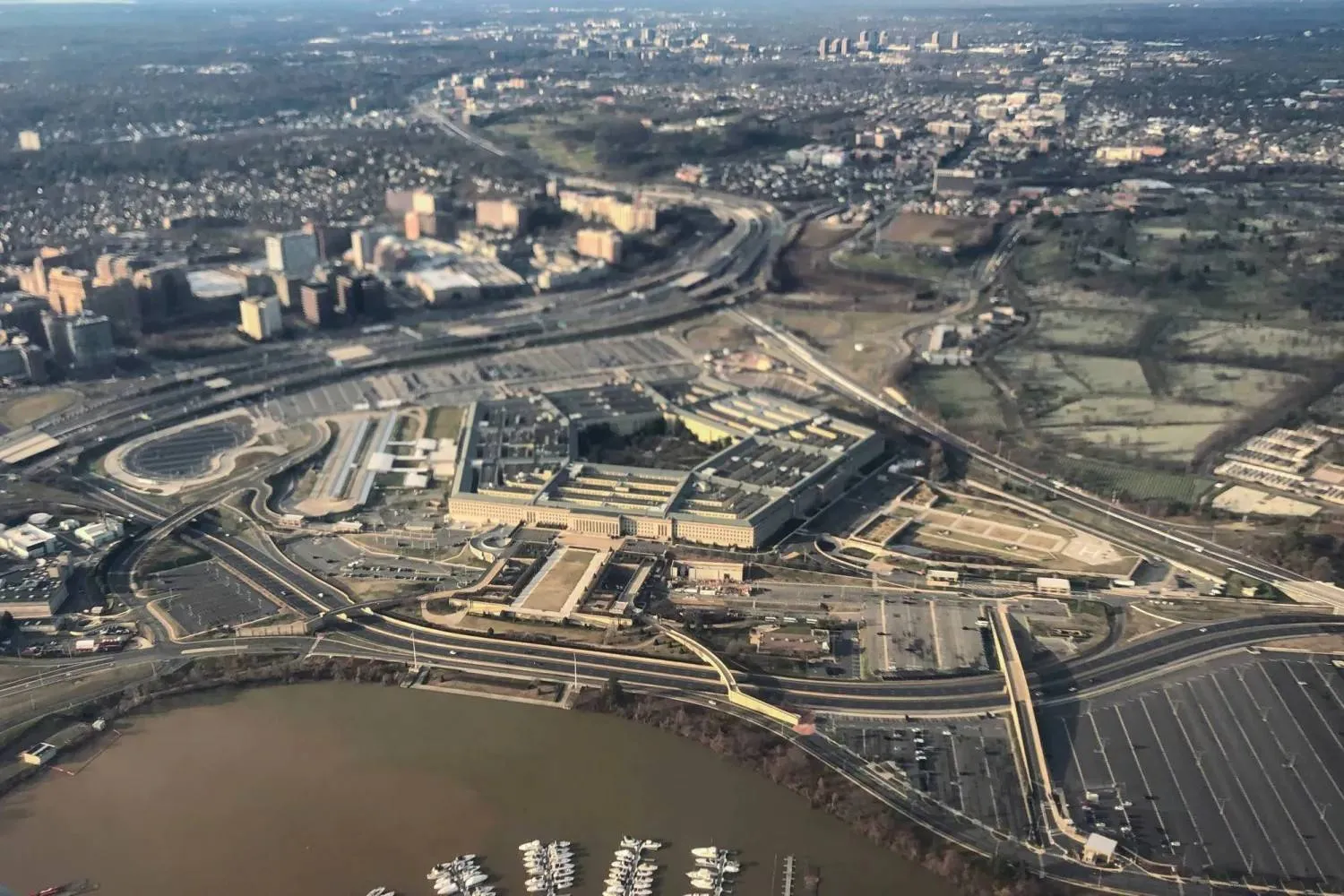
A general view of the Pentagon in Washington, DC (AP) 
TT

Pentagon Reaches Deals with Defense Firms to Expand Munitions Production

A general view of the Pentagon in Washington, DC (AP) 

The Pentagon said on Wednesday it had reached framework agreements with BAE Systems, Lockheed and Honeywell to boost production of defense systems munitions as part of a push to put the US military on a “wartime footing.”

The ‌announcements come more than three weeks after US President Donald Trump and Israel launched a war on Iran. They also follow Trump's meeting earlier this month with executives from seven defense contractors as the Pentagon sought to replenish weapons stocks depleted by US strikes on Iran and other recent military operations.

The Pentagon also plans to send thousands of airborne troops to ⁠the Gulf to give Trump more options to order a ground assault, Reuters reported on Tuesday.

Under the agreements, Honeywell Aerospace will “surge production of critical components for America's munitions stockpile,” as part of a $500 million multi-year investment, the Pentagon said.

BAE Systems and Lockheed Martin will also quadruple production of seekers for the Terminal High Altitude Area Defense (THAAD) interceptor, while a new framework agreement with Lockheed will accelerate production of its Precision Strike Missile, the Pentagon added.

Honeywell said the agreement would support increased output of navigation systems, missile steering actuators and electronic warfare products used ‌across ⁠US military platforms.

Honeywell Aerospace CEO Jim Currier said the company was ready to help meet the urgent demand.

Lockheed Martin CEO Jim Taiclet also said the company was “working closely with the Department of War and the US Army to scale production to meet operational demand.”

Trump in January signed an executive order directing ⁠officials to identify contractors deemed to be underperforming on government contracts while continuing to return profits to shareholders. His administration has also stepped up pressure on defense companies to prioritize production over shareholder payouts.

“We discussed ⁠production and production schedules,” Trump said of the earlier meeting, which included executives from Lockheed Martin, RTX, BAE Systems, Boeing, Honeywell Aerospace, L3Harris Technologies and Northrop Grumman.

The United States has drawn ⁠down billions of dollars worth of weapons from its stockpiles since Russia invaded Ukraine in 2022, and during Israel's military operations in Gaza, including artillery systems, ammunition and anti-tank missiles.