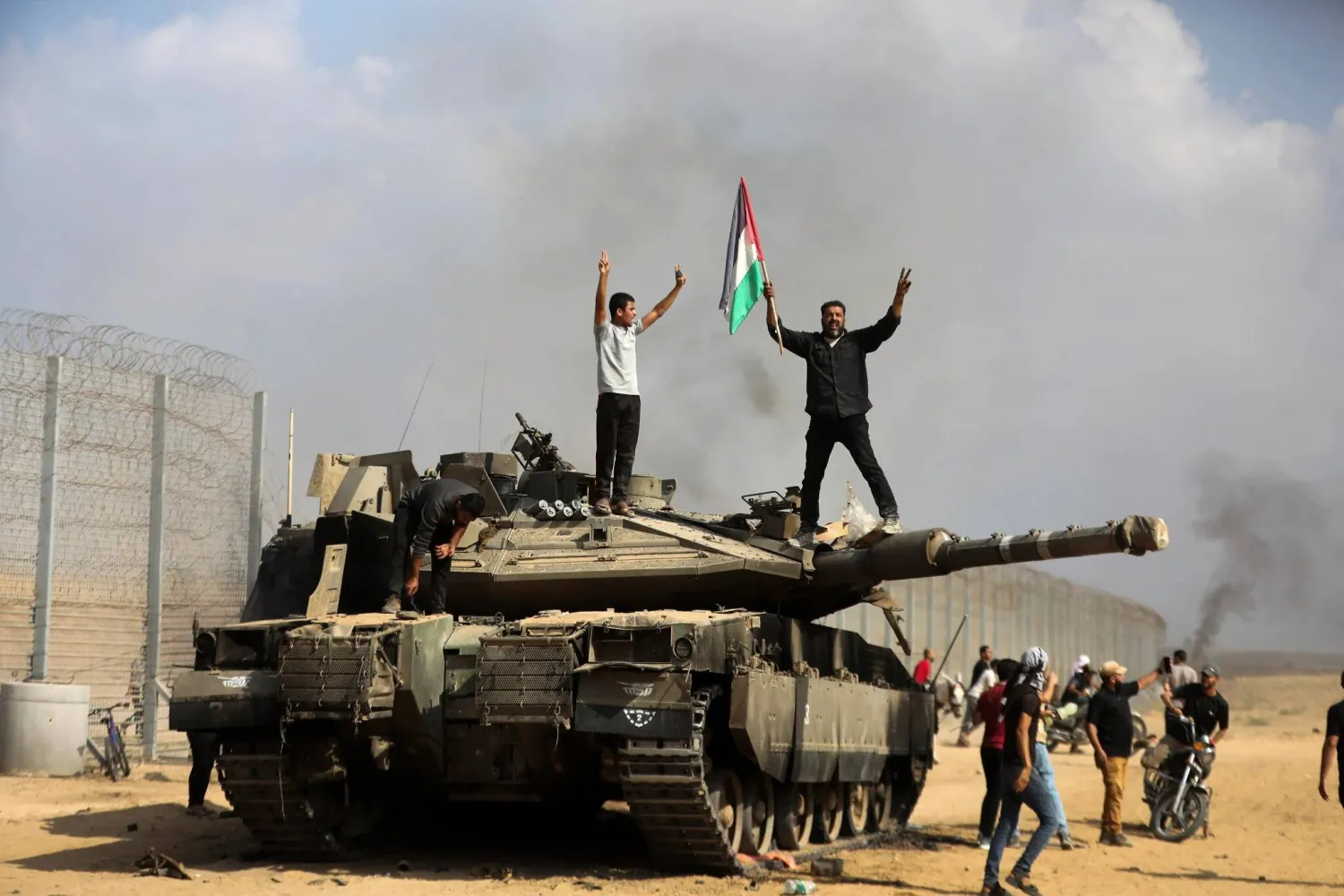

Incoming Israeli Army chief of staff Eyal Zamir is planning a major overhaul of the top command of the military, whose names were associated with the failures of October 7, 2023, Israel’s Channel 12 reported on Monday.
On Wednesday, Zamir will take over as the new chief of staff.
He plans to quickly dismiss several top generals who were in key posts during the October 7 attacks, Channel 12 said.
Among those Zamir is considering removing are Head of the Operations Directorate Maj. Gen. Oded Basyuk, Air Force Commander Maj. Gen. Tomer Bar, Home Front Command Head Maj. Gen. Rafi Milo, and Intelligence Directorate Head Maj. Gen Shlomi Binder.
The channel said the new chief of staff believes that his decision to replace the generals will restore the public's trust in the military.
It said the military overhaul is set to take place after Zamir takes over as Israel's top military officer on Wednesday.
Zamir, known for his close ties to Netanyahu, will succeed General Herzi Halevi, who resigned on January 21 following criticism over the military’s failure to prevent the Al-Aqsa Flood operation on October 7, 2023.
Earlier, the public broadcaster quoted sources close to Netanyahu as saying that Israel would change the nature of its fighting with the change of the Chief of Staff.
Last Thursday, the Israeli army started presenting part of the findings of its investigation into the Hamas attack on October 7, 2023.
It was only recognized months after the invasion that the military’s Gaza Division, the regional unit responsible for the Strip and for protecting southern Israel, was “defeated” for several hours. The chaos and confusion catastrophically slowed the fightback on the day.
The Israeli army detailed intelligence material that was insistently misinterpreted over the years; the military’s overreliance on having an early warning to prepare its defenses; the degree to which troops were massively outnumbered by the invading militants; and the failure to understand what Hamas was doing during the attack.
The probes at the General Staff level focused on four main topics.
The first topic is related to the development of the army’s perception of Gaza over the past decade. The “perception” probe found that the army believed, prior to the October 7 attack, that Hamas in Gaza did not pose a significant threat to Israel, that it was uninterested in a large-scale war, that its tunnel networks had been significantly degraded, and that any cross-border threat would be thwarted by Israel’s high-tech border fence.
The second concerns the army’s intelligence assessments of Hamas from 2014 until the outbreak of the war. The “intelligence assessments” investigation found that the Military Intelligence Directorate received information and plans outlining Hamas’s intent to launch a wide-scale attack against Israel over a period of several years, but dismissed the plans as unrealistic and unfeasible.
The third topic includes the intelligence and decision-making process on the eve of October 7. The investigation into the decision-making process made by top officials on the eve of the attack found that the army identified five signs of unusual Hamas activity the night before the terror group’s October 7 attack, but believed they did not indicate an imminent attack.
As for the final topic, it relates to the command and control and orders given during battles between October 7 and 10. The last investigation topic, focusing on the battles on October 7 and the following days, found out only in hindsight the army’s Gaza Division was defeated for several hours that day.
Finally, the battles investigation found that the Israeli army failed to protect Israeli civilians and was not ready for a wide-scale surprise attack.