


White House Wants Deep Cut in US Funding for War Crimes Investigations

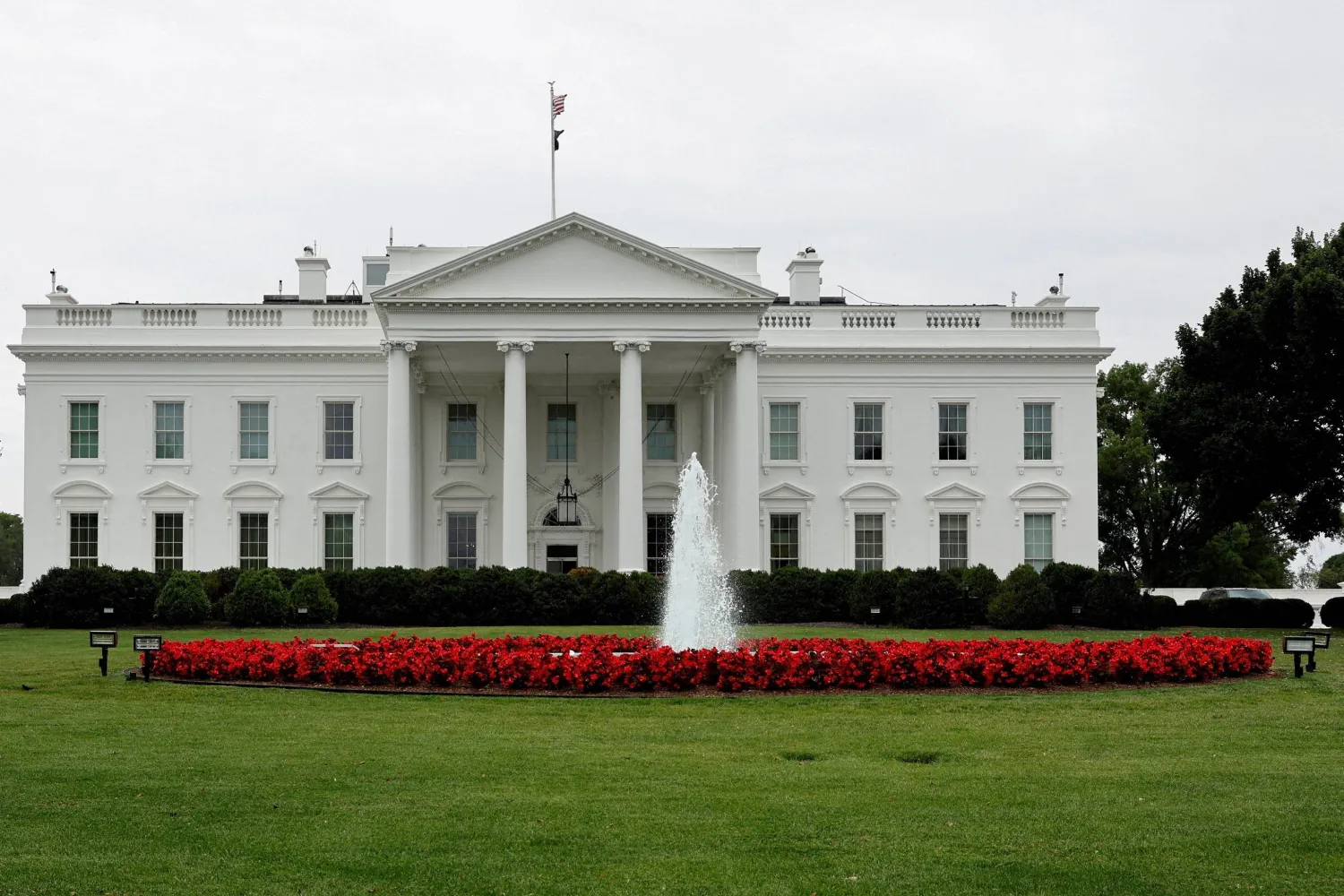
The White House in Washington. (Reuters)
TT

White House Wants Deep Cut in US Funding for War Crimes Investigations

The White House in Washington. (Reuters)

The White House has recommended terminating US funding for nearly two dozen programs that conduct war crimes and accountability work globally, including in Myanmar, Syria and on alleged Russian atrocities in Ukraine, according to three US sources familiar with the matter and internal government documents reviewed by Reuters.

The recommendation from the Office of Management and Budget, which was made on Wednesday and has not been previously reported, is not the final decision to end the programs since it gives the State Department the option to appeal.

But it sets up a potential back-and-forth between the OMB and US Secretary of State Marco Rubio and his aides, who will reply to OMB with their suggestions on which programs deserve to continue.

The programs also include work in Iraq, Nepal, Sri Lanka, Colombia, Belarus, Sudan, South Sudan, Afghanistan and the Gambia, according to the sources and a list seen by Reuters.

The State Department declined to comment. OMB did not immediately respond to a request for comment.

The expectation that Rubio would argue for many of the programs to be continued is slim, according to three US officials. However, the top US diplomat could make a case to keep crucial programs, such as aiding potential war crimes prosecutions in Ukraine, according to one source familiar with the matter.

Several of the programs earmarked for termination operate war crimes accountability projects in Ukraine, three sources familiar with the matter said, including Global Rights Compliance, which is helping to collect evidence of war crimes and crimes against humanity across Ukraine, such as sexual violence and torture.

Another is Legal Action Worldwide, a legal aid group which supports local efforts to bring cases against Russian suspects of war crimes in Ukraine, the sources said.

Requests seeking comment from the groups were not immediately answered.

State Department bureaus that would like to preserve any war crimes and accountability programs should send their justifications by close of business day on July 11, said an internal State Department email seen by Reuters.

CHANGING PRIORITIES

Many of the programs recommended for termination are dedicated to empowering local organizations seeking to advance justice in societies that have faced atrocities, one of the sources said, adding that some programs have been going on for decades across Democratic and Republican administrations.

"Even if Secretary Rubio intervenes to save these programs, many of which he supported as a senator, there will be no one left to manage these programs," the source said.

The administration of President Donald Trump has frozen and then cut back billions of dollars of foreign aid since taking office on January 20 to ensure American-taxpayer money funds programs that are aligned with his "America First" policies.

The unprecedented cutbacks have effectively shut down its premier aid arm US Agency for International Development, jeopardized the delivery of life-saving food and medical aid and thrown global humanitarian relief operations into chaos.

The OMB recommendation is yet another sign that the administration is increasingly de-prioritizing advocacy for human rights and rule of law globally, an objective that previous US administrations have pursued.

While US foreign aid freezes had already started hampering an international effort to hold Russia responsible for alleged war crimes in Ukraine, Wednesday's recommendations raise the risk of US completely abandoning those efforts.

Among the programs that are recommended for termination is a $18 million State Department grant for Ukraine's Prosecutor General's Office that is implemented by Georgetown University's International Criminal Justice Initiative, two sources said.

An official at Georgetown declined to comment.

While the programs do not directly impact Ukraine's frontline efforts to fend off Russia's invasion, supporters say they represent the best chance of extensively documenting reported battlefield atrocities in Europe's biggest conflict since World War Two, now grinding toward a fourth year.

Ukraine has opened more than 140,000 war crime cases since Moscow's February 2022 invasion, which has killed tens of thousands, ravaged vast swathes of the country and left behind mental and physical scars from occupation. Russia consistently denies war crimes have been committed by its forces in the conflict.

PATH TO APPEAL

Other programs include one that does accountability work on Myanmar army's atrocities against Rohingya minorities as well as on the persecution of Christians and other minorities by Syria's ousted former president Bashar al-Assad, two sources said.

While the OMB recommendations could face State Department push-back, the criteria to appeal are set very strictly.

In an internal State Department email, the administration cautioned that any effort to preserve programs that were recommended to be terminated should be thoroughly argued and directly aligned with Washington's priorities.

"Bureaus must clearly and succinctly identify direct alignment to administration priorities," the email, reviewed by Reuters said.



‘We Choose Denmark,’ Says Greenland Ahead of W. House Talks

Danish Prime Minister Mette Frederiksen and Greenlandic Prime Minister Jens-Frederik Nielsen attend a press conference in Copenhagen, Denmark, January 13, 2026. (Reuters)
TT

‘We Choose Denmark,’ Says Greenland Ahead of W. House Talks

Danish Prime Minister Mette Frederiksen and Greenlandic Prime Minister Jens-Frederik Nielsen attend a press conference in Copenhagen, Denmark, January 13, 2026. (Reuters)

Greenland would choose to remain Danish over a US takeover, its leader said Tuesday, ahead of crunch White House talks on the future of the Arctic island which President Donald Trump has repeatedly threatened.

Trump has been talking up the idea of buying or annexing the autonomous territory for years, and further stoked tensions this week by saying the United States would take it "one way or the other".

"We are now facing a geopolitical crisis, and if we have to choose between the United States and Denmark here and now, we choose Denmark," Greenland's Prime Minister Jens-Frederik Nielsen said at a press conference.

"One thing must be clear to everyone: Greenland does not want to be owned by the United States. Greenland does not want to be governed by the United States. Greenland does not want to be part of the United States."

He was speaking alongside Danish leader Mette Frederiksen, who said it had not been easy to stand up to what she slammed as "completely unacceptable pressure from our closest ally".

"However, there are many indications that the most challenging part is ahead of us," Frederiksen said.

Danish Foreign Minister Lars Lokke Rasmussen and his Greenlandic counterpart Vivian Motzfeldt are to meet US Vice President JD Vance and Secretary of State Marco Rubio on Wednesday to discuss Greenland's future.

Lokke said they had requested a meeting with Rubio, and Vance had asked to take part and host it at the White House.

Vance made an uninvited visit to the island in March where he criticized Denmark for what he said was a lack of commitment to Greenland and security in the Arctic, and called it a "bad ally".

The comments enraged Copenhagen, which has been an ardent trans-Atlantic supporter and which has sent troops to fight US wars in Iraq and Afghanistan.

- 'Misunderstandings' -

For Nuuk and Copenhagen, Wednesday's meeting at the White House is aimed at ironing out "misunderstandings".

These relate to Greenland's defense, Chinese and Russian military presence in the Arctic, and the relationship between Greenland and Copenhagen, which together with the Faroe Islands make up the Kingdom of Denmark.

"To the uninformed American listener, the ongoing (independence) talks between Denmark and Greenland might have been construed as if Greenland's secession from Denmark was imminent," said Greenland specialist Mikaela Engell.

For these listeners, "I can understand that, in this situation, it would be better for the Americans to take hold of that strategic place", the former Danish representative on the island told AFP.

But this "discussion has been going on for years and years and it has never meant that Greenland was on its way out the door", she stressed.

Denmark's foreign minister said the reason Copenhagen and Nuuk had requested Wednesday's meeting was "to move the entire discussion... into a meeting room, where you can look each other in the eye and talk through these issues".

Greenland's location is highly strategic, lying on the shortest route for missiles between Russia and the United States. It is therefore a crucial part of the US anti-missile shield.

Washington has accused Copenhagen of doing little to protect Greenland from what it perceives as a growing Arctic threat from Russia and China, though analysts suggest Beijing is a small player in the region.

Denmark's government has rejected US claims, recalling that it has invested almost 90 billion kroner ($14 billion) to beef up its military presence in the Arctic.

The Danish prime minister on Tuesday called for stronger cooperation with the US and NATO to improve the region's security.

She also called for NATO to defend Greenland, and said that security guarantees would be "the best defense against Chinese or Russian threats in the Arctic".

Diplomats at NATO say some Alliance members have floated the idea of launching a new mission in the region, although no concrete proposals are yet on the table.

Rutte said on Monday that NATO was working on "the next steps" to bolster Arctic security.

Greenland's foreign minister and Danish Defense Minister Troels Lund Poulsen are to meet NATO's Secretary General Mark Rutte on January 19 to discuss the issue.

"We are now moving forward with the whole issue of a more permanent, larger presence in Greenland from the Danish defense forces but also with the participation of other countries," Lund Poulsen told reporters.


ICJ Hears Gruesome Violence Against Rohingya in Myanmar Genocide Case

A view of the courtroom during the first hearing in which Myanmar is accused of committing genocide against the country's Muslim minority, the Rohingya, at the International Court of Justice in The Hague, The Netherlands, 12 January 2026. (EPA)
TT

ICJ Hears Gruesome Violence Against Rohingya in Myanmar Genocide Case

A view of the courtroom during the first hearing in which Myanmar is accused of committing genocide against the country's Muslim minority, the Rohingya, at the International Court of Justice in The Hague, The Netherlands, 12 January 2026. (EPA)

Myanmar soldiers rampaged door-to-door, systematically killing, raping, and burning Rohingya men, women and children, the International Court of Justice heard on Tuesday, on day two of a genocide hearing.

ICJ judges are hearing three weeks of testimony as they weigh accusations by The Gambia that Myanmar committed genocide against the Rohingya in a 2017 crackdown.

Tafadzwa Pasipanodya, a lawyer for The Gambia, laid out harrowing evidence of an alleged attack on a village in northern Rakhine State in Myanmar.

Soldiers decapitated old men, gang raped women and girls, threw infants into rivers.

After killing everyone in the villages, they "systematically" burned the buildings following the so-called "clearance operations", alleged Pasipanodya.

"The totality of this evidence... convincingly show that Myanmar, through its state organs, acted with the intent to destroy the Rohingya," said Pasipanodya.

Myanmar has always maintained the crackdown by its armed forces, known as the Tatmadaw, was justified to root out Rohingya insurgents after a series of attacks left a dozen security personnel dead.

The violence forced hundreds of thousands of Rohingya to flee to neighboring Bangladesh.

Today, 1.17 million Rohingya live crammed into dilapidated camps spread over 8,000 acres in Cox's Bazar in Bangladesh.

Lawyers for Myanmar will begin their response on Friday.

A final decision could take months or even years, and while the ICJ has no means of enforcing its decisions, a ruling in favor of The Gambia would heap more political pressure on Myanmar.

The Gambia is taking Myanmar to the ICJ, which rules in disputes between states, alleging breaches of the 1948 UN Genocide Convention, under which any state can haul another before the ICJ if it believes genocide is being committed.

Legal experts are watching this case as it could give clues for how the ICJ will handle similar accusations against Israel over its military campaign in Gaza, in a case brought by South Africa.


US Designates Three Muslim Brotherhood Chapters as Global Terrorists

Tourists stand next to the fence of the White House in Washington, DC, US December 26, 2025. (Reuters)
TT

US Designates Three Muslim Brotherhood Chapters as Global Terrorists

Tourists stand next to the fence of the White House in Washington, DC, US December 26, 2025. (Reuters)

The United States on Tuesday designated the Egyptian, Lebanese and Jordanian branches of the Muslim Brotherhood as global terrorists, citing in part what it called their support for Palestinian group Hamas.

The ‌move, which ‌Washington formally ‌set ⁠in motion ‌last November, will bring sanctions against one of the Arab world's oldest and most influential Islamist movements.

The Treasury said it ⁠was labeling the three chapters ‌as specially designated global ‍terrorists. ‍It has accused the ‍trio of supporting or encouraging violent attacks against Israel and US partners.

"Chapters of the Muslim Brotherhood purport to be legitimate civic organizations while, ⁠behind the scenes, they explicitly and enthusiastically support terrorist groups like Hamas," the Treasury Department said in a statement.

Republicans and right-wing voices have long advocated for and considered terrorist designations for ‌the Muslim Brotherhood.