
Ukraine to Boost Domestic Arms Production to Counter Russia's Invasion, Says Zelensky

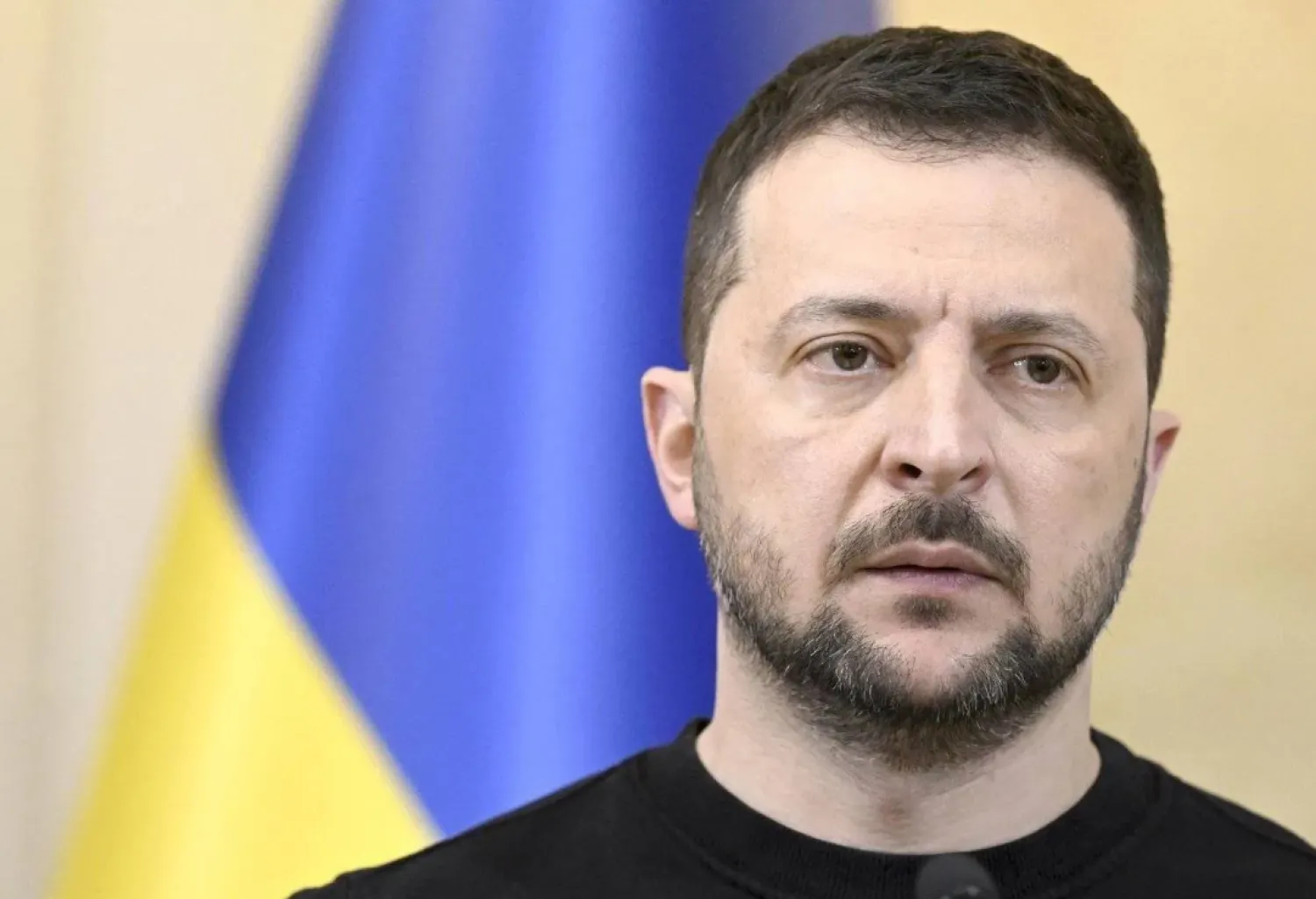
Ukrainian President Volodymyr Zelensky. File Photo/The AP
TT

Ukraine to Boost Domestic Arms Production to Counter Russia's Invasion, Says Zelensky

Ukrainian President Volodymyr Zelensky. File Photo/The AP

A new Ukrainian government approved Thursday will race to expand domestic arms production to meet half the country’s weapons needs within six months as it tries to push back Russia’s invasion, Ukrainian President Volodymyr Zelensky said.

Meanwhile, Switzerland said Thursday that the US Defense Department had informed it that Washington is diverting a Swiss order for Patriot air defense systems to help Ukraine, which badly needs to improve its response to increasingly heavy Russian aerial attacks.

Patriot air defense systems for Ukraine The Swiss Defense Ministry, which in 2022 ordered five Patriot systems, said Thursday it has been informed by the US Defense Department that it will “reprioritize the delivery of Patriot systems to support Ukraine.”

It was not immediately clear whether the Swiss-ordered Patriots would go directly to Ukraine or would replace units in other European countries that may be donated to Kyiv, The AP news reported.

Delivery to Switzerland of the systems, worth billions of dollars, was scheduled to begin in 2027 and be completed in 2028. But the Swiss government said Washington informed it of the delay on Wednesday, adding that it was unclear how many systems would be affected.

The need to adequately arm Ukraine’s military is pressing as Russia looks to drive forward its summer offensive after three years of war and pounds Ukrainian cities with hundreds of drones and ballistic and cruise missiles.

It remains unclear when the promised US-made weapons, especially the Patriot systems, might reach Ukraine. Trump has agreed to send the weaponry, but it will be paid for by European countries.

No timeframe for foreign weapons in Ukraine The US Ambassador to NATO, Matthew Whitaker, said he couldn’t give a timeframe for when Ukraine might get extra foreign weapons.

“We are all moving with haste to facilitate this and get this done. Things are actually moving very quickly, but I can’t verify a date that this will all be completed. I think it’s going to be an ongoing movement,” he told reporters in Brussels.

“The plan is that there will be American-made defense equipment, capabilities, that will be sold to our European allies, that they will provide to Ukraine,” he said.

British Defense Secretary John Healey said Thursday he and his German counterpart Boris Pistorius will chair a meeting of Ukraine’s allies on Monday to discuss US President Donald Trump’s weapons plans. Healey said US Defense Secretary Pete Hegseth and NATO leader Mark Rutte will attend the meeting of the Ukraine Defense Contact Group.

NATO’s Supreme Allied Commander Europe, Gen. Alexus Grynkewich, told The Associated Press Thursday that “preparations are underway” for weapons transfers to Ukraine and that NATO is working “very closely” with Germany to transfer Patriot systems.

Grynkewich said at a military event in Wiesbaden, Germany, that he had been ordered to “move (the weapons) out as quickly as possible.” He said the number of weapons being transferred is classified.

German Defense Ministry spokesperson Mitko Müller said Wednesday he couldn't confirm that anything is currently on its way to Ukraine.

Rutte, the NATO chief, said in Washington on Monday that the alliance is coordinating the military support with funding from allies in Europe and Canada. He said there were commitments from Germany, Finland, Denmark, Sweden, Norway, the United Kingdom, the Netherlands and Canada, “with more expected to follow.”

Ukraine now makes 40% of its own weapons Ukraine's domestic defense manufacturing already accounts for almost 40% of weapons used by the Ukrainian military, according to Zelensky. As uncertainty grows about how many more weapons shipments Western countries can provide — and how quickly — Ukraine is keen to increase its output and widen its strikes on Russian soil.

“What we need is greater capacity to push the war back onto Russia’s territory — back to where the war was brought from," Zelensky said late Wednesday in his nightly video address.

“We must reach the level of 50% Ukrainian-made weapons within the first six months of the new government’s work by expanding our domestic production.”

Ukraine has also developed its own long-range drones, which it uses to strike deep inside Russia .

Russian air defenses shot down 122 Ukrainian drones overnight, the country’s defense ministry said Thursday. The wave of drones caused flights to be grounded at airports in Moscow and St. Petersburg, although most of the drones were reportedly destroyed over the border regions of Bryansk and Kursk.

Meanwhile, Russia attacked Ukraine with 64 Shahed and decoy drones overnight, killing at least one person, the Ukrainian air force reported. The assault centered on the industrial Dnipropetrovsk region, officials said.

In other developments:

Russia on Thursday sent to Ukraine 1,000 bodies, including some of the country’s fallen soldiers, the Ukrainian Coordination Headquarters for the Treatment of Prisoners of War said.

At the same time, Russia received the bodies of 19 soldiers, Russian presidential aide Vladimir Medinsky said.

The exchange was part of a deal reached at direct peace talks last May and June that produced few other agreements between the sides.


Senior Iranian Official: New Talks with US Planned in Early March, Interim Deal Possible

Pedestrians walk past a billboard depicting a US aircraft carrier with damaged fighter jets on its deck and a sign in Farsi and English reading, "If you sow the wind, you'll reap the whirlwind," in Tehran, Iran, Sunday, Feb. 22, 2026. (AP Photo/Vahid Salemi)
TT

Senior Iranian Official: New Talks with US Planned in Early March, Interim Deal Possible

Pedestrians walk past a billboard depicting a US aircraft carrier with damaged fighter jets on its deck and a sign in Farsi and English reading, "If you sow the wind, you'll reap the whirlwind," in Tehran, Iran, Sunday, Feb. 22, 2026. (AP Photo/Vahid Salemi)

Iran and the United States have differing views over the scope and mechanism to lift sanctions on Tehran in exchange for curbs on its nuclear program, a senior Iranian official told Reuters on Sunday, adding that new talks were planned in early March.

The official said Tehran could seriously ⁠consider a combination of ⁠exporting part of its highly enriched uranium (HEU) stockpile, diluting the purity of its HEU and a regional consortium for enriching uranium, but in return Iran's ⁠right to "peaceful nuclear enrichment" must be recognized.

"The negotiations continue and the possibility of reaching an interim agreement exists," the official said.

Iran's Foreign Minister Abbas Araqchi said on Friday that he expected to have a draft counterproposal ready within days following nuclear talks with the ⁠United ⁠States this week, while US President Donald Trump said he was considering limited military strikes.

The senior official said Tehran will not hand over control of its oil and mineral resources but US companies can always participate as contractors in Iran’s oil and gas fields.


Witkoff Says Trump Questioning why Iran Has Not 'Capitulated'

US Special Envoy Steve Witkoff listens as President Donald Trump (not pictured) speaks at the inaugural Board of Peace meeting at the US Institute of Peace in Washington, D.C., US, February 19, 2026. REUTERS/Kevin Lamarque
TT

Witkoff Says Trump Questioning why Iran Has Not 'Capitulated'

US Special Envoy Steve Witkoff listens as President Donald Trump (not pictured) speaks at the inaugural Board of Peace meeting at the US Institute of Peace in Washington, D.C., US, February 19, 2026. REUTERS/Kevin Lamarque

US envoy Steve Witkoff said on Saturday that President Donald Trump is questioning why Iran has not "capitulated" in the face of Washington's military build-up aimed at pressuring them into a nuclear deal.

The United States and Iran this week resumed Oman-mediated talks in Geneva aimed at averting the possibility of military action, after Washington dispatched two aircraft carriers, jets and weaponry to the region to back its warnings.

In a Fox News interview with Trump's daughter-in-law Lara, Witkoff said the president was "curious" about Iran's position after he had warned them of severe consequences in the event they failed to strike a deal.

"I don't want to use the word 'frustrated,' because he understands he has plenty of alternatives, but he's curious as to why they haven't... I don't want to use the word 'capitulated,' but why they haven't capitulated," AFP quoted him as saying.

"Why, under this pressure, with the amount of seapower and naval power over there, why haven't they come to us and said, 'We profess we don't want a weapon, so here's what we're prepared to do'? And yet it's sort of hard to get them to that place."

The US envoy also confirmed in the interview that he had met with Reza Pahlavi, who has not returned to Iran since before the 1979 Iranian Revolution that ousted the monarchy.

"I met him at the direction of the president," he said, without providing further details.

US-based Pahlavi last week told a crowd in Munich that he was ready to lead the country to a "secular democratic future" after Trump said regime change would be best for the country.

Witkoff's comments come after Iranian Foreign Minister Abbas Araghchi said a draft proposal for an agreement with Washington would be ready in a matter of days.

Trump said on Thursday that Iran had at most 15 days to make a deal on concerns starting with its nuclear program.

As talks between the two nations continued in Geneva, Iran's supreme leader Ali Khamenei on Tuesday said that Trump would not succeed in destroying the country.


Will Trump Accept a ‘Token’ Nuclear Enrichment in Iran?

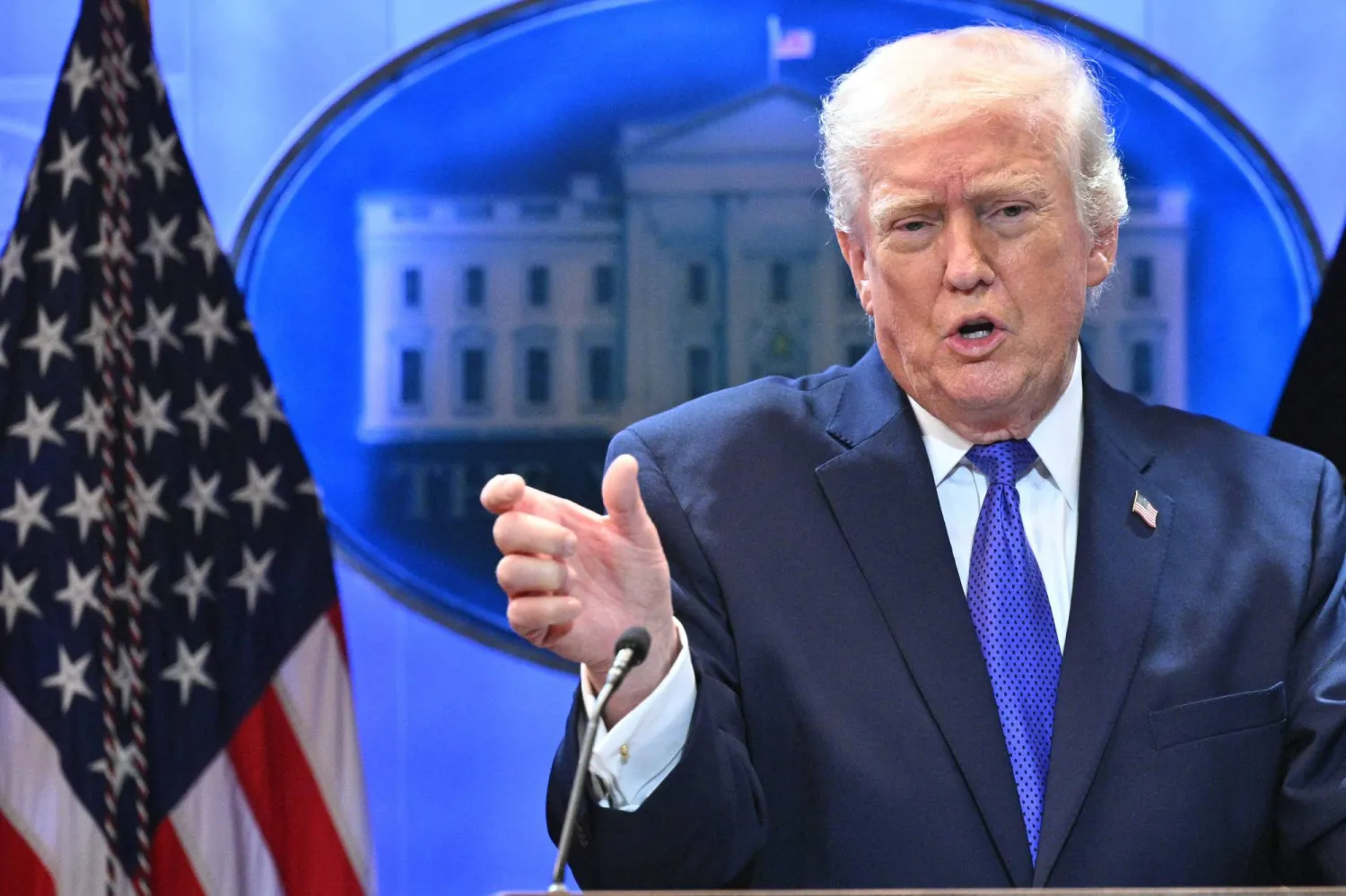
(FILES) US President Donald Trump speaks during a press conference in the Brady Press Briefing Room of the White House in Washington, DC, on February 20, 2026. (Photo by Mandel NGAN / AFP)
TT

Will Trump Accept a ‘Token’ Nuclear Enrichment in Iran?

(FILES) US President Donald Trump speaks during a press conference in the Brady Press Briefing Room of the White House in Washington, DC, on February 20, 2026. (Photo by Mandel NGAN / AFP)

The Trump administration is prepared to consider a proposal that allows Iran “token” nuclear enrichment if it leaves no possible path to a bomb, a senior US official told Axios on Saturday.

This suggests there could be an opening, if only a small one, between the red lines set by the US and Iran for a deal to constrain Iran's nuclear capabilities and prevent war, according to Axios.

The report published this week said that after the Geneva talks, US President Donald Trump's envoys Steve Witkoff and Jared Kushner asked Iranian Foreign Minister Abbas Araghchi to produce a detailed proposal addressing all the US concerns regarding Iran's nuclear program.

A senior US official said Witkoff and Kushner told Araghchi that Trump's position was “zero enrichment” on Iranian soil.

But the official said that if the proposal includes “small, token enrichment,” and if the Iranians offer detailed proof that it poses no threat, the US will study it.
Another senior Trump adviser said: “Trump is keeping his options open. He could decide on an attack at any moment.”

Pezeshkian: We Will Not Bow Our Heads

Meanwhile, Iranian ⁠President Masoud Pezeshkian said on Saturday that his country would not bow its ⁠head to pressure from world powers.

“World powers are lining up to force us to bow our heads... but we will not bow our heads despite all the problems that they are creating for us,” Pezeshkian said in a speech carried live by ⁠state TV.

But a senior US official told Axios that “Trump will be ready to accept a deal that would be substantive and that he can sell politically at home. If the Iranians want to prevent an attack they should give us an offer we can't refuse. The Iranians keep missing the window. If they play games there won't be a lot of patience.”

At the same time, Trump has been presented with military options that involve directly targeting the supreme leader.

The Trump adviser said the Pentagon had presented the US President with numerous options.

“They have something for every scenario. One scenario takes out the ayatollah and his son and the mullahs,” the adviser said, referring to Supreme Leader Ali Khamenei and his son Mojtaba, who is seen as a potential successor. “What the president chooses no one knows. I don't think he knows.”

A second source confirmed a plan to kill Khamenei and his son was floated to Trump several weeks ago.

Another senior Trump adviser said: “Trump is keeping his options open. He could decide on an attack at any moment.”

Zero Enrichment

In return, a senior US official said Witkoff and Kushner told Araghchi that Trump's position was “zero enrichment” on Iranian soil. But the official said that if the proposal includes “small, token enrichment,” and if the Iranians offer detailed proof that it poses no threat, the US will study it.

A source familiar with the talks told Axios that regional mediators told Iran and the US in recent days that any deal must enable both sides to claim victory and, if possible, also be something that Gulf countries can accept.

With the region bracing for war, the US official insisted that Washington would wait for Iran's proposal before deciding how to proceed, and whether there will be another round of talks.

CBS News quoted US officials as saying on Wednesday that Iran had floated the idea of pausing uranium enrichment for a specified period of time, possibly one to three years or five years, while some said this period covered the remainder of Trump's years in the White House.

For his part, Araghchi said on Friday that “Washington has not asked Tehran to permanently suspend uranium enrichment,” adding Tehran had not offered the US a temporary suspension of its uranium enrichment.

Iran's foreign minister said he expected to have a draft counterproposal ready within days following nuclear talks with the United States this ⁠week, while Trump said he was considering limited military strikes.

Two US officials told Reuters that US military planning on Iran had reached an advanced stage, with options including targeting individuals as part of an attack and even pursuing leadership change in Tehran, if ordered by Trump.

Araghchi said after indirect discussions in Geneva this week with Witkoff and Kushner that the sides had reached an understanding on main “guiding principles,” but that did not mean a deal was ⁠imminent.

The foreign minister, in an interview on MS NOW, said he had a draft counterproposal that could be ready in the next two or three days for top Iranian officials to review, with more US-Iran talks possible in a week or so.