



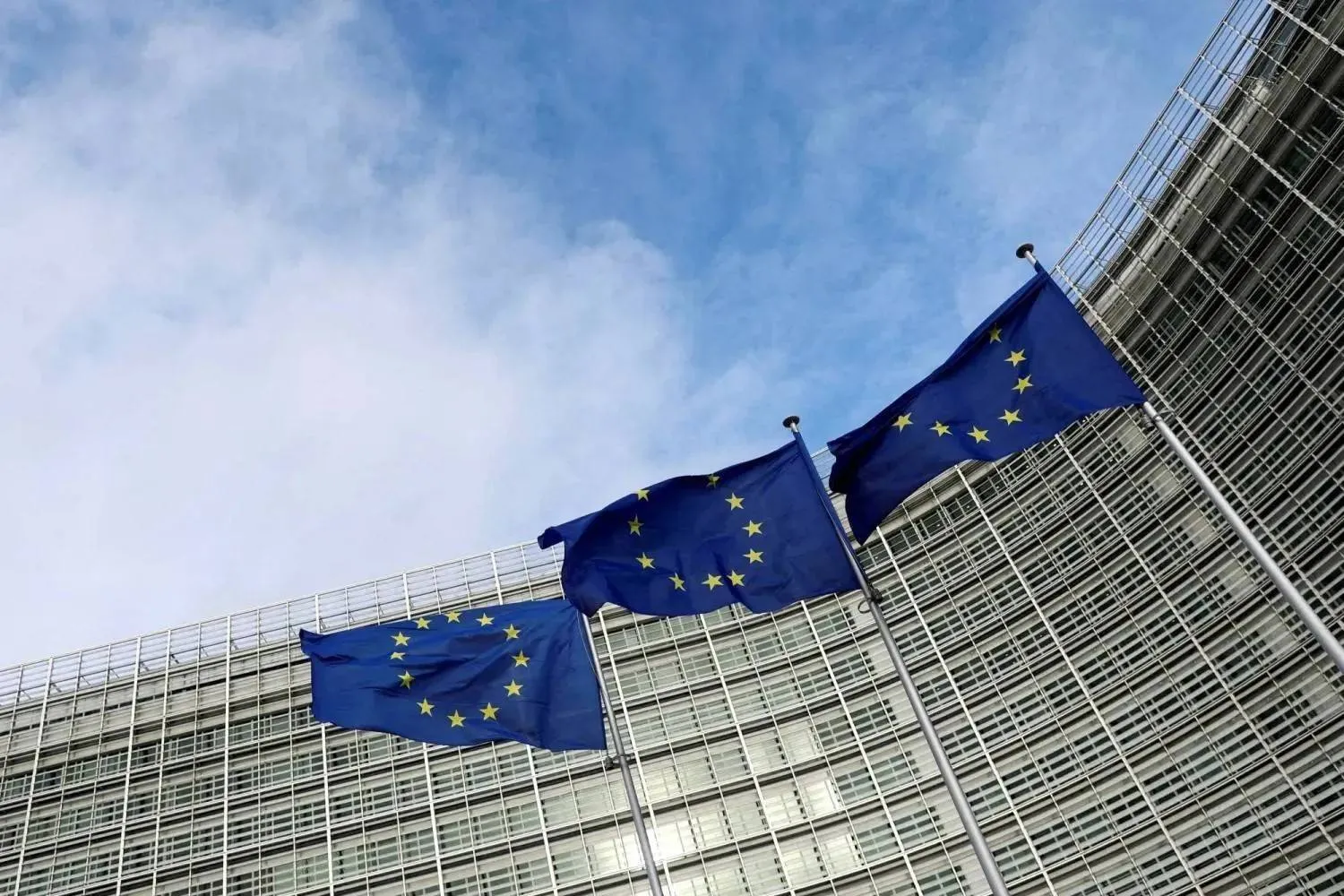

Last Monday, after much hesitation, the European Commission recommended curbing Israeli access to its flagship research funding after calls from EU countries to increase pressure on Israel to alleviate the humanitarian crisis in Gaza.
Since the beginning of June, the Netherlands requested the Commission to investigate Israel's compliance with Article 2 of the EU-Israel Association Agreement, which requires respect for human rights and democratic principles. Sweden also voiced support for this review.
On June 23, EU High Representative for Foreign Affairs and Security Policy, Kaja Kallas recognized in her report human rights violations by Israel in Gaza.
Horizon Europe
Horizon Europe is the EU's key funding program for research and innovation. Until last Monday, the European Commission had not taken any action or decision against Israel although over 60,000 Palestinians have been killed in the 21-month Israel-Hamas war.
Therefore, the Commission's latest proposal is the first collective practical step by the European Union to counter Israel’s actions in the Strip.
But the proposal needs approval from a qualified majority of EU countries to take effect - at least 15 of the EU's 27 members, representing at least 65% of its population.
Reports indicate that the Commission’s proposal was already blocked by four countries, primarily Germany, Italy, Hungary, and the Czech Republic.
It is worth noting that the EU has not collectively or officially condemned Israel's actions in Gaza and that its only unanimous measure and “symbolic” sanctions on settlers in the West Bank, has not stopped the settlement movement or violence.
This week, the Commission said the proposal would impact the participation of Israeli entities in the bloc's European Innovation Council Accelerator “which targets start-ups and small businesses with disruptive innovations and emerging technologies that have potential dual-use applications, such as in cybersecurity, drones, and artificial intelligence.”
A European Commission official said “Israel relies heavily, in its war on Gaza, on artificial intelligence and the increased use of drones.”
Israel has sensed the mounting pressure. The country’s President Isaac Herzog wrote on X that “it will be a huge mistake if EU takes such steps, especially in light of Israel’s ongoing and upgraded humanitarian efforts.”
It is not clear what “effort” Herzog was talking about. He fears that such a measure “would hurt Israel's image and open the door to other punitive measures.”
Also, Israel's foreign ministry said in a post on social media platform X on Monday that the Commission's move was “mistaken, regrettable, and unjustified” and that it hoped EU member countries would not adopt the proposal.
Europe’s Achilles Heel
It is no secret that splits among European countries is preventing the Union from playing an active role in the Gaza war and, more generally, in the Middle East crisis.
Some European countries want to resort to tough measures against Israel. Sweden, which recognizes the Palestinian state since 2015, called on the European Union to suspend the trade component of the bloc’s Association Agreement with Israel.
“The situation in Gaza is utterly deplorable, and Israel is not fulfilling its most basic obligations and agreed-upon commitments regarding humanitarian aid,” Swedish Prime Minister Ulf Kristersson said on X.
“Sweden therefore demands that the EU, as soon as possible, freezes the trade component of the association agreement,” Kristersson added. “Economic pressure on Israel must increase. The Israeli government must allow unrestricted humanitarian aid in Gaza.”
His Dutch counterpart, Dick Schoof, said Monday that the Netherlands is prepared to support suspending Israel’s participation in the European Union’s Horizon research program if Brussels determines that Israel is obstructing humanitarian aid access to Gaza.
Meanwhile, Slovenia announced last Thursday that it will ban all weapons trade with Israel over the war in Gaza, in what it said is a first by a European Union nation.
As of now, 12 EU member states recognize an independent state of Palestine. Others like France, Portugal, Malta, Luxembourg and Finland could join next month.
But this support does not mean that the EU member states would reach a qualified majority to suspend Israel’s participation in the Horizon program. Major countries, such as Germany, Italy and Austria block such plans.
CSU Secretary-General Martin Huber has categorically ruled out sanctions against Israel by the German government.
In an interview with Redaktionsnetzwerk Deutschland, Huber said that criticizing the Israeli government is legitimate, “but sanctions between friends are out of the question.”


